
In the realm of unmanned aerial vehicles (UAVs), the quadrotor drone has emerged as a pivotal platform due to its versatility, vertical take-off and landing capabilities, and adaptability to constrained environments. As a researcher and practitioner in this field, I have observed that the control and data transmission requirements for quadrotor drones are exceptionally demanding, given their six degrees of freedom and four independent inputs—the rotational speeds of each rotor. These complexities necessitate robust, real-time communication systems to ensure stable flight and efficient operation. One technology that has proven instrumental in addressing these challenges is the data transmission radio, often referred to as a wireless data transmission module. This article delves into the application of data transmission radios in quadrotor drones, exploring their principles, characteristics, and practical implementations, with an emphasis on enhancing performance through advanced data handling and control algorithms.
The data transmission radio leverages digital signal processing (DSP) and software-defined radio techniques to facilitate professional data transmission. Unlike traditional analog systems, modern data transmission radios employ fully digital processing, which enhances control precision and significantly reduces power consumption. In the context of quadrotor drones, this technology enables reliable communication between the ground station and the aerial vehicle, thereby solving critical issues related to data latency and interference. The integration of data transmission radios allows for seamless transmission of control commands and telemetry data, which is essential for managing the quadrotor drone’s intricate dynamics. For instance, the quadrotor drone’s ability to maintain hover, perform agile maneuvers, or navigate through obstacles relies heavily on the timely and accurate exchange of data. Thus, understanding the synergy between data transmission radios and quadrotor drones is key to advancing UAV technology.
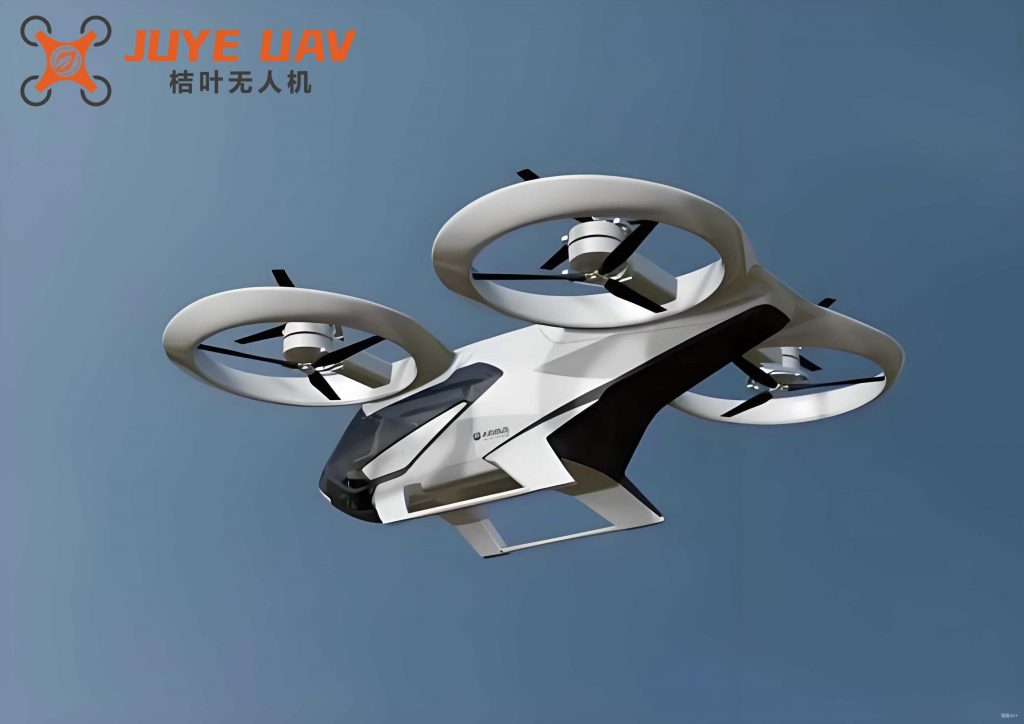
To appreciate the role of data transmission radios in quadrotor drones, it is essential to first examine their fundamental principles. A data transmission radio operates by modulating and demodulating signals through wireless means. The core component is a modem that interfaces directly with a radio unit, acting as an intermediary for transmitting and receiving radio waves. This modem converts binary signals into audio signals, which are then superimposed onto carrier waves for transmission. At the receiving end, a compatible modem reverses the process, converting the audio signals back into binary data for processing by a computer or controller. In mathematical terms, the modulation process can be described using equations for amplitude shift keying (ASK) or frequency shift keying (FSK), common techniques in digital radio. For example, in FSK, the binary signal modulates the frequency of the carrier wave, represented as:
$$ s(t) = A_c \cos(2\pi f_c t + 2\pi \Delta f \int_{-\infty}^{t} m(\tau) d\tau) $$
where \( s(t) \) is the transmitted signal, \( A_c \) is the amplitude, \( f_c \) is the carrier frequency, \( \Delta f \) is the frequency deviation, and \( m(t) \) is the binary message signal. For quadrotor drone applications, this ensures that control signals, such as those for adjusting rotor speeds or flight paths, are transmitted efficiently. The data transmission radio sends signals to the control terminal, which then relays commands to the quadrotor drone, enabling precise操控. This bidirectional flow is critical for real-time feedback, allowing the quadrotor drone to adapt to dynamic environments. Moreover, the use of DSP in data transmission radios minimizes errors and enhances signal integrity, which is paramount for the safety and reliability of quadrotor drone operations.
The characteristics of data transmission radios make them particularly suitable for quadrotor drone systems. Compared to other wireless technologies like Wi-Fi or Bluetooth, data transmission radios offer distinct advantages in terms of range, reliability, and real-time performance. Below is a table summarizing key features and comparisons:
| Feature | Data Transmission Radio | Wi-Fi | Bluetooth |
|---|---|---|---|
| Communication Range | Up to tens of kilometers | ~100 meters | ~10 meters |
| Installation Complexity | Simple and convenient | Moderate | Low |
| Cost of Frequency Points | Relatively low | High (licensed bands) | Low |
| Real-time Performance | High (low latency) | Variable (prone to interference) | Moderate |
| Anti-interference Capability | Strong (digital processing) | Weak | Weak |
| Power Consumption | Low | High | Low |
As shown, data transmission radios excel in long-range communication, which is crucial for quadrotor drones that may operate beyond visual line of sight. Their low latency ensures timely control inputs, essential for maintaining the quadrotor drone’s stability during flight. Additionally, the point-to-point polling method used by data transmission radios enhances network efficiency, reducing packet loss in noisy environments. The digital nature of these systems allows for signal regeneration through repeaters, enabling extended coverage without degradation. This is particularly beneficial for quadrotor drones deployed in remote areas, such as for surveillance or environmental monitoring. Furthermore, the uniformity in signal specifications means that data transmission radios can interface seamlessly with computers for real-time monitoring, facilitating rapid data analysis and decision-making for quadrotor drone operators.
In practical production, data transmission radios have found widespread use beyond quadrotor drones, demonstrating their versatility. Applications include remote monitoring in industries like mining, petroleum, and power distribution. For instance, in coal mines, the complex terrain makes real-time data collection challenging; data transmission radios enable continuous monitoring of gas levels, temperature, and equipment status, enhancing safety. Similarly, in power systems, they facilitate data transmission for circuit breakers, transformers, and capacitor banks, ensuring grid stability. In environmental contexts, such as hydrological or meteorological stations, data transmission radios collect and transmit data over long distances, supporting climate research and disaster预警. These examples underscore the reliability and adaptability of data transmission radios, qualities that translate well to quadrotor drone operations. When integrated into a quadrotor drone system, the radio can handle diverse data types, from video feeds to sensor readings, making the quadrotor drone a multifunctional tool for industrial and scientific purposes.
Turning specifically to quadrotor drones, the application of data transmission radios addresses several critical challenges. First, they enable high-efficiency data transmission, which is fundamental for the quadrotor drone’s performance. Traditional wireless networks, such as Wi-Fi, suffer from instability and limited range in outdoor settings, often failing beyond 100 meters. In contrast, data transmission radios provide stable signals over kilometers, ensuring uninterrupted communication between the ground station and the quadrotor drone. This is vital for missions requiring extended flight distances, such as search and rescue or agricultural surveying. The setup of a data transmission radio system is straightforward: the transmitter and receiver must share the same channel, air baud rate, and serial port settings. Once configured, data flows efficiently, allowing the quadrotor drone to execute complex tasks with minimal delay. To quantify this efficiency, consider the data rate \( R \) in bits per second, given by:
$$ R = B \log_2(1 + \text{SNR}) $$
where \( B \) is the bandwidth and SNR is the signal-to-noise ratio. Data transmission radios optimize these parameters to maximize throughput, ensuring that the quadrotor drone receives timely commands for navigation and control. This efficiency translates to longer mission durations and enhanced productivity for the quadrotor drone, as more data can be processed in real-time.
Second, data transmission radios meet the stringent flight requirements of quadrotor drones. The mechanical structure of a quadrotor drone typically consists of an X-frame, center plate, and landing gear, all designed to minimize weight while maintaining strength. Materials like carbon fiber composites are often used to achieve this balance, but weight reduction alone cannot guarantee optimal flight. The quadrotor drone exhibits six degrees of freedom: three linear displacements (surge, sway, heave) and three angular orientations (roll, pitch, yaw). These are governed by dynamic equations that describe the motion of the quadrotor drone. For instance, the thrust \( T_i \) generated by each rotor \( i \) can be modeled as:
$$ T_i = k_f \omega_i^2 $$
where \( k_f \) is a thrust coefficient and \( \omega_i \) is the angular velocity of rotor \( i \). The total thrust \( T \) and moments \( M_x, M_y, M_z \) about the body axes are given by:
$$ T = \sum_{i=1}^{4} T_i $$
$$ M_x = l (T_2 – T_4) $$
$$ M_y = l (T_1 – T_3) $$
$$ M_z = k_m (\omega_1^2 – \omega_2^2 + \omega_3^2 – \omega_4^2) $$
where \( l \) is the arm length and \( k_m \) is a moment coefficient. Controlling these parameters requires precise coordination of rotor speeds, which is facilitated by real-time data transmission. The data transmission radio ensures that control algorithms receive immediate feedback on the quadrotor drone’s attitude, enabling adjustments to maintain stability. For example, if the quadrotor drone experiences a disturbance, sensors transmit data via the radio to the ground station, where corrective commands are generated and sent back to adjust rotor speeds. This closed-loop control is essential for achieving diverse flight姿态, from hovering to aggressive maneuvering, making the quadrotor drone adaptable to various operational scenarios.
Third, data transmission radios support the implementation of advanced control algorithms for quadrotor drones. Historically, developing software for DSP-based systems involved manual coding in environments like TI’s Code Composer Studio (CCS), which was time-consuming and error-prone. However, with the advent of automatic code generation technologies, data transmission radios now enable seamless integration of algorithm design and deployment. In a quadrotor drone system, control algorithms—such as proportional-integral-derivative (PID) or model predictive control (MPC)—can be designed in simulation tools like MATLAB/Simulink. These algorithms are then automatically converted into executable code for the DSP开发板, streamlining the development process. The data transmission radio acts as the communication backbone, transmitting algorithm parameters and sensor data between the quadrotor drone and the ground station. For instance, a PID controller for altitude control might use the equation:
$$ u(t) = K_p e(t) + K_i \int_0^t e(\tau) d\tau + K_d \frac{de(t)}{dt} $$
where \( u(t) \) is the control output, \( e(t) \) is the error between desired and actual altitude, and \( K_p, K_i, K_d \) are tuning gains. Through the data transmission radio, these gains can be adjusted in real-time based on flight data, optimizing the quadrotor drone’s performance. This integration not only accelerates algorithm testing but also enhances reliability, as updates can be deployed over-the-air without physical intervention. Consequently, the quadrotor drone becomes more autonomous and capable of handling complex tasks, such as obstacle avoidance or formation flying, with minimal human oversight.
To further illustrate the benefits, consider the following table comparing quadrotor drone performance with and without data transmission radios:
| Aspect | With Data Transmission Radio | Without Data Transmission Radio |
|---|---|---|
| Data Transmission Range | Several kilometers | Limited to ~100 meters |
| Real-time Control Latency | Low (<50 ms) | High (>200 ms) |
| Interference Resistance | High (digital filtering) | Low (prone to noise) |
| Mission Flexibility | High (adaptable to environments) | Low (constrained by network) |
| System Integration | Seamless (plug-and-play) | Complex (custom interfaces) |
This comparison highlights how data transmission radios elevate the capabilities of quadrotor drones, making them suitable for demanding applications like disaster response or infrastructure inspection. In such scenarios, the quadrotor drone must transmit high-volume data, such as live video or LiDAR scans, over long distances without compromise. The data transmission radio’s ability to maintain a stable link ensures that operators receive critical information promptly, enabling informed decisions. Moreover, the quadrotor drone’s flight endurance can be extended by optimizing power usage, as data transmission radios consume less energy compared to alternatives. This is quantified by the power efficiency ratio \( \eta \):
$$ \eta = \frac{P_{\text{data}}}{P_{\text{total}}} $$
where \( P_{\text{data}} \) is the power used for data transmission and \( P_{\text{total}} \) is the total power consumption of the quadrotor drone. By minimizing \( \eta \), the quadrotor drone can allocate more power to propulsion, thereby increasing flight time. Data transmission radios contribute to this by employing low-power调制 techniques, such as Gaussian frequency shift keying (GFSK), which reduce energy expenditure while maintaining data integrity.
In conclusion, the integration of data transmission radios into quadrotor drone systems represents a significant advancement in UAV technology. From my perspective, this synergy addresses core challenges in control, communication, and efficiency, unlocking new possibilities for quadrotor drone applications. The quadrotor drone, with its four rotors and six degrees of freedom, demands high-precision data handling to achieve stable flight, and data transmission radios meet this demand through robust, long-range, and real-time transmission. Whether in industrial monitoring, environmental sensing, or emergency services, the quadrotor drone equipped with a data transmission radio proves to be a reliable and versatile tool. Future developments may focus on enhancing data rates and security, but the foundation laid by current data transmission radio technology ensures that quadrotor drones will continue to evolve as indispensable assets in modern society. Thus, I advocate for the widespread adoption of data transmission radios in quadrotor drone designs, as they not only improve performance but also pave the way for innovative applications that leverage the full potential of these remarkable flying machines.
Throughout this discussion, I have emphasized the technical aspects and practical benefits, but it is worth noting that the quadrotor drone’s success hinges on continuous innovation. As data transmission radios become more advanced—incorporating features like software-defined networking or artificial intelligence—the quadrotor drone will gain even greater autonomy and adaptability. For instance, machine learning algorithms could use data transmitted via radio to predict and compensate for aerodynamic disturbances, further stabilizing the quadrotor drone in turbulent conditions. Additionally, the quadrotor drone could form part of a larger networked system, where multiple drones communicate through data transmission radios to accomplish collaborative tasks, such as swarm-based mapping or delivery. These prospects underscore the transformative impact of data transmission radios on quadrotor drone technology, reinforcing their role as a cornerstone of next-generation UAV systems.
In summary, the application of data transmission radios in quadrotor drones is a multifaceted topic that encompasses engineering principles, practical implementation, and future trends. By enabling efficient data transmission, meeting flight requirements, and facilitating control algorithms, data transmission radios enhance the quadrotor drone’s capabilities across diverse domains. As we continue to explore this synergy, the quadrotor drone will undoubtedly become more integrated into our daily lives, driven by the reliable communication afforded by data transmission radios. Therefore, I encourage researchers and developers to further investigate this intersection, pushing the boundaries of what quadrotor drones can achieve with the support of advanced data transmission technologies.