
The approval of China’s first batch of low-altitude economy pilot cities has ignited nationwide enthusiasm, leading to a rapid expansion in the application of urban civilian drones. The proliferation of this industry, especially consumer-grade models, has brought into sharp focus the critical issues of low-altitude airspace safety and efficient spatial resource utilization. As a nascent industry, civilian drone operations in urban environments present unique challenges. Globally, there is a scarcity of mature and comprehensive management frameworks to draw from, with most regions still in the exploratory phase of developing regulations, optimizing airspace allocation, and establishing effective governance structures.
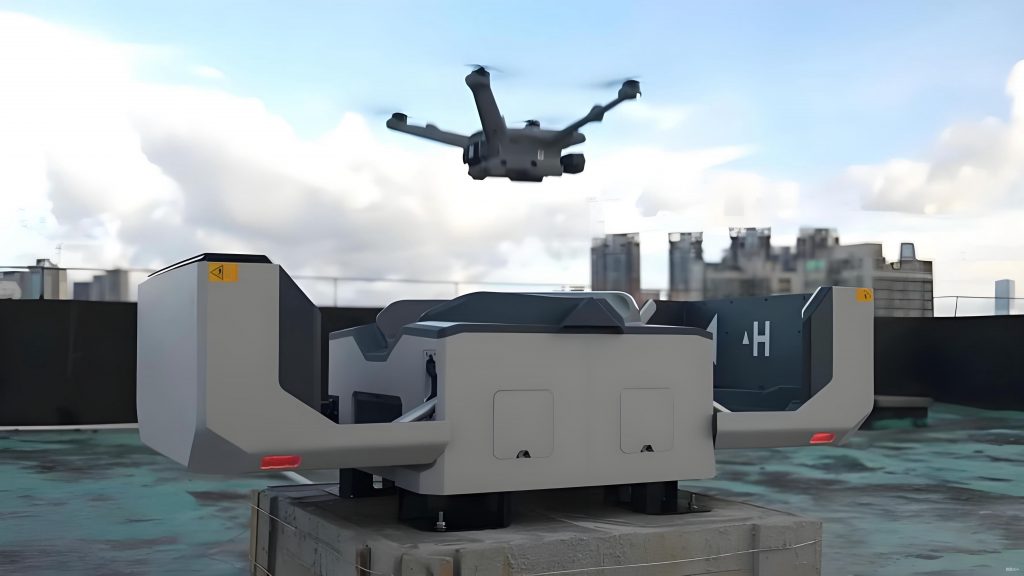
In urban skies, logistics drones are emerging as a key technological driver for the “low-altitude + logistics” sector, promoting the scale and intelligence of urban delivery systems. However, their practical application is fraught with multifaceted challenges. Operational risks stemming from system failures or human error can lead to cargo detachment or crashes, posing latent threats to ground personnel, infrastructure, and property.
I. Challenges Posed by Urban Civilian Drones
A. Safety Hazards
The integration of civilian drones into dense urban environments introduces several significant safety risks that demand rigorous mitigation strategies.
1. Collision Risk: The urban canyon effect, created by tall buildings, creates a complex navigational environment. Drones risk colliding with static obstacles like buildings, power lines, and trees. More critically, they pose a threat of collision with manned aircraft such as commercial airliners and helicopters, especially during takeoff and landing phases near airports. The risk probability can be conceptually modeled by considering traffic density and operational volume:
$$ P_{collision} \propto \rho_{UAV} \cdot \rho_{Manned} \cdot A_{overlap} \cdot t $$
Where \( \rho_{UAV} \) and \( \rho_{Manned} \) are the spatial densities of drones and manned aircraft, \( A_{overlap} \) is the shared airspace volume, and \( t \) is time. Incidents, such as a large fixed-wing drone crashing into a building during a test in Hubei province in December 2024, resulting in fire and casualties, underscore this tangible risk.
2. “Rogue Flight” Risk: The unauthorized operation of consumer-grade civilian drones, commonly termed “rogue flights,” frequently disrupts civil aviation. For instance, at a major airport in North China, consecutive days of rogue drone activity in September 2024 caused massive flight delays, cancellations, and diversions. Official data highlights the scale, with over 15,000 incidents of drone interference with civil aviation reported nationally in 2022 alone.
3. Public Security Risk: The capabilities of civilian drones present novel public security threats. They can be used to surveil sensitive areas like military installations or government compounds, potentially leading to breaches of state secrecy. High-resolution cameras can intrude on personal privacy. Furthermore, operational failures in crowded areas can cause physical injury, as evidenced by a July 2024 incident where a tourist was struck in the face by a consumer drone.
B. Regulatory Challenges
The widespread urban application of civilian drones is a phenomenon of the last decade. Consequently, mature and holistic management systems are rare both domestically and internationally. Gaps in existing regulatory frameworks make it difficult to effectively track and penalize rogue operations. A vast number of civilian drones exist in an unregistered “gray zone,” obscuring their provenance and user accountability. This reality forces regulatory bodies worldwide to urgently research and deliberate on governance models for urban civilian drones.
II. Current Management Status and Existing Problems
A. Responsible Entities: A Multi-Agency Dilemma
Current national regulations assign management responsibilities for urban civilian drones to a fragmented array of authorities. This includes the Civil Aviation Administration (CAA) and its regional bureaus, as well as various local government departments such as Public Security, Industry and Information Technology, Transport, and Market Supervision. This multi-headed management structure often suffers from incomplete information sharing channels, poor coordination between administrative links, and a lack of rapid response and joint decision-making mechanisms, leading to inefficiencies.
B. Management Object: The Classification Conundrum
National standards define an uncrewed aircraft as a powered vehicle carrying no pilot. Civilian drones are categorized by performance metrics into Micro, Light, Small, Medium, and Large types. Typically, Micro and Light categories encompass the vast majority of consumer-grade drones used for photography and recreation. Small, Medium, and Large drones are considered industrial-grade and are the primary drivers of the urban low-altitude economy, mainly serving transportation roles. However, the sheer diversity in design, take-off weight, range, endurance, power source, payload, and control modes makes accurate, single-dimension classification for management purposes highly challenging.
| Category | Typical Max Take-off Weight | Primary Use | Key Management Challenges |
|---|---|---|---|
| Micro | < 250g | Hobby, Toys | Massive quantity, easy concealment, low user regulatory awareness. |
| Light | 250g – 7kg | Photography, Videography | High performance (range, camera), significant privacy/security risk, prevalent rogue flights. |
| Small/Medium/Large | 7kg – 150kg+ | Logistics, Inspection, Surveying | Complex BVLOS operations, integration with manned air traffic, high kinetic energy risk. |
C. Legal and Regulatory Framework
The State Council’s “Interim Regulations on the Flight Management of Uncrewed Aircraft,” enacted on January 1, 2024, established the top-level legal framework. Supporting this, the “Safety Requirements for Civil Uncrewed Aircraft Systems” standard was implemented on June 1, 2024. Despite these steps, a significant gap persists between the number of drones in circulation and those compliantly registered. Reports indicate over 1.7 million registered civilian drones by mid-2024, a figure dwarfed by the 3.17 million units delivered in 2023 alone. The lack of stringent regulations directly governing point-of-sale mechanisms is a major contributor to this compliance gap.
| Document | Issuing Authority | Effective Date | Primary Scope |
|---|---|---|---|
| Interim Regulations on Flight Management of Uncrewed Aircraft | State Council | 2024-01-01 | Comprehensive flight rules, airspace access, operator responsibilities. |
| Safety Requirements for Civil Uncrewed Aircraft Systems | State Administration for Market Regulation | 2024-06-01 | Technical safety standards for micro, light, and small categories. |
D. Technical Means for Low-Altitude Control
Urban low-altitude surveillance employs a suite of technologies for detection, identification, and neutralization. These include radar, Radio Frequency Monitoring (RFM), electro-optical tracking, acoustic sensors, and AI-based visual recognition, aiming for comprehensive spatial awareness. Countermeasures involve directed RF jamming, GPS spoofing, and kinetic interception to force landing or return. Integrated management platforms are key to unifying these resources. Current global research focuses on airspace capacity assessment $$ C = \int_{A} \int_{h} \frac{V_{safe}}{S_{min}(h)} \, dh \, dA $$, route planning, conflict resolution, and urban wind field modeling. However, the transition from theory to practical, widely deployed low-altitude traffic management service platforms remains inadequate, perpetuating the issue of rogue flights.
| Function | Technology | Principle | Limitations |
|---|---|---|---|
| Detection | Radar, RF Scanning, Acoustic | Active/passive signal reflection or emission capture. | Clutter in urban environments, small RCS, silent drones. |
| Identification | Electro-Optical/Infrared, AI Vision | Visual signature analysis and classification. | Weather dependence, high computational load. |
| Neutralization | RF Jamming, Spoofing, Net Guns | Disrupt control/navigation signals or physical capture. | Collateral disruption, range limitations, safety of fall. |
E. Low-Altitude Air Traffic Management Personnel
The current Air Traffic Management (ATM) workforce in China is primarily structured to serve conventional civil aviation, comprising Air Traffic Controllers, Aeronautical Information Officers, Meteorologists, and Telecommunications personnel. As of 2020, the number of licensed controllers was approximately 15,000. Diverting these already strained resources to manage the high-volume, high-frequency, and highly dispersed operations of urban civilian drones is neither feasible nor safe. The distinct nature of civilian drone traffic—characterized by its scale, heterogeneity, and point-to-point randomness—demands a new breed of airspace manager. A critical shortage of personnel dedicated to low-altitude airspace management is becoming a bottleneck for the sustainable scaling of the low-altitude economy.
| Personnel Category | Licensed Count (2020) | Primary Service Focus | Relevance to Low-Altitude Civilian Drones |
|---|---|---|---|
| Air Traffic Controllers | ~15,008 | Manned aircraft separation, airport/terminal/area control. | Skills partially transferable but scale and operational paradigm differ vastly. |
| Aeronautical Information / Meteorology / Telecom | ~18,102 | Support services for manned aviation. | Need adapted services for dynamic, hyper-local UTM. |
| Dedicated Low-Altitude UTM Managers | N/A (Emerging) | Automated traffic flow management, contingency handling for drones. | Urgent need for new training pipelines and career paths. |
III. Recommendations for Strengthening Urban Civilian Drone Management
A. Vigorously Construct Low-Altitude Air Traffic Management Platforms
The focus of urban low-altitude security has evolved from simply countering rogue flights to establishing integrated “airborne urban management” systems that combine communication, sensing, and management. Pioneering examples, like the platform developed for Hangzhou, demonstrate the value of a unified digital foundation. Such platforms integrate service (flight application), regulatory (digital approval), and security (real-time monitoring) modules for stakeholders including operators, government agencies, and airspace authorities. A robust platform facilitates:
- Spatial Network Design: Dynamic zoning of 3D airspace corridors for different classes of civilian drones.
- Precise Trajectory Monitoring & Alerting: Real-time tracking and conflict prediction: $$ \Delta \vec{r}_{ij}(t) = \vec{r}_i(t) – \vec{r}_j(t); \quad \text{Alert if } |\Delta \vec{r}_{ij}(t)| < D_{min} $$.
- Resource Coordination: Optimizing the temporal and spatial use of urban airspace as a public resource.
B. Cultivate a Professional Low-Altitude Air Traffic Management Workforce
Given the unique “small, diverse, scattered, and covert” nature of urban civilian drone operations, relying on repurposed traditional air traffic controllers is insufficient. It is imperative to develop specialized training programs and career pathways for low-altitude UTM personnel. Curriculum should cover UTM system operations, automated conflict resolution algorithms, regulations specific to civilian drones, emergency response for drone incidents, and human-factor interactions with automated systems.
C. Explore and Advance Technical Means for Civilian Drone Air Traffic Management
Continuous technological innovation is vital. Future systems should leverage:
- Integrated Sensing & Communication: 5G-Advanced/6G networks with native sensing capabilities: $$ S(f, t) = \int_{V} \sigma(\vec{x}) e^{-j2\pi f \tau(\vec{x},t)} d\vec{x} $$, where \( S \) is the sensed signal, useful for tracking.
- AI and Big Data: Machine learning models for predictive traffic management, anomaly detection, and risk assessment.
- Digital Twins: Creating virtual replicas of urban airspace for simulation and real-time monitoring: $$ \frac{d\vec{X}_{virtual}(t)}{dt} = F(\vec{X}_{virtual}(t), \vec{U}(t), \vec{\Theta}) $$, synchronized with physical world data.
- Satellite-based Monitoring: Integrating BeiDou short-message services or other SATCOM for beyond-line-of-sight tracking and command.
Only through relentless exploration and integration of such technologies can a robust, scalable, and safe urban drone management system be realized.
D. Further Clarify the Responsible Entity for Urban Drone Management
While the Interim Regulations provide a legal foundation, the persistent issue of multi-agency management with unclear leadership hinders effective enforcement. To address this, it is recommended that cities establish specialized administrative and law enforcement departments dedicated to civilian drones. This single-window entity would be responsible for implementing national regulations locally, coordinating between different stakeholders (aviation, police, industry), handling permissions, conducting oversight, and enforcing penalties, thereby streamlining governance and improving accountability for all urban civilian drone activities.