
As a practitioner and observer deeply embedded in the technology sector, I have witnessed the remarkable journey of the civilian drone industry. This sector, a beacon of modern innovation, presents a fascinating case study in marketing evolution. The trajectory from technical obscurity to mainstream relevance underscores a critical lesson: marketing and brand building are not peripheral activities but core strategic functions for sustainable growth. The initial focus on pure technological prowess has gradually, and necessarily, given way to a more sophisticated, consumer-centric, and multi-channel marketing approach. This analysis delves into the development of marketing strategies within the civilian drone ecosystem, examining the phases of growth, the tactical shifts, and the underlying principles that now guide successful market engagement.
The civilian drone industry, as a distinct high-tech sector, truly entered public consciousness around 2015, a year often dubbed its “inflection point.” Prior to this, the landscape was characterized by small-scale operations, a strong hobbyist and research community overlap, and a distinct lack of mainstream media attention. The pioneers were often engineers and technologists, brilliant in product development but less focused on strategic communication and brand narrative. This led to a unique early-market marketing phenotype: insular, trade-show focused, and product-speak dominated. However, as the application spaces exploded—spanning aerial photography, precision agriculture, infrastructure inspection, surveying and mapping, public safety, and environmental monitoring—the market dynamics shifted irrevocably. The potential for economic impact grew exponentially, attracting more players, greater investment, and heightened consumer and enterprise interest. This expansion necessitated a parallel evolution in how companies marketed themselves and their civilian drones.
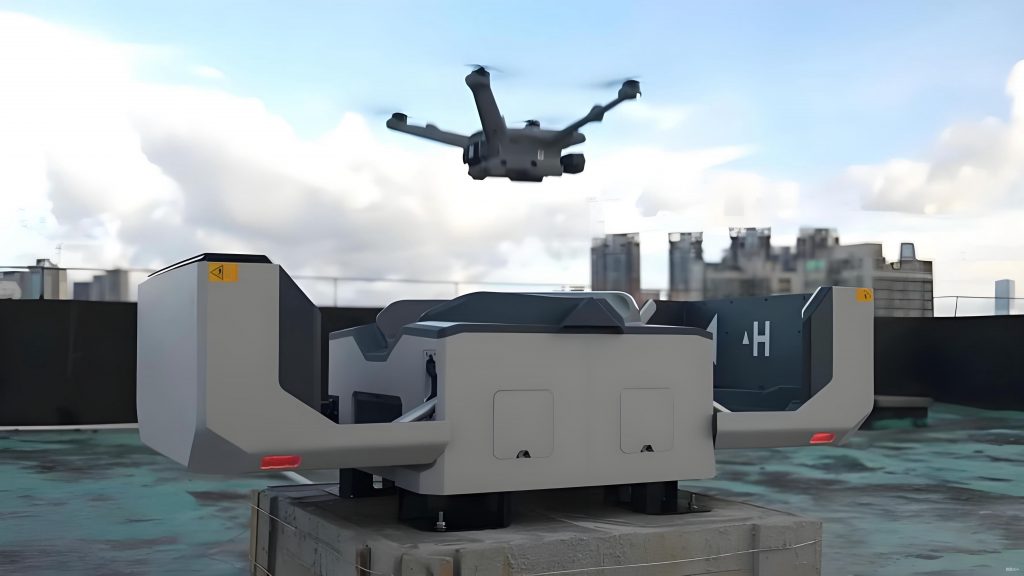
The growth metrics are compelling. From a modest base, the market has seen compound annual growth rates that are the envy of many traditional industries. We can model the projected market size \( M_t \) at time \( t \) with a simplified growth function, acknowledging that early-stage growth is often super-linear before moderating:
$$ M_t = M_0 \times (1 + r)^t $$
Where \( M_0 \) is the initial market size, \( r \) is the annual growth rate, and \( t \) is the number of years. For instance, if we take a base year with a market value of $2.33 billion and apply a compound annual growth rate (CAGR) of approximately 59% as some analysts have projected for certain periods, the figures become staggering within a few years. This potential, however, has been tempered by regulatory uncertainty and the initial “wild west” phase of development, where marketing efforts were as unregulated and experimental as the flight operations themselves.
The marketing journey for civilian drones can be broadly segmented into two overarching phases, each with distinct characteristics and dominant tactics. The transition between them marks the industry’s maturation from a niche technical field to a significant commercial vertical.
| Marketing Phase | Timeframe | Primary Focus | Key Channels | Relationship with Customer |
|---|---|---|---|---|
| Early Trade Show & Technical Validation | Pre-2015 to ~2016 | Product Specification, Peer Recognition | Industry-specific Expositions, Niche Forums | B2B & Enthusiast; Transactional |
| Integrated Brand Building & Solution Marketing | ~2017 – Present | Brand Equity, Application Solutions, User Community | Omni-channel: Targeted Tours, Owned Media, Events, Digital Ecosystem | B2B2C & Direct B2C; Relational & Collaborative |
The Era of Technical Showcasing and Niche Exposure
In the formative years, marketing for civilian drones was virtually synonymous with participation in trade exhibitions. Events like model fairs and early dedicated drone expos were the primary arenas for visibility. The objectives were simple: display the hardware, engage with a small circle of industry peers, distributors, and potential early adopters, and perhaps secure a few articles in the handful of nascent industry blogs or magazines. The content was highly technical, revolving around flight time, payload capacity, gimbal stability, and radio control specs. There was little narrative beyond the product’s immediate features. The audience was self-selected and already informed, so marketing did not need to educate or inspire a broader base; it merely needed to impress the technically literate. This period saw significant homogenization in marketing approach, with companies differentiating largely on spec sheets rather than brand story or customer experience.
The Shift to Strategic Brand and Omni-Channel Engagement
The turning point came as competition intensified and the customer base diversified beyond technophiles. Companies realized that superior technology alone was not a defensible long-term advantage in a rapidly iterating field. Building a brand—an emotional and reputational reservoir of trust, quality, and innovation—became paramount. This ushered in the current phase of integrated marketing, characterized by several sophisticated, often hybrid strategies.
1. Targeted On-Ground Demonstrations and Roadshows
Moving beyond the static booth, forward-thinking companies began taking their civilian drones directly to the point of application. This “on-ground” strategy is a powerful form of solution marketing, demonstrating value in real-world contexts rather than in convention halls.
- Application-Centric Tours: A survey and mapping drone company might launch a nationwide “technology exchange” tour, visiting major cities with strong geospatial industries. These sessions combine product demonstration with technical workshops, directly engaging with surveyors, engineers, and government officials. The goal is twofold: educate the market on a new capability (e.g., “control-point-free aerial surveying”) and gather critical frontline feedback for product iteration. The marketing ROI here is measured not just in immediate sales leads but in deep market penetration and ecosystem development.
- The “Mobile Service” Model: Particularly in the agricultural segment, some companies deployed “big篷车” (mobile van) programs. These rolling service centers travel tens of thousands of kilometers across farming heartlands. Their mission is multifunctional: provide direct technical support and training to farmers and operators, conduct live field demonstrations of agricultural civilian drones, and, most importantly, listen. For a company specializing in flight controllers, this direct feedback loop from the dusty, demanding conditions of a farm is invaluable R&D data, transforming marketing into a core input for product reliability and feature development.
- Efficiency-Driven Showcases: A company specializing in smart farming solutions might tour to demonstrate how its dedicated mapping drone can replace weeks of manual field surveying with a single automated flight. The marketing message shifts from “our drone has a 40-minute flight time” to “we can increase your operational planning efficiency by 100x.” This direct, quantified value proposition is far more compelling to an enterprise buyer.
2. Mastery of Owned Media and Digital Community Building
In the mobile internet age, a company’s digital presence is its global storefront and support desk. Successful civilian drone firms have moved far beyond static websites to dynamic, content-rich owned media channels.
The strategic operation of official social media accounts, particularly on platforms like WeChat (via Official Accounts), has become a cornerstone of marketing. These channels serve multiple purposes:
- Direct Communication: Announcing firmware updates, new product features, or safety notices.
- Value-Driven Content: Publishing tutorial videos, case studies, troubleshooting guides, and application spotlights. For example, a company focused on agricultural civilian drones might run a dedicated “Academy” account, weekly推送 content that helps pilots improve spraying techniques or understand crop disease patterns. This positions the brand as an expert and partner, not just a vendor.
- Community Facilitation: Creating and managing user groups (e.g., on WeChat or Discord) where pilots can share experiences, tips, and footage. Company representatives often participate, providing support and gathering insights. This fosters brand loyalty and turns customers into advocates.
The effectiveness of an owned media channel can be conceptualized by its ability to create and sustain engagement. We can think of a simplified metric for community health, \( C_h \):
$$ C_h = \frac{{(E_r \times A_p) + U_{gc}}}{T} $$
Where:
\( E_r \) = Engagement rate (likes, comments, shares),
\( A_p \) = Active participatory members,
\( U_{gc} \) = User-generated content promoted,
\( T \) = Churn rate of community members.
A high \( C_h \) score indicates a vibrant, self-sustaining community that amplifies marketing efforts organically.
3. Strategic Use of High-Impact Events and Sustained Brand Aesthetics
While digital tools are crucial, the power of physical events for launching flagship products or making major announcements remains undiminished. The modern approach, however, is more calculated. Product launch events are crafted as immersive experiences that reinforce brand identity. Consistency in visual language—color schemes, stage design, presenter style, and keynote narrative—is critical. A company known for consumer-grade civilian drones might maintain a minimalist, sleek, black-and-white aesthetic across all event materials and product packaging, creating instant visual recognition that associates those qualities (sleek, minimalist, premium) with the brand itself.
Participation in major industry expos has also evolved. It is no longer just about having a booth; it’s about creating an impactful brand zone within the expo, hosting press briefings, and sometimes even timing major product revelations to these events to maximize media coverage and industry buzz.
The Centrality of Brand and Customer-Centricity
Underpinning all these tactical shifts is a fundamental strategic realignment: the move from a product-centric to a customer-centric and brand-centric model. In a market where consumers and B2B clients are inundated with choices, brand equity serves as a critical heuristic for quality and reliability. The brand becomes a promise that reduces perceived risk for the buyer.
Furthermore, in the network economy, the customer has unprecedented power and access to information. Successful marketing for civilian drones now involves actively listening to and integrating user feedback into the product development cycle. This co-creative relationship is a powerful marketing tool in itself. When users see their suggestions reflected in software updates or new hardware features, their loyalty and advocacy intensify. The marketing function thus becomes a two-way conduit, not just a megaphone.
We can express the goal of modern marketing in this sector as maximizing the Brand-Customer Fit (BCF), which is a function of perceived value, community engagement, and solution alignment:
$$ BCF = \int_{0}^{t} \left( PV(s) + \alpha CE(s) + \beta SA(s) \right) ds $$
Where:
\( PV(s) \) = Perceived Value of the brand and its products over time,
\( CE(s) \) = Community Engagement strength,
\( SA(s) \) = Alignment of solutions with evolving customer needs,
\( \alpha, \beta \) = Weighting coefficients for engagement and solution fit relative to core value.
Marketing strategies are the levers used to optimize this integral over the customer lifecycle.
| Marketing Strategy Pillar | Traditional Approach | Modern, Evolved Approach | Key Performance Indicator Shift |
|---|---|---|---|
| Customer Dialogue | One-way broadcast of specifications | Two-way conversation; feedback integrated into R&D | From impression count to customer lifetime value & net promoter score |
| Channel Focus | Trade shows, limited print media | Omni-channel: Targeted tours, owned digital media, events, search/SEO, community platforms | From cost-per-lead at event to integrated ROI across channel mix |
| Message Core | What the product IS (features) | What the user can DO (solutions, outcomes, experiences) | From technical specification comparisons to share of narrative in application sector |
| Brand Investment | Minimal, often an afterthought | Strategic priority; consistency in aesthetics and narrative across all touchpoints | From simple logo recognition to measured brand affinity and equity |
Future Trajectories and Enduring Challenges
The marketing evolution of the civilian drone industry is ongoing. We are likely to see further deepening in several areas:
- Hyper-Segmentation and Precision Marketing: As applications diverge (e.g., cinematic, agricultural, industrial inspection), marketing will become even more tailored. The content, channels, and value propositions for a Hollywood cinematographer will share almost nothing with those for a utility company manager, even if the core technology is related.
- Data-Driven Marketing and Services: The data collected by civilian drones themselves will fuel new service-based marketing. Companies will not just sell the drone but market the insights derived from its flights (e.g., crop health analytics, infrastructure degradation models).
- Regulatory Narrative: As airspace integration advances, a key part of corporate marketing will involve shaping and communicating around safety, compliance, and responsible use, building trust with regulators and the public.
The challenges remain significant. Regulatory fragmentation, public perception around privacy and safety, and the need for continuous technological education of new market segments are all hurdles that marketing must help overcome. The industry’s path from technical showcase to integrated brand-building reflects a broader maturation. The most successful players in the civilian drone market will be those who understand that their marketing must be as innovative, responsive, and value-creating as their aircraft. It is no longer about simply selling a flying machine; it is about championing a solution, nurturing a community, and stewarding a brand that stands for trust and transformation in the skies.