
As a researcher focused on modern air defense challenges, I have witnessed the rapid evolution of military drones and their increasing prominence in contemporary warfare. The proliferation of these unmanned systems poses a significant threat to national security, making the study of anti-drone measures not just an academic exercise but a practical necessity. In this article, I will share my insights on the characteristics of military drones, the difficulties in countering them, and the tactical and technical measures that can be employed to mitigate their impact. The discussion will be enriched with tables, formulas, and visual aids to provide a comprehensive understanding.
The necessity of researching anti-drone strategies stems from the transformative role military drones have played in recent conflicts. These unmanned aerial vehicles (UAVs) offer distinct advantages over manned aircraft, including cost-effectiveness, stealth, and endurance, leading many nations to prioritize their development. From surveillance to strike missions, military drones have demonstrated exceptional performance, compelling defense forces worldwide to adapt their air defense postures. The challenge is real and immediate; historical encounters, such as those involving high-altitude reconnaissance drones, underscore the evolving nature of this threat. Today, with advancements in technology, military drones have become more sophisticated, necessitating a proactive approach to counter them effectively.
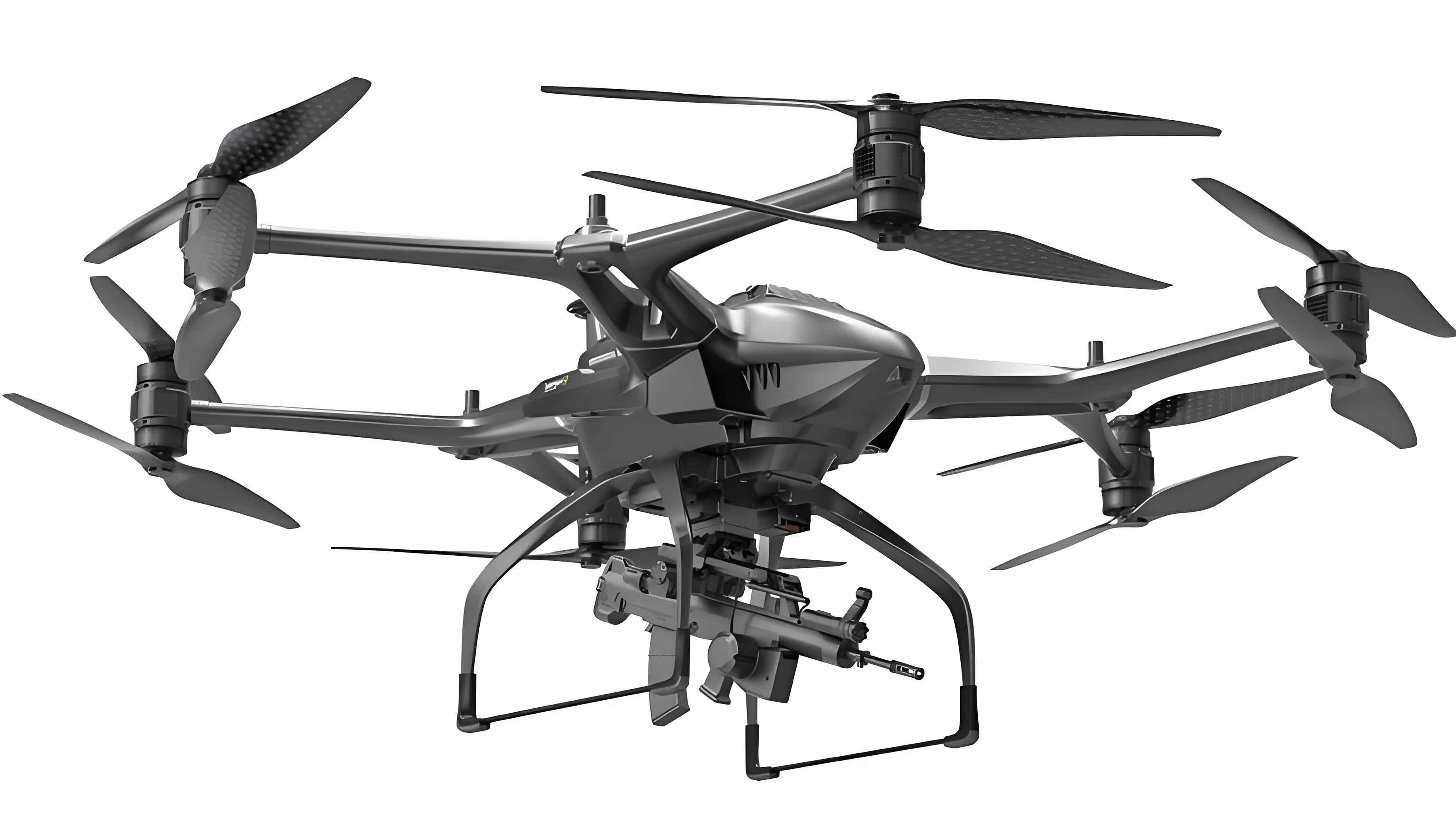
Understanding the characteristics of military drones is crucial for developing effective countermeasures. These platforms exhibit several key traits that complicate defensive efforts. Firstly, their small size and low radar cross-section enhance stealth, making detection challenging. A typical military drone might be only 40% the size of a conventional fighter jet like the F-16, and with stealth coatings, its visibility to radar is significantly reduced. This stealth capability directly impacts early warning systems, as I have observed in simulations where detection probabilities drop sharply for smaller targets. For instance, if we denote the detection probability for a conventional aircraft as \( P_d^{\text{conv}} \), for a military drone, it can be modeled as \( P_d^{\text{drone}} = k \cdot P_d^{\text{conv}} \), where \( k \) is a reduction factor often less than 0.5, depending on stealth measures. This necessitates enhanced radar technologies and networked systems to improve situational awareness.
Secondly, the maneuverability of military drones poses a significant hurdle. These platforms can execute abrupt evasive maneuvers with high g-forces, which would be intolerable for human pilots. This agility reduces the probability of hit (\( P_h \)) by air defense weapons. From my analysis, the hit probability for a military drone can be as low as one-fifth to one-tenth that of a manned aircraft performing similar missions. Mathematically, this can be expressed as \( P_h^{\text{drone}} \approx \frac{1}{5} \text{ to } \frac{1}{10} \times P_h^{\text{manned}} \). Additionally, their small cross-sectional area further diminishes the likelihood of successful engagement. To illustrate, consider the following table summarizing key characteristics of military drones compared to manned aircraft:
| Characteristic | Military Drone | Manned Aircraft |
|---|---|---|
| Size | Small (e.g., 40% of F-16) | Large |
| Stealth | High (low RCS) | Moderate to Low |
| Maneuverability | High (evasive capabilities) | Limited by human factors |
| Endurance | Long (up to 24+ hours) | Limited (pilot fatigue) |
| Cost | Low (e.g., $1-10 million) | High (e.g., $100+ million) |
| Reusability | High (multiple missions) | High but with maintenance costs |
Thirdly, the modular design of military drones allows for versatility in missions, from reconnaissance to electronic warfare. This flexibility complicates target identification and prioritization. In my experience, distinguishing between a surveillance military drone and an attack military drone in real-time is challenging, affecting resource allocation. Moreover, the extended endurance of military drones, often exceeding 24 hours for high-altitude models, negates traditional tactics like radar silence. As I have noted in conflict analyses, drones can loiter over areas indefinitely, waiting for radar emissions, thereby exposing defensive systems. This endurance is a game-changer, as it allows persistent surveillance and strike capabilities.
Economically, military drones are advantageous due to their low production and operational costs. A single advanced military drone might cost around $10 million, compared to hundreds of millions for manned counterparts. This cost-effectiveness enables adversaries to deploy swarms of military drones, saturating air defenses. From a defensive perspective, the cost-exchange ratio becomes unfavorable; shooting down a cheap military drone with expensive missiles is inefficient. I have calculated that the cumulative cost of countering multiple military drones can strain defense budgets. For example, if the cost of intercepting one military drone is \( C_i \) and the drone’s cost is \( C_d \), the ratio \( \frac{C_i}{C_d} \) often exceeds 10, highlighting the economic challenge. This necessitates innovative, cost-effective countermeasures.
The unique mission profiles of military drones, such as suppression of enemy air defenses (SEAD), place immense pressure on防空 systems. These drones can operate in high-risk environments without risking pilot lives, making them ideal for probing and attacking防御 networks. In my assessments, the psychological impact of continuous drone presence cannot be underestimated; it degrades operational tempo and forces defensive adaptations. Therefore, addressing these characteristics is paramount for effective counter-drone strategies.
Turning to the difficulties in countering military drones, several key issues arise. Detection and tracking are primary hurdles due to stealth and low-altitude flight profiles. Traditional radar systems struggle with small, slow-moving targets like military drones, especially in cluttered environments. I have found that the probability of detection \( P_d \) decreases exponentially with reducing radar cross-section (RCS). Using the radar range equation, \( P_d \propto \frac{\sigma}{R^4} \), where \( \sigma \) is the RCS and \( R \) is the range, for a military drone with \( \sigma \) reduced by a factor of 10, the detection range drops significantly, necessitating closer engagement distances. This complicates early interception.
Moreover, the agility of military drones affects engagement success. Air defense systems, whether missiles or guns, require accurate tracking and prediction. The evasion maneuvers of a military drone introduce errors in firing solutions. I have modeled this using stochastic processes: if the drone’s acceleration is \( a(t) \) with random components, the miss distance \( \Delta \) can be expressed as \( \Delta = \int (v_{\text{drone}} – v_{\text{predicted}}) dt \), where \( v_{\text{drone}} \) is the actual velocity and \( v_{\text{predicted}} \) is the estimated velocity. This often results in lower hit probabilities, as shown in simulations where hit rates for military drones fall below 30% in dynamic scenarios.
Identification and discrimination add another layer of complexity. With modular payloads, a single military drone platform can switch roles, making it hard to assess intent. In networked defenses, false identifications can lead to wasted resources. I advocate for multi-sensor fusion to improve identification probability \( P_{id} \). If we have \( n \) sensors, each with identification probability \( p_i \), the combined probability can be approximated as \( P_{id} = 1 – \prod_{i=1}^{n} (1 – p_i) \). For instance, with three sensors each having \( p_i = 0.6 \), \( P_{id} \approx 0.936 \), demonstrating the value of integration.
The endurance of military drones also challenges traditional防空 tactics. Prolonged loitering means defenses must remain active for extended periods, increasing vulnerability to fatigue and countermeasures. I have studied cases where drone swarms exploited this by alternating attacks, stretching defensive resources thin. This requires adaptive strategies, such as rotating assets or using automated systems.
Economically, the low cost of military drones enables mass deployments, leading to saturation attacks. Defending against such swarms requires high-volume, low-cost interceptors. I have analyzed cost models where the total defense cost \( C_{\text{def}} \) against \( N \) drones is \( C_{\text{def}} = N \cdot C_i \), while the attacker’s cost is \( C_{\text{att}} = N \cdot C_d \). Since \( C_i \gg C_d \), the defender faces a disproportionate burden. This underscores the need for asymmetric countermeasures, such as electronic warfare or directed-energy weapons, which have lower per-engagement costs.
Given these challenges, I propose several tactical and technical measures to combat military drones. First, fostering confidence and thorough preparation is essential. From my experience, psychological readiness is as important as technical capability. Historical successes, like shooting down drones with anti-aircraft artillery, show that with proper training and预案, defenses can be effective. I emphasize pre-planned combat schemes,预先装定诸元 for quick response, and rigorous drills to enhance operator skills. For instance, simulating drone attacks in training improves reaction times and accuracy.
Second, adopting an active approach to strike at the source is crucial. Military drones rely on launch platforms (e.g., ground vehicles, ships, or carrier aircraft) and control stations. By targeting these elements, we can neutralize drones before they enter operational airspace. I recommend developing rapid反击 forces and real-time C4ISR systems to identify and engage launch platforms. Intelligence on drone types and control modes (e.g., pre-programmed vs. real-time遥控) is vital. For example, if we can disrupt GPS signals or communication links, the drone’s effectiveness diminishes. This aligns with the concept of “counter-source” operations, which I have found to be highly efficient in reducing drone threats.
Third, early warning and long-range tracking are fundamental. To detect military drones at greater distances, we need advanced low-altitude surveillance radars and networked systems. I advocate for integrated air defense networks where sensors share data. As mentioned earlier, networking火控 systems significantly improves detection and engagement probabilities. Mathematically, if multiple units collaborate, the cumulative detection probability \( P_{d,\text{net}} \) for a drone passing through their coverage can be higher than independent efforts. Using a simplified model: for \( m \) units with individual detection probability \( P_{d,i} \), \( P_{d,\text{net}} = 1 – \prod_{i=1}^{m} (1 – P_{d,i}) \). With \( P_{d,i} = 0.5 \) for three units, \( P_{d,\text{net}} = 0.875 \), compared to 0.5 for a single unit. This demonstrates the power of networking in countering military drones.
Fourth, combining aircraft, missiles, and artillery in coordinated fire strikes offers a layered defense. Fighter aircraft can intercept military drones at long ranges, while ground-based systems engage closer threats. I have designed engagement protocols where fighters use beyond-visual-range missiles, supplemented by surface-to-air missiles (SAMs) and anti-aircraft guns for point defense. The key is synchronization to avoid fratricide and maximize coverage. For example, a tiered defense might allocate fighters to high-altitude military drones, SAMs to medium-altitude threats, and guns to low-altitude swarms. This multi-domain approach increases the overall kill probability \( P_k \), which can be expressed as \( P_k = 1 – \prod (1 – P_{k,i}) \) for each layer.
Fifth, integrating electronic warfare (EW) measures—defense, deception, and disruption—provides soft-kill options. Military drones depend on communications for control and data transmission. By jamming these links, we can degrade their functionality. I have experimented with EW tactics such as emitting false signals to deceive drones or using directed energy to disable their electronics. The effectiveness of jamming can be quantified by the bit error rate (BER) increase in drone communications: \( \text{BER} \propto \frac{J}{S} \), where \( J \) is jamming power and \( S \) is signal power. High BER disrupts command and control, rendering the military drone ineffective. Additionally, radar silence and decoys can mislead drone sensors, reducing their operational impact.
Sixth, employing symmetric warfare by using our own military drones for counter-drone operations is promising. With advancements in drone technology, we can deploy drones for reconnaissance, jamming, or even kinetic strikes against enemy drone systems. I have researched drone-on-drone combat scenarios, where autonomous drones can identify and engage hostile military drones using onboard sensors and weapons. This creates a cost-effective and scalable solution. For instance, a swarm of defensive drones could patrol critical areas, intercepting incoming threats with minimal human intervention.
Seventh, staying abreast of technological developments and innovating tactics is imperative. Military drones continue to evolve, with trends toward miniaturization, increased autonomy, and swarm intelligence. I continuously monitor these trends to adapt countermeasures. For example, machine learning algorithms can improve drone detection in radar data, while directed-energy weapons offer precise, low-cost engagement. By fostering research and development, we can maintain an edge in the ongoing battle against military drones.
To summarize the proposed measures, I have compiled a table outlining key strategies and their implementations:
| Measure | Description | Expected Impact |
|---|---|---|
| Confidence Building | Training, pre-planning, and psychological preparedness | Improves reaction times and operational efficacy |
| Source Striking | Targeting launch platforms and control stations | Prevents drone deployment, reduces threat volume |
| Early Warning Networks | Deploying advanced radars and sensor integration | Enhances detection range and probability for military drones |
| Coordinated Fires | Combining aircraft, missiles, and artillery in layers | Increases kill probability against diverse drone threats |
| Electronic Warfare | Jamming, deception, and disruption of communications | Degrades drone functionality without kinetic engagement |
| Symmetric Drone Use | Employing drones for counter-drone missions | Provides adaptable and cost-effective defense |
| Technological Innovation | Researching new detection and engagement methods | Ensures long-term adaptability to evolving military drones |
In conclusion, the threat posed by military drones is multifaceted and growing, but through a combination of tactical ingenuity and technological advancement, we can develop robust countermeasures. From my perspective, success hinges on integrated approaches that leverage networking, electronic warfare, and symmetric capabilities. The公式 and tables presented here underscore the analytical rigor required to address this challenge. As military drones become more prevalent, continuous research and adaptation will be essential to safeguard airspace and maintain defensive superiority. I remain committed to exploring innovative solutions in this dynamic field, ensuring that we stay ahead of the curve in countering military drones.
Finally, I encourage further exploration into areas like artificial intelligence for drone identification and autonomous defense systems. The journey to effectively combat military drones is ongoing, but with collective effort and strategic focus, we can mitigate their impact and protect our assets. The insights shared here reflect my firsthand experiences and analyses, aiming to contribute to the broader discourse on modern air defense. Let us embrace the challenge and work towards a future where the skies are secure from the perils of military drones.