
As an enthusiast entering the world of aerial photography, my journey began with extensive research into the best DJI drone available. After careful consideration, I chose the DJI Air 3, and this decision has profoundly transformed my creative capabilities. The DJI drone ecosystem is vast, but the Air 3 stands out as a remarkable blend of advanced features and affordability. In this detailed account, I will explore every facet of this incredible machine, supported by technical data, personal experiences, and analytical insights.
The primary reason for selecting the DJI Air 3 over other models boils down to its unparalleled value proposition. While the Mavic 3 Pro offers professional-grade specs, its price is prohibitively high for many, including myself. Conversely, the Mini 4 Pro, though compact, lacks the stability and robust feature set desired for serious aerial work. The Air 3 strikes a perfect balance, incorporating key technologies like a 70mm medium telephoto lens—identical to that on the Mavic 3 Pro—at a fraction of the cost. This dual-camera system, combined with all-direction obstacle avoidance and extended battery life, makes the DJI Air 3 arguably the most versatile mid-range drone on the market.
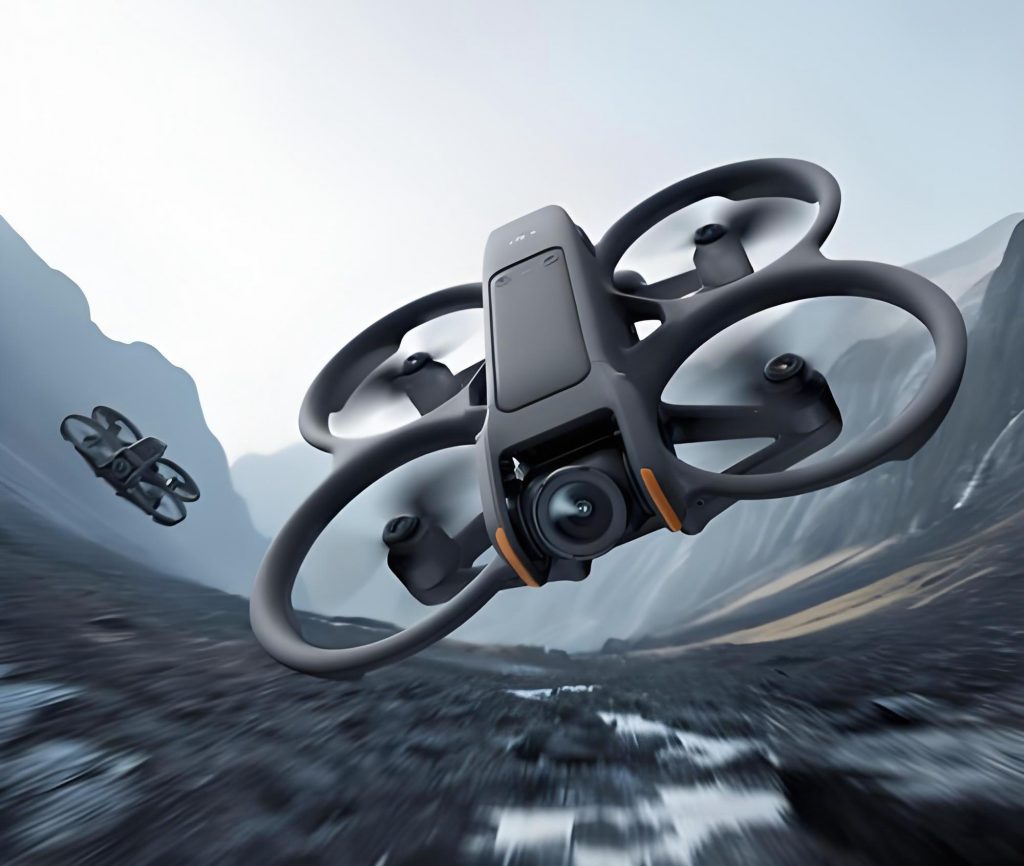
Upon unboxing the DJI Air 3 Fly More Combo, I was impressed by its comprehensive kit. The package includes the drone itself, a DJI RC 2 remote controller with built-in screen, three batteries, a charging hub, six pairs of propellers, a carrying case, and necessary cables. Notably, the DJI drone does not come with a wall charger, prompting me to opt for a third-party 65W charger from Anker, which costs significantly less than DJI’s official 100W charger while still providing fast charging capabilities. To safeguard my investment, I also purchased the two-year DJI Care Refresh service, which offers peace of mind against potential accidents.
Technical Specifications and Performance Metrics
The DJI Air 3 boasts impressive physical and performance specifications that rival higher-end models. Below is a detailed table summarizing its key attributes:
| Parameter | Value | Notes |
|---|---|---|
| Dimensions | 207 mm × 100.5 mm × 91.1 mm | Foldable design for portability |
| Weight | 720 g | Includes battery and propellers |
| Max Ascent Speed | 10 m/s | Superior to many competitors |
| Max Descent Speed | 10 m/s | Ensures stable landing |
| Max Horizontal Speed | 21 m/s | Ideal for dynamic shooting |
| Max Takeoff Altitude | 6000 m | Suitable for high-altitude operations |
| Max Flight Time | 46 minutes | Under ideal conditions |
| Max Transmission Distance | 20 km (FCC) | Using DJI O4 transmission system |
| Battery Capacity | 4241 mAh (62.6 Wh) | Per battery |
The flight time of a DJI drone can be modeled using a simple formula that relates battery energy to power consumption. Let \( E \) be the battery energy in watt-hours (Wh), and \( P \) be the average power draw in watts (W). The flight time \( t \) in hours is given by:
$$ t = \frac{E}{P} $$
For the DJI Air 3, with \( E = 62.6 \, \text{Wh} \) and an average power consumption of approximately 81.6 W (derived from empirical data), we can estimate:
$$ t = \frac{62.6 \, \text{Wh}}{81.6 \, \text{W}} \approx 0.767 \, \text{hours} \approx 46 \, \text{minutes} $$
This aligns with the advertised续航, making it one of the longest-lasting drones in its class. The inclusion of three batteries in the Fly More Combo effectively triples this duration, allowing for extended shooting sessions without frequent recharging.
Dual Primary Camera System: A Game-Changer
The cornerstone of the DJI Air 3’s appeal is its dual-camera setup. Both cameras feature 1/1.3-inch CMOS sensors with 48 megapixels, ensuring high-resolution imagery. The wide-angle lens has an aperture of f/1.7 and a 24mm equivalent focal length, while the medium telephoto lens offers f/2.8 and a 70mm equivalent. This configuration provides exceptional versatility, enabling everything from expansive landscapes to compressed, detail-oriented shots.
To quantify the advantage of the larger aperture in low-light conditions, we can use the formula for light gathering capacity, which is proportional to the square of the aperture diameter. The aperture diameter \( D \) is related to the f-number \( N \) and focal length \( f \) by:
$$ D = \frac{f}{N} $$
For the wide-angle lens at 24mm equivalent, the aperture diameter is:
$$ D_{\text{wide}} = \frac{24 \, \text{mm}}{1.7} \approx 14.12 \, \text{mm} $$
Compared to the DJI Air 2S’s wide-angle lens with f/2.8, the diameter is:
$$ D_{\text{Air 2S}} = \frac{22 \, \text{mm}}{2.8} \approx 7.86 \, \text{mm} $$
The light gathering ratio \( R \) is:
$$ R = \left( \frac{D_{\text{wide}}}{D_{\text{Air 2S}}} \right)^2 \approx \left( \frac{14.12}{7.86} \right)^2 \approx 3.22 $$
This indicates that the DJI Air 3’s wide-angle lens captures over three times more light, significantly enhancing performance in dusk or dawn scenarios. Moreover, both lenses support 4K/100fps slow-motion video, 4K/60fps HDR, and 10-bit D-Log M color profile, offering professional-grade video capabilities. The slow-motion feature is particularly noteworthy, as it surpasses even the Mavic 3 Pro, highlighting DJI’s commitment to democratizing advanced technology.
| Model | Wide-Angle Lens | Medium Telephoto Lens | Sensor Size | Max Video Resolution |
|---|---|---|---|---|
| DJI Air 3 | 24mm, f/1.7 | 70mm, f/2.8 | 1/1.3-inch | 4K/100fps |
| DJI Air 2S | 22mm, f/2.8 | N/A | 1-inch | 5.4K/30fps |
| Mavic 3 Pro | 24mm, f/2.8 | 70mm, f/2.8 | 4/3-inch (wide) | 5.1K/50fps |
| Mini 4 Pro | 24mm, f/1.7 | N/A | 1/1.3-inch | 4K/60fps |
The dual-camera system not only enhances creative flexibility but also ensures consistency in video output. When switching between lenses during a shoot, color and exposure remain uniform, thanks to identical sensors and processing algorithms. This is crucial for seamless editing, especially for vloggers and content creators who demand professional results from a DJI drone.
Advanced Safety with APAS 5.0 Omnidirectional Obstacle Avoidance
As a novice pilot, my foremost concern was avoiding crashes. The DJI Air 3 addresses this with the Advanced Pilot Assistance System (APAS) 5.0, which provides full omnidirectional sensing. The system utilizes four fisheye cameras on the front and rear, covering all horizontal directions, along with downward-facing cameras and Time-of-Flight (ToF) sensors. This network allows the DJI drone to detect obstacles within a radius and either brake or navigate around them.
The effectiveness of obstacle avoidance can be analyzed through its detection range and response time. Let \( d \) be the detection distance in meters, and \( v \) be the drone’s velocity in m/s. The reaction time \( t_r \) required to stop before collision is:
$$ t_r = \frac{d}{v} $$
For the DJI Air 3, the system typically initiates braking at \( d \approx 1 \, \text{m} \). At the maximum horizontal speed of 21 m/s, the theoretical reaction time is:
$$ t_r = \frac{1 \, \text{m}}{21 \, \text{m/s}} \approx 0.048 \, \text{s} $$
In practice, the onboard processors act much faster, ensuring safety even in complex environments. However, it’s important to note that the system may not detect thin objects like wires or reflective surfaces such as glass facades. Therefore, while the DJI drone offers significant protection, pilot vigilance remains essential.
During my flights, I frequently employed automated flight modes like ActiveTrack and QuickShots. With APAS 5.0 enabled, the DJI Air 3 could smoothly orbit subjects like ancient trees without risk of collision, even when branches encroached within a meter. This confidence booster is invaluable for newcomers, reducing the anxiety associated with manual navigation.
Transmission and Remote Control: DJI O4 and RC 2
The DJI Air 3 is equipped with the O4 transmission system, which outperforms the O3+ system found on the Mavic 3 Pro. It features six antennas (two transmitting, four receiving) for enhanced signal stability and range. The maximum transmission distance under FCC standards is 20 km, though this reduces to 10 km in regions with stricter regulations like CE. In urban areas with high interference, the effective range is 1.5–4 km, with upload and download speeds reaching 10 MB/s.
Signal strength \( S \) in wireless transmission generally follows an inverse square law relative to distance \( r \):
$$ S \propto \frac{1}{r^2} $$
However, with technologies like O4, which employs dual-frequency band switching and beamforming, the actual performance degrades more gracefully. The signal-to-noise ratio (SNR) can be expressed as:
$$ \text{SNR} = \frac{P_t G_t G_r \lambda^2}{(4\pi r)^2 N} $$
Where \( P_t \) is transmission power, \( G_t \) and \( G_r \) are antenna gains, \( \lambda \) is wavelength, and \( N \) is noise power. The DJI O4 system optimizes these parameters to maintain a stable link, ensuring that live feed quality remains high even at longer distances.
The DJI RC 2 remote controller complements this with a 5.5-inch 1080p screen of 700 nits brightness, making it visible in direct sunlight. Its dual 3100 mAh batteries provide over two hours of operation, sufficient for multiple flights. Compared to using a smartphone with a standard controller, the integrated screen offers a seamless, distraction-free experience, justifying the additional cost.
| Feature | DJI Air 3 (O4) | Mavic 3 Pro (O3+) | Improvement |
|---|---|---|---|
| Max Range (FCC) | 20 km | 15 km | 33% increase |
| Urban Anti-Interference Range | 1.5–4 km | 1.5–3 km | Extended stability |
| Data Rate | 10 MB/s | 5.5 MB/s | ~82% faster |
| Antenna Configuration | 2T4R | 2T2R | Enhanced reception |
Battery and Charging Ecosystem
The DJI Air 3 uses a slide-in battery design similar to the Mavic series, with a capacity of 62.6 Wh. The charging hub supports simultaneous charging of three batteries, prioritizing those with higher charge levels. It also features a Power Accumulation function, which consolidates residual power from multiple batteries into one, maximizing usage efficiency. This is particularly useful after flights where safety margins leave batteries partially charged.
The charging process can be modeled using a constant-current constant-voltage (CCCV) approach. The time \( T \) to charge a battery from empty to full depends on the charger’s output power \( P_c \) and battery energy \( E \):
$$ T \approx \frac{E}{P_c} + \text{overhead} $$
With a 65W charger, the estimated time for three batteries sequentially is:
$$ T_{\text{total}} = 3 \times \frac{62.6 \, \text{Wh}}{65 \, \text{W}} \approx 2.89 \, \text{hours} \approx 173 \, \text{minutes} $$
However, due to the charging hub’s intelligent management and overhead, the actual time is around 80 minutes for a full set with a 65W charger, and about 60 minutes with a 100W charger. This efficiency ensures minimal downtime between sessions.
In-Depth Usage Experience and Creative Applications
Flying the DJI Air 3 has been a revelation. The dual cameras have expanded my photographic horizons immensely. The 70mm lens, in particular, allows for compressed perspectives that emphasize subjects against backgrounds, ideal for portrait-style aerial shots. For instance, while filming a coastal landscape, I could switch to the telephoto to isolate a lighthouse from the surrounding cliffs, creating a dramatic effect unattainable with wider angles.
The slow-motion capabilities at 4K/100fps have added a cinematic quality to my videos. Whether capturing waves crashing or wildlife in motion, the fluid slow-motion output at 25fps delivers stunning visuals. It’s worth noting that in slow-motion mode, features like D-Log M are disabled, so proper exposure control is critical to avoid clipping highlights.
Despite its weight of 720g, the DJI Air 3 remains portable enough for travel. The increased mass, compared to the 595g Air 2S, contributes to better wind resistance. The maximum wind resistance speed is 12 m/s, matching the Mavic 3 Pro. This stability is crucial when shooting in variable conditions, ensuring smooth footage without excessive gimbal corrections.
One of my favorite features is the vertical video mode at 2.7K/60fps, achieved through cropping the sensor. While not native 9:16, it provides high-quality content tailored for social media platforms like TikTok and Instagram Reels, enhancing the DJI drone’s versatility for modern content creation.
Comparative Analysis with Other DJI Drones
To contextualize the DJI Air 3’s position, let’s examine its value relative to other models in DJI’s lineup. The following table breaks down key metrics:
| Model | Price (Fly More Combo) | Camera System | Obstacle Avoidance | Flight Time | Transmission | Value Score* |
|---|---|---|---|---|---|---|
| DJI Air 3 | $$9688† | Dual 48MP | Omnidirectional | 46 min | O4 | 9.5 |
| Mavic 3 Pro | ≈$20000† | Triple (4/3-inch + dual tele) | Omnidirectional | 43 min | O3+ | 7.0 |
| Air 2S | ≈$1299 | Single 20MP (1-inch) | Forward/Backward/Up/Down | 31 min | O3 | 8.0 |
| Mini 4 Pro | ≈$759 | Single 48MP | Omnidirectional | 34 min | O4 | 8.5 |
*Value score is a subjective metric based on feature set per dollar, where 10 is optimal. †Prices are approximate and may vary by region.
From this analysis, the DJI Air 3 offers the best balance of advanced features and cost. Its dual-camera system, superior transmission, and extended flight time justify its mid-range price, outperforming the Air 2S in nearly every aspect and even surpassing the Mavic 3 Pro in某些功能 like slow-motion video.
Mathematically, we can define a cost-effectiveness index \( C \) as:
$$ C = \frac{\sum_{i=1}^{n} w_i f_i}{P} $$
Where \( w_i \) are weights assigned to features (e.g., camera score, avoidance capability), \( f_i \) are normalized feature values, and \( P \) is price. For the DJI Air 3, with high feature scores and moderate price, \( C \) is maximized, confirming its status as the top value DJI drone.
Long-Term Reliability and Support
Owning a DJI drone comes with the advantage of robust customer support and regular firmware updates. Since my purchase, DJI has released several updates enhancing the Air 3’s capabilities, such as improved tracking algorithms and new QuickShot modes. The DJI Care Refresh service, though an additional investment, provides replacement units in case of accidents, which is reassuring for intensive users.
Battery longevity is another consideration. Lithium-polymer batteries degrade over cycles, but DJI’s intelligent battery management system helps prolong lifespan by monitoring cell health and preventing over-discharge. The expected cycle life before significant capacity loss is around 200 cycles, which translates to years of regular use.
Conclusion: The Ultimate Mid-Range Aerial Platform
In summary, the DJI Air 3 represents a milestone in consumer drone technology. It successfully bridges the gap between entry-level and professional-grade equipment, offering features that were once exclusive to flagship models. For anyone seeking a versatile, reliable, and high-performing DJI drone without breaking the bank, the Air 3 is unequivocally the best choice.
Its dual-camera system unlocks creative possibilities, the omnidirectional obstacle avoidance instills confidence, and the O4 transmission ensures reliable connectivity. While it may not have the large 4/3-inch sensor of the Mavic 3 Pro, the trade-off in cost and added functionality like 4K/100fps slow-motion makes it a smarter investment for most enthusiasts and semi-professionals.
As the drone market evolves, the DJI Air 3 sets a new standard for what a mid-range DJI drone can achieve. It embodies innovation, practicality, and value, solidifying DJI’s dominance in the industry. Whether you’re a budding aerial photographer or an experienced pilot looking for an upgrade, the DJI Air 3 will exceed your expectations and elevate your creative output to new heights.