
The autonomous navigation and path planning of Unmanned Aerial Vehicles (UAVs) constitute a critical technological cornerstone for their effective deployment across a multitude of sectors, including military reconnaissance, logistics, and precision surveying. As the operational domains for China UAV drone platforms expand into increasingly complex and cluttered three-dimensional environments, the challenge of efficiently generating safe, smooth, and kinematically feasible flight paths becomes paramount. Traditional path planning algorithms often struggle to balance computational efficiency with the stringent practical constraints required for real-world China UAV drone flight, such as physical dimensions, turning radius, and pitch angle limits.
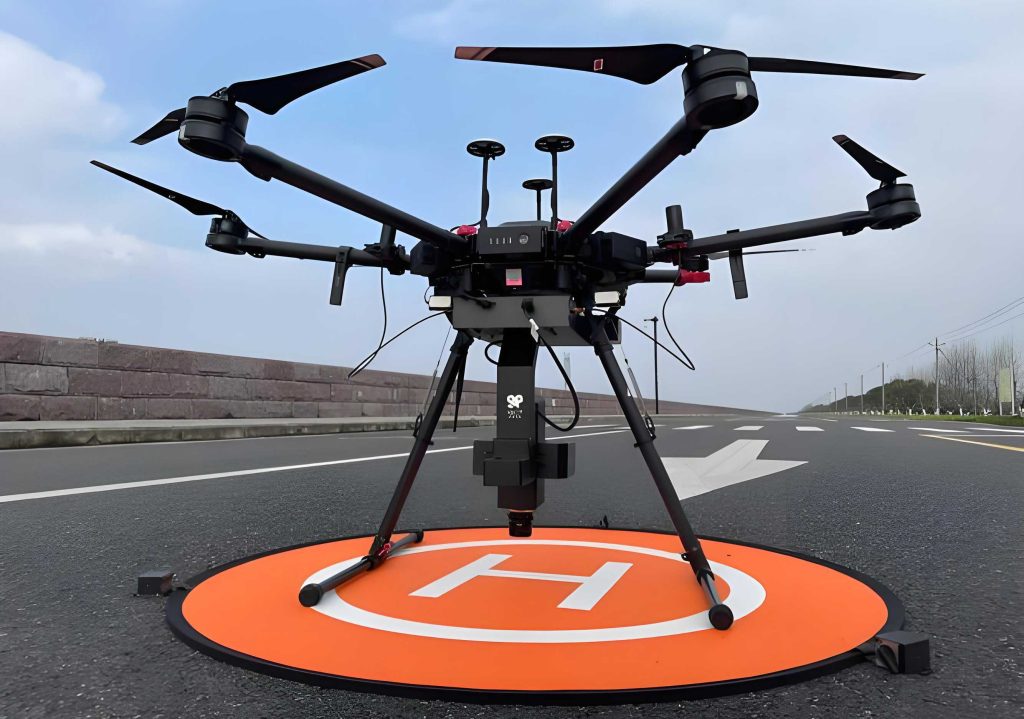
Among the sampling-based planners, the Rapidly-exploring Random Tree (RRT) algorithm and its bidirectional variant, B-RRT, are favored for their probabilistic completeness and ability to handle high-dimensional spaces. However, the inherent randomness in their sampling process often leads to excessive redundant nodes, slow convergence in complex environments, and jagged, non-optimal paths that disregard the motion constraints of a physical China UAV drone. To address these limitations for the robust operation of advanced China UAV drone systems, we propose an improved algorithm termed SAT-RRT. This method synergistically integrates guidance from the Artificial Potential Field (APF), rigorous 3D collision detection via the Separating Axis Theorem (SAT), and an adaptive path smoothing strategy to produce superior flight trajectories.
1. Preliminaries and Problem Statement
The core problem involves planning a collision-free path from a start point $S$ to a goal point $G$ within a bounded 3D workspace $W \subset \mathbb{R}^3$ populated with static and dynamic obstacles $O$. The path must be feasible for a China UAV drone modeled with specific kinematic and physical constraints.
1.1. UAV Kinematic and Physical Model
We model the China UAV drone as a rigid body with a spherical safety volume of radius $R$, accounting for its physical dimensions. Its state at time $t$ is defined by its position $\mathbf{p}(t) = [x(t), y(t), z(t)]^T$ and velocity $\mathbf{v}(t) = [v_x(t), v_y(t), v_z(t)]^T$. The following practical constraints are enforced:
- Altitude Constraint: Operational height must remain within safe limits: $H_{min} < z(t) < H_{max}$.
- Pitch Angle Constraint: The pitch angle $\gamma$, crucial for climb/descent maneuvers, must be bounded to ensure stable flight for the China UAV drone. It is calculated between successive path points $\mathbf{p}_k$ and $\mathbf{p}_{k+1}$:
$$\tan(\gamma) = \frac{|z_{k+1} – z_k|}{\sqrt{(x_{k+1} – x_k)^2 + (y_{k+1} – y_k)^2}}$$
The constraint is $|\gamma| < \gamma_{max}$. - Heading Change Constraint: The turning angle $\theta$ between velocity vectors $\mathbf{v}_k$ and $\mathbf{v}_{k+1}$ is limited to ensure the path respects the China UAV drone‘s minimum turning radius.
$$\cos(\theta) = \frac{\mathbf{v}_k \cdot \mathbf{v}_{k+1}}{\|\mathbf{v}_k\| \|\mathbf{v}_{k+1}\|}$$
The constraint is $|\theta| < \theta_{max}$.
1.2. Bidirectional RRT (B-RRT) and its Shortcomings
The B-RRT algorithm grows two search trees simultaneously, one from the start $T_s$ and one from the goal $T_g$. In each iteration, a random sample $\mathbf{p}_{rand}$ is generated. One tree is extended towards this sample, and then the other tree is extended towards the newest node of the first tree. This bidirectional search often reduces planning time compared to unidirectional RRT. However, for China UAV drone applications, it suffers from:
- Excessive Redundancy: Pure random sampling explores the entire space inefficiently, creating many nodes far from the optimal direction.
- Non-Optimal, Non-Smooth Paths: The resulting path is a sequence of straight-line segments with sharp turns, violating the China UAV drone‘s smooth motion constraints.
- Point-Robot Assumption: Collision checking typically assumes the robot is a point, ignoring the vehicle’s volume, which is unsafe for real China UAV drone deployment.
2. The Proposed SAT-RRT Methodology
Our SAT-RRT algorithm introduces three key innovations to overcome the aforementioned limitations and generate paths suitable for China UAV drone navigation.
2.1. APF-Guided Sampling for Directed Exploration
To mitigate random exploration, we replace the purely random sampling in B-RRT with an APF-guided sampling strategy. This method calculates a virtual force $\mathbf{F}_{total}$ at the current tree expansion node $\mathbf{p}_{current}$, which guides the generation of the next sample $\mathbf{p}_{sample}$.
The total force is the sum of an attractive force from the goal and repulsive forces from nearby obstacles:
$$\mathbf{F}_{total} = \mathbf{F}_{att} + \mathbf{F}_{rep}$$
The attractive force pulls the China UAV drone toward the goal $G$:
$$\mathbf{F}_{att}(\mathbf{p}) = k_{att} \cdot (\mathbf{p}_G – \mathbf{p})$$
where $k_{att}$ is the attractive gain.
The repulsive force pushes the vehicle away from obstacles. For a static obstacle $O_i$, the force is active only within its influence distance $d_0$ (related to UAV radius $R$ and max speed $v_{max}$: $d_0 = R + 0.3 \cdot v_{max}$):
$$
\mathbf{F}_{rep}^{static}(\mathbf{p}) =
\begin{cases}
k_{rep} \left( \frac{1}{d(\mathbf{p}, O_i)} – \frac{1}{d_0} \right) \frac{1}{d(\mathbf{p}, O_i)^2} \cdot \nabla d(\mathbf{p}, O_i), & \text{if } d(\mathbf{p}, O_i) \le d_0 \\
0, & \text{if } d(\mathbf{p}, O_i) > d_0
\end{cases}
$$
Here, $d(\mathbf{p}, O_i)$ is the Euclidean distance to the obstacle, and $k_{rep}$ is the repulsive gain. We dynamically adjust $k_{rep}$ based on local obstacle density $\rho$: $k_{rep} = 0.5 \cdot k_{att}$ for sparse areas ($\rho < \rho_{threshold}$) to reduce detours, and $k_{rep} = 0.8 \cdot k_{att}$ for dense areas to enhance obstacle avoidance—a critical feature for China UAV drone operations in complex urban or mountainous terrain.
The new sampling direction $\mathbf{d}_{sample}$ is then a weighted combination of the random direction and the normalized force vector:
$$\mathbf{d}_{sample} = \alpha \cdot \mathbf{d}_{random} + (1-\alpha) \cdot \frac{\mathbf{F}_{total}}{\|\mathbf{F}_{total}\|}$$
where $\alpha$ is a small bias parameter (e.g., 0.1) to maintain probabilistic completeness. The sample is generated as $\mathbf{p}_{sample} = \mathbf{p}_{current} + \delta \cdot \mathbf{d}_{sample}$, where $\delta$ is the step size. This strategy dramatically reduces samples in hopeless directions, focusing the search for the China UAV drone path.
2.2. 3D Volume-Aware Collision Detection via Separating Axis Theorem (SAT)
To ensure the safety of the physical China UAV drone, we model it as a sphere of radius $R$ and obstacles as convex polyhedra. We employ the SAT extended to 3D for fast and accurate collision checking between the UAV’s volume at a candidate position and all obstacles.
The SAT principle states that two convex shapes are disjoint if and only if there exists an axis (a line) onto which their projections are separated. For a sphere (UAV) and a convex polyhedron (obstacle), the set of potential separating axes includes:
- The face normals of the polyhedron.
- The axis from the sphere center $\mathbf{c}_{uav}$ to the polyhedron center $\mathbf{c}_{obs}$.
- The axes resulting from the cross product of each polyhedron edge vector with the axis from point 2.
For each candidate axis $\hat{\mathbf{a}}$, we project both shapes. The projection of a sphere is an interval: $I_{uav} = [\mathbf{c}_{uav} \cdot \hat{\mathbf{a}} – R, \mathbf{c}_{uav} \cdot \hat{\mathbf{a}} + R]$. The projection of a polyhedron is the interval $I_{obs} = [\min(\mathbf{v}_i \cdot \hat{\mathbf{a}}), \max(\mathbf{v}_i \cdot \hat{\mathbf{a}})]$ over its vertices $\mathbf{v}_i$. If $I_{uav}$ and $I_{obs}$ do not overlap on any axis, the shapes are separated, and the node is collision-free for the China UAV drone. If overlap exists on all tested axes, a collision is imminent, and the node is rejected. This method is computationally efficient as it allows early exit upon finding a single separating axis.
If a collision is detected during tree extension, the local repulsive gain for that obstacle is temporarily amplified ($k_{rep}^{new} = \lambda \cdot k_{rep}, \lambda > 1$) to strongly repel the search tree from that region in the next iteration, helping the China UAV drone path escape local traps.
2.3. Adaptive Cubic B-Spline Smoothing with Collision Correction
The initial path from SAT-RRT is a piecewise linear chain of nodes $\mathbf{P} = \{\mathbf{p}_0, \mathbf{p}_1, …, \mathbf{p}_n\}$. Directly applying a standard cubic B-spline smoothing might pull the path into obstacles. Our adaptive smoothing strategy ensures the final path is both smooth and safe.
First, a cubic B-spline curve $\mathbf{C}(t)$ is defined using $\mathbf{P}$ as control points:
$$\mathbf{C}(t) = \sum_{i=0}^{n} N_{i,3}(t) \mathbf{p}_i, \quad t \in [0,1]$$
where $N_{i,3}(t)$ are the cubic B-spline basis functions.
Second, the curve is discretized into a dense set of points $\{\mathbf{q}_1, \mathbf{q}_2, …, \mathbf{q}_m\}$. Each point $\mathbf{q}_j$ is checked for collision using the SAT method (with a safety margin). Any point violating the safety distance $d_{safe}$ triggers a correction.
Third, an optimization is performed to adjust the control points $\mathbf{P}$ to minimize a composite cost function $E$:
$$E(\mathbf{P}) = w_{smooth} \int \|\mathbf{C}”(t)\|^2 dt + w_{obs} \sum_{j=1}^{m} \max(0, d_{safe} – d(\mathbf{q}_j, O))^2$$
The first term penalizes high curvature (promoting smoothness for the China UAV drone), and the second term penalizes proximity to obstacles. The weights $w_{smooth}$ and $w_{obs}$ balance the objectives. Gradient descent is used to iteratively update $\mathbf{P}$:
$$\mathbf{p}_i \leftarrow \mathbf{p}_i – \eta \nabla_{\mathbf{p}_i} E$$
where $\eta$ is a learning rate. This process converges to a smooth B-spline path that maintains a safe distance from all obstacles, fulfilling the practical flight requirements of a China UAV drone.
3. Simulation Experiments and Comparative Analysis
We evaluated SAT-RRT against three established algorithms: Goal-Biased RRT (Goal-RRT), Dynamic RRT, and an improved RRT-Connect, in both 2D and 3D environments of varying complexity. Simulations were conducted in MATLAB.
3.1. 2D Environment Results
The 2D map was 200m x 200m with static and dynamic obstacles. The results, averaged over multiple runs, are summarized below:
| Environment | Algorithm | Sample Nodes | Planning Time (s) | Path Length (m) |
|---|---|---|---|---|
| Simple | Goal-RRT | 134 | 0.063 | 304.4 |
| Dynamic RRT | 115 | 0.051 | 304.0 | |
| RRT-Connect | 63 | 0.052 | 301.5 | |
| SAT-RRT (Ours) | 61 | 0.079 | 301.1 | |
| Complex | Goal-RRT | 461 | 0.369 | 379.2 |
| Dynamic RRT | 209 | 0.123 | 349.6 | |
| RRT-Connect | 63 | 0.048 | 321.4 | |
| SAT-RRT (Ours) | 54 | 0.173 | 318.3 |
SAT-RRT consistently generated the fewest sample nodes due to APF guidance, reducing redundancy by over 54% in simple and 88% in complex scenes compared to Goal-RRT. While the force calculation added some overhead, the path length was consistently the shortest or very competitive, demonstrating more efficient exploration for China UAV drone route planning.
3.2. 3D Environment Results
A more comprehensive evaluation was performed in a 20m x 20m x 20m 3D space with static polyhedral obstacles and moving dynamic obstacles. The China UAV drone radius $R$ was set to 0.3m. Performance was averaged over 30 runs for each scenario.
| Scenario | Algorithm | Avg. Nodes | Avg. Time (s) | Avg. Length (m) | Avg. Curvature (m⁻¹) | Collision % |
|---|---|---|---|---|---|---|
| Simple 3D | Goal-RRT | 182 | 0.082 | 38.38 | N/A | 10.3% |
| Dynamic RRT | 167 | 0.073 | 36.42 | N/A | 7.7% | |
| RRT-Connect | 217 | 0.570 | 34.77 | 0.080 | 3.3% | |
| SAT-RRT (Ours) | 136 | 0.124 | 34.52 | 0.050 | 0% | |
| Narrow Corridor | Goal-RRT | 567 | 0.384 | 45.33 | N/A | 24.3% |
| Dynamic RRT | 171 | 0.088 | 36.40 | N/A | 23.7% | |
| RRT-Connect | 365 | 1.124 | 40.62 | 0.133 | 10.7% | |
| SAT-RRT (Ours) | 167 | 0.209 | 42.76 | 0.165 | 0% |
The advantages of SAT-RRT are pronounced in 3D. It maintains a low node count across all scenarios, indicating highly efficient sampling guided toward the goal for the China UAV drone. Crucially, its collision rate is 0% due to the integrated SAT volume check and adaptive smoothing, whereas other algorithms exhibit significant collision risks when accounting for UAV volume. In the narrow corridor scenario, SAT-RRT prioritizes safety, sometimes choosing a slightly longer but guaranteed safe route over a risky shortcut, which is a desirable behavior for reliable China UAV drone autonomy. The final path curvature is also lower or comparable, indicating smoother trajectories that better adhere to kinematic constraints.
4. Conclusion and Future Work
This paper presented the SAT-RRT algorithm, a significant enhancement to the bidirectional RRT framework tailored for practical China UAV drone path planning. By incorporating an Artificial Potential Field for intelligent sampling, the Separating Axis Theorem for rigorous 3D volume-aware collision detection, and an adaptive B-spline smoothing mechanism with obstacle correction, SAT-RRT effectively addresses the key shortcomings of traditional sampling-based planners. Experimental results in both 2D and 3D environments demonstrate its superior performance in reducing redundant exploration (by up to 88%), generating shorter and smoother paths, and, most importantly, guaranteeing collision-free paths that respect the physical and kinematic constraints of a real China UAV drone.
Future work will focus on integrating more accurate environmental representations, such as octrees or point clouds, to handle non-convex obstacles commonly encountered by China UAV drones in natural terrain. Extending the algorithm to explicitly account for dynamic obstacle prediction and planning in real-time will further enhance its applicability for autonomous China UAV drone operations in shared airspace. Finally, embedding the algorithm within a model predictive control framework could tightly couple path planning with the China UAV drone‘s dynamic model for ultimate performance.