
I have observed with increasing concern the escalating threat of forest fires worldwide, fueled by climate change. These catastrophic events, characterized by their sudden onset and rapid spread, pose unprecedented challenges to traditional ground-based and manned aerial firefighting methods. The imperative to achieve “early detection, rapid response, and complete extinguishment” often remains elusive in complex terrain and under adverse weather conditions. In my analysis, the integration of Unmanned Aerial Vehicles (UAVs), or drones, with traditional manned helicopters represents a transformative shift in aerial firefighting strategy. This paper systematically explores the technical characteristics, application scenarios, and, most critically, the synergistic strategies for helicopters and drones in forest fire management, aiming to construct an efficient “air-ground integrated” three-dimensional fire prevention and control system. While helicopters, with their unparalleled payload and endurance, remain indispensable for direct suppression and logistical support, China UAV drone technology, with its flexibility, low risk, and real-time data capabilities, excels in surveillance, early warning, and decision support. By examining contemporary application cases, particularly within China’s context, I will propose a framework for effective协同, providing theoretical and practical insights for advancing the intelligence level of forest aerial firefighting.
Technical Characteristics: A Foundation for Complementary Roles
Forest aerial firefighting assets can be broadly categorized into manned aircraft (primarily helicopters and fixed-wing air tankers) and unmanned aircraft systems (UAS). Their distinct technical profiles dictate divergent yet complementary operational roles. A clear understanding of these differences is fundamental to building an effective协同 ecosystem.
Manned Helicopters: The Workhorse of Suppression
Manned helicopters have been the cornerstone of aerial firefighting for decades. Their core advantages are formidable. First is their significant payload capacity. Large fixed-wing air tankers like the Boeing 747 Supertanker can carry tens of thousands of liters of retardant, while helicopters using suspended buckets can deliver 2 to 5 tonnes of water or foam per cycle. Second is their extended endurance, typically allowing for 4 to 6 hours of continuous operation, which is essential for sustained campaigns against large fires. Third is their robust performance in challenging environmental conditions, offering relatively high stability and reliability even in poor visibility and turbulent winds.
However, these assets come with inherent limitations. Operational safety risks are considerable, especially during low-altitude operations in complex topography. The financial costs are substantial, encompassing acquisition, maintenance, and highly trained crew expenses. Furthermore, their response time can be slower due to necessary pre-flight preparations and mobilization from often-distant bases.
Unmanned Aerial Systems: The Agile Sensors and Emerging Suppressors
China UAV drone technology has rapidly evolved over the past decade, becoming a pivotal tool in modern firefighting. Platforms range from multi-rotor and fixed-wing drones to unmanned helicopters. Compared to their manned counterparts, drones offer distinct advantages. Their operational flexibility is exceptional, capable of ultra-low-level flight and precision hovering, which is ideal for navigating complex terrain and confined spaces. Their situational awareness capability is enhanced by advanced payloads like infrared thermal imagers and multispectral sensors that can penetrate smoke to gather critical data. The cost of operation is significantly lower, eliminating the need for onboard life support and reducing crew-related expenses. Most importantly, they enhance personnel safety by removing firefighters from directly hazardous environments. Modern China UAV drone systems can achieve operational ranges of 50-100 km, providing substantial area coverage.
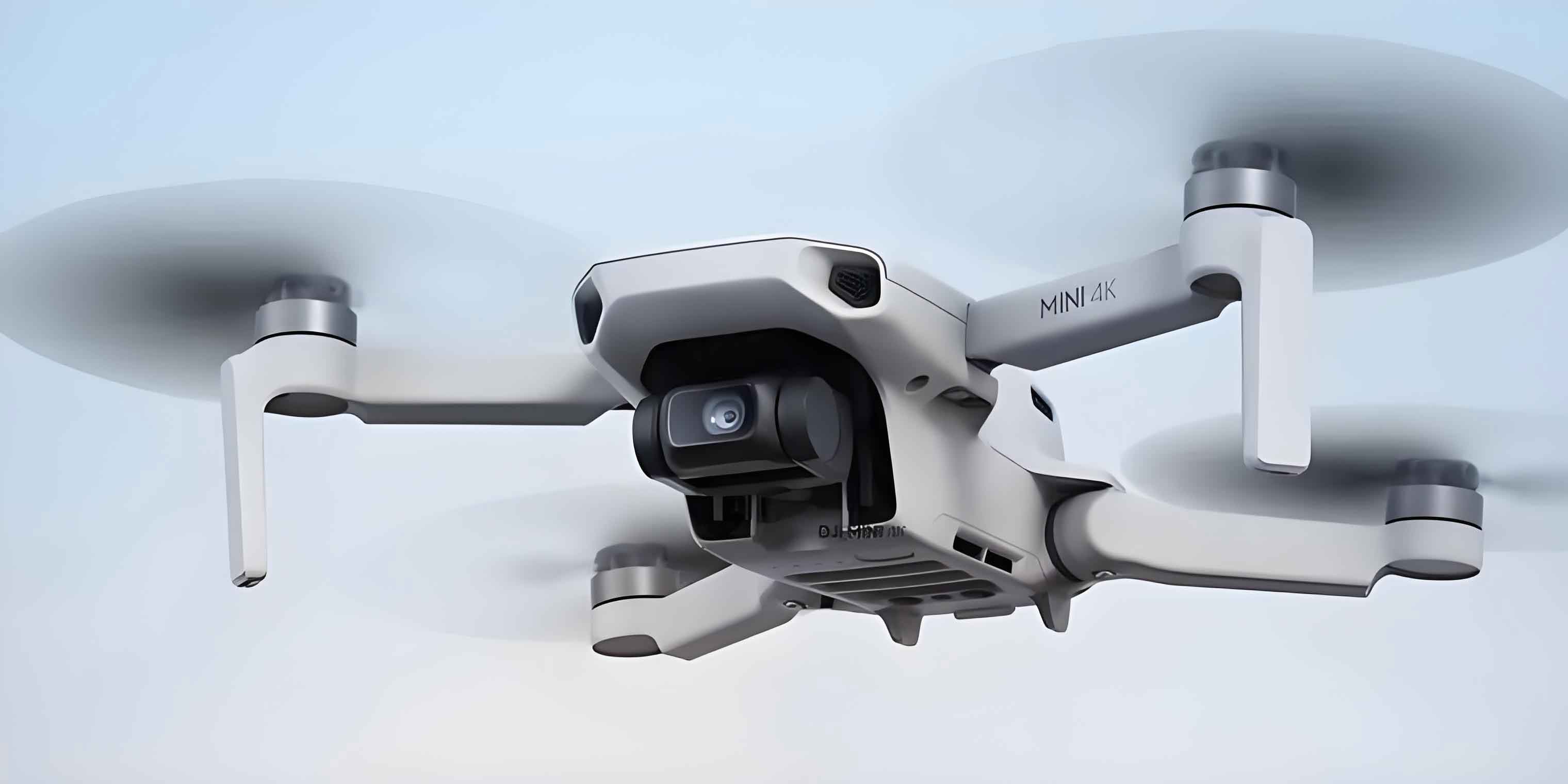
Drones are not without constraints. Their payload capacity is generally limited, their wind resistance can be lower, and they are subject to communication range limitations and regulatory airspace restrictions.
Analyzing the Complementary Relationship
The dichotomy in technical特性 creates a natural division of labor. Helicopters, leveraging their power and capacity, handle “hard” tasks like direct attack and heavy logistics. Drones are optimally deployed for “soft” tasks: reconnaissance, communications relay, and intelligence gathering. This division is not absolute. Technological progress, particularly in heavy-lift unmanned helicopters, is blurring the lines. For instance, the FWH-150 unmanned helicopter developed by a China UAV drone manufacturer can carry a 300 kg payload, enabling it to deploy multiple 50 kg fire-suppression capsules for targeted attacks on initial outbreaks. Conversely, manned helicopters can be equipped with advanced sensor pods to enhance their own reconnaissance capabilities. The future trend points toward a more integrated model where both platforms retain core strengths but increasingly share functionalities for tighter协同.
| Feature | Manned Helicopter | UAV (Drone) |
|---|---|---|
| Primary Role | Direct Suppression, Heavy Logistics | ISR (Intelligence, Surveillance, Reconnaissance), Light Suppression, Relay |
| Payload Capacity | High (2-5t for water; 10,000+ L for fixed-wing) | Low to Medium (Up to ~300 kg for heavy-lift models) |
| Endurance | Long (4-6 hours typical) | Short to Medium (30 min – 3+ hours depending on type) |
| Maneuverability | Good, but limited in ultra-confined spaces | Excellent, capable of hovering and navigating tight spaces |
| Sensor & Data Capability | Typically visual; can be augmented with pods | Integrated high-res optics, thermal, multispectral, LiDAR |
| Operational Risk | High (crew in danger) | Low (only equipment at risk) |
| Response Time | Moderate (crew mobilization, pre-flight) | Very Fast (rapid deployment from nearby sites) |
| Operational Cost per Hour | Very High | Relatively Low |
| Key Limitation | Cost, Safety, Delayed Response | Payload, Endurance, Weather Sensitivity, Regulation |
Application Scenarios Across the Fire Management Cycle
Forest aerial firefighting is a multi-phase endeavor encompassing prevention, detection, response, and post-event assessment. Helicopters and China UAV drone systems are deployed across this cycle according to their strengths, creating a comprehensive application matrix.
Prevention and Early Detection: The Drone’s Domain
Early detection is paramount. In this phase, drones demonstrate superior utility. Equipped with automated patrol systems, they conduct frequent, large-area surveillance. A notable example from China is the system in Ninghua County, Fujian Province, where networked drones can reach a potential fire site within 5 minutes, using visible-light and infrared cameras to pinpoint ignitions and transmit data in real-time. This efficiency vastly outperforms manual patrols. The integration of artificial intelligence, such as the systems developed by partnerships between China UAV drone companies and AI platforms like Baidu’s PaddlePaddle, enables automatic smoke and fire point detection with algorithms, reportedly boosting patrol efficiency by 200%. Drones are also effective for law enforcement patrols to deter and document illegal burning activities. During high-risk periods, such as the Qingming Festival, drone units in regions like Guizhou have successfully identified and intervened in numerous small fire starts, preventing escalation.
Manned aircraft can participate in preventative patrols, especially fixed-wing platforms covering vast, remote areas. However, the cost-effectiveness of drones makes them the preferred tool for establishing a persistent, automated surveillance presence, as seen with the “automatic drone hangar” networks being deployed in parts of China.
Fire Response and Suppression: Integrated立体 Operations
During active firefighting, a synergistic立体 system comes into play. Drones primarily undertake three critical support tasks:
- Real-time Reconnaissance and Mapping: They provide live video feeds, generate panoramic images, and create 3D models of the fireground. This data is crucial for understanding fire behavior, identifying hotspots, and locating personnel. Advanced models can perform rapid topographic mapping.
- Communications Relay: In terrain that blocks radio signals, drones can act as airborne communication nodes, ensuring uninterrupted command and control. Some larger China UAV drone platforms are even capable of deploying satellite-linked base stations.
- Initial Attack and Precision Support: Medium and heavy-lift drones can conduct precision drops of fire retardant or extinguishing agents on spot fires or flanks, helping to contain fires in their early stages. For example, specific China UAV drone models are configured to carry and deploy fire-suppression capsules during their patrol missions.
Manned helicopters remain the principal suppression force. They deliver massive volumes of water or retardant, either in wide-area drops from fixed-wing aircraft or precise, repetitive bucket drops from helicopters, which are particularly effective for difficult-to-access fires like those on cliffsides.
Specialized and Innovative Applications
Both platforms exhibit innovative value in specialized scenarios. At night or in dense smoke, drone-mounted thermal cameras become the “eyes” of the operation, guiding both ground crews and manned aircraft. In extremely complex terrain like deep canyons, small scout drones can first map safe ingress/egress routes for helicopters. Research within China, such as the LUFFD-YOLO model developed by Northeast Forestry University, focuses on enhancing China UAV drone detection capabilities in complex forest backgrounds using advanced computer vision techniques. The detection confidence can be modeled as part of an optimization function for patrol planning:
$$ P_{detection}(t, x, y) = f(I_{thermal}(t, x, y), S_{smoke}(t, x, y), M_{model}(x,y)) $$
Where $P_{detection}$ is the probability of detecting a fire at location $(x,y)$ and time $t$, dependent on thermal imagery $I_{thermal}$, smoke analysis $S_{smoke}$, and contextual terrain/vegetation model $M_{model}$.
| Fire Phase | Primary UAV/Drone Applications | Primary Manned Helicopter Applications | Synergistic Potential |
|---|---|---|---|
| Prevention & Patrol | Automated routine surveillance, AI-based hot-spot detection, illegal activity monitoring. | Large-area, long-range reconnaissance patrols in remote zones (higher cost). | UAVs provide persistent, granular coverage; helicopters validate and respond to major threats identified by UAVs. |
| Initial Attack | First-on-scene assessment, precise location & size mapping, initial suppression attempt with light payloads. | Rapid deployment with full suppression payload (water/retardant) based on UAV intelligence. | UAVs guide helicopters directly to the highest-priority targets, optimizing first-attack effectiveness. |
| Large Fire Suppression | Real-time perimeter mapping, hotspot identification (thermal), monitoring spot fires, communications relay, assessing drop effectiveness. | Sustained, heavy-lift water/retardant delivery, crew transport, establishing wet-lines. | UAVs act as forward observers and battlefield coordinators, dynamically directing helicopter attacks to critical fire fronts. |
| Post-Fire & Mop-up | Identifying remaining hotspots (smoldering) with thermal sensors, monitoring for re-ignition, damage assessment. | Delivering water to persistent deep-seated hotspots identified by UAVs. | UAVs efficiently scan large burnt areas, guiding precise mop-up operations by helicopter or ground crews. |
Strategic Synergy: Frameworks for Effective Helicopter-UAV协同
True协同 transcends mere concurrent use; it requires a systematic framework integrating command structures, unified data protocols, and standardized procedures. This integration involves deep operational intertwining across mission planning, real-time command, information sharing, and safety assurance.
协同 Mission Planning
Scientific mission planning is the bedrock of协同. Asset allocation must be dynamic, based on fire stage and scale. A lightweight planning algorithm can help allocate tasks. Let $T_{total}$ represent the total tasks (e.g., patrol area, suppression points). Let $C_{helo}(t)$ and $C_{uav}(t)$ be the cost functions for deploying a helicopter and a UAV for task $t$, considering factors like time-to-scene, effectiveness, and risk. Let $E_{helo}(t)$ and $E_{uav}(t)$ represent their effectiveness scores for that task type. An optimized allocation seeks to:
$$ \text{Maximize } Z = \sum_{t \in T_{total}} ( \alpha_{helo} \cdot E_{helo}(t) \cdot X_{helo}(t) + \alpha_{uav} \cdot E_{uav}(t) \cdot X_{uav}(t) ) $$
$$ \text{Subject to: } \sum C_{helo}(t) \cdot X_{helo}(t) \leq B_{helo}, \quad \sum C_{uav}(t) \cdot X_{uav}(t) \leq B_{uav}, \quad X_{helo}(t) + X_{uav}(t) \leq 1 $$
Where $X(t)$ are binary decision variables for asset assignment, $B$ are budget/resource constraints, and $\alpha$ are weighting factors for platform priority in the overall strategy.
Information Sharing and Fusion
The core of operational协同 is a unified information platform enabling shared situational awareness and interconnected command. This platform must: 1) Fuse Multi-Source Data: Integrate feeds from UAVs, helicopters, satellites, and ground sensors. 2) Enable Real-Time Dissemination: Ensure all units operate from a Common Operational Picture (COP). 3) Provide Analytical Support: Use AI to process data, predict fire spread, and suggest resource deployment. The fire front propagation can be approximated using models like the Rothermel equation, where the rate of spread $R$ is a function of fuel, weather, and topography:
$$ R = \frac{I_R \xi (1 + \phi_w + \phi_s)}{\rho_b \epsilon Q_{ig}} $$
Integrating real-time data from China UAV drone fleets on fuel moisture ($\rho_b$), wind ($\phi_w$), and slope ($\phi_s$) can dynamically refine such models for more accurate prediction within the COP.
Safety Assurance Mechanisms
Safety is paramount. A robust协同 safety framework must include: Stratified Airspace Management: Drones typically occupy lower altitudes (e.g., below 300 ft AGL for detailed work), while manned aircraft operate at higher levels (e.g., above 500 ft AGL for approaches and drops), with clear transition corridors. Dynamic Deconfliction: Use technologies like Automatic Dependent Surveillance–Broadcast (ADS-B) and UAS Traffic Management (UTM) to maintain real-time awareness of all aircraft positions and ensure safe separation. Clear Emergency Protocols: Establish priority rules (e.g., manned aircraft always have right-of-way in a conflict) and predefined emergency breakaway procedures for all operators.
A Model Integrated Operational Workflow
A standardized协同 workflow ensures efficiency and safety. The following four-phase model illustrates this integration:
- Phase 1: UAV-Centric Initial Assessment. UAVs are first deployed to the reported location. They conduct a broad scan, create a 3D map, identify the fire’s perimeter, intensity hotspots via thermal imaging, and mark hazards (e.g., power lines, terrain features). This data populates the shared COP.
- Phase 2: Joint Tactical Planning. The incident command, using the COP enriched by UAV data, formulates the suppression plan. This includes identifying primary and secondary attack lines, designating helicopter ingress/egress routes, calculating required water/retardant volumes, and assigning specific targets to each helicopter sortie.
- Phase 3: Coordinated Suppression Execution. Helicopters, guided by the pre-briefed plan and real-time updates from orbiting UAVs, execute their drops. UAVs continuously monitor the fire’s reaction, assess drop effectiveness, watch for spot fires, and provide immediate alerts if conditions change or new hazards emerge. They also ensure communications continuity across the fireground.
- Phase 4: Combined Evaluation and Mop-up. As the main fire front is controlled, UAVs switch to thermal scanning for residual hotspots. They relay the coordinates of these smoldering areas to helicopters for precise mop-up drops or to ground crews for final extinguishment.
| 协同 Dimension | Key Components | Implementation Tools/Protocols |
|---|---|---|
| Command & Control | Unified Incident Command System (ICS) with integrated UAS operations cell; clear lines of authority for both manned and unmanned assets. | Joint command software; interoperable communication systems (voice & data). |
| Data Fusion & COP | Centralized platform ingesting live video, telemetry, GIS data, weather, and resource tracking. | Cloud-based Common Operational Picture (COP) systems; standardized data links (e.g., STANAG 4586 for UAS). |
| Airspace Management | Pre-defined altitude strata, dynamic geofencing, real-time deconfliction services. | UTM/U-Space systems; ADS-B In/Out on all aircraft; surveillance radars. |
| Joint Training & Exercises | Regular cross-training for helicopter crews, UAS pilots, and incident commanders on joint procedures and communications. | Simulated fire scenarios (table-top and live-fly); after-action review protocols. |
| Logistics & Sustainment | Co-located or rapidly deployable support for both asset types (fuel, maintenance, comms). | Mobile forward operating bases designed to support混合 fleets. |
Future Outlook and Concluding Perspective
The trajectory of forest aerial firefighting is decisively toward greater integration and intelligence. The future will see not just协同, but true teamning between manned and unmanned systems. Advances in artificial intelligence and machine learning will enable更高水平的 autonomous operation for China UAV drone swarms, capable of collaborative surveillance, adaptive fire mapping, and even coordinated suppression tactics. Manned helicopters will evolve into highly connected “motherships” or command nodes within these networked systems, directing drone fleets and focusing their superior payload where AI-analysis indicates it is most critically needed.
The development of heavy-lift, long-endurance China UAV drone platforms will further close the capability gap, allowing drones to take on more sustained direct suppression roles in medium-risk scenarios. Concurrently, the regulatory environment, especially in China with its focused development of “low-altitude economy,” is rapidly adapting to safely accommodate these混合 operations in national airspace.
In conclusion, the challenge of modern forest fires demands a sophisticated, layered response. Helicopters provide the indispensable force for direct confrontation with large blazes. UAVs, particularly those emerging from the vibrant China UAV drone ecosystem, provide the essential intelligence, connectivity, and precision required for modern, efficient, and safe fire management. Their relationship is fundamentally synergistic. By implementing robust frameworks for joint planning, shared situational awareness, and integrated operations, firefighting agencies can forge a truly立体 fire suppression capability. This “air-ground integrated” system, leveraging the unique strengths of both manned courage and unmanned precision, represents our most promising path toward mitigating the growing threat of catastrophic wildfires and protecting vital forest ecosystems globally.