
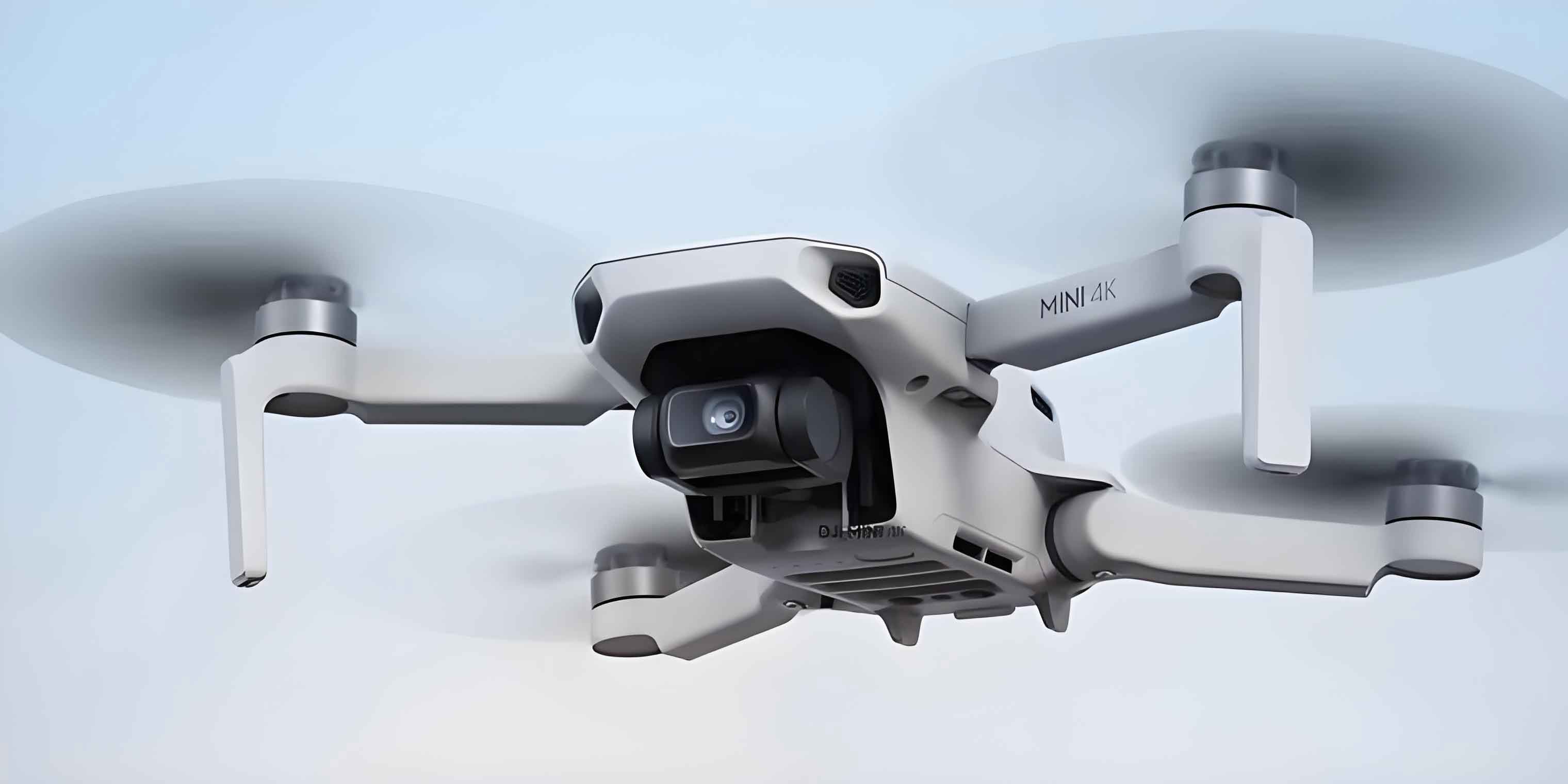
The reliable operation of power distribution networks is a cornerstone of modern infrastructure. In China, the rapid expansion and increasing complexity of these networks, traversing dense urban centers, mountainous regions, and forested areas, necessitate advanced inspection methodologies. Traditional manual inspection is labor-intensive, slow, and poses safety risks, while helicopter-based methods are cost-prohibitive and constrained by airspace regulations. The emergence of Unmanned Aerial Vehicles (UAVs), particularly the China UAV drone, offers a transformative solution. However, the deployment of China UAV drone platforms for autonomous inspection of distribution lines faces significant hurdles due to the harsh operational environment characterized by severe GPS signal occlusion, complex electromagnetic interference, and drastic variations in lighting and weather. These challenges severely impact the precision, stability, and real-time performance of conventional positioning and navigation systems. To address these limitations, this paper proposes a comprehensive algorithmic framework that synergistically optimizes visual localization and navigation for the China UAV drone, integrating enhanced SLAM (Simultaneous Localization and Mapping) techniques, deep learning, and dynamic path planning to significantly improve autonomous inspection capabilities and operational efficiency in complex grid environments.
The operational environment for a China UAV drone conducting distribution line inspection is exceptionally demanding. The network’s infrastructure is dispersed across highly variable terrains. In mountainous areas, rapid changes in line altitude, severe multipath effects, and frequent GPS denial due to terrain blockage are common. Turbulent wind conditions further challenge flight stability. Urban corridors present a different set of obstacles: dense high-rise buildings create intense electromagnetic noise, disrupting communication and navigation signals, while also causing severe visual occlusions. Furthermore, a China UAV drone must contend with extreme weather conditions like heavy rain, fog, and the stark contrast between day and night lighting, which can drastically degrade the performance of vision-based sensors. These factors collectively demand a navigation system that is robust, adaptive, and capable of operating with minimal reliance on global positioning systems. This necessity has driven the shift towards vision-centric solutions for the China UAV drone, which offer the potential for centimeter-level accuracy, real-time environmental perception, and the ability to function in GPS-denied conditions, thereby providing a foundation for intelligent, data-driven grid maintenance.
Optimization of Visual Localization Algorithms for China UAV Drone
The core of autonomous navigation for a GPS-denied China UAV drone is a robust visual localization system. Standard visual SLAM frameworks, such as ORB-SLAM, often struggle in the repetitive textures and challenging conditions of power line corridors. Our optimization begins with a hierarchical enhancement of the ORB-SLAM framework specifically tailored for the China UAV drone inspection mission.
Enhanced ORB-SLAM with Adaptive Feature Management
At the front-end processing layer, we improve the feature point extraction and description. The FAST corner detector is made adaptive: in texture-rich areas (e.g., pylons, insulators), a higher threshold is applied to reduce computational redundancy; in texture-poor areas (e.g., sky, uniform vegetation), a lower threshold ensures sufficient feature points for tracking. The BRIEF descriptor is enhanced with rotation-invariant calculations based on the dominant orientation of the feature point, improving resilience to viewpoint changes typical in China UAV drone maneuvers around power lines.
In the local mapping thread, a smart keyframe insertion policy is implemented. Instead of inserting a keyframe at a fixed frequency, the decision is based on the complexity of the observed scene and the parallax between the current frame and the last keyframe. This prevents the map from being flooded with redundant keyframes during periods of slow or no motion, a common occurrence when a China UAV drone hovers to inspect a specific component. The backend optimization employs a sliding window approach with marginalization. Older keyframes are removed from the active optimization window to maintain real-time performance, but their constraint information is preserved through marginalization, maintaining global consistency. A robust Huber kernel function is applied to suppress the influence of outliers in feature matching, which are prevalent in environments with moving foliage or specular reflections on conductors.
Multi-Source Visual Odometry: Fusing Optical Flow and Feature Points
Relying on a single visual odometry method is insufficient for the dynamic and varied scenarios encountered by a China UAV drone. We propose a hybrid model that fuses the high-frequency, dense motion estimates of pyramidal Lucas-Kanade (LK) optical flow with the robust, wide-baseline pose recovery of feature-based methods. The LK tracker provides smooth, high-frame-rate pose increments between consecutive frames. Concurrently, ORB feature matching is performed between keyframes, with RANSAC used to estimate the essential matrix and remove outliers. This feature-based tracking recovers from situations where optical flow fails, such as during rapid motion blur or occlusion. The final fused pose estimate, \( T_{fused} \), is computed as a dynamic weighted average:
$$ T_{fused} = \alpha T_{optical} + (1-\alpha)T_{feature} $$
Here, \( T_{optical} \) and \( T_{feature} \) are the pose estimates from optical flow and feature-based methods, respectively. The weighting factor \( \alpha \) is dynamically adjusted based on the image’s texture richness and the consistency of the optical flow residuals. When texture is abundant and flow is reliable, \( \alpha \) increases; in low-texture or high-blur scenarios, the system leans more on the feature-based estimate (\( \alpha \) decreases). This fusion grants the China UAV drone superior balance between real-time responsiveness and localization robustness.
Semantic Enhancement for Robust Loop Closure and Localization
To combat perceptual aliasing—where different locations look visually similar (e.g., consecutive pylons)—and to improve performance in adverse lighting, we integrate semantic understanding into the visual pipeline. A lightweight convolutional neural network (CNN) runs onboard the China UAV drone to perform pixel-wise semantic segmentation, identifying stable, high-level landmarks such as “transformer,” “insulator,” “pylon,” and “conductor.” These semantic labels are attached to map points and keyframes. During loop closure detection, in addition to visual bag-of-words matching, we compute a semantic consistency score. A semantic consistency matrix \( S \) is constructed, where the element \( S_{ij} \) between keyframe \( i \) and \( j \) is defined as:
$$ S_{ij} = \frac{|C_i \cap C_j|}{|C_i \cup C_j|} $$
Here, \( C_i \) and \( C_j \) are the sets of semantic categories present in keyframes \( i \) and \( j \). A score \( S_{ij} \) close to 1 indicates highly similar semantic distributions, providing strong corroborative evidence for a potential loop closure, even when visual appearance differs due to lighting or seasonal changes. This semantic-augmented system significantly boosts the China UAV drone‘s ability to relocalize and maintain a globally consistent map.
Multi-Sensor Fusion: Federated Filtering of GPS and Vision
To harness the global consistency of GPS when available and the local high accuracy of vision when GPS is degraded, we employ a Federated Kalman Filter (FKF) architecture. This decentralized filter runs two local filters in parallel: one for GPS measurements (pseudorange, Doppler) and another for visual odometry constraints (reprojection errors). The master filter fuses these local estimates using an information-sharing factor based on real-time confidence metrics. The weight assigned to the GPS filter, \( \beta_{GPS} \), is dynamically adjusted according to its Geometric Dilution of Precision (GDOP) and signal-to-noise ratio:
$$ \beta_{GPS} = f(GDOP^{-1}, SNR) $$
When GPS quality is high (low GDOP, high SNR), it dominates the state estimate, providing global datum. When GPS signals are occluded or noisy, the weight automatically shifts towards the visual filter. In the event of complete GPS failure, the system seamlessly transitions to a pure visual SLAM mode. Upon GPS signal recovery, a map alignment algorithm quickly corrects any visual drift by aligning the visual map to the global GPS coordinate frame, ensuring continuous and reliable positioning for the China UAV drone throughout its mission.
Advanced Navigation and Path Planning for China UAV Drone
Accurate localization is only one component of autonomous inspection. An intelligent China UAV drone must also plan and execute efficient, safe flight paths. We propose a multi-layer planning architecture.
Topological Graph for Dynamic Mission Management
We abstract the inspection environment into a topological graph \( G = (V, E) \), where vertices \( V \) represent inspection targets (pylons, insulators, junctions) and edges \( E \) represent navigable paths between them. Each node \( v_i \in V \) is annotated with spatial coordinates, priority \( P_i \), estimated inspection time \( t_i^{insp} \), and a dynamic environmental difficulty score \( D_i \) derived from wind models, obstacle density, and lighting conditions. This graph is not static; it supports dynamic node generation and priority updates. For instance, if an automatic image analysis module detects a potential fault at a location, a new high-priority node can be inserted into the graph in real-time. The mission scheduler then re-optimizes the visitation sequence. This mechanism allows the China UAV drone to adapt its mission plan based on real-time findings and changing operational constraints, such as remaining battery life.
| Node Attribute | Description | Dynamic Update Source |
|---|---|---|
| Spatial Coordinates (x, y, z) | Precise location of the inspection target. | Pre-survey GIS data, real-time GPS/Vision. |
| Priority (P) | Inspection urgency (e.g., fault suspect = High). | Ground control command, AI-based fault detection. |
| Inspection Time (t_insp) | Estimated time to complete inspection at node. | Target complexity, required sensor data. |
| Difficulty Score (D) | Environmental complexity (wind, obstacles, light). | Onboard sensors, weather forecast API. |
| Connectivity Edges (E) | Feasible and safe flight corridors between nodes. | Pre-planned routes, updated via real-time obstacle map. |
Hybrid Global-Local Path Planning: A* and Guided RRT*
Path planning occurs in two stages. For global route planning across the topological graph, we use the A* algorithm. The cost function \( f(n) = g(n) + h(n) \) is defined where \( g(n) \) is the actual cost from the start node to node \( n \), incorporating distance and average difficulty scores of traversed edges, and \( h(n) \) is a heuristic estimate of the cost from \( n \) to the goal (typically Euclidean distance). This efficiently generates an optimal sequence of nodes to visit.
For local, collision-free trajectory generation between two nodes, especially in cluttered environments, we employ an improved Rapidly-exploring Random Tree Star (RRT*) algorithm. To accelerate convergence, we introduce a goal-biased sampling strategy and a path pruning mechanism. The sampling probability \( p \) is given by:
$$ p = \lambda p_{goal} + (1-\lambda)p_{uniform} $$
where \( p_{goal} \) samples near the goal direction, \( \lambda \) is a biasing factor, and \( p_{uniform} \) samples randomly in the configuration space. Once a initial path is found, a rewiring and pruning step removes redundant nodes, shortening the path. The final output is a smooth, flyable trajectory generated by fitting a B-spline curve to the waypoints, respecting the kinematic constraints of the China UAV drone.
Real-Time Obstacle Avoidance with Multi-Modal Perception
Despite careful planning, a China UAV drone must react to unforeseen dynamic obstacles like birds or maintenance vehicles. Our real-time avoidance module fuses data from a depth camera and a Light Detection and Ranging (LiDAR) sensor. The depth camera provides high-frequency, dense depth maps for close-range obstacle detection and dynamic motion cue extraction via frame-to-frame optical flow. The LiDAR provides accurate, longer-range 3D point clouds. These datasets are spatially fused to build a local 3D occupancy grid map.
For reactive navigation, we implement a Dynamic Window Approach (DWA). The algorithm simulates a set of feasible velocity commands \( (v, \omega) \) for the next time interval, based on the China UAV drone‘s current state and dynamics. For each candidate trajectory, it evaluates a multi-objective cost function \( C \):
$$ C = \alpha \cdot C_{obstacle} + \beta \cdot C_{goal} + \gamma \cdot C_{smoothness} + \delta \cdot C_{efficiency} $$
Where \( C_{obstacle} \) penalizes proximity to obstacles, \( C_{goal} \) rewards progress toward the next sub-goal, \( C_{smoothness} \) favors stable motion, and \( C_{efficiency} \) considers energy consumption. The coefficients \( \alpha, \beta, \gamma, \delta \) are tuned for the inspection mission. A Kalman filter predicts the trajectory of moving obstacles, allowing the China UAV drone to perform anticipatory avoidance maneuvers, ensuring safe and uninterrupted operation.
System Implementation and Experimental Validation
To validate the proposed algorithms, we developed a comprehensive experimental platform centered on a commercially available China UAV drone platform. The drone was equipped with a suite of sensors: a stereo visual-inertial system (cameras and IMU), a Livox MID-70 LiDAR, a u-blox F9P RTK-GPS module, and an NVIDIA Jetson AGX Xavier onboard computer for real-time processing. A ground control station communicated with the drone for mission upload and telemetry monitoring.
Experimental Design and Metrics
We conducted two phases of experiments. First, controlled indoor experiments in a motion-capture arena with mock power line elements tested the fundamental accuracy and robustness of the visual localization system under varying lighting and occlusion conditions. Second, extensive field trials were performed on actual 10kV distribution lines in a suburban environment featuring mixed terrain. The China UAV drone was tasked with autonomously inspecting a sequence of 15 pylons over a 2km route. Key performance indicators (KPIs) were measured:
- Localization Accuracy: Root Mean Square Error (RMSE) compared to ground truth from RTK-GPS (when available) and laser total station measurements.
- Path Planning Efficiency: Total path length, flight time, and computational time for plan generation.
- Obstacle Avoidance Performance: Success rate, minimum clearance distance, and reaction time to sudden obstacles.
- System Robustness: Mission completion rate in GPS-denied zones and under variable lighting.
Field Test Results and Analysis
The field test results demonstrated the effectiveness of our optimized framework for the China UAV drone. The following table summarizes a quantitative comparison between our proposed system and a baseline using traditional ORB-SLAM with a simple waypoint navigation planner.
| Performance Metric | Proposed Optimized System | Baseline System (ORB-SLAM + Waypoint) | Improvement |
|---|---|---|---|
| Average Localization RMSE (in GPS-denied area) | 4.8 cm | 9.5 cm | ~49% more accurate |
| Mission Path Length (for 15-pylon circuit) | 1.82 km | 2.05 km | ~11% shorter |
| Total Autonomous Flight Time | 18 min 15 sec | 20 min 30 sec | ~11% faster |
| Obstacle Avoidance Reaction Time | 0.28 s | 0.50 s (manual trigger needed) | ~44% quicker |
| Mission Success Rate (Full autonomy) | 95% | 70% | 25 percentage points higher |
The data clearly indicates that our optimizations led to substantial gains. The fusion-based visual localization maintained high precision even under tree canopies where the baseline system experienced significant drift. The hybrid A*/RRT* planner generated more efficient global paths and smoother local trajectories, directly reducing flight time and energy consumption. The real-time avoidance module successfully handled multiple simulated dynamic obstacles (e.g., a suddenly moving cart) without aborting the mission, showcasing the China UAV drone‘s enhanced situational awareness and safety.
Conclusion and Future Work
This paper has presented a holistic algorithmic framework for enhancing the visual localization and navigation capabilities of China UAV drone platforms in the demanding context of power distribution network inspection. By innovating at multiple levels—from the low-level feature processing in SLAM and the fusion of multi-source odometry, to the high-level semantic understanding and dynamic, multi-layer path planning—we have developed a system that significantly improves accuracy, robustness, and operational efficiency. The proposed solutions directly address the critical challenges of GPS denial, environmental complexity, and dynamic obstacle response. Experimental validation on a real China UAV drone system confirms the practical viability and superior performance of our approach compared to conventional methods.
Future work will focus on further increasing the intelligence and autonomy of the China UAV drone. We plan to investigate lightweight, self-supervised deep learning models for even more robust feature description and direct depth prediction from monocular images, reducing dependency on specific depth sensors. Furthermore, we aim to deploy advanced edge computing strategies to distribute processing between the drone and mobile edge servers, enabling more complex scene understanding and cooperative planning for multi-drone swarm inspections. These advancements will continue to push the boundaries of what is possible for intelligent, reliable, and fully autonomous infrastructure inspection using China UAV drone technology.