
The advent and proliferation of Unmanned Aerial Vehicles (UAVs) represent a paradigm shift in modern warfare, fundamentally altering the concepts of reconnaissance, strike, and force projection. Among these, the military UAV has transitioned from a peripheral support asset to a central pillar of national defense strategy for leading powers. The trajectory of military UAV development is not merely a story of technological innovation but one of strategic prioritization and operational adaptation. This analysis delves into the contemporary developments, performance parameters, and strategic trajectories of American and Chinese military UAV programs, offering a detailed comparison to elucidate the current state of the field and forecast future directions.
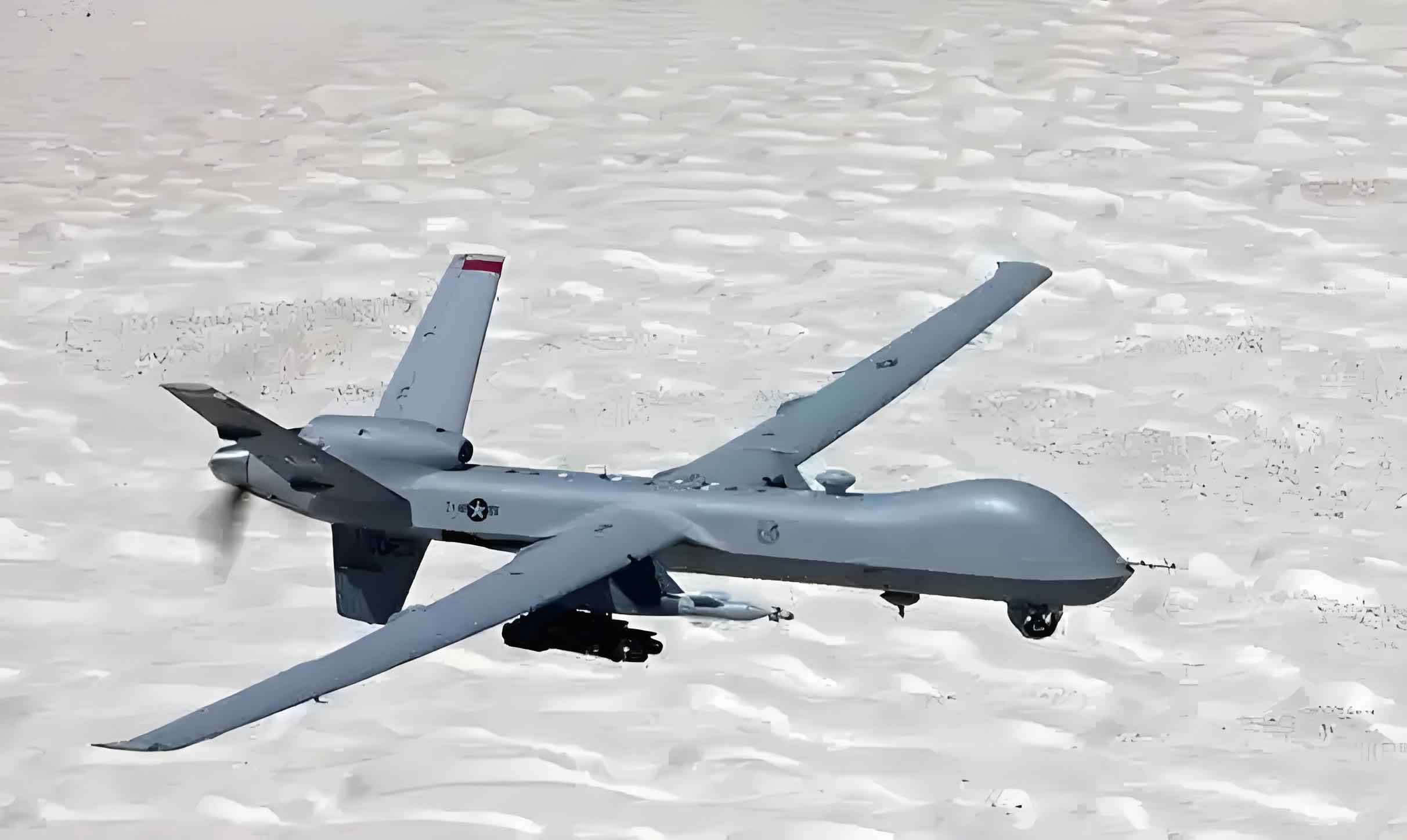
The United States, with its decades-long head start and immense investment in research and development, has established a comprehensive and battle-tested military UAV ecosystem. American systems range from strategic High-Altitude Long-Endurance (HALE) platforms to tactical mini-drones, many of which have been refined through extensive combat experience. China, while a later entrant, has demonstrated remarkable acceleration in its military UAV programs, showcasing a diverse portfolio that mirrors, and in some aspects, seeks to surpass, Western capabilities. The evolution of the Chinese military UAV industry from reverse-engineering and procurement to indigenous innovation marks a significant shift in the global defense technological landscape.
The Vanguard: New Developments in U.S. Military UAV Technology
The United States continues to push the boundaries of military UAV capabilities, focusing on enhancing autonomy, survivability, and mission versatility. The development is characterized by a move towards greater integration into all domains of warfare, with several key trends defining the next generation.
1. Proliferation of Micro and Nano-UAVs: The drive to equip small tactical units with organic intelligence, surveillance, and reconnaissance (ISR) has led to significant investment in micro (<15 cm) and nano-UAVs. These systems, such as the “Black Hornet” Personal Reconnaissance System, offer dismounted soldiers immediate situational awareness beyond their line of sight, effectively acting as a personal aerial scout. Research continues into biologically-inspired designs like the “RoboFly” or “Nano Hummingbird,” which promise covert surveillance capabilities in complex urban and indoor environments. The operational utility of a micro military UAV is defined by parameters such as endurance ($T_{micro}$), communication range ($R_{com}$), and payload capacity for micro-sensors ($P_{micro}$), often constrained by the fundamental limits of battery energy density.
$$P_{available} = \eta_{motor} \cdot \eta_{prop} \cdot \frac{E_{battery}}{T_{flight}}$$
Where $E_{battery}$ is the energy content of the power source, and $\eta$ terms represent efficiencies.
2. The Multi-Domain, Multi-Role UAV: The future military UAV is envisioned as a modular, swappable-payload platform capable of executing a wide spectrum of missions. Beyond traditional ISR, these UAVs are being developed for electronic warfare (EW), communications relay, signals intelligence (SIGINT), and even meteorological sensing. The strategic “Vulture” program (though paused) aimed for extreme endurance measured in months, not hours, utilizing advanced solar-regenerative power systems. The key metric for such a platform is its total mission adaptability, which can be expressed as a function of its payload power budget, internal volume, and data bus compatibility.
$$M_{adaptability} = f(P_{payload}, V_{internal}, C_{data}, N_{hardpoints})$$
3. The Emergence of Autonomous Unmanned Combat Aerial Vehicles (UCAVs): This represents the most significant leap. The fielding of the MQ-9 “Reaper” signaled the move from unarmed scouts to dedicated hunter-killers. The next step is the development of stealthy, carrier-capable, autonomous UCAVs like the X-47B and its successor, the MQ-25 “Stingray.” These systems are designed to penetrate contested airspace, perform strike missions, and conduct aerial refueling with minimal human intervention. Their performance is judged by combat-centric metrics: low observability (Radar Cross Section – RCS), combat radius ($R_{combat}$), weapons payload ($W_{payload}$), and the level of autonomous decision-making ($A_{level}$) in dynamic environments.
$$R_{combat} = \frac{V}{TSFC} \cdot \ln\left(\frac{W_{initial}}{W_{final}}\right)$$
Where $V$ is velocity, $TSFC$ is thrust-specific fuel consumption, and $W$ represents weight at different mission phases.
4. The Loyal Wingman and Collaborative Combat Aircraft (CCA): The U.S. Air Force’s Next Generation Air Dominance (NGAD) program and the DARPA Air Combat Evolution (ACE) program are pioneering the “Loyal Wingman” concept. Here, advanced, optionally manned fighter aircraft (like the envisioned NGAD platform) would command a fleet of lower-cost, attritable autonomous UAVs. These CCAs would perform roles such as sensing, jamming, and weapons delivery, overwhelming enemy integrated air defense systems (IADS) and absorbing risk. The effectiveness of such a team can be modeled as a force multiplier.
$$Force\ Multiplier \propto \frac{N_{UAV} \cdot C_{UAV}}{Cost_{Total}} \cdot I_{network}$$
Where $N_{UAV}$ is the number of drones, $C_{UAV}$ is individual capability, and $I_{network}$ is the level of secure, resilient data linking.
The Ascent: The Trajectory of Chinese Military UAV Development
China’s journey in military UAV development has been one of rapid catch-up and strategic indigenization. From initial use as target drones and limited imports in the 1980s and 1990s, China now boasts one of the world’s most extensive and diverse UAV industrial bases, supplying both its own forces and the international market.
Phase 1: Foundation and Assimilation (Pre-2000s): Early efforts focused on modifying existing target drones for reconnaissance. The import of Israeli systems like the “Harpy” loitering munition and “Harop” provided crucial insights into operational concepts and technology. Domestic programs began yielding results with tactical systems like the ASN series, which entered widespread service for artillery spotting and battlefield surveillance.
Phase 2: Indigenous Innovation and Diversification (2000s-Present): This period saw an explosion in publicly revealed designs, reflecting significant investment and confidence. Key milestones include:
- Strategic ISR: The unveiling of the “Soar Dragon” (Xianglong) HALE UAV, featuring a unique joined-wing design for high-altitude, long-range endurance, directly responding to the capability gap highlighted by the U.S. RQ-4 Global Hawk.
- Stealth and Air Combat: The “Dark Sword” (Anjian) concept, a supersonic, low-observable UCAV with a canard-delta configuration, signaled ambitions beyond ISR-strike platforms towards unmanned air superiority.
- Medium-Altitude Long-Endurance (MALE) Strike: The “Pterodactyl” (Yilong/Wing Loong) series emerged as China’s primary armed military UAV, analogous in role and appearance to the U.S. MQ-1/9 series. The CH-4 and CH-5 further developed this line with increased payload and endurance.
- High-Speed Tactical UAVs: The “WJ-600” represents a high-subsonic, jet-powered UAV designed for high-value time-sensitive reconnaissance, electronic attack, and potentially as a launch platform for other systems.
Strategic Drivers: Chinese development is guided by the People’s Liberation Army’s (PLA) doctrine of “informationized” warfare, which emphasizes network-centric operations, long-range precision strikes, and anti-access/area-denial (A2/AD). The military UAV is a key node in this system, intended for persistent surveillance over the “first island chain,” targeting support, and eventually, swarming attacks to saturate enemy defenses.
A Detailed Performance Comparison: Key U.S. and Chinese Military UAV Systems
A quantitative analysis reveals both the impressive strides made by China and the areas where capability gaps relative to the U.S. persist. The following tables compare representative platforms in critical categories.
Table 1: Strategic High-Altitude Long-Endurance (HALE) ISR UAVs
| Parameter | U.S. RQ-4B Global Hawk (Block 40) | Chinese Soar Dragon (Xianglong) |
|---|---|---|
| Primary Role | Broad Area Maritime & Land Surveillance | Strategic Reconnaissance, Communications Relay |
| Length | 14.5 m | ~14.3 m |
| Wingspan | 39.9 m | ~24.9 m |
| Max Takeoff Weight (MTOW) | 14,628 kg | ~7,500 kg (estimated) |
| Payload Capacity | ~1,360 kg | ~600-800 kg (estimated) |
| Service Ceiling | 18,000 m | 18,000 – 20,000 m (claimed) |
| Max Speed | 357 kts (661 km/h) | ~470 km/h (estimated cruise) |
| Endurance | > 34 hours | > 10 hours (estimated) |
| Range | > 22,800 km | ~7,000 km (estimated) |
| Key Sensors | Multi-Platform Radar Tech. Insertion Program (MP-RTIP) SAR/GMTI radar, EO/IR suite, SIGINT package. | Likely large-aperture SAR, high-resolution EO/IR, SIGINT payload (specifics classified). |
| Operational Status | In service since 2001, continuously upgraded. | Publicly revealed, believed in late-stage testing or initial service. |
Analysis: The Global Hawk represents a matured, extremely capable strategic asset with unparalleled endurance and sensor integration, proven in global operations. The Soar Dragon, while achieving a comparable service ceiling, exhibits significantly lower MTOW, payload, and most critically, endurance and range. This suggests limitations in airframe efficiency and/or engine technology. The joined-wing design may optimize high-altitude loiter efficiency but likely at the cost of structural and payload complexity. The sensor performance, particularly the resolution and data processing capabilities of its SAR and EO/IR systems, remains an open question compared to the mature U.S. systems.
Table 2: Medium-Altitude Long-Endurance (MALE) Armed/ISR UAVs
| Parameter | U.S. MQ-9B SeaGuardian/SkyGuardian | Chinese Wing Loong II (Yi Long II) |
|---|---|---|
| Primary Role | Armed ISR, Maritime Patrol, Multi-Domain Integration | Armed Reconnaissance, Precision Strike |
| Length | 11.7 m | 11.0 m |
| Wingspan | 24.0 m | 20.5 m |
| MTOW | 5,670 kg | 4,200 kg |
| Payload Capacity | > 2,130 kg (internal & external) | ~480 kg (external) |
| Service Ceiling | > 12,500 m | 9,000 m |
| Max Speed | > 200 kts (370 km/h) | 370 km/h |
| Endurance | > 35 hours (ISR config) | 32 hours (claimed) |
| Range | > 6,000 nm (11,100 km) with SATCOM | ~4,000 km (estimated) |
| Weapons/Stations | Up to 8 hardpoints. AGM-114 Hellfire, GBU-12/38 JDAM, GBU-49, Small Diameter Bomb (SDB), AIM-9X Sidewinder (tested). | 6 hardpoints. BA-7 air-to-ground missiles, YZ-212/102 guided bombs, YZ-200 cluster munitions, anti-radiation missiles. |
| Key Features | Certified for civil airspace (STANAG-4671), modular payload bays, automatic takeoff and landing (ATOL), robust anti-icing, maritime radar. | Relatively low-cost, proven export success, continuous avionics and weapon integration. |
Analysis: The MQ-9B represents the zenith of the “Reaper” lineage, evolved into a highly flexible, certifiable, and network-integrated multi-role platform. Its payload capacity and variety of integrated weapons are substantially greater. The Wing Loong II is a capable and cost-effective system that has found significant export success. However, it trails in key performance metrics: payload (by a factor of ~4), service ceiling, and demonstrated integration of advanced munitions and multi-domain networking. The Chinese system excels in providing a potent, affordable armed military UAV capability to a broad market, while the U.S. system focuses on high-end, interoperable warfare within a complex battlespace.
Table 3: Stealthy/Next-Generation Unmanned Combat Systems
| System | U.S. X-47B / MQ-25 / NGAD CCA | Chinese Dark Sword (Anjian) / GJ-11 |
|---|---|---|
| Status & Role | X-47B: Tech demonstrator (carrier ops, AAR). MQ-25: In production (carrier-based tanker). NGAD CCA: In development (Loyal Wingman). | Dark Sword: Technology demonstrator (air combat concept). GJ-11 (Sharp Sword): Stealth UCAV, likely in service/test (strike/ISR). |
| Key Attributes | X-47B: Tailless, low-observable design; autonomous carrier launch/recovery; aerial refueling demonstration. MQ-25: Operational focus on unmanned tanking. CCA: Focus on attritability, AI-driven teaming, and sensor/shooter roles. | Dark Sword: Canard-delta, supersonic design emphasizing agility and low observability. GJ-11: Flying-wing design with internal weapons bay; likely subsonic; focus on penetration and strike. |
| Technological Focus | Autonomous mission execution in complex environments (carrier deck, contested airspace); secure manned-unmanned teaming (MUM-T); airframe durability for carrier operations. | Demonstrating supersonic performance for a UCAV; integrating low-observability features; developing internal weapons carriage and sensor suites. |
Analysis: This category highlights the frontier of military UAV development. The U.S. has moved through successful technology demonstrators (X-47B) to fielding a specific mission system (MQ-25) and is now deeply invested in the operational concept of collaborative combat. China has publicly revealed advanced concepts (Dark Sword) and appears to have fielded an operational stealthy UCAV (GJ-11). The GJ-11 is significant as it provides the PLA with a credible, low-observable strike and reconnaissance platform. The gap lies less in the existence of stealthy airframes and more in the maturity of the autonomous “brain” and the network that connects these assets into a resilient, lethal system of systems. The U.S. focus on CCAs operating in concert with 6th-generation fighters represents a more evolved and complex vision for future air combat.
Table 4: Summary of Capability Gaps and Trends
| Aspect | Current U.S. Lead | Chinese Progress & Focus |
|---|---|---|
| Propulsion & Endurance | Highly efficient turbofan/turboprop engines enabling 30+ hour MALE and 30+ hour HALE endurance. | Reliance on reliable but less efficient piston/turboprop engines; endurance for HALE/MALE platforms is a key limiting factor. |
| Sensor Fusion & Processing | Decades of operational experience integrating SAR, GMTI, EO/IR, HYPER spectral, and SIGINT data into real-time, actionable intelligence. | Rapidly advancing in sensor hardware; level of real-time multi-INT fusion, data processing, and dissemination lags behind. |
| Combat Provenance & Tactics | Vast operational database from thousands of sorties in permissive and contested environments; refined tactics, techniques, and procedures (TTPs). | Limited known combat experience; TTPs are largely untested in high-intensity peer conflict scenarios. |
| Network Integration & MUM-T | Advanced, resilient datalinks (TTNT, MADL); mature integration with NATO allies; operational programs for manned-unmanned teaming. | Developing proprietary datalink ecosystems (e.g., Tianlian); focused on integration within PLA systems; MUM-T concepts are in early stages. |
| Operational Scale & Logistics | Massive, global support infrastructure; ability to sustain continuous, long-duration operations from distributed locations. | Scaling production and fielding; building the global support and sustainment network for extended operations is a work in progress. |
Quantifying the Gap: A Synthetic Performance Index
To move beyond qualitative comparison, we can propose a simplified composite index for a military UAV platform, acknowledging that real assessment involves classified details. This index, $I_{UAV}$, could combine key performance parameters normalized against a benchmark (e.g., a leading contemporary system).
$$I_{UAV} = \alpha \cdot \left(\frac{R}{R_{ref}}\right) + \beta \cdot \left(\frac{T}{T_{ref}}\right) + \gamma \cdot \left(\frac{P}{P_{ref}}\right) + \delta \cdot \left(\frac{S_{fusion}}{S_{ref}}\right) + \epsilon \cdot \left(\frac{C_{network}}{C_{ref}}\right)$$
Where:
- $R$: Operational Range
- $T$: Endurance
- $P$: Payload Capacity/Quality
- $S_{fusion}$: Sensor Fusion & Data Processing Capability (qualitative score)
- $C_{network}$: Network Integration & Autonomy Level (qualitative score)
- $\alpha, \beta, \gamma, \delta, \epsilon$: Weighting coefficients reflecting mission priority (e.g., $\alpha, \beta$ high for HALE ISR; $\gamma, \delta$ high for strike).
- The $_{ref}$ subscript denotes the benchmark system’s value.
Applying this model conceptually, a U.S. HALE or MALE military UAV would score highly across all parameters due to mature technology and integration ($I_{UAV} \rightarrow 1$). A comparable Chinese system might score well on basic airframe parameters (range, endurance normalized to its size) but would likely have lower scores for $S_{fusion}$ and $C_{network}$ due to the previously discussed gaps, resulting in $I_{UAV}^{Chinese} < I_{UAV}^{US}$ for analogous platforms. The index for next-generation stealth/CCA systems would heavily weight $\delta$ and $\epsilon$, areas where the U.S. is investing deeply.
Conclusion: Divergent Paths and Converging Skies
The analysis reveals a complex landscape. The United States maintains a significant qualitative lead in military UAV technology, particularly in the areas of propulsion for extreme endurance, sophisticated sensor fusion, battle-hardened operational concepts, and the development of next-generation autonomous collaborative systems. The U.S. approach is characterized by evolutionary upgrades to proven platforms and revolutionary leaps in operational concepts like NGAD’s CCAs.
China, however, has closed the gap with astonishing speed in terms of platform diversity and basic capabilities. It fields everything from hand-launched tactical drones to stealthy flying-wing UCAVs and is aggressively marketing capable armed MALE UAVs worldwide. The Chinese military UAV industry benefits from centralized direction, ample funding, and a willingness to rapidly prototype and iterate.
The most critical disparities are not necessarily in the airframes themselves but in the less-visible layers: the depth of operational experience, the maturity of the autonomous software “pilots,” the robustness of the battle network in a contested electromagnetic environment, and the global logistical tail. The future of military UAV competition will hinge on these factors. China’s trajectory suggests it will continue to field increasingly capable and numerous platforms, seeking to offset U.S. qualitative advantages with mass and strategic focus within its regional A2/AD umbrella. The U.S., meanwhile, is betting on a paradigm shift towards human-machine teaming and AI-enabled autonomy to maintain dominance. The skies of future conflict will undoubtedly be populated by unmanned systems from both nations, making the continued analysis of military UAV development not just an academic exercise, but a crucial element of understanding the evolving balance of power.