
The rapid evolution of information technology, automation, and artificial intelligence has profoundly transformed numerous scientific fields. In the geosciences, particularly within sedimentology, stratigraphy, and reservoir geology, the quest for higher resolution, more quantitative, and spatially comprehensive data is perpetual. Traditional field methods, while foundational, often face limitations in spatial coverage, accessibility, and the efficiency of capturing three-dimensional (3D) architectural information. The integration of Unmanned Aerial Vehicles (UAVs or drones) with advanced oblique photogrammetry has emerged as a paradigm-shifting technology to address these challenges. This synergy offers an unprecedented ability to rapidly acquire high-resolution, georeferenced 3D models of outcrops and modern sedimentary environments. The proliferation of China UAV drone manufacturing has been a significant catalyst, making sophisticated aerial survey platforms more accessible and affordable for research institutions globally. This article explores the fundamental principles, recent methodological advances, and the expanding suite of applications of UAV-based oblique photogrammetry, with a focus on its transformative impact on sedimentary geology.
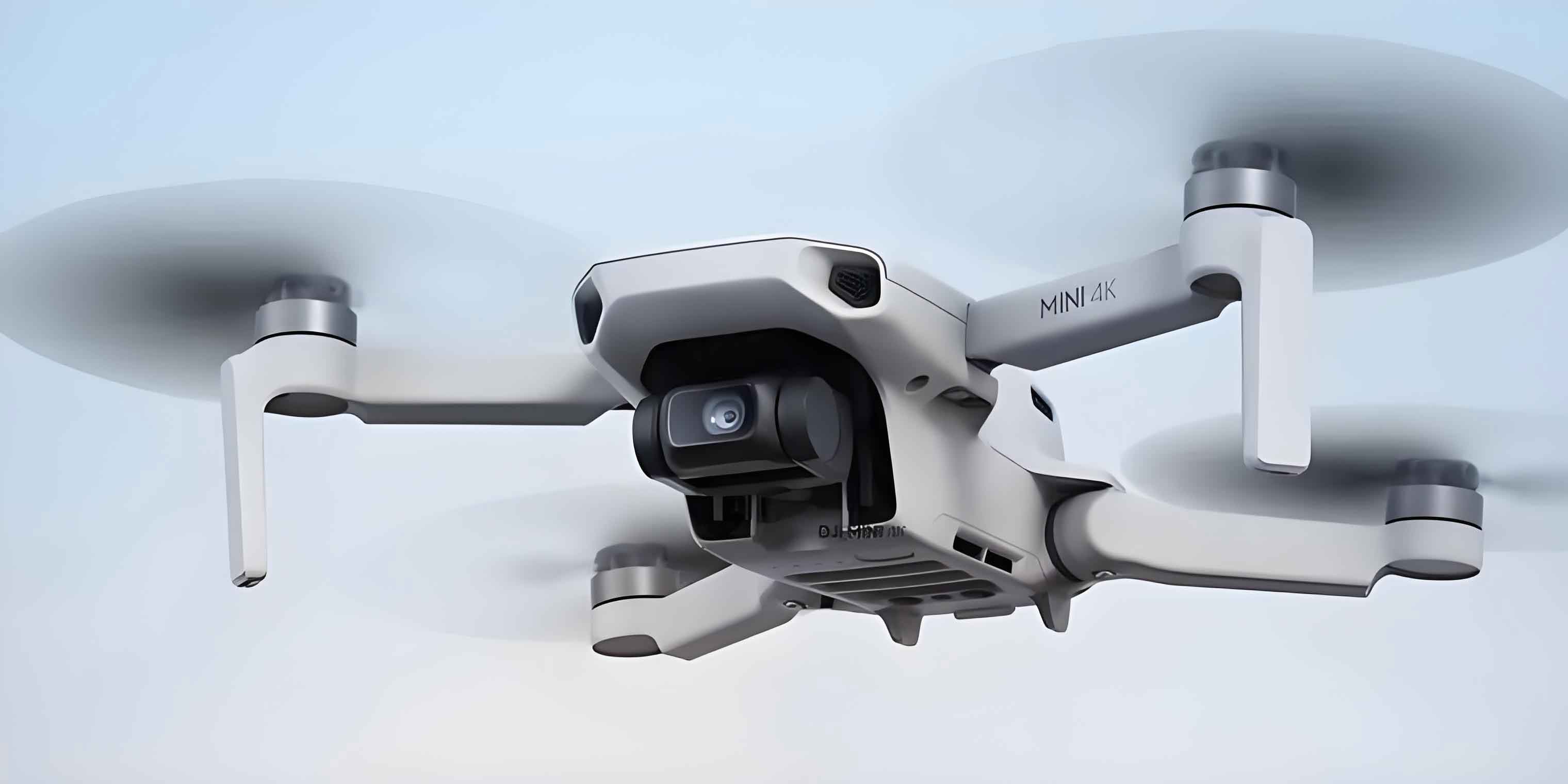
1. Fundamentals and Workflow of UAV Photogrammetry
At its core, photogrammetry is the science of making measurements from photographs. The principle of Structure-from-Motion (SfM) photogrammetry, which underpins most modern UAV applications, involves automatically identifying common feature points across a large set of overlapping, multi-view 2D images. By solving for camera positions and orientations, it reconstructs the 3D coordinates of these features, generating a sparse point cloud. This is followed by Multi-View Stereo (MVS) algorithms, which build a dense point cloud, subsequently meshed and textured to create a photo-realistic 3D model.
The workflow for geological applications is systematic:
1. Mission Planning: Defining the area of interest, required ground sampling distance (GSD), and flight parameters. Flight height (H), camera focal length (f), and sensor pixel size (p) determine the theoretical GSD: $$ GSD = \frac{H \times p}{f} $$. Overlap (typically >70% frontlap and >60% sidelap) is crucial for robust 3D reconstruction.
2. Ground Control: Placing and surveying Ground Control Points (GCPs) with high-precision GNSS (e.g., RTK) is essential for georeferencing and minimizing cumulative errors, transforming the model from a relative to an absolute coordinate system.
3. Data Acquisition: Executing autonomous flights with a UAV (often a multi-rotor for flexibility or fixed-wing for large areas) equipped with a high-resolution camera. Oblique angles are captured by flying multiple passes or using multi-camera rigs.
4. Data Processing: Using software like Agisoft Metashape, Pix4D, or RealityCapture to align images, build dense clouds, create meshes, and apply textures.
5. Geological Interpretation & Analysis: The derived products—Digital Outcrop Models (DOMs), Digital Elevation Models (DEMs), and orthomosaics—are analyzed in 3D visualization or GIS software for quantitative geological measurement.
2. Advantages Over Traditional Methods and Data Fusion
UAV photogrammetry fills a critical gap between ground-based measurements and traditional aerial or satellite surveys. The following table summarizes its comparative advantages.
| Method | Key Characteristics | Typical Scale/Application | Primary Advantages | Limitations |
|---|---|---|---|---|
| Traditional Field Sketching & Measurement | Manual, compass, tape, Jacob’s staff. | Meter to decameter scale; detailed logs. | Direct observation, tactile samples. | Time-consuming, subjective, limited spatial continuity. |
| Terrestrial Laser Scanning (TLS) | Active LiDAR sensor, millimeter accuracy. | Decameter scale; high-detail outcrops. | Extremely high accuracy, works in low light. | High cost, heavy equipment, occlusion issues, large data volumes. |
| Satellite/Regional Aerial Imagery | Passive optical/synthetic aperture radar. | Kilometer to regional scale; mapping. | Broad synoptic view, multispectral data. | Low resolution, infrequent revisit, cloud cover. |
| UAV Oblique Photogrammetry | Passive optical, SfM-MVS processing. | Centimeter to kilometer scale; outcrop & landscape. | High resolution, rapid deployment, cost-effective, safe for hazardous areas, 3D textured model, quantitative. | Weather/light dependent, requires GCPs for high absolute accuracy. |
A key trend is the fusion of UAV data with other sources. For instance, UAV-derived high-resolution topography can be integrated with Ground Penetrating Radar (GPR) profiles to correlate surface expressions with subsurface structures. Similarly, UAV-based DEMs provide essential topographic correction for geophysical data. The agility of the modern China UAV drone platform makes it an ideal hub for multi-sensor payloads, including multispectral and thermal cameras, and even lightweight LiDAR systems, pushing the boundaries of data fusion.
3. Core Applications in Sedimentary Geology
3.1 High-Resolution Digital Outcrop Modeling (DOM) and Digital Twins
The most direct application is the creation of millimeter-to-centimeter resolution 3D models of outcrops. These DOMs serve as permanent, shareable digital records. Beyond simple visualization, they enable:
Non-Contact Measurement: Accurate measurements of bed thickness, fracture spacing, clast size, and channel dimensions directly in 3D space, often over inaccessible cliff faces.
Virtual Fieldwork & Education: Allowing remote collaboration, re-examination of sites, and immersive virtual field trips. Platforms like V3Geo host global DOM libraries.
Digital Twin Development: The DOM forms the geometric backbone of a digital twin—a dynamic virtual replica. Geological interpretations (e.g., stratigraphic boundaries, facies belts, fault traces) and property data (e.g., porosity, permeability from sampled locations) are linked to the 3D mesh. This creates an interactive knowledge system where spatial queries and hypothesis testing can be performed. Research teams across China are leveraging China UAV drone technology to build extensive digital twin databases for classic sedimentary basins, enhancing both research efficiency and educational outreach.
3.2 Quantitative Sedimentology and Stratigraphy
UAV photogrammetry moves sedimentology from qualitative description to robust quantitative analysis.
Architectural Element Analysis: In fluvial or deltaic outcrops, DOMs allow for the systematic mapping and quantification of architectural elements (e.g., channel belts, crevasse splays, levees). Parameters like width, thickness, sinuosity, and connectivity statistics are extracted to build quantitative geological knowledge databases (GKDB). These GKDBs are critical inputs for conditioning subsurface reservoir models. For example, the relationship between channel belt width ($W_{cb}$) and thickness ($T_{cb}$) can be empirically derived: $$ W_{cb} = \alpha T_{cb}^{\beta} $$ where $\alpha$ and $\beta$ are constants derived from the DOM analysis.
Clast and Grain-Size Analysis: In coarse-grained deposits, high-resolution orthomosaics enable semi-automated particle size distribution analysis. Software can detect individual clasts, measuring their long-axis (A), intermediate-axis (B), and calculating metrics like flatness index ($\frac{A+B}{2C}$) or sphericity. Studies on modern alluvial fans using China UAV drone imagery have successfully demonstrated downstream fining trends and particle shape evolution, providing key data for source-to-sink (S2S) system analysis.
Cyclostratigraphy and Sequence Stratigraphy: The high-resolution topographic and spectral (color) data from DOMs can be used to detect sedimentary rhythms. By extracting vertical profiles of elevation or RGB-derived indices (e.g., redness), time-series analysis (e.g., spectral analysis, wavelet transform) can be applied to identify potential Milankovitch-scale cycles, aiding in the construction of high-resolution chronostratigraphic frameworks.
3.3 Modern Sedimentary Environments and Source-to-Sink Studies
UAVs are ideal for monitoring active sedimentary processes in modern analogues (rivers, deltas, coastlines, alluvial fans). Repeated surveys (4D change detection) can quantify erosion/deposition rates, bar migration, and channel dynamics over time scales from days to years. This provides direct insight into process-form relationships that govern the sedimentary record. In S2S studies, UAVs can efficiently map sediment production in source areas (e.g., landslide scars, glaciated valleys) and their downstream dispersal patterns, helping to calibrate numerical landscape evolution models. The portability and ease of deployment of many China UAV drone systems make them particularly valuable for fieldwork in remote or challenging terrains, such as the high-altitude sedimentary systems of the Tibetan Plateau.
3.4 Reservoir Analogue Studies and Geological Modeling
Outcrops acting as analogues for subsurface reservoirs are primary targets for UAV mapping. The detailed 3D facies and architectural models derived serve two crucial purposes:
1. Prototype Model Definition: They provide geologically realistic templates (training images) for advanced reservoir modeling techniques like Multiple-Point Statistics (MPS). The spatial patterns of permeability barriers (e.g., shale drapes) or conduits (e.g., fracture networks) captured in the DOM directly inform reservoir simulation scenarios.
2. Algorithm Testing and Validation: The “ground truth” of a fully exposed outcrop is the perfect testbed for different stochastic modeling algorithms (Sequential Indicator Simulation, Truncated Gaussian Simulation, Object-Based Modeling). The performance of these algorithms in replicating the known outcrop architecture can be rigorously evaluated.
Recent research involves using DOMs to train Generative Adversarial Networks (GANs) for geological pattern synthesis. A generator network ($G$) learns to produce realistic facies models from a latent space vector ($z$), while a discriminator network ($D$) tries to distinguish between real outcrop patterns and generated ones. The adversarial training minimizes the loss: $$ \min_G \max_D V(D, G) = \mathbb{E}_{x \sim p_{data}(x)}[\log D(x)] + \mathbb{E}_{z \sim p_z(z)}[\log(1 – D(G(z)))] $$ where $x$ is a real training image patch from the DOM. This represents a cutting-edge intersection of China UAV drone data acquisition and AI-driven geological modeling.
4. Technical Considerations, Error Sources, and Accuracy
While powerful, the accuracy of UAV-SfM models is not automatic. Key error sources must be managed:
1. Geometric Errors: These stem from camera calibration inaccuracies, imperfect GNSS/IMU data (especially on consumer drones without RTK), and insufficient or poorly distributed GCPs. The error often manifests as “doming” or “bowling” in the model. The accuracy is commonly expressed as a multiple of the GSD. With good network design and GCPs, root mean square error (RMSE) can achieve: $$ \text{RMSE}_{XY} \approx 1-3 \times \text{GSD}, \quad \text{RMSE}_{Z} \approx 2-3 \times \text{GSD} $$. Without GCPs, errors can be an order of magnitude larger.
2. Data Quality Issues: Repetitive textures (e.g., uniform sand), high-relief topography causing shadows, and moving objects (vegetation, water) challenge the SfM algorithm and can lead to noisy or missing data.
3. Processing Challenges: Large datasets require significant computational resources. Balancing model resolution with file size and processing time is a constant consideration.
Best practices to mitigate these include: using pre-calibrated or self-calibrating cameras, implementing RTK/PPK positioning on the UAV, deploying a robust and well-distributed GCP network, planning flights for optimal lighting, and using appropriate software settings for dense cloud generation.
5. Future Directions and Integration with AI
The future of UAV photogrammetry in geology lies in deeper integration with automation and artificial intelligence:
Automated Feature Detection and Mapping: Convolutional Neural Networks (CNNs) are being trained on DOMs and orthomosaics to automatically map lithological boundaries, sedimentary structures (cross-bedding, ripples), and fracture networks. Semantic segmentation models (e.g., U-Net, DeepLab) can classify every pixel in an image into geological categories, drastically reducing manual interpretation time. The vast datasets collected by China UAV drone campaigns provide the essential training material for these AI algorithms.
Intelligent 3D Modeling: Beyond 2D image analysis, graph neural networks and 3D CNNs are being explored to interpret features directly within the 3D point cloud or mesh, enabling true 3D geological scene understanding.
Real-Time Processing and Edge Computing: Advances in onboard processing will allow for real-time model generation during flight, enabling immediate quality assessment and adaptive flight planning.
Hyper-Spectral and LiDAR Fusion: The integration of lightweight hyperspectral sensors and UAV-borne LiDAR with standard photogrammetry will enable simultaneous analysis of mineralogy, chemistry, and detailed topography, offering a more complete geological characterization.
In conclusion, UAV-based oblique photogrammetry has evolved from a novel surveying tool into a fundamental component of the modern sedimentary geologist’s toolkit. Its ability to provide rich, quantitative, and spatially explicit 3D data is revolutionizing how we characterize outcrops, understand sedimentary processes, and build predictive models of subsurface reservoirs. As the technology of the China UAV drone platform continues to advance—becoming more capable, autonomous, and integrated with AI—its role in unlocking the complex, three-dimensional story written in sedimentary rocks will only become more central and transformative.