
In recent years, the rapid advancement of unmanned aerial vehicle (UAV) technology has transformed modern warfare, with UAV clusters emerging as a significant threat to air defense systems. From my perspective as a researcher in this field, I have observed that UAV clusters, characterized by their scalability, intelligence, and networked capabilities, pose unprecedented challenges to traditional防空 systems. The concept of anti-UAV operations has thus become a critical focus, requiring innovative approaches to counter these swarm-based threats. This article delves into the characteristics of UAV clusters, analyzes key technologies, evaluates existing and emerging anti-UAV systems, and proposes comprehensive作战 methods to enhance anti-UAV cluster effectiveness. Throughout this discussion, I will emphasize the importance of integrated anti-UAV strategies, leveraging both hard-kill and soft-kill measures to mitigate the risks posed by UAV swarms.
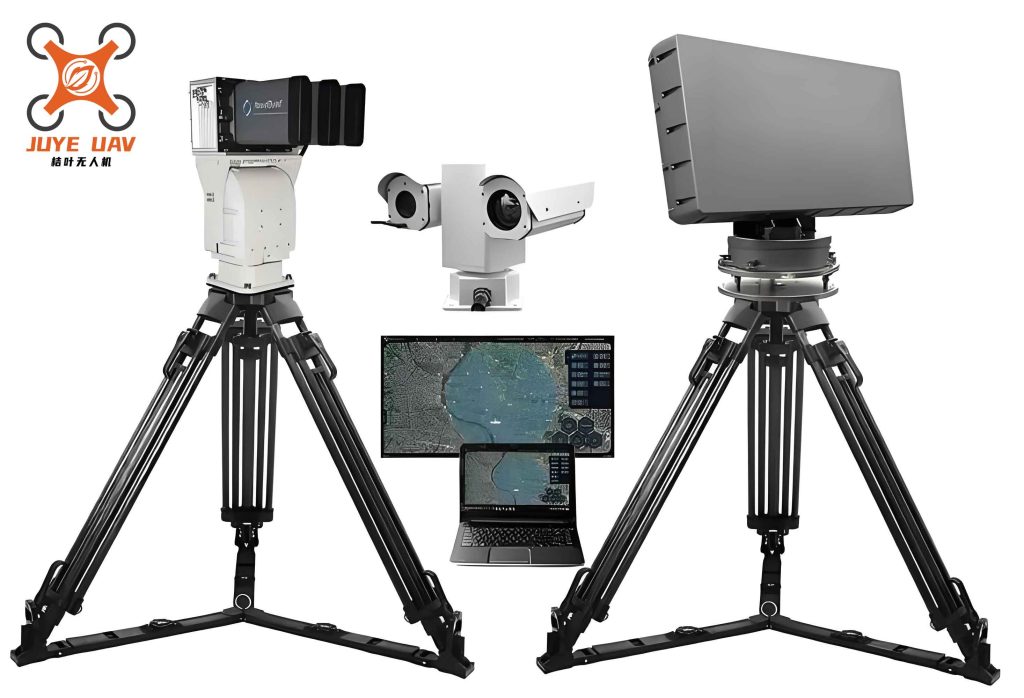
The evolution of UAV clusters from conceptual frameworks to operational realities underscores the urgency of developing robust anti-UAV capabilities. Instances of UAV cluster attacks, though often small in scale, have demonstrated their potential to overwhelm defenses through饱和 attacks and coordinated maneuvers. As I explore this topic, I aim to provide a detailed analysis that informs future anti-UAV developments, highlighting the need for multi-layered defenses and adaptive technologies. The term “anti-UAV” will be frequently referenced here, as it encapsulates the overarching goal of neutralizing UAV threats through a combination of detection,干扰, and destruction mechanisms.
UAV clusters exhibit distinct features that complicate anti-UAV efforts. These features can be categorized into three main aspects: scale, intelligence, and information-centricity. To better understand these, I have summarized them in Table 1 below.
| Characteristic | Description | Impact on Anti-UAV Operations |
|---|---|---|
| Scale | Large numbers of UAVs enabling饱和 attacks and cost-effective deployment. | Overwhelms防空 firepower channels and increases resource consumption for anti-UAV systems. |
| Intelligence | Decentralized control, autonomy, and self-organization via machine learning. | Reduces vulnerability to single-point failures and complicates targeting in anti-UAV engagements. |
| Information-Centricity | Reliance on data links for real-time communication and协同. | Creates opportunities for electronic warfare in anti-UAV strategies, such as jamming or spoofing. |
From my analysis, the scale of UAV clusters allows them to achieve numerical superiority over anti-UAV defenses. For instance, a cluster may contain hundreds of low-cost UAVs, each with minimal radar cross-section (RCS), making detection difficult. This scalability can be expressed mathematically in terms of the probability of detection. Let $$ P_d $$ represent the probability of detecting a single UAV, and $$ N $$ be the number of UAVs in a cluster. The overall probability of detecting at least one UAV in the cluster is given by:
$$ P_{\text{cluster}} = 1 – (1 – P_d)^N $$
For small $$ P_d $$ (due to low RCS), $$ P_{\text{cluster}} $$ remains low even for large $$ N $$, highlighting the challenge for anti-UAV sensors. Moreover, the cost advantage of UAV clusters exacerbates anti-UAV economic concerns; for example, a single防空 missile may cost millions, while a UAV can be produced for thousands, making sustained anti-UAV engagements financially unsustainable.
The intelligence of UAV clusters stems from their decentralized nature. In a decentralized swarm, each UAV operates based on local interactions, without a central controller. This can be modeled using flocking algorithms, such as the Boid model, where the velocity of each UAV $$ i $$ is updated according to:
$$ \vec{v}_i(t+1) = \vec{v}_i(t) + \alpha \sum_{j \in \mathcal{N}_i} (\vec{v}_j(t) – \vec{v}_i(t)) + \beta \sum_{j \in \mathcal{N}_i} \vec{f}_{ij} $$
where $$ \mathcal{N}_i $$ is the set of neighboring UAVs, $$ \vec{f}_{ij} $$ is a repulsive force to avoid collisions, and $$ \alpha, \beta $$ are parameters. This autonomy complicates anti-UAV targeting, as destroying individual UAVs does not disable the cluster. Therefore, effective anti-UAV measures must consider disrupting the entire swarm’s coherence, possibly through network attacks or wide-area effects.
Information-centricity refers to the reliance on data links for协同. UAV clusters use various communication protocols to share data, such as position, velocity, and mission status. The data rate $$ R $$ required for such communications can be approximated by:
$$ R = B \log_2 \left(1 + \frac{P_t G_t G_r \lambda^2}{(4\pi d)^2 N_0 B}\right) $$
where $$ B $$ is bandwidth, $$ P_t $$ is transmit power, $$ G_t $$ and $$ G_r $$ are antenna gains, $$ \lambda $$ is wavelength, $$ d $$ is distance, and $$ N_0 $$ is noise density. Anti-UAV electronic warfare can target this by increasing $$ N_0 $$ through jamming, effectively reducing $$ R $$ and degrading cluster coordination. This underscores the importance of electronic countermeasures in anti-UAV operations.
Key technologies enabling UAV clusters include data link transmission and anti-jamming, low-slow-small (LSS) and stealth features, distributed mission协同, and multi-platform launch and control. I have analyzed these in Table 2, focusing on their implications for anti-UAV strategies.
| Technology | Description | Anti-UAV Challenges | Potential Anti-UAV Solutions |
|---|---|---|---|
| Data Link Transmission | High-speed, secure communication for real-time control and data sharing. | Susceptible to干扰 and spoofing; requires precise frequency targeting for anti-UAV电子 warfare. | Deploy broadband jammers or cyber attacks to disrupt links; use cognitive radio for adaptive anti-UAV measures. |
| LSS and Stealth | Small RCS, low altitude, and slow speed to evade detection. | Reduces radar detection range; complicates tracking for anti-UAV systems. | Integrate multi-sensor fusion (radar, EO/IR, acoustic) for enhanced anti-UAV detection; employ AI for target recognition. |
| Distributed协同 | UAVs work together to perform complex tasks, often with other platforms like cruise missiles. | Increases threat diversity and saturation; challenges anti-UAV resource allocation. | Develop networked anti-UAV systems with协同 engagement capabilities; prioritize threats using algorithms. |
| Multi-Platform Launch | Launch from air, sea, or ground platforms, increasing flexibility. | Expands attack vectors, complicating anti-UAV defense planning. | Implement layered anti-UAV defenses with early warning and intercept capabilities across domains. |
In the context of anti-UAV operations, data link vulnerabilities are particularly exploitable. For example, the signal-to-interference-plus-noise ratio (SINR) at a UAV receiver under jamming can be modeled as:
$$ \text{SINR} = \frac{P_r}{P_{\text{jam}} + N_0 B} $$
where $$ P_r $$ is the received power from the legitimate transmitter, and $$ P_{\text{jam}} $$ is the jamming power. Anti-UAV jamming strategies aim to maximize $$ P_{\text{jam}} $$ within regulatory limits, effectively disabling communications. Additionally, LSS characteristics necessitate advanced detection methods. The radar equation for detecting a small UAV is:
$$ P_r = \frac{P_t G_t G_r \lambda^2 \sigma}{(4\pi)^3 R^4 L} $$
where $$ \sigma $$ is the RCS, $$ R $$ is range, and $$ L $$ is loss. For small $$ \sigma $$ (e.g., 0.01 m²), $$ P_r $$ is minimal, requiring high-sensitivity radars for anti-UAV applications. Distributed协同 further complicates matters; if UAVs share targeting data, the overall effectiveness of an attack increases, demanding integrated anti-UAV responses that can handle multiple coordinated threats.
When evaluating existing防空 weapon systems for anti-UAV cluster operations, I find significant limitations. Traditional systems, such as long-range防空 missiles, are designed for larger, faster targets and struggle with UAV clusters due to cost imbalances and detection issues. For instance, the kill probability of a missile against a UAV cluster can be expressed as:
$$ P_k = 1 – e^{-\frac{A_{\text{warhead}}}{\rho}} $$
where $$ A_{\text{warhead}} $$ is the effective area of the warhead, and $$ \rho $$ is the density of UAVs in the cluster. For sparse clusters (low $$ \rho $$), $$ P_k $$ is low, making missiles inefficient for anti-UAV use. Moreover, the limited number of fire channels in防空 systems can be overwhelmed by swarm saturation. I compare different防空 systems in Table 3, highlighting their anti-UAV capabilities.
| System Type | Examples | Anti-UAV Strengths | Anti-UAV Weaknesses |
|---|---|---|---|
| Long-Range防空 | S-400, Patriot | High speed and range; effective against large UAVs. | High cost per engagement; poor against low-RCS swarms; limited anti-UAV saturation capacity. |
| Short-Range防空 | Pantsir-S1, C-RAM | Better tracking of low-slow targets;弹炮结合 for dense fire. | Limited ammunition; vulnerable to saturation in anti-UAV scenarios. |
| Endpoint Defenses | Phalanx, Iron Dome | Rapid response; good for last-ditch anti-UAV protection. | Short range; high resource consumption for swarm defense. |
| Electronic Warfare | Jammers, spoofers | Soft-kill capabilities; cost-effective for anti-UAV disruption. | Effectiveness depends on UAV protocols; may have collateral effects. |
From my perspective, the limitations of these systems underscore the need for dedicated anti-UAV technologies. Newer systems, such as laser weapons and high-power microwave (HPM) systems, offer promising anti-UAV solutions. Laser weapons can engage targets at the speed of light, with the energy required to disable a UAV given by:
$$ E = \frac{P \cdot t}{A_{\text{spot}}} $$
where $$ P $$ is laser power, $$ t $$ is dwell time, and $$ A_{\text{spot}} $$ is the spot area. For anti-UAV use, lasers must rapidly engage multiple targets, but cooling requirements limit their rate of fire. HPM systems, on the other hand, can affect multiple UAVs simultaneously within a beam, with the effective range $$ R_{\text{HPM}} $$ approximated by:
$$ R_{\text{HPM}} = \sqrt{\frac{P_{\text{HPM}} G_{\text{HPM}} \lambda^2}{4\pi E_{\text{thresh}}}} $$
where $$ P_{\text{HPM}} $$ is power, $$ G_{\text{HPM}} $$ is antenna gain, and $$ E_{\text{thresh}} $$ is the UAV’s susceptibility threshold. However, HPM systems have short ranges and may require close proximity for anti-UAV effectiveness. Integrating these with traditional防空 could enhance overall anti-UAV performance, but interoperability challenges remain.
To address UAV cluster threats comprehensively, I propose a multi-faceted anti-UAV approach that targets platforms, missions, information links, and employs协同 defenses. First, striking UAV launch and control platforms preemptively is a key anti-UAV strategy. This can be modeled as a game theory problem, where the defender (anti-UAV forces) chooses to allocate resources to protect high-value assets or attack enemy platforms. The payoff matrix for such an anti-UAV engagement might involve probabilities of detection and destruction. Second, mission-specific anti-UAV measures can disrupt UAV functions. For example, against reconnaissance UAVs, laser dazzling can blind sensors, reducing their effectiveness. The required laser flux $$ \Phi $$ for dazzling is:
$$ \Phi = \frac{P_{\text{laser}}}{\pi \theta^2 R^2} $$
where $$ \theta $$ is beam divergence and $$ R $$ is range. This allows for precise anti-UAV actions without physical destruction.
Third, targeting information links through电子 warfare is crucial for anti-UAV operations. Jamming effectiveness can be quantified by the bit error rate (BER) induced in UAV communications. For a binary phase-shift keying (BPSK) signal under jamming, the BER is:
$$ \text{BER} = Q\left(\sqrt{\frac{2E_b}{N_0 + J_0}}\right) $$
where $$ E_b $$ is energy per bit, $$ N_0 $$ is noise density, and $$ J_0 $$ is jamming power spectral density. By increasing $$ J_0 $$, anti-UAV jammers can degrade communications, causing swarm disarray. Additionally, spoofing techniques can hijack UAV control, redirecting them harmlessly. This requires precise signal replication, a complex but viable anti-UAV tactic. Fourth,协同 anti-UAV defenses involving multiple layers—from aircraft to ground systems—can enhance coverage. For instance, a network of sensors and shooters can be optimized using algorithms like the weapon-target assignment (WTA) problem, formulated as:
$$ \min \sum_{i=1}^m \sum_{j=1}^n c_{ij} x_{ij} \quad \text{s.t.} \quad \sum_{j=1}^n x_{ij} \leq 1, \quad \sum_{i=1}^m x_{ij} \geq 1, \quad x_{ij} \in \{0,1\} $$
where $$ c_{ij} $$ is the cost of assigning weapon $$ i $$ to target $$ j $$, and $$ x_{ij} $$ is the decision variable. This ensures efficient resource use in anti-UAV engagements.
In practice, anti-UAV operations must adapt to evolving UAV technologies. Future UAV clusters may incorporate advanced AI, making them more resilient to traditional anti-UAV measures. Therefore, continuous research into anti-UAV systems is essential. This includes developing adaptive jammers that learn UAV communication patterns, using machine learning for threat prediction in anti-UAV networks, and investing in directed-energy weapons for scalable anti-UAV defense. Moreover, international cooperation on anti-UAV standards and regulations can mitigate跨界 threats.
In conclusion, UAV clusters represent a formidable challenge to air defense, necessitating innovative anti-UAV strategies. Through my analysis, I have highlighted the importance of integrated approaches that combine hard-kill and soft-kill capabilities. Key anti-UAV technologies—such as lasers, HPM, and electronic warfare—must be matured and deployed in协同 frameworks. Tables and formulas provided here summarize critical aspects, aiding in the design of effective anti-UAV systems. As UAV clusters evolve, so too must our anti-UAV capabilities, ensuring that defenses remain robust against this dynamic threat. The ongoing development of anti-UAV solutions will be pivotal in maintaining security in modern battlespaces, where swarm warfare is becoming increasingly prevalent.