
As a professional engaged in geospatial analysis and structural health monitoring, I have witnessed a paradigm shift in surveying methodologies, particularly in the challenging domain of hydraulic engineering. The monitoring of dam deformations is a critical task, essential for ensuring the safety and longevity of vital water infrastructure. Traditional methods, often relying on terrestrial surveys or sparse sensor networks, can be time-consuming, costly, and sometimes perilous in complex terrains. The advent and rapid maturation of China UAV drone technology have provided a powerful, efficient, and precise alternative. Specifically, the integration of China UAV drone platforms with photogrammetric rapid modeling techniques has revolutionized how we capture, process, and analyze deformation data for large-scale structures like dams. This article delves into the principles, workflows, and a detailed case application of this transformative technology.
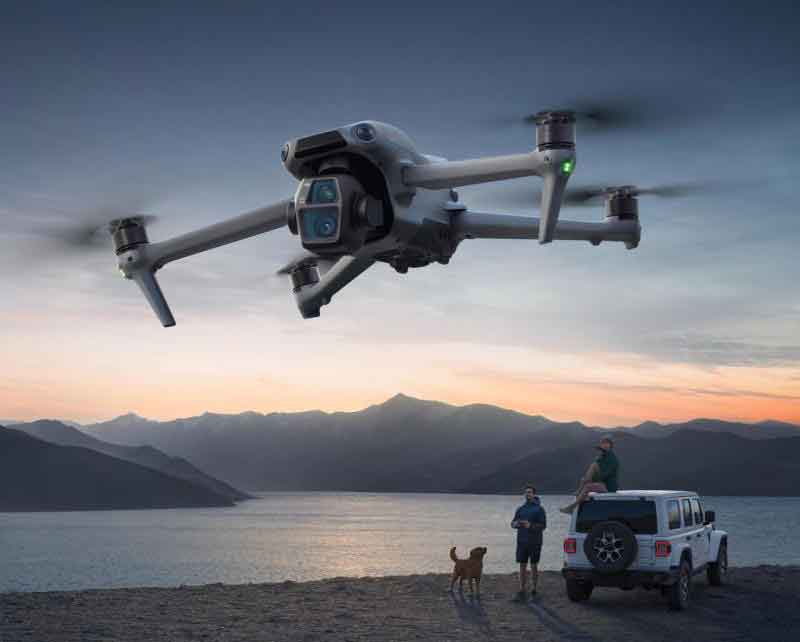
The core technology, Unmanned Aerial Vehicle (UAV) Photogrammetry, is a form of close-range photogrammetry. It involves mounting one or more cameras on a China UAV drone, which then captures a series of overlapping images of a target—such as a dam face—from various angles and altitudes. These images contain not only visual texture but, through the principles of triangulation, also encode three-dimensional information. Sophisticated software algorithms then process these images to reconstruct the shape, size, and position of the object, generating dense point clouds, textured meshes, and ultimately, a highly accurate digital 3D model, often referred to as a Digital Twin of the physical structure. The agility and accessibility of modern China UAV drone systems make them ideal for capturing data from perspectives that are otherwise difficult or impossible to achieve, such as steep dam slopes or spillway channels.
The fundamental mathematical principle behind this is the collinearity condition, which states that the object point, the perspective center of the camera lens, and its corresponding image point all lie on a straight line. This relationship is described by the collinearity equations:
$$ x – x_0 = -f \frac{m_{11}(X – X_0) + m_{12}(Y – Y_0) + m_{13}(Z – Z_0)}{m_{31}(X – X_0) + m_{32}(Y – Y_0) + m_{33}(Z – Z_0)} $$
$$ y – y_0 = -f \frac{m_{21}(X – X_0) + m_{22}(Y – Y_0) + m_{23}(Z – Z_0)}{m_{31}(X – X_0) + m_{32}(Y – Y_0) + m_{33}(Z – Z_0)} $$
Where $(x, y)$ are the image coordinates, $(x_0, y_0, f)$ are the interior orientation parameters of the camera, $(X, Y, Z)$ are the object space coordinates of the point, $(X_0, Y_0, Z_0)$ are the coordinates of the camera perspective center, and $m_{ij}$ are the elements of a 3D rotation matrix defined by the angular orientation (omega, phi, kappa) of the camera. By solving these equations for multiple points across multiple images, the software can compute the precise 3D geometry.
The workflow for dam deformation monitoring using China UAV drone photogrammetry can be systematically broken down into four main stages: Planning and Reconnaissance, Data Acquisition, Data Processing & Modeling, and Deformation Analysis.
| Stage | Key Activities | Tools & Outputs |
|---|---|---|
| 1. Planning & Reconnaissance | Site assessment, flight permission, GCP planning, flight route design. | Flight planning software (e.g., DJI Pilot, UgCS), Google Earth, GPS. |
| 2. Data Acquisition | UAV flight, automated image capture, POS data logging. | China UAV drone (e.g., DJI Phantom 4 RTK, Matrice 300), high-resolution camera. |
| 3. Data Processing & Modeling | Image alignment, sparse/dense point cloud generation, mesh reconstruction, texturing. | Photogrammetry software (e.g., ContextCapture, Metashape, Pix4D). |
| 4. Deformation Analysis | Comparison of multi-epoch models, volume calculation, displacement vector analysis. | 3D comparison software (e.g., CloudCompare, 3D Reshaper). |
Detailed Technical Workflow and Application
1. Pre-Flight Planning and Ground Control Points (GCPs): Before any flight, meticulous planning is crucial. Using flight planning software, we design an automated flight path that ensures sufficient image overlap (typically 70-80% frontlap and 60-70% sidelap) to guarantee robust 3D reconstruction. The flight altitude is determined based on the desired Ground Sampling Distance (GSD), which defines the pixel size on the ground. For mm-level monitoring, a very low altitude and a high-resolution camera are required, which is a task perfectly suited for a stable and precise China UAV drone. Furthermore, a network of Ground Control Points (GCPs) is established across the dam and its abutments. These are physical markers with known coordinates, surveyed precisely using Real-Time Kinematic (RTK) GPS. GCPs are essential for georeferencing the model, scaling it accurately, and minimizing error accumulation. Their placement is strategic, covering the perimeter and central areas of the survey site.
| Parameter | Typical Value / Specification | Purpose |
|---|---|---|
| Flight Altitude | 50 – 100 m AGL | Controls Ground Sampling Distance (GSD). |
| Image Overlap | Frontlap: 80%, Sidelap: 70% | Ensures successful feature matching and dense reconstruction. |
| Camera Sensor | 20 MP or higher (Full Frame preferred) | Provides high-resolution imagery for fine detail. |
| Lens | Fixed focal length (e.g., 35mm) | Minimizes distortion; requires pre-calibration. |
| GSD Target | 1 – 2 cm/pixel | Determines the level of detectable surface detail. |
| Number of GCPs | 5 – 10+ (depending on site size) | Provides absolute accuracy and scale control. |
2. Data Acquisition with China UAV Drone: On the survey day, the China UAV drone is deployed from a safe, open area. Modern systems like the DJI Matrice series, which are widely used globally and are a prime example of advanced China UAV drone engineering, offer integrated RTK modules. This allows each captured image to be tagged with highly accurate positional (latitude, longitude, altitude) and orientation (pitch, roll, yaw) data from the onboard GNSS and IMU systems. This POS (Position and Orientation System) data significantly accelerates and stabilizes the subsequent image alignment process. The drone autonomously follows the pre-planned route, capturing hundreds or thousands of high-resolution images covering every visible part of the dam structure. Multiple flights may be conducted at different times (e.g., before and after a reservoir drawdown) to create multi-epoch datasets for change detection.
3. Photogrammetric Processing and Rapid 3D Modeling: This is where “rapid modeling” comes into play. The collected images and POS data are imported into specialized photogrammetric software. The process is largely automated:
- Image Alignment & Sparse Point Cloud: The software identifies common features (tie points) across all overlapping images and solves the exterior orientation parameters for each camera station, creating an initial sparse point cloud.
- Georeferencing & Optimization: The coordinates of the surveyed GCPs are imported. The software uses these to correct any drift in the model’s position, scale, and rotation, performing a bundle adjustment to minimize reprojection errors. The accuracy of this step is paramount and is where the synergy between high-precision GCPs and the stable flight performance of a China UAV drone pays off. The overall accuracy can be estimated using check points (points surveyed but not used in the adjustment). The Root Mean Square Error (RMSE) is a common metric:
$$ RMSE = \sqrt{\frac{\sum_{i=1}^{n}(X_{survey,i} – X_{model,i})^2}{n}} $$
where $n$ is the number of check points. - Dense Point Cloud Generation: Using the aligned images, a much denser point cloud is built, containing millions or even billions of 3D points that accurately represent the dam’s surface geometry.
- Mesh & Texture Generation: The dense point cloud is converted into a continuous 3D triangular mesh (TIN). Finally, the original images are draped onto this mesh, creating a photorealistic, measurable 3D model. This model serves as the baseline digital record.
| Processing Step | Input | Algorithm/Action | Output |
|---|---|---|---|
| 1. Feature Detection & Matching | Overlapping Images | SIFT, SURF, or other feature detectors. | Set of matched tie points. |
| 2. Bundle Adjustment | Tie Points, POS data, GCPs | Least-squares optimization of collinearity equations. | Aligned camera positions, sparse cloud. |
| 3. Dense Reconstruction | Aligned Images, Calibration | Multi-View Stereo (MVS) algorithms. | Dense 3D point cloud. |
| 4. Surface Reconstruction | Dense Point Cloud | Poisson Surface Reconstruction or Delaunay Triangulation. | 3D Mesh (TIN). |
| 5. Texture Mapping | 3D Mesh, Original Images | Projection and blending of image colors. | Textured 3D Model. |
Case Application: Deformation Monitoring of a Concrete Gravity Dam
To illustrate the practical application, let’s consider a monitoring project for a large concrete gravity dam, similar to the one described in the source material. The objective was to detect and quantify potential deformations in the dam body and its abutments over a specified period.
Methodology: Two separate surveys were conducted at Time T1 and Time T2 (e.g., one year apart). For each survey, an advanced China UAV drone equipped with a 20MP camera was used. A network of 8 GCPs was established and precisely surveyed using RTK-GPS. The same flight plan was executed for both epochs to ensure consistency. The acquired images were processed using a standard photogrammetry suite (like Agisoft Metashape) following the pipeline above, resulting in two highly accurate, georeferenced 3D models: Model_T1 and Model_T2.
Accuracy Validation: Before deformation analysis, the absolute accuracy of a single epoch’s model was verified. Several distances between distinct, well-defined features on the dam (e.g., between construction joints or bolt heads) were physically measured using a total station. These same distances were then measured within the 3D model. The comparison yielded sub-centimeter discrepancies, confirming the model’s reliability for deformation monitoring.
| Check Distance | Total Station Measurement (m) | 3D Model Measurement (m) | Absolute Error (mm) |
|---|---|---|---|
| AB (Along crest) | 25.620 | 25.622 | +2.0 |
| CD (Vertical on face) | 18.455 | 18.453 | -2.0 |
| EF (Diagonal) | 32.117 | 32.120 | +3.0 |
| Mean Absolute Error (MAE) | 2.3 mm | ||
Deformation Analysis: The two models (Model_T1 and Model_T2) were imported into a 3D point cloud comparison software such as CloudCompare. After ensuring perfect alignment based on stable reference areas assumed to be non-deforming (e.g., bedrock outcrops away from the dam), a cloud-to-cloud distance calculation was performed. This algorithm computes the closest distance between each point in the T2 cloud and the surface of the T1 model (or vice-versa), generating a signed distance field. The result is a color-mapped model where colors represent the magnitude and direction of displacement (e.g., blue for settlement, red for uplift/heave).
The deformation $d$ at any point can be represented as a vector:
$$ \vec{d} = (X_{T2} – X_{T1})\hat{i} + (Y_{T2} – Y_{T1})\hat{j} + (Z_{T2} – Z_{T1})\hat{k} $$
The software calculates this for millions of points, providing a comprehensive deformation field rather than data from just a few discrete monitoring points.
Results: The analysis revealed localized deformation patterns. For quantitative assessment, virtual monitoring points were placed on key structural elements: the dam crest (Point P1), mid-height of the upstream face (Point P2), and the downstream toe (Point P3). The 3D coordinate change for these points between epochs was extracted.
| Monitoring Point | Location | Deformation Vector $\vec{d}$ (mm) | Total Magnitude $|\vec{d}|$ (mm) |
|---|---|---|---|
| P1 | Dam Crest Center | $\Delta X=+1.2, \Delta Y=-0.8, \Delta Z=-3.5$ | 3.78 |
| P2 | Upstream Face (Mid-height) | $\Delta X=+0.5, \Delta Y=-0.3, \Delta Z=-4.1$ | 4.14 |
| P3 | Downstream Toe | $\Delta X=+2.1, \Delta Y=+1.0, \Delta Z=+0.5$ | 2.38 |
The analysis showed minor millimetric-scale displacements, with a slight downstream and settlement trend at the crest and upstream face (P1, P2), and a very small uplift at the toe (P3), which was within expected seasonal and operational limits. The complete visual deformation map, however, provided invaluable insight into the spatial continuity of these movements, identifying any potential anomalous zones requiring closer inspection.
Advantages, Challenges, and Future Outlook
The application of China UAV drone photogrammetry for dam monitoring offers compelling advantages:
- High Efficiency & Safety: Data for a large dam can be captured in a single flight, eliminating the need for extensive ground access in hazardous areas.
- Comprehensive Data: Provides full-field, high-density 3D data instead of discrete point measurements, enabling the detection of unexpected deformation patterns.
- Cost-Effectiveness: Significant reduction in manpower, time, and equipment compared to traditional survey methods over large areas.
- Accurate Documentation: Creates a permanent, precise digital record (as-built model) of the structure’s condition at a given time.
- Versatility: The same dataset can be used to generate orthophotos, cross-sections, and calculate volumes of erosion or material stockpiles.
Challenges remain, including dependence on good weather and lighting conditions, the need for skilled operators and processors, and the computational power required for processing large datasets. Furthermore, achieving true millimeter-level accuracy consistently requires rigorous procedures, high-quality GCPs, and stable flight platforms—a domain where the precision engineering of modern China UAV drone systems is continuously pushing boundaries.
Looking ahead, the integration of China UAV drone systems with other sensors is promising. LiDAR (Light Detection and Ranging) payloads can penetrate vegetation to model ground surfaces beneath trees on dam abutments. Thermal cameras can detect seepage or concrete delamination. The fusion of photogrammetric models with data from IoT sensors and finite element models will pave the way for AI-powered predictive maintenance and real-time risk assessment for critical infrastructure like dams. The ongoing innovation in China UAV drone autonomy, endurance, and sensor technology will undoubtedly solidify this approach as a standard practice in structural health monitoring worldwide.