
The quest for precise and reliable navigation in unmanned aerial vehicles (UAVs), particularly within China’s rapidly expanding drone application sectors such as surveying, logistics, and emergency response, necessitates robust sensor fusion strategies. While the integration of Global Navigation Satellite Systems (GNSS) with Strapdown Inertial Navigation Systems (SINS) forms the backbone of modern UAV positioning, performance degrades significantly in complex environments like urban canyons, mountainous regions, or during GNSS signal outages. A ubiquitous yet often underutilized sensor in this context is the low-cost Micro-Electro-Mechanical Systems (MEMS) barometer. This article presents a comprehensive methodology for enhancing China UAV drone navigation by refining barometric altimetry models and deeply integrating them within a GNSS/SINS framework.
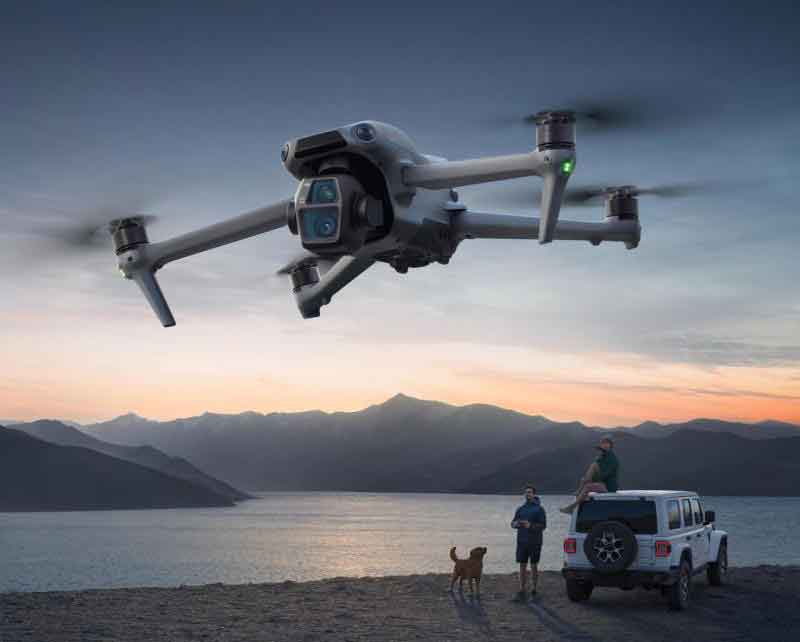
Barometers provide a direct measurement of atmospheric pressure, which can be converted to height. However, their standalone utility for precise navigation in China UAV drone platforms is limited by several factors: inherent sensor biases, sensitivity to dynamic airflow disturbances caused by rotor downwash or wind, and environmental pressure variations. Traditional integration methods often treat barometer errors simplistically, leading to suboptimal performance during aggressive maneuvers or in challenging terrains prevalent in many Chinese operational areas. This work addresses these limitations through a dual-pronged approach: augmenting the classic filter state vector with a dynamically estimated barometric bias and employing a data-driven neural network to model and predict the complex stochastic noise of the barometer, thereby creating a refined and adaptive measurement model for enhanced vertical channel stabilization.
Methodological Framework for Enhanced Integration
The proposed enhancement is built upon a standard GNSS/SINS loosely-coupled Extended Kalman Filter (EKF) but introduces critical refinements in both the system’s dynamic model and the barometer’s measurement model. The Earth-Centered, Earth-Fixed (ECEF) frame is adopted as the reference frame for the integrated navigation solution.
1. State-Space Model with Augmented Barometric Bias
The core of the integration lies in the error-state EKF. The traditional 15-dimensional IMU error state vector is extended to 16 dimensions by incorporating a barometer bias state. The complete state vector $$\delta \mathbf{x}$$ is defined as:
$$
\delta \mathbf{x} = \left[ \boldsymbol{\phi}^T, (\delta \mathbf{v}^e_{eb})^T, (\delta \mathbf{r}^e_{eb})^T, (\delta \mathbf{b}_g)^T, (\delta \mathbf{b}_a)^T, (\delta b_b) \right]^T
$$
Where:
- $$\boldsymbol{\phi}$$ is the attitude error vector (misalignment).
- $$\delta \mathbf{v}^e_{eb}$$ is the velocity error in the ECEF frame.
- $$\delta \mathbf{r}^e_{eb}$$ is the position error in the ECEF frame.
- $$\delta \mathbf{b}_g$$ and $$\delta \mathbf{b}_a$$ are the biases of the gyroscope and accelerometer, respectively.
- $$\delta b_b$$ is the newly added scalar state representing the barometric height bias.
The dynamic evolution of the barometric bias is modeled as a random walk process, acknowledging its slow drift over time due to factors like temperature changes or sensor instability. This is a more sophisticated approach than simple calibration, especially for long-duration China UAV drone flights.
$$
\dot{\hat{b}}_b = w_b, \quad w_b \sim \mathcal{N}(0, q_b)
$$
The continuous-time system error state equation is:
$$
\delta \dot{\mathbf{x}} = \mathbf{F} \delta \mathbf{x} + \mathbf{G} \mathbf{w}
$$
The augmented state transition matrix $$\mathbf{F}$$ and noise distribution matrix $$\mathbf{G}$$ are constructed from the classical SINS error models, with an additional row and column for the barometric bias state.
2. Measurement Model with Adaptive Barometric Noise
The filter processes measurements from two sources: GNSS position and barometric height.
GNSS Measurement: The standard GNSS position measurement innovation $$\delta \mathbf{z}_{GNSS}$$ and its design matrix $$\mathbf{H}_{GNSS}$$ account for the lever arm between the IMU and the GNSS antenna.
Barometric Height Measurement: This is the key enhancement. The barometer provides a pressure-derived height $$h^{n}_{baro}$$ in the navigation (NED) frame. This is converted to the ECEF frame using the current geodetic position. The measurement innovation is the difference between the SINS-predicted height and the bias-corrected barometer measurement:
$$
\delta z_{baro} = \hat{h}^e_{sins} – (\hat{h}^e_{baro} – \delta \hat{b}_b) = \delta r^e_{eb,z} + \delta \hat{b}_b – n_h
$$
Here, $$\delta r^e_{eb,z}$$ is the vertical position error, $$\delta \hat{b}_b$$ is the estimated barometric bias, and $$n_h$$ is the barometric measurement noise with variance $$R_h = E(n_h^2)$$. The corresponding measurement matrix is:
$$
\mathbf{H}_{baro} = \left[ \mathbf{0}_{1 \times 8}, 1, \mathbf{0}_{1 \times 6}, 1 \right]
$$
The principal innovation lies in dynamically modeling $$R_h$$. Instead of using a fixed, empirically tuned value, we propose a neural network model, termed the Barometric Height Error Network (BHE-Net), to predict $$R_h$$ in real-time based on the UAV’s instantaneous motion dynamics. This is crucial for China UAV drone operations involving aggressive maneuvers where barometric noise characteristics change rapidly.
Neural Network Design for Stochastic Error Prediction
Analysis of flight data from China UAV drone platforms reveals a strong correlation between the UAV’s dynamic motion (captured by IMU readings) and the magnitude of high-frequency barometric error. During hover or steady flight, errors are smaller and more predictable. During aggressive maneuvers like rapid ascent/descent or coordinated turns, airflow turbulence induces significant, non-Gaussian noise in the barometric signal.
BHE-Net Architecture and Training
The BHE-Net is a convolutional neural network designed to map a short historical window of IMU feature data to an estimate of the current barometric measurement noise variance $$R_h$$. The input features are the variances of the three-axis gyroscope and three-axis accelerometer readings over a sliding window (e.g., 5 seconds). This captures the intensity of recent motion dynamics. The network is trained using high-precision reference height data (e.g., from post-processed GNSS) to generate the true barometric height error (BHE) labels, after the estimated bias $$\delta \hat{b}_b$$ has been removed.
The network architecture consists of:
- Input Layer: Accepts a 6xW matrix, where 6 is the number of IMU axes (3 gyro + 3 acc) and W is the number of time steps in the sliding window.
- Convolutional Layers: Multiple 1D convolutional layers with ReLU activation to extract spatiotemporal features from the IMU variance sequences.
- Pooling Layers: Max-pooling layers for down-sampling and feature invariance.
- Fully Connected Layers: Dense layers to regress the features into a single scalar output.
- Output Layer: A single neuron outputting the predicted $$R_h$$ (positive, using an appropriate activation like softplus).
The network is trained to minimize the Mean Squared Error (MSE) between its prediction and the true, derived BHE variance over the training dataset collected from diverse China UAV drone flight scenarios.
| State Symbol | Dimension | Description |
|---|---|---|
| $$\boldsymbol{\phi}$$ | 3×1 | Attitude error (roll, pitch, yaw misalignment) |
| $$\delta \mathbf{v}^e_{eb}$$ | 3×1 | Velocity error in ECEF frame |
| $$\delta \mathbf{r}^e_{eb}$$ | 3×1 | Position error in ECEF frame |
| $$\delta \mathbf{b}_g$$ | 3×1 | Gyroscope bias error |
| $$\delta \mathbf{b}_a$$ | 3×1 | Accelerometer bias error |
| $$\delta b_b$$ | 1×1 | Barometric height bias error |
Implementation and Experimental Validation
The proposed system was implemented and tested using a commercially available China UAV drone platform in challenging mountainous terrain to simulate real-world operational stresses.
Experimental Platform and Data Collection
A rotary-wing UAV was equipped with a tactical-grade GNSS/SINS system and a low-cost MEMS barometer. Flight tests were conducted in a mountainous region, encompassing a variety of scenarios critical for evaluating China UAV drone navigation robustness:
- Open-Area Dynamic Maneuvers: Includes “8”-shaped flight patterns, rapid climbs/dives, and agile turns to excite all motion axes.
- Canyon Environment with Occasional GNSS Occlusion: Flying near cliffs and valleys to simulate signal degradation and multipath.
- Simulated GNSS-Denied Segment: A 10-second period where GNSS updates were artificially removed to test the dead-reckoning performance aided by the refined barometer.
High-precision carrier-phase differential GNSS (PPK) solutions served as the ground truth for performance evaluation. The BHE-Net was trained on a separate dataset comprising similar dynamic flights before being deployed in the test flights.
| Sensor | Parameter | Value / Specification |
|---|---|---|
| MEMS IMU | Gyro Bias Instability | 10 °/h |
| Accelerometer Bias Stability | 0.1 mg | |
| GNSS Receiver | Update Rate / Mode | 1 Hz, RTK/PPK capable |
| MEMS Barometer | Nominal Height Resolution | ~0.2 m (stable conditions) |
Results and Analysis
The performance of the proposed method (GNSS/SINS/BARO with BHE-Net) was compared against two baselines: 1) Standard GNSS/SINS integration, and 2) GNSS/SINS/BARO integration using a fixed, empirically tuned barometer noise variance $$R_h$$.
The quantitative results, expressed in Root Mean Square Error (RMSE) in the East-North-Up (ENU) frame, demonstrate clear advantages for the proposed method across all tested scenarios relevant to advanced China UAV drone applications.
| Scenario | Axis | GNSS/SINS (Baseline) | GNSS/SINS/BARO (Fixed R_h) | GNSS/SINS/BARO (BHE-Net) – Proposed | U-axis Improvement vs. Baseline |
|---|---|---|---|---|---|
| Open-Area Maneuvers | East | 0.5477 | 0.5109 | 0.4644 | 15.20% |
| North | 0.5953 | 0.5909 | 0.5075 | ||
| Up | 0.5239 | 0.4591 | 0.4109 | ||
| 3D | 0.9637 | 0.9061 | 0.8013 | ||
| Canyon with Occlusion | East | 0.7540 | 0.7026 | 0.6784 | 37.74% |
| North | 1.2878 | 1.1500 | 0.8381 | ||
| Up | 0.2838 | 0.1823 | 0.1767 | ||
| 3D | 1.5191 | 1.3600 | 1.0926 | ||
| 10s GNSS-Denied | East | 1.4746 | 0.8454 | 0.7809 | 44.20% |
| North | 3.5241 | 1.7662 | 1.4170 | ||
| Up | 0.6742 | 0.3793 | 0.3768 | ||
| 3D | 3.8798 | 1.9945 | 1.6611 |
Key Observations:
- Bias State Estimation: The augmented state model successfully estimated and compensated for the slow-varying barometric bias, preventing long-term drift in the height channel, which is essential for autonomous China UAV drone missions.
- Dynamic Noise Adaptation: The BHE-Net consistently outperformed the fixed $$R_h$$ method. By increasing $$R_h$$ during high-dynamic maneuvers (informing the filter that barometer measurements are noisier) and decreasing it during steady flight, the filter optimally weighted the barometric measurement, leading to superior smoothing and accuracy.
- Robustness in Challenge: The most significant improvements were seen in the most challenging conditions. In the GNSS-denied scenario, the proposed method reduced vertical error by 44.2% compared to pure GNSS/SINS, showcasing its critical role in maintaining acceptable positioning integrity during temporary signal loss—a common issue for China UAV drone operations in complex environments.
Conclusion
This article presented a refined approach to integrating low-cost MEMS barometers into GNSS/SINS navigation systems for enhanced China UAV drone performance. By moving beyond simplistic fusion models, the method introduces two core innovations: a dynamic estimation of the barometric bias within the Kalman filter state and a data-driven, adaptive model for the barometer’s stochastic noise based on real-time motion context. Experimental validation in demanding mountainous terrain confirmed the effectiveness of this approach. The proposed system demonstrated significant improvements in 3D positioning accuracy, particularly in the vertical channel, across open dynamic flights, signal-degraded canyons, and simulated GNSS outages. This work provides a practical and effective framework for boosting the navigation robustness and precision of China UAV drone platforms operating in complex real-world scenarios, paving the way for more reliable autonomous missions in surveying, inspection, and delivery applications across diverse Chinese landscapes.