
In recent years, the proliferation of UAV drones has revolutionized numerous fields, from commercial deliveries to military surveillance, enhancing efficiency and enabling innovative applications. However, this rapid expansion has also raised significant public safety and privacy concerns, necessitating robust regulatory measures for UAV drones flight activities. Radar technology, as a reliable sensing modality, plays a pivotal role in detecting and identifying UAV drones due to its ability to operate in various weather conditions and provide accurate range, velocity, and micro-Doppler signatures. Traditional machine learning approaches often rely on handcrafted features, such as radar cross-section (RCS) and micro-Doppler signatures (MDS), but these methods can be time-consuming and less adaptable to complex scenarios. The advent of deep learning has transformed UAV drones detection and recognition by enabling automatic feature extraction, leading to superior performance in handling diverse challenges like distinguishing UAV drones from birds, classifying UAV drones types, and dealing with low radar cross-sections. This survey focuses on deep learning techniques applied to radar-based UAV drones detection and recognition, providing a systematic overview of convolutional neural networks (CNNs), recurrent neural networks (RNNs), and Transformer networks, along with their variants. I will explore their design characteristics, performance metrics, and applications, incorporating tables and mathematical formulations to summarize key insights. The integration of multi-sensor fusion and pre-trained foundation models represents future directions, aiming to enhance the robustness and accuracy of UAV drones surveillance systems.
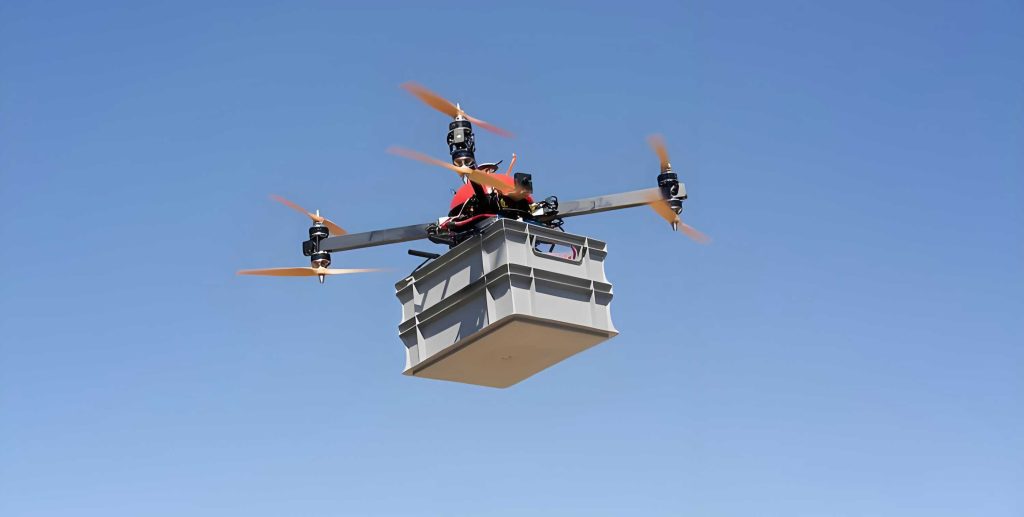
Radar systems emit radio waves and analyze the echoes to detect targets like UAV drones, offering advantages such as long-range coverage and resilience to environmental factors. Common radar types for UAV drones include surveillance radar, millimeter-wave radar, pulse-Doppler radar, continuous-wave radar, and frequency-modulated continuous-wave (FMCW) radar. The micro-Doppler effect, generated by rotating propellers of UAV drones, produces unique signatures in radar returns, which serve as discriminative features for classification. Deep learning models leverage these signatures to automate detection and recognition tasks, overcoming limitations of traditional methods. In this survey, I will delve into the three major deep learning feature extractors—CNNs, RNNs, and Transformers—and their applications in radar-based UAV drones tasks. I will also discuss datasets, experimental setups, and performance evaluations, using tables to compare different approaches and formulas to elucidate underlying principles. The goal is to provide a comprehensive resource for researchers and practitioners working on UAV drones detection and recognition, highlighting trends and challenges in this evolving field.
Deep Neural Networks: An Overview
Deep learning has emerged as a powerful paradigm for processing radar data, with CNNs, RNNs, and Transformers serving as core architectures. CNNs excel at capturing spatial features from images, such as spectrograms or range-Doppler maps, making them ideal for UAV drones classification tasks. The convolution operation in CNNs can be mathematically expressed as:
$$y_{i,j} = \sum_{m=0}^{M-1} \sum_{n=0}^{N-1} w_{m,n} \cdot x_{i+m, j+n} + b$$
where $y_{i,j}$ is the output feature map element, $w_{m,n}$ are the filter weights, $x_{i+m, j+n}$ is the input data, and $b$ is the bias term. This local connectivity and weight sharing reduce parameters and enable efficient feature learning for UAV drones signatures. RNNs, including long short-term memory (LSTM) and gated recurrent units (GRU), model sequential data by maintaining hidden states over time, which is useful for analyzing time-series radar signals from UAV drones. The LSTM update equations are:
$$f_t = \sigma(W_f \cdot [h_{t-1}, x_t] + b_f)$$
$$i_t = \sigma(W_i \cdot [h_{t-1}, x_t] + b_i)$$
$$\tilde{C}_t = \tanh(W_C \cdot [h_{t-1}, x_t] + b_C)$$
$$C_t = f_t \odot C_{t-1} + i_t \odot \tilde{C}_t$$
$$o_t = \sigma(W_o \cdot [h_{t-1}, x_t] + b_o)$$
$$h_t = o_t \odot \tanh(C_t)$$
where $f_t$, $i_t$, $o_t$ are forget, input, and output gates; $C_t$ is the cell state; $h_t$ is the hidden state; $\sigma$ is the sigmoid function; and $\odot$ denotes element-wise multiplication. These gates help mitigate gradient vanishing issues, allowing RNNs to capture long-term dependencies in UAV drones radar echoes. Transformers, based on self-attention mechanisms, have recently gained prominence for their ability to model global dependencies without recurrent connections. The self-attention computation for UAV drones data is given by:
$$\text{Attention}(Q, K, V) = \text{softmax}\left(\frac{QK^T}{\sqrt{d_k}}\right)V$$
where $Q$, $K$, $V$ are query, key, and value matrices derived from input embeddings, and $d_k$ is the dimensionality. This enables Transformers to process radar sequences in parallel, making them efficient for real-time UAV drones detection. The following table summarizes these networks and their relevance to UAV drones tasks:
| Network Type | Key Characteristics | Application to UAV Drones | Typical Input Data |
|---|---|---|---|
| CNN | Spatial feature extraction via convolution layers | Classification using spectrograms or range-Doppler images | Micro-Doppler spectrograms, range-Doppler maps |
| RNN (LSTM/GRU) | Temporal modeling with memory cells | Sequence analysis of radar time-series signals | Time-domain radar echoes, Doppler profiles |
| Transformer | Global dependency modeling with self-attention | End-to-end detection from raw radar data | Pulse-range matrices, complex-valued sequences |
These architectures form the foundation for numerous deep learning methods applied to UAV drones detection and recognition, as detailed in subsequent sections.
CNN-Based Methods for UAV Drones Detection and Recognition
Convolutional neural networks have been extensively employed for UAV drones tasks due to their proficiency in image-based feature learning. Early approaches used traditional CNNs with multiple convolution and pooling layers to classify UAV drones based on micro-Doppler spectrograms. For instance, a deep CNN (DCNN) with four convolution layers and two fully connected layers achieved 93% accuracy in distinguishing four types of UAV drones using simulated micro-Doppler data transformed via short-time Fourier transform (STFT) and Wigner-Ville distribution. The STFT for a radar signal $s(t)$ is defined as:
$$\text{STFT}(t, f) = \int_{-\infty}^{\infty} s(\tau) w(\tau – t) e^{-j2\pi f \tau} d\tau$$
where $w(\tau – t)$ is a window function, and the resulting time-frequency representation serves as input for CNN-based classification of UAV drones. In real-world scenarios, CNNs have been applied to datasets like RDRD (Range-Doppler Radar Dataset), which includes UAV drones, pedestrians, and vehicles. A lightweight CNN with 32 kernels achieved 97.63% accuracy in UAV drones recognition, demonstrating the efficacy of CNNs for processing range-Doppler matrices. To enhance performance, researchers have explored multi-channel CNNs that fuse features from different representations, such as range profiles, micro-Doppler images, and motion trajectories, improving classification accuracy for UAV drones and birds. The table below summarizes key CNN-based methods for UAV drones tasks:
| Method | CNN Architecture | Radar Type | Dataset | Accuracy for UAV Drones | Key Features |
|---|---|---|---|---|---|
| DCNN for Micro-Doppler | 4 conv layers, 2 FC layers | Simulated CW radar | Simulated spectrograms | 93% | Uses STFT and Wigner-Ville distributions |
| DopplerNet | 1 conv layer (32 kernels), 3 FC layers | FMCW radar | RDRD dataset | 99%+ | Processes 3D range-Doppler-time tensors |
| Multi-Channel CNN | Dual-channel CNN with fusion | Surveillance radar | Real-world radar data | 95% | Fuses range profiles and range-Doppler maps |
| Complex-valued CNN | 3-layer complex CNN | Millimeter-wave radar | Real radar echoes | 93.8% | Utilizes both amplitude and phase information |
| Lightweight CNN for FMCW | Large kernel conv layers | FMCW radar | Synthetic and real data | 99.21% | Employs expanded receptive fields for micro-Doppler |
Pre-trained CNN models, such as GoogLeNet, AlexNet, VGG, and ResNet, have also been adapted for UAV drones classification via transfer learning. GoogLeNet, with its inception modules, achieved 100% accuracy on outdoor micro-Doppler images for UAV drones recognition, while AlexNet attained over 95% accuracy on pulsed radar data. The residual connections in ResNet help train deeper networks, with ResNet-SP achieving 83.39% accuracy for detecting five classes including UAV drones. The YOLO (You Only Look Once) framework, a CNN-based object detector, has been used for joint detection and recognition of UAV drones in range-Doppler images, achieving F1-scores above 99%. These methods highlight the versatility of CNNs in handling diverse radar data formats for UAV drones applications.
Mathematically, the performance of CNN-based classifiers for UAV drones can be evaluated using metrics like accuracy, precision, recall, and F1-score. For a binary classification task distinguishing UAV drones from non-UAV drones, these are defined as:
$$\text{Accuracy} = \frac{TP + TN}{TP + TN + FP + FN}$$
$$\text{Precision} = \frac{TP}{TP + FP}$$
$$\text{Recall} = \frac{TP}{TP + FN}$$
$$\text{F1-score} = 2 \cdot \frac{\text{Precision} \cdot \text{Recall}}{\text{Precision} + \text{Recall}}$$
where $TP$, $TN$, $FP$, and $FN$ denote true positives, true negatives, false positives, and false negatives, respectively. In UAV drones detection, high recall is crucial to minimize missed detections, while precision reduces false alarms. CNNs often optimize these metrics through loss functions like cross-entropy:
$$\mathcal{L} = -\sum_{i=1}^{C} y_i \log(\hat{y}_i)$$
where $C$ is the number of classes (e.g., UAV drones types), $y_i$ is the true label, and $\hat{y}_i$ is the predicted probability. Data augmentation techniques, such as generating synthetic micro-Doppler signatures via deterministic models, further improve CNN robustness for UAV drones classification in low-signal-to-noise ratio (SNR) conditions. The SNR for radar echoes from UAV drones is given by:
$$\text{SNR} = 10 \log_{10}\left(\frac{P_{\text{signal}}}{P_{\text{noise}}}\right)$$
where $P_{\text{signal}}$ is the power of UAV drones echoes, and $P_{\text{noise}}$ is the noise power. CNNs trained on augmented data show enhanced performance across varying SNRs, enabling reliable UAV drones detection in challenging environments.
RNN-Based Methods for UAV Drones Detection and Recognition
Recurrent neural networks, particularly LSTM and GRU variants, are well-suited for analyzing sequential radar data from UAV drones, as they capture temporal dependencies in micro-Doppler signatures. An LSTM-based approach for low-frequency radar achieved superior performance over CNNs and SVMs in detecting and classifying small UAV drones, using features extracted from micro-Doppler spectrograms via principal component analysis (PCA). The PCA transformation for UAV drones data reduces dimensionality by projecting onto eigenvectors of the covariance matrix:
$$\Sigma = \frac{1}{N} \sum_{i=1}^{N} (x_i – \mu)(x_i – \mu)^T$$
where $\Sigma$ is the covariance matrix, $x_i$ are feature vectors from UAV drones spectrograms, $\mu$ is the mean, and $N$ is the number of samples. The LSTM then processes these features to classify UAV drones with high accuracy. Another study proposed LSTM-ALRO (Adaptive Learning Rate Optimization) for UAV drones recognition using radar cross-section data, achieving better accuracy than GoogLeNet and CNN on datasets of small and large UAV drones. The adaptive learning rate adjusts during training to improve convergence for UAV drones tasks:
$$\theta_{t+1} = \theta_t – \eta_t \nabla \mathcal{L}(\theta_t)$$
where $\theta_t$ are model parameters at time $t$, $\eta_t$ is the learning rate, and $\nabla \mathcal{L}$ is the gradient of the loss function. RNNs can also be combined with preprocessing techniques like empirical mode decomposition (EMD) to isolate micro-Doppler components from UAV drones signals, enhancing detection in noisy conditions. The EMD decomposes a signal $s(t)$ into intrinsic mode functions (IMFs) for UAV drones analysis:
$$s(t) = \sum_{k=1}^{K} \text{IMF}_k(t) + r(t)$$
where $\text{IMF}_k(t)$ are oscillatory components, and $r(t)$ is the residue. This decomposition helps extract meaningful features for RNN-based classification of UAV drones. The table below compares RNN-based methods for UAV drones tasks:
| Method | RNN Architecture | Radar Type | Dataset | Accuracy for UAV Drones | Key Features |
|---|---|---|---|---|---|
| LSTM with PCA | 2-layer LSTM (256 units each) | Low-frequency radar | Real radar data | High (outperforms CNN) | Uses EMD and PCA for feature extraction |
| LSTM-ALRO | LSTM with adaptive learning rate | Millimeter-wave radar | RCS data from UAV drones | Superior to GoogLeNet | Optimizes weights for large and small UAV drones |
| GRU for Time-Series | GRU layers with attention | FMCW radar | Synthetic and real sequences | ~90% | Models temporal patterns in Doppler shifts |
RNNs excel in scenarios where UAV drones exhibit dynamic motion patterns, as they can model sequences of radar returns over time. However, they may suffer from high computational costs due to sequential processing, which can be mitigated through parallelization techniques or hybrid architectures with CNNs for UAV drones applications.
Transformer-Based Methods for UAV Drones Detection and Recognition
Transformer networks have recently been applied to radar-based UAV drones tasks, leveraging self-attention to capture global dependencies in raw radar data. The Echoformer framework uses a Transformer encoder-decoder architecture to directly process pulse-range matrices for UAV drones detection, achieving an F1-score of 97.6% on pulse-Doppler radar data. The encoder employs multi-head self-attention to learn features from UAV drones echoes:
$$\text{MultiHead}(Q, K, V) = \text{Concat}(\text{head}_1, \ldots, \text{head}_h)W^O$$
where each head is computed as $\text{head}_i = \text{Attention}(QW_i^Q, KW_i^K, VW_i^V)$, with $W_i^Q$, $W_i^K$, $W_i^V$ as projection matrices, and $W^O$ as output matrix. This allows the model to attend to relevant parts of the radar signal for UAV drones identification. Another model, CT-RURnet, combines CNNs for local feature extraction and Transformers for global modeling, attaining 97.14% accuracy on real Doppler radar datasets for UAV drones recognition. The Transformer block in CT-RURnet includes layer normalization and feed-forward networks:
$$\text{LayerNorm}(x + \text{Sublayer}(x))$$
where $\text{Sublayer}$ is self-attention or a feed-forward network. Transformers have also been evaluated in multi-modal settings for UAV drones detection, where they fuse radar amplitude and phase data with statistical features to improve robustness against noise like Pareto or impulse interference. The performance of Transformers on UAV drones data can be analyzed through attention weights, which indicate the importance of different time steps or frequency bins in micro-Doppler signatures. For a sequence of UAV drones radar returns $X = [x_1, x_2, \ldots, x_T]$, the attention output for element $i$ is:
$$z_i = \sum_{j=1}^{T} \alpha_{ij} x_j, \quad \alpha_{ij} = \frac{\exp(e_{ij})}{\sum_{k=1}^{T} \exp(e_{ik})}, \quad e_{ij} = \frac{q_i \cdot k_j}{\sqrt{d}}$$
where $q_i$ and $k_j$ are query and key vectors, and $d$ is the dimension. This mechanism enables Transformers to focus on critical micro-Doppler patterns for UAV drones classification. Compared to CNNs and RNNs, Transformers offer parallel processing and better handling of long sequences, making them promising for real-time UAV drones surveillance systems. However, they require large datasets for training, which can be addressed through synthetic data generation or transfer learning for UAV drones applications.
Hybrid Neural Networks for UAV Drones Detection and Recognition
Hybrid networks integrate CNNs, RNNs, and Transformers to leverage their complementary strengths for UAV drones tasks. For example, a fully convolutional network (FCN) combined with SPDNet (Symmetric Positive Definite Network) uses Riemannian geometry to classify UAV drones based on time-frequency representations, achieving over 90% accuracy with small datasets. The SPDNet operates on covariance matrices $P$ of UAV drones features, with geodesic distance on the manifold:
$$d(P_1, P_2) = \|\log(P_1^{-1/2} P_2 P_1^{-1/2})\|_F$$
where $\|\cdot\|_F$ is the Frobenius norm, and $\log$ is the matrix logarithm. This hybrid approach enhances feature learning for UAV drones in low-data regimes. Another model, CNN-BiLSTMA, incorporates convolutional layers for spatial feature extraction, bidirectional LSTM for temporal modeling, and attention mechanisms for UAV drones intent classification, outperforming standalone CNNs or RNNs. The attention weights in such hybrids prioritize informative frames in UAV drones radar sequences. In cognitive radar systems, GANomaly networks (based on autoencoders and generative adversarial networks) have been used with CNNs and RNNs to detect unknown UAV drones types by learning normal patterns and identifying anomalies. The loss function for GANomaly in UAV drones detection includes reconstruction and adversarial terms:
$$\mathcal{L} = \mathbb{E}[\|x – G(x)\|^2] + \lambda \mathbb{E}[\log D(x) + \log(1 – D(G(x)))]$$
where $G$ is the generator, $D$ is the discriminator, $x$ is input data from known UAV drones, and $\lambda$ is a weighting factor. Hybrid networks offer flexibility in designing architectures tailored to specific UAV drones challenges, such as classifying swarms or handling low-RCS targets. The table below outlines hybrid methods for UAV drones:
| Method | Hybrid Components | Radar Type | Dataset | Accuracy for UAV Drones | Key Features |
|---|---|---|---|---|---|
| FCN-SPDNet | FCN + SPDNet on covariance matrices | CW radar | Simulated and real data | >90% | Uses Riemannian geometry for small datasets |
| CNN-BiLSTMA | CNN + BiLSTM + attention | Surveillance radar | Flight intent data | High for intent classification | Models temporal dependencies for UAV drones behavior |
| GANomaly with CNN/RNN | Autoencoder + GAN + CNN/RNN | FMCW radar | Micro-Doppler images | Comparable to Softmax | Detects unknown UAV drones via anomaly detection |
These hybrids demonstrate how combining deep learning architectures can address complex UAV drones recognition scenarios, such as distinguishing between multiple UAV drones types or identifying adversarial attacks.
Multi-Sensor Fusion for UAV Drones Detection and Recognition
Multi-sensor fusion enhances UAV drones detection and recognition by integrating radar with other modalities like optical cameras, acoustic sensors, and RF systems. Radar provides robust range and velocity data for UAV drones, but may struggle with low-altitude or small-RCS targets, where optical or acoustic sensors complement it. Fusion can occur at decision-level or feature-level for UAV drones tasks. In decision-level fusion, outputs from separate deep learning models (e.g., CNN on radar images, ResNet on optical images) are combined via logistic regression to improve overall accuracy for UAV drones. The fused decision for UAV drones detection can be expressed as:
$$p_{\text{fused}} = \sigma\left(\sum_{i=1}^{S} w_i p_i + b\right)$$
where $p_i$ is the probability from sensor $i$ (e.g., radar, camera), $w_i$ are weights, $b$ is bias, and $\sigma$ is the sigmoid function. This approach achieved F1-scores above 76% for UAV drones and bird classification. In feature-level fusion, features extracted from radar time-series (via RNN) and optical images (via YOLOv5) are concatenated and passed through a fully connected layer for UAV drones recognition, boosting accuracy to 98% for UAV drones and 94% for birds. The fusion of radar and acoustic data further improves UAV drones classification in noisy environments, as acoustic sensors capture propeller sounds distinctive to UAV drones. A multi-modal Transformer can integrate these diverse inputs for UAV drones detection, using self-attention to align features from different sensors. The fusion process for UAV drones data from $M$ sensors is:
$$F_{\text{fused}} = \text{TransformerEncoder}([E_1, E_2, \ldots, E_M])$$
where $E_i$ are embeddings from sensor $i$. Multi-sensor systems address limitations of single sensors, enabling reliable UAV drones surveillance across varied conditions. However, they increase complexity and require calibration, which can be mitigated through deep learning-based fusion networks trained end-to-end for UAV drones applications.
Conclusion and Future Trends
Deep learning methods have significantly advanced radar-based UAV drones detection and recognition, with CNNs, RNNs, and Transformers offering powerful tools for automated feature learning. CNNs dominate image-based approaches using micro-Doppler spectrograms, RNNs excel in sequential analysis of radar echoes, and Transformers provide global modeling for raw data. Hybrid networks and multi-sensor fusion further enhance performance for challenging UAV drones scenarios. Future trends include the development of pre-trained foundation models specifically for radar data, which could improve generalization across different UAV drones types and environments. For instance, large-scale pre-training on diverse radar datasets could yield models that require minimal fine-tuning for new UAV drones tasks. Additionally, multi-modal fusion using Transformers may become standard for integrating radar, optical, and acoustic data, offering robust UAV drones detection in complex settings like urban areas or adverse weather. Challenges remain in handling UAV drones swarms, low-RCS targets, and real-time processing constraints, but ongoing research in lightweight architectures (e.g., compressed CNNs) and adversarial training promises solutions. The mathematical formulation of these advances will continue to evolve, with loss functions incorporating domain knowledge for UAV drones, such as:
$$\mathcal{L}_{\text{total}} = \mathcal{L}_{\text{cls}} + \alpha \mathcal{L}_{\text{reg}} + \beta \mathcal{L}_{\text{adv}}$$
where $\mathcal{L}_{\text{cls}}$ is classification loss for UAV drones, $\mathcal{L}_{\text{reg}}$ is regression loss for localization, $\mathcal{L}_{\text{adv}}$ is adversarial loss for robustness, and $\alpha, \beta$ are hyperparameters. As UAV drones technology proliferates, deep learning will remain central to ensuring effective surveillance and security, driving innovation in radar signal processing and intelligent systems for UAV drones management.