
In modern urban security management, the integration of unmanned aerial vehicles, commonly referred to as UAV drones, has revolutionized traditional patrol and surveillance frameworks. These UAV drones offer unparalleled advantages in terms of rapid deployment, extensive aerial coverage, and cost-effective operational scalability. However, the efficacy of UAV drone-based patrol systems critically hinges on the strategic placement of takeoff and landing sites, which must balance routine patrol efficiency with emergency response capabilities. Traditional approaches often rely on static or heuristic layouts that fail to adapt to dynamic crime patterns, leading to suboptimal resource allocation and compromised service quality. This study addresses this gap by proposing a data-driven optimization framework for UAV drone base station placement, leveraging spatiotemporal crime analysis and advanced operational research techniques. We focus on a representative urban area, referred to as NH City, to demonstrate the practical applicability of our methodology. The core innovation lies in synthesizing crime hotspot identification via spatial clustering with a hybrid integer programming model that simultaneously minimizes both road network distances for patrols and Euclidean distances for emergency responses. Through rigorous computational experiments, we explore the trade-offs between different operational priorities and derive actionable insights for law enforcement agencies. By frequently incorporating the term UAV drones throughout our discussion, we emphasize the centrality of these assets in contemporary policing strategies. This research not only contributes to the academic discourse on facility location problems but also offers a scalable template for enhancing public safety infrastructure through intelligent UAV drone deployment.
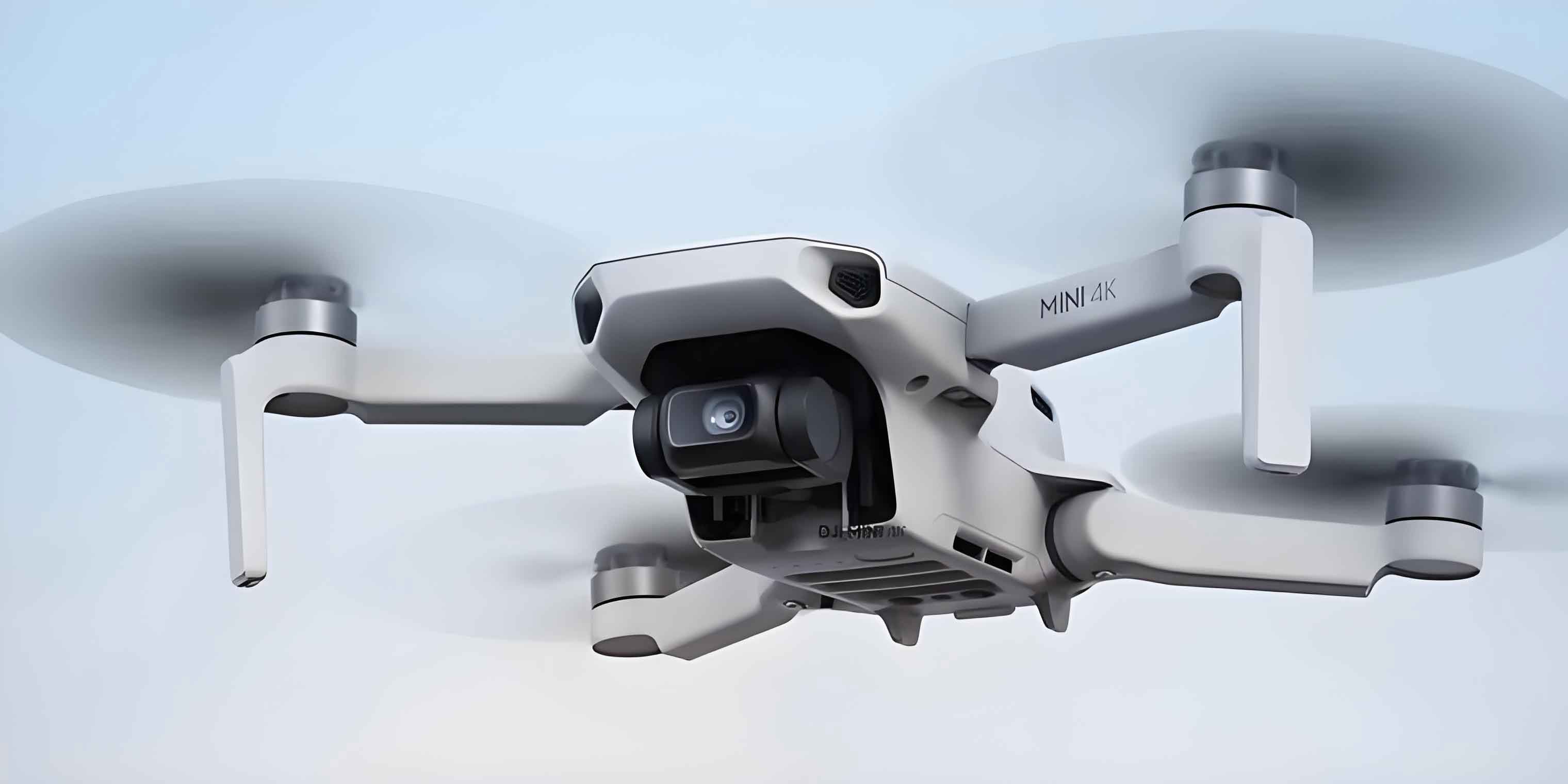
The proliferation of UAV drones in law enforcement has been propelled by their ability to perform persistent monitoring, rapid incident assessment, and evidence collection in diverse environments. Unlike ground-based patrols, UAV drones can bypass traffic congestion, access difficult terrain, and provide a bird’s-eye view of large areas, making them indispensable for crowd management, search and rescue, and crime prevention. However, the operational effectiveness of a fleet of UAV drones is intrinsically linked to the geographical distribution of their support infrastructure—specifically, the takeoff and landing points, which we term base stations. These stations serve as logistical hubs for charging, maintenance, and command control, and their locations directly influence mission readiness, response times, and coverage continuity. A poorly designed network of UAV drone base stations can lead to prolonged deployment times, inadequate coverage of high-risk zones, and excessive operational costs. Consequently, the problem of optimal base station placement has emerged as a critical research frontier, intersecting fields such as geographic information science, criminology, and combinatorial optimization. In this paper, we present a comprehensive study that begins with analyzing historical crime data to identify spatial concentrations of criminal activity, then formulates a mathematical optimization model to determine the best positions for UAV drone stations. Our approach is grounded in real-world data from NH City, an urban locality with heterogeneous land use and demographic patterns, providing a robust testbed for our methodology. We contend that a dynamic, evidence-based strategy for UAV drone deployment can significantly augment urban security postures, enabling proactive rather than reactive policing. Throughout this work, we will consistently highlight the role of UAV drones as force multipliers, underscoring the need for systematic planning to unlock their full potential.
Previous research on UAV drone applications in patrol and surveillance has largely focused on trajectory planning, swarm coordination, and endurance extension. For instance, studies have explored algorithms for multi-UAV drone scheduling in highway monitoring or coordinated patrols involving ground vehicles and UAV drones. While these contributions are valuable, they often assume pre-existing or arbitrarily chosen base locations. The facility location problem, a classic topic in operations research, provides a theoretical foundation for our work. The P-median model aims to minimize total service cost or distance, making it suitable for routine patrols where cumulative travel distance is a proxy for operational expense. Conversely, the P-center model seeks to minimize the maximum distance to any demand point, aligning with emergency response scenarios where the worst-case delay must be controlled. However, applying these models directly to UAV drone station placement is challenging due to the dual nature of police work: daily preventive patrols along road networks and urgent dispatches to incident scenes that may require straight-line rapid response. Moreover, crime is not uniformly distributed; it exhibits spatial clustering influenced by socio-economic factors, land use, and transportation corridors. Therefore, any optimization framework must incorporate crime hotspot analysis to ensure that UAV drone resources are concentrated where they are most needed. Our literature review indicates a paucity of integrated approaches that couple crime pattern analysis with multi-objective facility location for UAV drones. This study fills that void by developing a hybrid model that balances road network distance (for patrols) and Euclidean distance (for emergencies) through a tunable weighting parameter. We employ a combination of greedy heuristics and exact linear programming solvers to handle computational complexity, ensuring that our solutions are both high-quality and practically feasible. By repeatedly referencing UAV drones, we reinforce the focus on these aerial platforms as the primary agents in our optimization narrative.
Our methodological pipeline consists of three main stages: crime data preprocessing and hotspot detection, mathematical model formulation, and computational solution. In the first stage, we aggregate historical crime incident data, specifically theft cases, from NH City over a two-year period. Each record includes geographic coordinates and timestamps, allowing for spatial analysis. To identify crime hotspots, we apply the K-means clustering algorithm, an unsupervised machine learning technique that partitions data points into k clusters based on feature similarity. In our context, the features are the latitude and longitude of crime incidents. The algorithm aims to minimize the within-cluster sum of squares, expressed as:
$$ J = \sum_{j=1}^{k} \sum_{i=1}^{n_j} \| x_i^{(j)} – c_j \|^2 $$
where \( J \) is the objective function, \( k \) is the number of clusters, \( n_j \) is the number of points in cluster \( j \), \( x_i^{(j)} \) is the \( i \)-th point in cluster \( j \), and \( c_j \) is the centroid of cluster \( j \). The optimal value of \( k \) is determined using the elbow method, ensuring that clusters represent genuine spatial aggregations of crime rather than random noise. The resulting centroids are then mapped to the nearest road segments, as UAV drones for patrol operations typically follow street networks. This step transforms raw crime points into representative demand nodes for the subsequent location optimization.
The second stage involves constructing a mixed-integer linear programming (MILP) model to select optimal base station sites from a set of candidate locations. These candidates include existing police stations and medical facilities, which offer logistical advantages such as security, power supply, and administrative support. Let \( I = \{1, 2, \dots, n\} \) denote the set of demand points (crime hotspot centroids), and \( J = \{1, 2, \dots, m\} \) denote the set of candidate base stations for UAV drones. We define two key distance metrics: \( D_{ij}^{\text{network}} \), the shortest path distance along the road network from demand point \( i \) to candidate \( j \), and \( D_{ij}^{\text{euclidean}} \), the straight-line Euclidean distance between them. The decision variables are \( x_j \in \{0,1\} \), indicating whether candidate \( j \) is selected as a base station for UAV drones, and \( y_{ij} \in \{0,1\} \), indicating whether demand point \( i \) is served by station \( j \). The objective function is a weighted sum of total network distance and maximum Euclidean distance, designed to balance patrol efficiency and emergency response:
$$ \text{Minimize} \quad \alpha \sum_{i=1}^{n} \sum_{j=1}^{m} D_{ij}^{\text{network}} \cdot y_{ij} + (1-\alpha) \sum_{i=1}^{n} \sum_{j=1}^{m} D_{ij}^{\text{euclidean}} \cdot (1 – x_j) $$
However, to properly integrate the P-center aspect, we refine the objective to directly minimize the weighted combination of total network distance and the maximum Euclidean distance from any demand point to its assigned station. A more precise formulation is:
$$ \text{Minimize} \quad \alpha \sum_{i=1}^{n} \sum_{j=1}^{m} D_{ij}^{\text{network}} \cdot y_{ij} + (1-\alpha) \cdot Z $$
where \( Z \) is an auxiliary variable representing the maximum Euclidean distance between any demand point and its serving base station for UAV drones, subject to constraints \( D_{ij}^{\text{euclidean}} \cdot y_{ij} \leq Z \) for all \( i, j \). The parameter \( \alpha \in [0,1] \) controls the trade-off: when \( \alpha = 1 \), the model prioritizes minimizing total patrol distance (P-median); when \( \alpha = 0 \), it focuses on minimizing the worst-case response distance (P-center). Intermediate values blend both objectives. The constraints are as follows:
1. Each demand point must be served by exactly one base station:
$$ \sum_{j=1}^{m} y_{ij} = 1, \quad \forall i \in I $$
2. A demand point can only be served from an open base station:
$$ y_{ij} \leq x_j, \quad \forall i \in I, \forall j \in J $$
3. The number of selected base stations for UAV drones must lie within a specified range:
$$ k_{\text{min}} \leq \sum_{j=1}^{m} x_j \leq k_{\text{max}} $$
4. Each open base station must serve a minimum number of demand points to justify its operation:
$$ \sum_{i=1}^{n} y_{ij} \geq q_{\text{min}} \cdot x_j, \quad \forall j \in J $$
5. The road network distance from a demand point to its serving station must not exceed a maximum allowable patrol range:
$$ D_{ij}^{\text{network}} \cdot y_{ij} \leq D_{\text{max}}, \quad \forall i \in I, \forall j \in J $$
6. The Euclidean distance must be within the UAV drone’s operational radius for emergency response:
$$ D_{ij}^{\text{euclidean}} \cdot y_{ij} \leq R, \quad \forall i \in I, \forall j \in J $$
Here, \( k_{\text{min}} \) and \( k_{\text{max}} \) are lower and upper bounds on the number of UAV drone stations, \( q_{\text{min}} \) is the minimum demand per station, \( D_{\text{max}} \) is the maximum patrol distance, and \( R \) is the service radius for emergencies. This model captures the multifaceted requirements of police UAV drone operations.
The third stage addresses solution methodologies. Solving the MILP model directly for large-scale instances can be computationally intensive. Therefore, we adopt a hybrid strategy that combines a greedy algorithm for initial station selection with an exact solver for refined allocation. The greedy algorithm iteratively chooses the candidate site that covers the most uncovered demand points within radius \( R \), until \( k_{\text{max}} \) stations are selected or all points are covered. This provides a feasible starting solution. Then, we use the PyLP (Python Linear Programming) solver to solve the full MILP, leveraging the initial solution to warm-start the optimization. To further enhance scalability, we preprocess the data by aggregating demand points via K-means and limiting the candidate set for each demand point to its \( K \)-nearest neighbors based on network distance. This hybrid approach ensures computational efficiency while maintaining solution quality. We implement the entire pipeline in Python, utilizing libraries such as scikit-learn for clustering, NetworkX for road network analysis, and PuLP for linear programming. The performance is evaluated using metrics like total coverage area, number of UAV drone stations, and average response distance, allowing us to compare different configurations of the weighting parameter \( \alpha \).
Turning to the empirical results, the analysis of crime data from NH City reveals distinct spatial patterns. The theft incidents exhibit a pronounced aggregation along major transportation arteries, forming a Y-shaped corridor of heightened criminal activity. This pattern underscores the influence of urban infrastructure on crime distribution and validates the need for targeted UAV drone deployment. The K-means clustering identified several hotspot zones, with centroids predominantly located in commercial districts, residential neighborhoods with high population turnover, and industrial peripheries. These hotspots become the demand points in our optimization model. The candidate base stations, drawn from existing police and medical facilities, are spread across the city, providing a diverse set of potential locations for UAV drone hubs.
We conducted a series of experiments to evaluate our optimization framework. First, we compared the performance of our hybrid greedy-PyLP method against a pure PyLP approach and a simulated annealing heuristic. The evaluation metrics included the total area covered by the UAV drone stations (within radius \( R \)) and the number of stations deployed. The coverage area is computed as the union of circles centered at each selected station with radius \( R \), approximating the operational reach of the UAV drones. The results are summarized in Table 1.
| Weight \( \alpha \) | Algorithm | Coverage Area (km²) | Number of UAV Drone Stations |
|---|---|---|---|
| 0.00 | Greedy + PyLP | 596.88 | 8 |
| Simulated Annealing | 580.75 | 8 | |
| Pure PyLP | 584.92 | 8 | |
| 0.25 | Greedy + PyLP | 590.36 | 9 |
| Simulated Annealing | 561.56 | 9 | |
| Pure PyLP | 567.14 | 9 | |
| 0.50 | Greedy + PyLP | 550.65 | 10 |
| Simulated Annealing | 546.76 | 10 | |
| Pure PyLP | 541.34 | 10 | |
| 0.75 | Greedy + PyLP | 523.11 | 11 |
| Simulated Annealing | 537.13 | 11 | |
| Pure PyLP | 532.54 | 11 | |
| 1.00 | Greedy + PyLP | 519.67 | 13 |
| Simulated Annealing | 497.63 | 14 | |
| Pure PyLP | 500.19 | 14 |
As observed, the hybrid greedy-PyLP method consistently achieves competitive or superior coverage areas with comparable or fewer UAV drone stations across most \( \alpha \) values. For instance, at \( \alpha = 0.25 \), it covers 590.36 km² using 9 stations, outperforming both benchmarks. This demonstrates the efficacy of our hybrid approach in solving the UAV drone station placement problem. The variation in results with \( \alpha \) highlights the trade-off between patrol efficiency and emergency response: lower \( \alpha \) values favor fewer stations with larger coverage per station (emphasizing emergency reach), while higher \( \alpha \) values lead to more stations with tighter network alignment (emphasizing patrol cost).
To delve deeper into the impact of the weighting parameter, we analyzed the optimal layouts generated for different \( \alpha \) values. Figure 1 illustrates the spatial configurations of selected UAV drone stations and their service areas. At \( \alpha = 0 \), the model prioritizes Euclidean distance minimization, resulting in a dispersed set of 8 stations that provide broad coverage, ideal for emergency responses but potentially suboptimal for daily patrols along roads. As \( \alpha \) increases to 0.25, the layout adjusts to include 9 stations, with some clustering around major road intersections, reflecting a balance between straight-line response and network proximity. At \( \alpha = 0.5 \), 10 stations are deployed, further aligning with the road network, and at \( \alpha = 0.75 \), 11 stations appear, showing a clear tendency to follow arterial roads. Finally, at \( \alpha = 1 \), the model focuses solely on network distance, yielding 13 stations that are densely packed along highways and urban streets, maximizing patrol efficiency but possibly increasing infrastructure costs. These visual patterns confirm that the parameter \( \alpha \) effectively controls the design philosophy for UAV drone base station networks.
We further quantify the trade-offs by examining key performance indicators versus \( \alpha \). Let \( N(\alpha) \) be the number of UAV drone stations, \( A(\alpha) \) the total coverage area, and \( E(\alpha) = A(\alpha) / N(\alpha) \) the coverage efficiency per station. Table 2 summarizes these metrics for our hybrid method.
| \( \alpha \) Value | Number of UAV Drone Stations (\( N \)) | Total Coverage Area (\( A \)) in km² | Efficiency (\( E \)) in km² per Station |
|---|---|---|---|
| 0.00 | 8 | 596.88 | 74.61 |
| 0.25 | 9 | 590.36 | 65.60 |
| 0.50 | 10 | 550.65 | 55.07 |
| 0.75 | 11 | 523.11 | 47.56 |
| 1.00 | 13 | 519.67 | 39.97 |
The data shows a monotonic increase in the number of UAV drone stations as \( \alpha \) rises, from 8 to 13. Conversely, the total coverage area decreases gradually, indicating that adding more stations does not necessarily expand coverage because the stations become more specialized for road network proximity rather than geographical span. The efficiency metric \( E \) drops significantly, from 74.61 km² per station at \( \alpha = 0 \) to 39.97 at \( \alpha = 1 \), underscoring the diminishing returns when prioritizing patrol distance minimization. This analysis suggests that intermediate values of \( \alpha \), such as 0.25, offer a reasonable compromise, maintaining high coverage with a moderate number of UAV drone stations and acceptable efficiency. For NH City, setting \( \alpha = 0.25 \) would result in 9 stations covering over 590 km², effectively addressing both routine patrols and emergency call-outs.
The implications of these findings are manifold for police departments seeking to integrate UAV drones into their operations. First, the crime hotspot-driven approach ensures that UAV drone resources are concentrated in high-risk areas, enhancing deterrence and rapid intervention. Second, the tunable model allows agencies to customize the station network based on operational priorities: if the budget is constrained, a lower \( \alpha \) reduces the number of stations while still providing good emergency coverage; if patrol intensity is paramount, a higher \( \alpha \) optimizes for road network proximity. Third, the hybrid solution method ensures that optimal or near-optimal layouts can be computed within practical timeframes, even for large urban areas. It is worth noting that the success of such a system depends on continuous data updates; as crime patterns evolve, the model can be re-run to adjust the UAV drone station placements dynamically. This adaptability is crucial for long-term resilience against shifting criminal behaviors.
In discussing limitations, we acknowledge that our model assumes static demand points derived from historical crime data. In reality, crime is temporally variable, with fluctuations by time of day, day of week, and season. Future work could incorporate temporal dimensions, perhaps using time-series clustering to identify spatiotemporal hotspots and dynamic UAV drone scheduling. Additionally, we considered only theft crimes; other offense types like assault or vandalism may exhibit different spatial signatures, necessitating multi-crime analysis. The road network model simplifications, such as ignoring traffic conditions or elevation, could be refined for more accurate distance calculations. Furthermore, the UAV drone characteristics, such as flight speed, battery life, and payload capacity, could be integrated to create a more comprehensive operational plan. Despite these limitations, our framework provides a robust foundation for evidence-based deployment of UAV drones in law enforcement.
To conclude, this study presents a novel methodology for optimizing the placement of UAV drone takeoff and landing stations for police patrol operations. By combining spatial crime clustering with a hybrid integer programming model that balances road network and Euclidean distances, we generate actionable layouts that cater to both preventive patrols and emergency responses. The case study of NH City demonstrates the practical applicability of our approach, revealing that a weighting parameter of \( \alpha = 0.25 \) yields a balanced configuration with 9 stations covering a substantial portion of the urban area. The frequent mention of UAV drones throughout this paper underscores their centrality in modern policing and the importance of strategic infrastructure planning. Our contributions are threefold: we advance the theoretical integration of crime analysis and facility location optimization; we provide a computational tool that agencies can adapt to their local contexts; and we highlight the trade-offs involved in designing UAV drone support networks. As cities worldwide grapple with rising security challenges, intelligent deployment of UAV drones, guided by data-driven models like ours, can significantly enhance public safety outcomes. We encourage further research into dynamic and multi-objective extensions, ultimately paving the way for smarter, more responsive urban security ecosystems powered by UAV drones.