
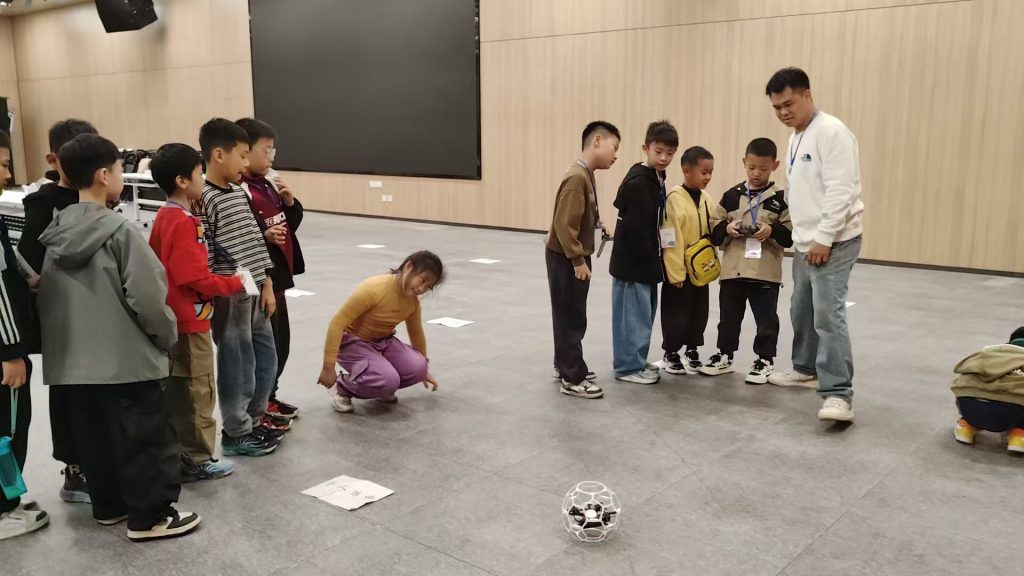
In recent years, the rapid expansion of higher education institutions has led to increasingly complex campus environments, with student populations growing exponentially. As a researcher focused on technological solutions for public safety, I have observed that traditional campus security measures often fall short in addressing emergent threats such as unauthorized intrusions, fire hazards, and crowd-related incidents. This has spurred my interest in exploring innovative approaches, particularly through the integration of unmanned aerial vehicle (UAV) monitoring platforms. Drone training, in this context, becomes a critical component for ensuring effective deployment and operation. In this article, I will delve into the technical foundations, practical applications, and strategic management对策 for leveraging drone-based systems to enhance campus security, emphasizing the importance of comprehensive drone training programs for operators and administrators alike.
The significance of campus security cannot be overstated, as it directly impacts the well-being of students, staff, and assets. From my perspective, the conventional reliance on fixed surveillance cameras and manual patrols is inadequate for dynamic, large-scale campuses. These methods often suffer from blind spots, delayed response times, and human error. For instance, during nighttime or in secluded areas, security breaches may go unnoticed until it is too late. This gap highlights the need for adaptive, real-time monitoring solutions, where drone training plays a pivotal role in enabling rapid response. By incorporating drone training into security protocols, institutions can empower personnel to operate advanced UAV systems efficiently, thereby transforming reactive measures into proactive safeguards.
To understand the potential of drones in campus security, it is essential to examine the current state of drone monitoring platforms. These platforms typically consist of UAVs equipped with various sensors, ground control stations, and software systems that facilitate autonomous or remotely piloted missions. In my research, I have worked with platforms like the DJI M300, which offers robust flight capabilities and payload flexibility. Drone training for such platforms involves mastering flight controls, sensor operation, and data analysis, ensuring that operators can harness their full potential. The core advantage lies in the aerial perspective, which provides comprehensive coverage and the ability to access hard-to-reach areas. Moreover, with advancements in artificial intelligence, these platforms can perform intelligent tasks such as automated patrols and anomaly detection, further underscoring the need for specialized drone training to interpret and act on gathered data.
Key technologies underpinning drone monitoring include a range of sensors, image recognition algorithms, and smart inspection capabilities. Below, I summarize common sensor types used in UAVs, which are integral to effective surveillance and require thorough drone training for optimal utilization:
| Sensor Type | Primary Function | Typical Applications in Campus Security |
|---|---|---|
| Satellite Positioning (GPS/BDS) | Precision navigation and location tracking | Drone flight path control, geotagging incidents |
| Visible Light Camera | High-resolution imaging with stabilization | Daytime surveillance, license plate recognition |
| Infrared (IR) Sensor | Thermal imaging for low-light conditions | Night patrols, fire hotspot detection |
| Multispectral Camera | Multi-band spectral data acquisition | Environmental monitoring, vegetation health checks |
| LiDAR (Light Detection and Ranging) | 3D mapping and distance measurement | Topographic surveys, structural integrity assessment |
| Meteorological Sensor | Atmospheric parameter collection | Weather monitoring for safe drone operations |
Each sensor type contributes to a holistic security framework, but their effectiveness hinges on proper drone training. For example, operators must learn to switch between visible and IR modes based on lighting conditions, a skill refined through hands-on drone training sessions. Additionally, image recognition technology, often based on convolutional neural networks (CNNs), enables automated detection of objects like people, vehicles, or fire. The mathematical foundation of CNNs can be expressed through convolution operations, which I frequently discuss in drone training workshops to help operators understand the AI behind the tools. A basic convolution formula is:
$$ y_{ij} = \sum_{m=0}^{M-1} \sum_{n=0}^{N-1} x_{i+m, j+n} \cdot w_{mn} + b $$
Here, $x$ represents the input image matrix, $w$ denotes the filter weights, $b$ is the bias term, and $y$ is the output feature map. This process allows drones to identify anomalies in real-time, reducing reliance on human monitoring. However, implementing such algorithms requires continuous drone training to update models with campus-specific data, ensuring accuracy in diverse scenarios.
Drone smart inspection technology further automates routine patrols, using pre-programmed routes and AI-driven analysis. In my experience, setting up automated inspections involves defining waypoints and configuring sensors for periodic data capture. Drone training here focuses on mission planning software and response protocols for flagged issues. For instance, if a drone detects a crowd gathering during off-hours, it can alert security personnel while continuing to track the situation. This seamless integration of automation and human oversight is a cornerstone of modern campus security, and regular drone training ensures that staff can intervene effectively when needed.
To illustrate practical applications, I will share a case study from my work deploying a drone monitoring platform on a university campus. Using a DJI M300 equipped with a Zenmuse H20T sensor, I conducted daytime and nighttime flights to assess security vulnerabilities. During daytime operations, the drone’s high-zoom capability allowed me to monitor crowded areas like entrances and parking lots, with the AI automatically tracking individuals and vehicles. This demonstrated how drone training can enhance situational awareness, as operators learn to prioritize targets and coordinate with ground teams. At night, I switched to IR mode, which revealed heat signatures of people in poorly lit zones, enabling rapid identification of intruders. In both cases, the drone’s laser rangefinder provided precise coordinates, which I relayed to security centers for immediate action. These exercises underscored the value of scenario-based drone training, where operators practice in realistic conditions to build proficiency.
Another application involved creating a digital orthophoto map (DOM) of the campus for emergency planning. By flying the drone over a 182,047 m² area, I captured 680 images and processed them into a detailed 2D map using software like DJI Terra. This map now serves as a reference for incident response, helping security teams visualize terrain and plan routes. Drone training for such mapping tasks includes lessons on flight planning, image stitching, and data interpretation, ensuring that operators can quickly generate accurate maps during crises. Furthermore, I integrated this DOM with a cloud-based monitoring system, where AI algorithms scan for changes or threats, a process that requires ongoing drone training to keep pace with software updates.
Based on these experiences, I propose a comprehensive set of management对策 for campus security centered on drone monitoring platforms. These对策 emphasize the iterative nature of drone training, as technology and threats evolve. The following steps outline a proactive approach:
First, define the monitoring scope by conducting a campus-wide risk assessment. Use drones to create DOMs and 3D models, segmenting areas into zones based on threat levels. Drone training should cover this assessment phase, teaching operators to identify high-risk zones like dormitories, labs, and perimeter fences. Second, deploy drone equipment strategically, including industrial-grade UAVs and automated systems like drone docks. Ensure robust 5G connectivity for real-time data transmission, with latency under 20 ms to support rapid decision-making. Drone training must include network management and cybersecurity protocols to protect sensitive data.
Third, develop daily patrol schemes that combine automated and manual flights. Establish flight paths for routine inspections, with sensors capturing data at predefined points. I often use tables to summarize patrol schedules in drone training materials, as shown below:
| Time of Day | Patrol Zone | Sensor Mode | Key Objectives |
|---|---|---|---|
| Daytime (06:00-18:00) | High-traffic areas (e.g., entrances, squares) | Visible light, AI tracking | Monitor crowds, detect unauthorized vehicles |
| Nighttime (18:00-06:00) | Perimeters, secluded spots | Infrared, low-light imaging | Identify intruders, check for fire hazards |
| Periodic (Weekly) | Entire campus for mapping | Multispectral, LiDAR | Update DOMs, assess infrastructure |
Drone training for these patrols involves simulator-based exercises, where operators practice responding to simulated incidents like fires or breaches. Fourth, enhance emergency response mechanisms by integrating drones into existing protocols. This includes establishing communication channels between drone operators and security teams, with regular drills to test coordination. Drone training here focuses on crisis management, such as using drones for search and rescue or crowd control during emergencies.
Fifth, conduct frequent emergency drills that incorporate drone scenarios. For example, simulate a missing person case where drones are deployed for thermal searches, requiring operators to apply drone training in high-pressure situations. Sixth, prioritize continuous personnel development through structured drone training programs. These programs should cover flight skills, sensor operation, data analysis, and legal compliance, with certifications to ensure competency. I recommend a curriculum that includes both theoretical lessons and hands-on flights, as reflected in the formula for training effectiveness:
$$ E_t = \frac{T_h + S_s}{C_r} $$
where $E_t$ represents training effectiveness, $T_h$ is hands-on flight hours, $S_s$ is simulator sessions, and $C_r$ is the complexity of real-world scenarios. This formula helps institutions allocate resources for optimal drone training outcomes. Seventh, maintain equipment through regular checks and updates, with drone training extending to basic troubleshooting and maintenance tasks.
Throughout these对策, drone training emerges as a recurring theme, essential for maximizing the benefits of UAV technology. From my perspective, investing in drone training not only improves operational efficiency but also fosters a culture of innovation and safety on campus. As drones become more autonomous, training will shift towards supervising AI systems and interpreting complex data streams. For instance, operators might need to understand machine learning metrics like precision and recall for object detection models, which can be expressed as:
$$ \text{Precision} = \frac{TP}{TP + FP}, \quad \text{Recall} = \frac{TP}{TP + FN} $$
where $TP$ is true positives, $FP$ is false positives, and $FN$ is false negatives. Incorporating such concepts into drone training ensures that personnel can fine-tune systems for campus-specific needs.
In conclusion, the integration of drone monitoring platforms offers a transformative approach to campus security, addressing limitations of traditional methods through aerial surveillance, real-time data, and intelligent automation. However, success hinges on a robust framework that prioritizes drone training at every stage—from initial deployment to ongoing operations. As I continue to advocate for this technology, I emphasize that drone training is not a one-time event but a continuous process adapting to new challenges. By embracing these strategies, institutions can build safer, smarter campuses where drones and trained personnel work in harmony to prevent and respond to threats. The future of campus security lies in the skies, and with comprehensive drone training, we can ensure it soars to new heights.