
The proliferation of UAV drone technology has fundamentally transformed geospatial data acquisition. Equipped with advanced sensors like LiDAR and high-resolution cameras, UAV drones can rapidly capture dense, high-precision three-dimensional point clouds over vast and often inaccessible areas. This capability is indispensable for applications ranging from digital terrain modeling and urban planning to infrastructure inspection and environmental monitoring. However, the point clouds generated by these UAV drone systems are frequently plagued by data gaps or “holes.” These imperfections arise from various factors, including occlusions (e.g., by vegetation or structures), sensor limitations, specular reflections on water or glass, and systematic errors in the data registration process. The presence of these holes compromises the geometric integrity and completeness of the 3D model, severely limiting its utility for subsequent analysis, visualization, and simulation. Consequently, developing robust and automated methods for repairing point cloud holes is a critical challenge in UAV drone-based photogrammetry and remote sensing.
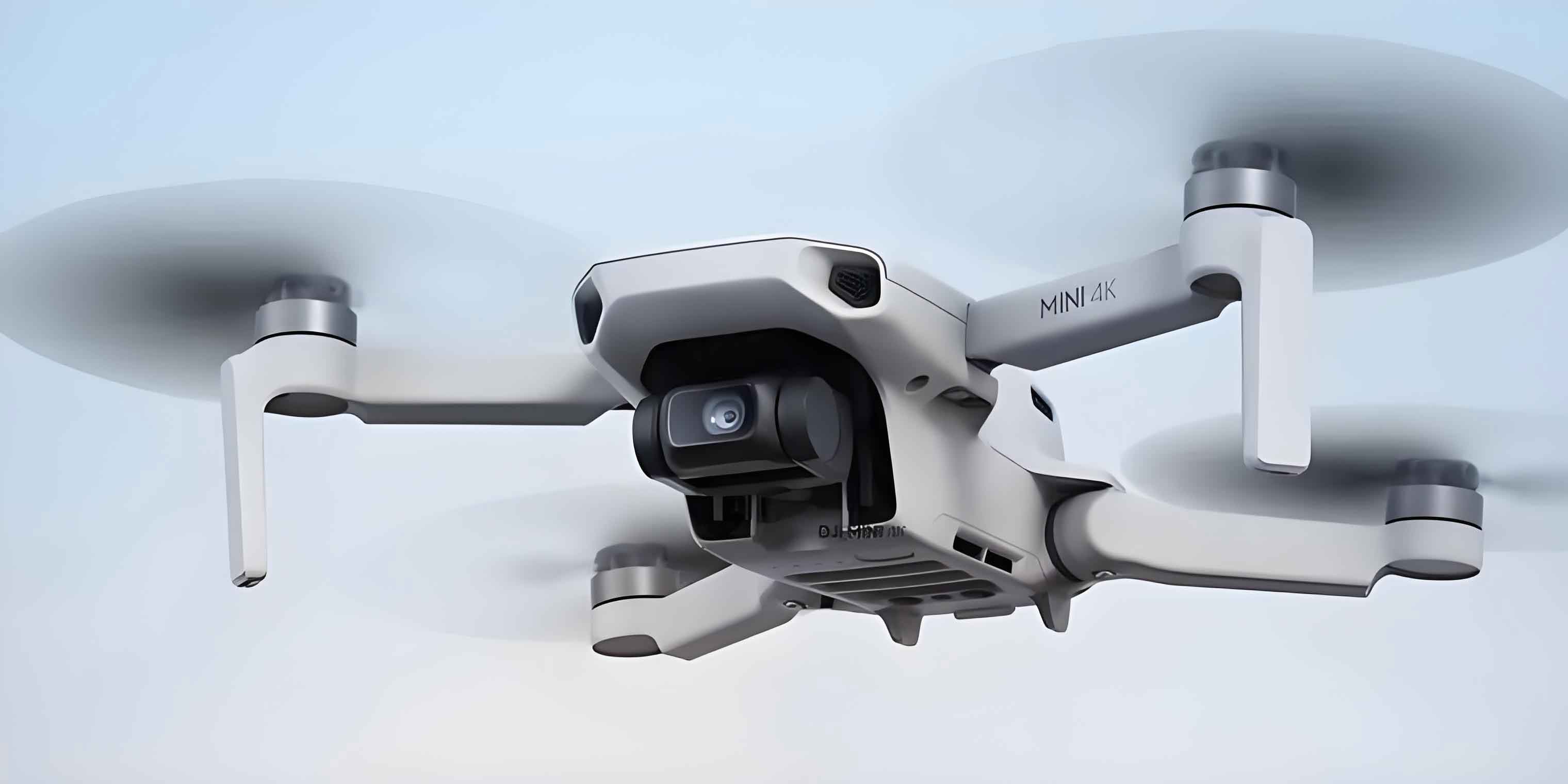
Traditional hole-filling methodologies can be broadly categorized into two groups: mesh-based and volumetric approaches. Mesh-based algorithms operate on a triangulated surface representation of the point cloud. They identify the boundary of the hole and generate new triangles to fill the gap, often using techniques like Radial Basis Functions (RBF) or advancing front methods. While effective for small, simple holes on uniformly sampled surfaces, these methods struggle with the massive, irregular, and feature-rich point clouds typical of UAV drone surveys. They can introduce artificial smoothness, distort sharp features, and fail on complex topological structures. Volumetric methods, on the other hand, convert the point cloud into a volumetric grid (e.g., a signed distance field) and apply algorithms like Poisson reconstruction or volumetric diffusion to fill the missing regions. These approaches are generally more robust for large holes but can be computationally intensive and may alter the global structure of the object, leading to over-smoothing or shrinkage.
In recent years, data-driven regression models have emerged as a powerful alternative. These methods treat hole repair as a surface fitting or prediction problem. Given the known points surrounding the hole, a model is trained to learn the underlying surface geometry and then predicts the coordinates of missing points. Support Vector Machines (SVM) and Artificial Neural Networks (ANNs), particularly Backpropagation (BP) networks, have been applied to this task with promising results. However, standard SVMs involve solving a quadratic programming problem, which becomes computationally prohibitive for the massive datasets produced by UAV drones. BP neural networks, while powerful, are prone to overfitting, require careful architecture design, and often converge to local minima. The Least Squares Support Vector Machine (LSSVM) offers a compelling solution by reformulating the SVM optimization into a linear system, significantly reducing computational complexity while maintaining good generalization ability. The performance of an LSSVM model, however, is highly sensitive to the selection of its hyperparameters, primarily the regularization parameter $\gamma$ and the kernel width parameter $\sigma$ for the commonly used Radial Basis Function (RBF) kernel. Suboptimal parameter selection can lead to poor fitting accuracy (underfitting) or lack of generalization (overfitting).
This paper addresses the critical challenge of UAV drone point cloud hole repair by proposing a novel, hybrid intelligent model. The core innovation lies in the integration of an Improved Harris Hawks Optimization (IHHO) algorithm to automatically and optimally tune the hyperparameters of an LSSVM model. We first enhance the standard HHO algorithm by introducing a nonlinear convergence factor and an adaptive escape probability strategy, thereby improving its global search capability and convergence speed. This enhanced IHHO algorithm is then employed as a meta-heuristic optimizer to find the optimal $(\gamma, \sigma)$ pair for the LSSVM. The resulting IHHO-LSSVM model is trained on the intact regions surrounding a hole and subsequently used to predict the missing points. We rigorously evaluate the proposed method against standard BP neural networks and vanilla LSSVM models on real-world UAV drone point cloud data featuring complex terrain. The results demonstrate that our parameter-optimized LSSVM model achieves superior repair accuracy, exhibits greater stability, and is well-suited for handling the large-scale, complex holes prevalent in UAV drone data.
Theoretical Foundations: LSSVM and Parameter Sensitivity
The Least Squares Support Vector Machine for regression seeks to find a function $f(\mathbf{x})$ that models the relationship between an input vector $\mathbf{x} \in \mathbb{R}^n$ and a target output $y \in \mathbb{R}$. Given a training dataset ${(\mathbf{x}_i, y_i)}_{i=1}^{N}$, the LSSVM model is formulated as:
$$
f(\mathbf{x}) = \mathbf{w}^T \phi(\mathbf{x}) + b
$$
where $\phi(\cdot)$ is a nonlinear mapping to a high-dimensional feature space, $\mathbf{w}$ is the weight vector, and $b$ is the bias term. Unlike standard SVM, LSSVM adopts a least squares cost function and equality constraints, leading to the following optimization problem:
$$
\begin{aligned}
& \min_{\mathbf{w}, b, \boldsymbol{\xi}} \mathcal{J}(\mathbf{w}, \boldsymbol{\xi}) = \frac{1}{2} \mathbf{w}^T \mathbf{w} + \frac{1}{2} \gamma \sum_{i=1}^{N} \xi_i^2 \\
& \text{subject to: } y_i = \mathbf{w}^T \phi(\mathbf{x}_i) + b + \xi_i, \quad i = 1, \ldots, N
\end{aligned}
$$
Here, $\xi_i$ are error variables, and $\gamma > 0$ is the regularization parameter. This parameter crucially controls the trade-off between minimizing the training error (the sum of $\xi_i^2$) and minimizing the model complexity (the norm of $\mathbf{w}$). A small $\gamma$ emphasizes model smoothness, potentially causing underfitting, while a large $\gamma$ forces the model to fit the training data more closely, risking overfitting.
To solve this constrained optimization problem, we construct the Lagrangian:
$$
\mathcal{L}(\mathbf{w}, b, \boldsymbol{\xi}, \boldsymbol{\alpha}) = \mathcal{J}(\mathbf{w}, \boldsymbol{\xi}) – \sum_{i=1}^{N} \alpha_i \left( \mathbf{w}^T \phi(\mathbf{x}_i) + b + \xi_i – y_i \right)
$$
where $\alpha_i$ are Lagrange multipliers. The optimality conditions (Karush-Kuhn-Tucker conditions) are derived by setting the partial derivatives to zero:
$$
\begin{aligned}
\frac{\partial \mathcal{L}}{\partial \mathbf{w}} &= 0 \rightarrow \mathbf{w} = \sum_{i=1}^{N} \alpha_i \phi(\mathbf{x}_i) \\
\frac{\partial \mathcal{L}}{\partial b} &= 0 \rightarrow \sum_{i=1}^{N} \alpha_i = 0 \\
\frac{\partial \mathcal{L}}{\partial \xi_i} &= 0 \rightarrow \alpha_i = \gamma \xi_i \\
\frac{\partial \mathcal{L}}{\partial \alpha_i} &= 0 \rightarrow \mathbf{w}^T \phi(\mathbf{x}_i) + b + \xi_i – y_i = 0
\end{aligned}
$$
By eliminating $\mathbf{w}$ and $\boldsymbol{\xi}$, we obtain a linear system of equations in terms of $b$ and $\boldsymbol{\alpha}$:
$$
\begin{bmatrix}
0 & \mathbf{1}^T \\
\mathbf{1} & \mathbf{\Omega} + \gamma^{-1} \mathbf{I}
\end{bmatrix}
\begin{bmatrix}
b \\
\boldsymbol{\alpha}
\end{bmatrix}
=
\begin{bmatrix}
0 \\
\mathbf{y}
\end{bmatrix}
$$
where $\mathbf{1} = [1, \ldots, 1]^T$, $\mathbf{y} = [y_1, \ldots, y_N]^T$, $\mathbf{I}$ is the identity matrix, and $\mathbf{\Omega}$ is the kernel matrix with entries $\Omega_{ij} = K(\mathbf{x}_i, \mathbf{x}_j) = \phi(\mathbf{x}_i)^T \phi(\mathbf{x}_j)$. We employ the Radial Basis Function (RBF) kernel, defined as:
$$
K(\mathbf{x}_i, \mathbf{x}_j) = \exp\left( -\frac{\|\mathbf{x}_i – \mathbf{x}_j\|^2}{2\sigma^2} \right)
$$
Here, $\sigma$ is the width parameter (or kernel parameter). This parameter defines the influence radius of a single training point. A small $\sigma$ leads to a complex, “spiky” model that may overfit the noise in the UAV drone point cloud. A large $\sigma$ produces an overly smooth model that may fail to capture important local terrain variations. The final LSSVM regression function is:
$$
f(\mathbf{x}) = \sum_{i=1}^{N} \alpha_i K(\mathbf{x}, \mathbf{x}_i) + b
$$
The profound sensitivity of the LSSVM model’s performance to the $(\gamma, \sigma)$ pair is the primary motivation for employing a sophisticated optimization strategy. Manual or grid-based search for these parameters is inefficient and often impractical for large-scale UAV drone data processing tasks.
Enhanced Optimization: The Improved Harris Hawks Algorithm (IHHO)
The Harris Hawks Optimization (HHO) algorithm is a population-based, nature-inspired metaheuristic that mimics the cooperative hunting behavior of Harris’ hawks. It comprises two main phases: exploration (searching for prey) and exploitation (besieging the prey using various tactics). While HHO is known for its simplicity and good performance, its convergence speed and search precision can be inadequate for fine-tuning complex models like LSSVM. We propose two strategic improvements to create the IHHO algorithm.
1. Nonlinear Convergence Factor: In the standard HHO, the transition from exploration to exploitation is governed by the prey’s escape energy $E$, which decreases linearly from a random initial value $E_0$ over iterations:
$$E = 2E_0(1 – \frac{t}{T})$$
where $t$ is the current iteration and $T$ is the maximum number of iterations. This linear decay does not optimally balance global and local search. We introduce a nonlinear convergence factor $a$ to replace the linear component:
$$
a = \frac{2}{1 + \exp\left(Q \cdot ( \frac{2t}{T} – 1 )\right)}
$$
where $Q$ is a constant (typically set to 5 or 6). The modified escape energy becomes $E = 2E_0 \cdot a$. This nonlinear function decays slowly at the beginning, allowing for more extensive global exploration, and decays rapidly towards the end, facilitating intensive local exploitation and faster convergence to the optimum. The comparative trends are summarized below:
| Phase | Standard HHO (Linear) | Improved IHHO (Nonlinear) |
|---|---|---|
| Early Iterations | Moderate exploration | Prolonged, thorough exploration |
| Mid Iterations | Gradual transition | Accelerated transition |
| Late Iterations | Slow exploitation | Rapid, focused exploitation |
2. Adaptive Escape Probability: In the exploitation phase, HHO employs four strategies (soft besiege, hard besiege, soft besiege with progressive rapid dives, hard besiege with progressive rapid dives) based on a random number $r$ and the absolute value of $E$. The original algorithm uses a fixed 50% probability threshold for selecting between “soft” and “hard” besiege variations. To better balance these strategies throughout the optimization process, we introduce an adaptive escape probability $r_{ad}$:
$$
r_{ad} = 1 – \log_2\left(1 + \frac{t}{T}\right)
$$
This probability starts high (favoring the more exploratory “soft” strategies early on) and decreases adaptively as iterations progress (favoring the more exploitative “hard” strategies later). This dynamic adjustment leads to a more balanced and efficient search.
The pseudocode for the key steps of the IHHO algorithm is as follows:
Algorithm 1: Improved Harris Hawks Optimization (IHHO)
1. Initialize the hawk population $X_i (i=1,2,…,N)$.
2. While (stopping condition not met) do
3. Calculate the fitness of each hawk. Identify the best hawk (prey location) $X_{rabbit}$.
4. Update the nonlinear convergence factor $a$ and escape energy $E$ using $E = 2E_0 \cdot a$.
5. Update the adaptive escape probability $r_{ad}$.
6. For each hawk $X_i$ do
7. If ($|E| \geq 1$) # Exploration Phase
8. Update position using exploration rules (based on random perching or average positions).
9. End If
10. If ($|E| < 1$) # Exploitation Phase
11. Generate a random number $rand$.
12. If ($rand \geq r_{ad}$) and ($|E| \geq 0.5$) perform Soft Besiege.
13. Else If ($rand \geq r_{ad}$) and ($|E| < 0.5$) perform Hard Besiege.
14. Else If ($rand < r_{ad}$) and ($|E| \geq 0.5$) perform Soft Besiege with Progressive Rapid Dives.
15. Else perform Hard Besiege with Progressive Rapid Dives.
16. End If
17. End For
18. End While
19. Return the best solution $X_{rabbit}$.
The Integrated IHHO-LSSVM Framework for UAV Point Cloud Repair
The proposed framework integrates the IHHO optimizer with the LSSVM regressor to form a powerful tool for repairing holes in UAV drone point clouds. The process involves several sequential steps, from data preparation to final hole filling.
Step 1: Hole Detection and Data Preparation. The input is a raw 3D point cloud $P$ from a UAV drone survey. A hole detection algorithm (e.g., based on nearest neighbor distance analysis or surface mesh boundary identification) is applied to locate regions with missing data. For each detected hole, a local neighborhood $P_{local}$ comprising points on the boundary and the immediate surrounding intact surface is extracted. This neighborhood is then divided into a training set $P_{train}$ and a validation set $P_{val}$. The training set is used to build the LSSVM model, while the validation set is used internally by the IHHO to evaluate the fitness of parameter sets $(\gamma, \sigma)$. The spatial coordinates $(X, Y)$ serve as the 2D input vector $\mathbf{x}_i$, and the elevation $Z$ is the target output $y_i$. Data normalization is applied to scale the $(X, Y, Z)$ coordinates to a common range (e.g., [0, 1]) to prevent numerical instability during model training.
Step 2: IHHO-based Parameter Optimization. The core of the framework is the use of IHHO to find the optimal LSSVM parameters. Each hawk in the IHHO population represents a candidate solution vector $[\gamma, \sigma]$. The search spaces for these parameters are defined based on the characteristics of the UAV drone data, e.g., $\gamma \in [0.1, 1000]$ and $\sigma \in [0.001, 10]$. The fitness of a hawk (i.e., the quality of the parameter set) is evaluated by a two-step process: 1) Train an LSSVM model on $P_{train}$ using the candidate $(\gamma, \sigma)$; 2) Use this trained model to predict the elevations for the points in $P_{val}$ and calculate the Root Mean Square Error (RMSE) between the predictions and the actual known elevations. This RMSE is the fitness value $f_t$ to be minimized:
$$
f_t = \sqrt{ \frac{1}{M} \sum_{j=1}^{M} \left( Z_{pred,j} – Z_{true,j} \right)^2 }
$$
where $M$ is the number of points in $P_{val}$. The IHHO algorithm iteratively updates the hawk population, driven by the mechanisms described in Section 2, seeking the parameter pair that yields the minimum validation RMSE. This process automatically balances model complexity and predictive accuracy.
Step 3: Model Training and Hole Filling. Once the IHHO converges, the best-found parameters $(\gamma^*, \sigma^*)$ are retrieved. A final LSSVM model is trained on the combined $P_{train} \cup P_{val}$ data using these optimal parameters. To fill the hole, a grid of new $(X, Y)$ coordinates is generated within the planar bounds of the hole (the density of this grid can be set to match the average point density of the original UAV drone point cloud). The trained IHHO-LSSVM model then predicts the corresponding $Z$ elevation for each grid point. These newly predicted 3D points are seamlessly integrated with the original point cloud to create a complete, repaired surface.
The complete workflow is illustrated in the following table:
| Stage | Input | Process/Action | Output |
|---|---|---|---|
| 1. Preprocessing | Raw UAV Point Cloud | Hole detection, local patch extraction, train/validation split, normalization. | Normalized $P_{train}$ and $P_{val}$ sets. |
| 2. Optimization | $P_{train}$, $P_{val}$, IHHO parameters. | IHHO searches for $(\gamma, \sigma)$ minimizing prediction RMSE on $P_{val}$. | Optimal parameters $(\gamma^*, \sigma^*)$. |
| 3. Final Modeling | $P_{train} \cup P_{val}$, $(\gamma^*, \sigma^*)$. | Train final LSSVM model with optimal parameters. | Trained IHHO-LSSVM predictor. |
| 4. Repair | Trained predictor, hole boundary. | Generate grid over hole, predict Z coordinates. | Set of new 3D points filling the hole. |
| 5. Integration | Original cloud, new points. | Merge point sets, optional denoising/smoothing at seams. | Complete, repaired UAV point cloud. |
Experimental Validation and Analysis
To validate the effectiveness of the proposed IHHO-LSSVM model, experiments were conducted on real UAV drone LiDAR point cloud data collected over a complex terrain area featuring low vegetation, mounds, and depressions. Three distinct regions with significant holes were manually selected as test cases.
Dataset Description:
– Hole 1: Located on a sloping vegetated area. Total points: 1,145 (Training: 864, Testing: 281).
– Hole 2: Located across a small terrain mound. Total points: 2,152 (Training: 1,592, Testing: 560).
– Hole 3: Located in a shallow depression. Total points: 786 (Training: 538, Testing: 248).
Parameter Optimization Performance: We first compared the parameter search stability of the standard HHO and our improved IHHO when optimizing the LSSVM for Hole 1. Both algorithms were run for 10 independent trials with a maximum iteration limit of 60. The search ranges were $\gamma \in [0, 1000]$ and $\sigma \in [0, 1000]$. The results, including the found parameters and the corresponding test set RMSE, are summarized below. The goal of the optimizer is to find parameters that minimize this RMSE.
| Trial | Standard HHO-LSSVM | Improved IHHO-LSSVM | ||||
|---|---|---|---|---|---|---|
| # | $\gamma$ | $\sigma$ | RMSE (m) | $\gamma$ | $\sigma$ | RMSE (m) |
| 1 | 665.93 | 0.001 | 0.083 | 22.31 | 0.001 | 0.050 |
| 2 | 660.29 | 0.001 | 0.086 | 23.84 | 0.001 | 0.051 |
| 3 | 371.97 | 0.001 | 0.075 | 21.86 | 0.001 | 0.049 |
| 4 | 443.20 | 0.001 | 0.086 | 233.48 | 0.001 | 0.055 |
| 5 | 996.25 | 0.001 | 0.094 | 99.65 | 0.001 | 0.053 |
| 6 | 600.00 | 0.002 | 0.084 | 23.75 | 0.001 | 0.055 |
| 7 | 461.47 | 0.001 | 0.089 | 52.06 | 0.001 | 0.060 |
| 8 | 612.66 | 0.001 | 0.080 | 77.62 | 0.001 | 0.059 |
| 9 | 245.40 | 0.002 | 0.077 | 215.39 | 0.001 | 0.057 |
| 10 | 897.33 | 0.001 | 0.083 | 107.54 | 0.001 | 0.053 |
| Average | 595.35 | 0.001 | 0.0837 | 87.65 | 0.001 | 0.0542 |
The table reveals two key findings. First, the average RMSE of IHHO-LSSVM (0.0542 m) is significantly lower than that of HHO-LSSVM (0.0837 m), demonstrating the superior repair accuracy afforded by the improved optimizer. Second, the standard deviation of the RMSE values across 10 trials is much smaller for IHHO, indicating that it consistently finds high-quality parameters, whereas HHO’s performance is more variable. This highlights the enhanced stability and reliability of the IHHO algorithm for this task.
Comparative Performance Analysis: We compared the proposed IHHO-LSSVM model against two benchmark models: a standard Backpropagation (BP) Neural Network and a standard LSSVM model with empirically chosen parameters (e.g., $\gamma=100$, $\sigma=1$). The BP network had an architecture of 2-5-1 (input-hidden-output nodes). The prediction residuals (difference between predicted and true elevation) for the test points in all three holes were calculated and analyzed.
The statistical summary of the residuals provides a clear picture of model performance:
| Hole # | Algorithm | Residual Range (m) [Min, Max] | Mean Absolute Error – MAE (m) | Mean Squared Error – MSE (m²) | Root Mean Sq. Error – RMSE (m) |
|---|---|---|---|---|---|
| 1 | BP Network | [-0.258, 0.255] | 0.086 | 0.011 | 0.103 |
| Standard LSSVM | [-0.201, 0.309] | 0.073 | 0.008 | 0.091 | |
| IHHO-LSSVM (Proposed) | [-0.166, 0.154] | 0.041 | 0.003 | 0.052 | |
| 2 | BP Network | [-0.333, 0.307] | 0.077 | 0.009 | 0.097 |
| Standard LSSVM | [-0.240, 0.220] | 0.062 | 0.006 | 0.078 | |
| IHHO-LSSVM (Proposed) | [-0.134, 0.130] | 0.034 | 0.002 | 0.042 | |
| 3 | BP Network | [-0.274, 0.305] | 0.081 | 0.010 | 0.102 |
| Standard LSSVM | [-0.243, 0.253] | 0.070 | 0.008 | 0.087 | |
| IHHO-LSSVM (Proposed) | [-0.125, 0.130] | 0.041 | 0.003 | 0.051 |
The results are unequivocal. Across all three test holes and all three error metrics (MAE, MSE, RMSE), the proposed IHHO-LSSVM model outperforms both the BP network and the standard LSSVM. The RMSE, a key indicator of overall prediction accuracy, is reduced by approximately 40-50% compared to the standard LSSVM and by over 50% compared to the BP network. Furthermore, the residual range for the proposed method is the narrowest, indicating that its predictions are not only more accurate on average but also more consistent, with far fewer large errors (outliers). This level of accuracy, with RMSE values consistently around 0.05 meters, meets the stringent requirements for high-precision applications derived from UAV drone data, such as large-scale topographic mapping.
Qualitative Assessment and Discussion: Visually, the point clouds repaired by the IHHO-LSSVM model exhibit excellent continuity and smoothness with the surrounding intact terrain. The filled regions naturally blend with the existing topography, preserving the geometric characteristics of slopes, mounds, and depressions without introducing noticeable artifacts, over-smoothing, or unrealistic sharp discontinuities. This is a direct consequence of the optimally tuned LSSVM model, which has learned an appropriate balance between fitting the local training data and maintaining a smooth functional form.
The success of the proposed method can be attributed to several factors. First, the LSSVM provides a strong theoretical foundation for regression with good generalization. Second, the automatic, intelligent parameter optimization via IHHO liberates the model from suboptimal manual tuning, allowing it to adapt to the specific scale and complexity of each unique hole in the UAV drone point cloud. Third, the improvements to the HHO algorithm ensure a more efficient and reliable search for the global optimum, enhancing both the final accuracy and the robustness of the solution process. While the computational cost of the IHHO optimization is non-negligible, it is a one-time cost per hole (or per scene with similar characteristics) and is justified by the significant gain in repair quality. For operational processing of large UAV drone datasets, strategies like parallel processing of independent holes or using optimal parameters from a similar region as a starting point can be employed to improve efficiency.
Conclusion
This paper presented a novel and effective framework for repairing holes in UAV drone point clouds, a common yet critical problem in aerial surveying and 3D modeling. The core of the framework is a hybrid intelligent model that synergistically combines an Improved Harris Hawks Optimization algorithm with a Least Squares Support Vector Machine regressor. The IHHO algorithm, enhanced with a nonlinear convergence factor and an adaptive escape probability, efficiently and reliably solves the crucial problem of tuning the LSSVM’s hyperparameters ($\gamma$ and $\sigma$). This automated optimization tailors the model to the specific geometric characteristics of the missing region, a capability essential for handling the diverse and complex terrain captured by UAV drones.
Experimental validation on real-world UAV drone LiDAR data containing complex holes demonstrated the superior performance of the proposed IHHO-LSSVM model. It significantly outperformed both standard Backpropagation Neural Networks and non-optimized LSSVM models across multiple quantitative accuracy metrics (MAE, MSE, RMSE). The model also showed greater stability and produced visually seamless repair results. The method provides a robust, accurate, and automated solution for point cloud completion, directly enhancing the value and usability of UAV drone-acquired geospatial data for downstream applications in topography, volumetrics, change detection, and digital twin creation. Future work may explore the integration of additional spatial features (e.g., local curvature) into the regression model and the extension of the framework to directly process color or intensity information from the point cloud for more comprehensive scene completion.