
As an active researcher in the field of defense technology, I have witnessed the escalating challenges posed by unexploded ordnance (UXO) following intensive, combat-oriented military training exercises. These hazardous remnants, often including grenades, mortars, and rockets, pose a severe and persistent threat to personnel safety, environmental security, and the continuity of training operations. Traditional manual disposal methods, while established, inherently expose personnel to extreme risk, suffer from low efficiency, and are constrained by human physical and cognitive limits, especially in vast and complex terrains. The recent, rapid evolution of low-altitude airspace operations and unmanned systems has opened a transformative pathway. In this article, I will explore and detail the promising paradigm of UAV-based UXO disposal, reviewing the current technological landscape, analyzing key methodologies, and outlining future directions to enhance safety and operational efficacy in combat support scenarios.
The core objective is to shift from high-risk, labor-intensive manual processes toward an intelligent, remote, and integrated system centered on unmanned aerial vehicles, or drones. This UAV drone-centric approach leverages the unique advantages of drones: their high mobility for rapid area coverage, their ability to carry diverse sensor payloads, and their potential for autonomous or semi-autonomous operation. By integrating advanced sensing, artificial intelligence, and robotic coordination, we can reimagine the entire UXO disposal cycle—from detection and identification to neutralization—minimizing human exposure to danger. Throughout this discussion, the role of the UAV drone will be emphasized as the linchpin of this new technological framework.
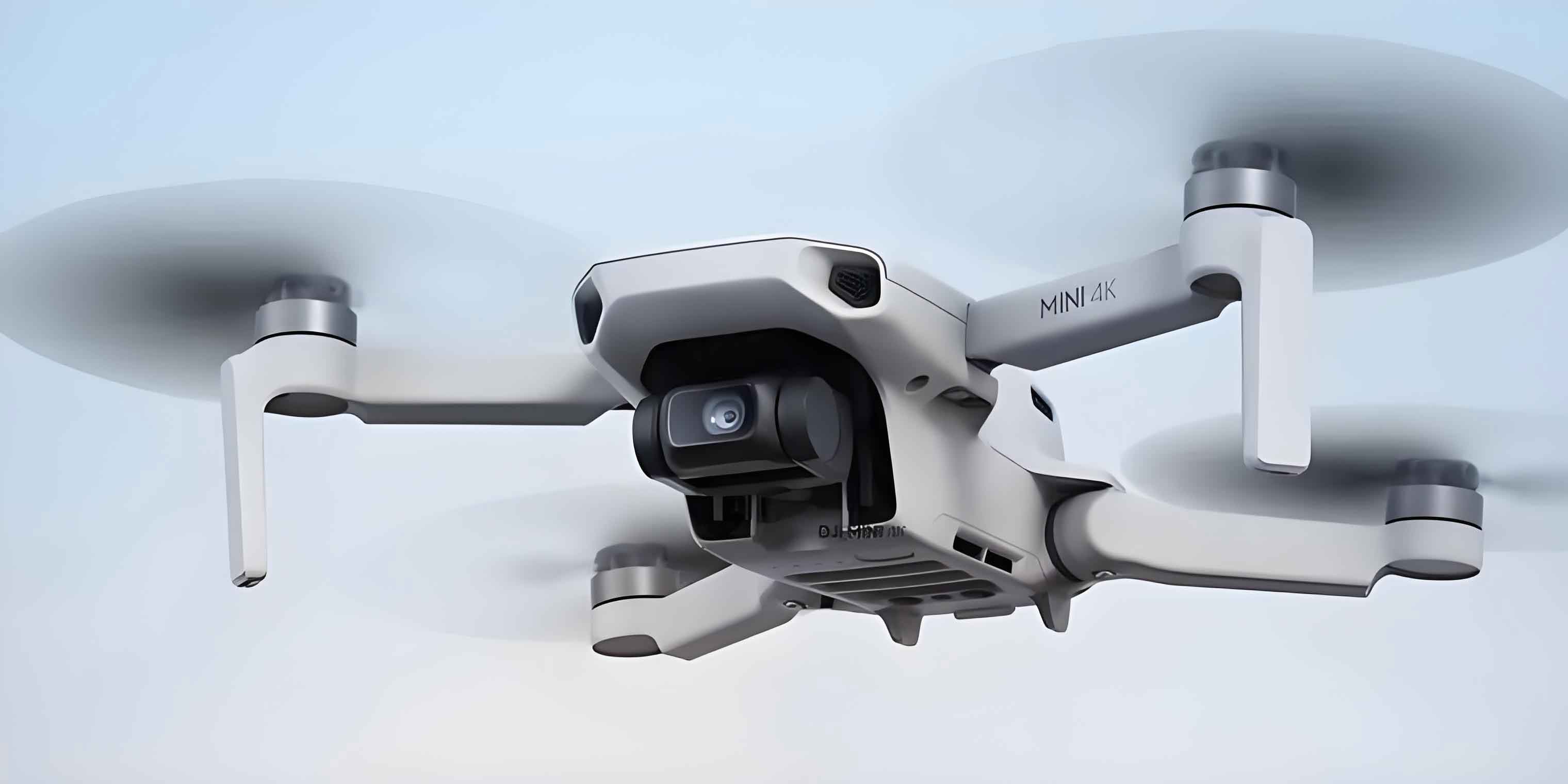
The proliferation of UAV drone technology across civilian and military sectors provides a robust foundation. Modern drones are no longer simple remote-controlled aircraft but sophisticated platforms capable of precise navigation, real-time data transmission, and executing complex tasks. Their application to the UXO problem is a natural convergence of need and capability. I will begin by examining the current state of research in UXO handling, followed by a critical analysis of the traditional disposal workflow and its inherent difficulties. Subsequently, I will delve into the specific key technologies that enable effective UAV drone-based disposal, employing tables and mathematical formulations to clarify technical comparisons and algorithmic principles. Finally, I will project the future trajectory of this field, considering trends toward greater autonomy, integration, and system intelligence.
Current Research Landscape in UXO Disposal
The pursuit of safer, more efficient UXO disposal has spurred significant research, particularly in the areas of detection, recognition, and neutralization. These efforts increasingly intersect with advancements in robotics, sensor fusion, and artificial intelligence.
Detection and Recognition: The accurate identification of UXO amidst cluttered environments is a primary challenge. Traditional methods often rely on manual visual inspection or basic electromagnetic sensing, which are slow and hazardous. The advent of deep learning, particularly convolutional neural networks (CNNs), has revolutionized this domain. Research has focused on adapting powerful object detection frameworks for the specific task of spotting UXO. These frameworks can be broadly categorized into two-stage and single-stage detectors.
Two-stage detectors, like the R-CNN family, first generate region proposals and then classify them. For instance, research utilizing Faster R-CNN has demonstrated high precision in identifying UXO targets from imagery, offering robust performance. However, their computational complexity often limits real-time application on mobile platforms like UAVs. The general workflow involves a region proposal network (RPN) and a downstream classifier. The objective function for training often combines classification and bounding-box regression losses. For a region proposal i, the loss can be expressed as:
$$L(\{p_i\}, \{t_i\}) = \frac{1}{N_{cls}} \sum_i L_{cls}(p_i, p_i^*) + \lambda \frac{1}{N_{reg}} \sum_i p_i^* L_{reg}(t_i, t_i^*)$$
Here, \(p_i\) is the predicted probability of the proposal being an object, \(p_i^*\) is the ground-truth label (1 for object, 0 otherwise), \(t_i\) is the predicted bounding-box regression vector, \(t_i^*\) is the ground-truth regression vector, and \(L_{cls}\) and \(L_{reg}\) are classification and regression loss functions (e.g., log loss and smooth L1 loss), respectively.
Single-stage detectors, most notably the YOLO (You Only Look Once) series, frame detection as a unified regression problem, offering superior speed suitable for real-time drone applications. Recent studies have adapted versions like YOLOv5 and YOLOv8 for UXO detection from aerial imagery. These models strike a balance between accuracy and inference speed, making them ideal for deployment on UAV drone platforms. The YOLO approach divides the input image into an \(S \times S\) grid. Each grid cell predicts \(B\) bounding boxes and confidence scores, as well as \(C\) class probabilities. The core prediction for a cell can be summarized by a tensor of size \(S \times S \times (B \cdot 5 + C)\). The confidence score reflects both the probability of an object being present and the accuracy of the bounding box, defined as \( \text{Confidence} = Pr(\text{Object}) * \text{IOU}_{\text{pred}}^{\text{truth}} \). The total loss function in early YOLO versions combines these components:
$$ \lambda_{\text{coord}} \sum_{i=0}^{S^2} \sum_{j=0}^{B} \mathbb{1}_{ij}^{\text{obj}} \left[ (x_i – \hat{x}_i)^2 + (y_i – \hat{y}_i)^2 \right] $$
$$ + \lambda_{\text{coord}} \sum_{i=0}^{S^2} \sum_{j=0}^{B} \mathbb{1}_{ij}^{\text{obj}} \left[ (\sqrt{w_i} – \sqrt{\hat{w}_i})^2 + (\sqrt{h_i} – \sqrt{\hat{h}_i})^2 \right] $$
$$ + \sum_{i=0}^{S^2} \sum_{j=0}^{B} \mathbb{1}_{ij}^{\text{obj}} (C_i – \hat{C}_i)^2 $$
$$ + \lambda_{\text{noobj}} \sum_{i=0}^{S^2} \sum_{j=0}^{B} \mathbb{1}_{ij}^{\text{noobj}} (C_i – \hat{C}_i)^2 $$
$$ + \sum_{i=0}^{S^2} \mathbb{1}_{i}^{\text{obj}} \sum_{c \in \text{classes}} (p_i(c) – \hat{p}_i(c))^2 $$
Where \(\mathbb{1}_{i}^{\text{obj}}\) denotes if an object appears in cell \(i\), and \(\mathbb{1}_{ij}^{\text{obj}}\) denotes that the \(j\)th bounding box predictor in cell \(i\) is responsible for that prediction.
Emerging architectures like Vision Transformers (ViTs) and Detection Transformers (DETR) show promise for handling complex scenes with better global context understanding but currently face challenges in computational efficiency for lightweight UAV drone deployment. The key research trend is toward developing lightweight, robust models that maintain high accuracy under varying conditions (occlusion, lighting, weather) while being optimized for embedded systems on drones.
Neutralization Technologies: Once identified, UXO must be safely neutralized. Existing methods include controlled detonation (using explosive charges), cryogenic disruption (freezing with liquid nitrogen), high-pressure waterjet cutting, projectile disruption, and directed energy methods (e.g., lasers). Each has trade-offs between safety, required proximity, equipment portability, and effectiveness. The prevailing direction is to make these methods compatible with remote or robotic operation. For example, the explosive charge for a controlled detonation can be placed by a ground robot guided by a UAV drone, rather than by a human. The integration of these neutralization tools with unmanned systems, particularly ensuring they are modular and lightweight enough for UAV drone deployment or coordination, is a critical area of ongoing development.
The following table summarizes and compares the mainstream object detection algorithms relevant to UAV-based UXO recognition, highlighting their suitability for the task.
| Algorithm Category | Core Principle | Advantages & Disadvantages | Suitability for UAV-based UXO Disposal |
|---|---|---|---|
| Faster R-CNN | Two-stage: Region Proposal Network (RPN) generates candidates, followed by classification and regression. | Adv: High detection accuracy. Disadv: Relatively slow inference speed; high computational load; not ideal for real-time use. | Best for offline, high-precision analysis where real-time response is not critical. Less suitable for real-time drone processing. |
| YOLO Series (e.g., v8) | Single-stage: Treats detection as a unified regression problem, predicting bounding boxes and class probabilities directly. | Adv: Very fast inference, enabling real-time detection; models can be effectively lightweighted. Disadv: Accuracy can be slightly lower than two-stage methods, especially for small or densely packed objects. | Highly suitable. The speed meets real-time requirements for drones. Accuracy is sufficient for UXO, and the model can be optimized (pruning, quantization) for embedded drone platforms. |
| Vision Transformer (ViT) | Uses Transformer architecture: splits image into patches, models global dependencies via self-attention. | Adv: Excellent global feature representation; high accuracy on complex tasks. Disadv: Very high parameter count; computationally intensive; slow training and inference. | Potential for high-accuracy offline analysis but currently impractical for real-time processing on resource-constrained UAV drone hardware. |
| DETR | End-to-end object detection with Transformers; uses bipartite matching for direct set prediction. | Adv: Simplifies pipeline; strong performance in cluttered scenes. Disadv: Slow convergence; high resource demands; weaker for small object detection. | Shows promise for handling complex backgrounds but its computational profile currently limits application on lightweight drone systems. |
The Conventional UXO Disposal Process and Its Inherent Challenges
To understand the value proposition of UAV drone technology, one must first appreciate the standard manual process and its limitations. Based on established safety protocols, the disposal of training UXO typically follows a sequential, human-centric workflow.
Basic Workflow:
1. Observation and Initial Assessment: After a live-fire exercise, personnel observe the impact area from a safe distance using binoculars or cameras. They attempt to count explosions and mark suspected dud locations. This step relies heavily on human acuity and is prone to error over long distances or in obscured terrain.
2. Manual Search and Approach: EOD (Explosive Ordnance Disposal) teams, clad in heavy protective suits, then conduct a slow, methodical ground search. They sweep the area to locate the UXO precisely. The protective gear, while necessary, severely hampers mobility and endurance.
3. Close-Range Evaluation and Marking: Upon locating a UXO, a technician conducts a visual assessment to determine its type, orientation, and potential hazards. A marker (e.g., flag) is placed. Based on this assessment, a disposal plan (e.g., type and amount of explosive for sympathetic detonation) is formulated.
4. Charge Placement and Detonation: The technician then places the disposal charge near the UXO, adhering to the “no-move, no-touch” principle whenever possible. All personnel retreat to a safe distance, and the charge is remotely detonated.
5. Post-Blast Assessment and Clearance: After detonation, personnel return to verify complete neutralization, recover equipment, and restore the area.
Primary Difficulties: This process is fraught with challenges that directly motivate the adoption of UAV drone systems:
1. Inaccurate Initial Assessment: Remote visual and auditory assessment of explosions and impact points is unreliable, leading to missed UXOs or false positives.
2. Low Search Efficiency and High Risk: Ground searches in bulky suits are extremely slow. Personnel are in immediate danger throughout the approach and evaluation phases, as the UXO is highly unstable.
3. Limited Situational Awareness: A single technician’s field of view and judgment may not fully capture the surrounding terrain, obstacles, or other hazards near the UXO, complicating disposal planning.
4. Inherent Instability of the UXO: The primary hazard—an explosive device with failed safeties—threatens personnel at every step, from search to charge placement.
These difficulties create a compelling case for a technological intervention that removes personnel from the most dangerous phases of the operation.
Key Technologies for UAV-Based UXO Disposal
The integration of UAV drones addresses the core challenges by introducing remote sensing, automated analysis, and coordinated robotic action. I will now explore the critical technological pillars that make this integration effective.
1. Low-Altitude UAV Drone: The Core Platform and Its Typical Applications
The UAV drone serves as the versatile, mobile hub for the disposal system. Its primary roles can be conceptualized within a “see, decide, act” framework tailored for UXO scenarios.
Typical Application Flow:
– Wide-Area Reconnaissance and Rapid Assessment: A UAV drone or a swarm of drones equipped with visible-light and thermal imaging cameras can quickly overfly the impact area. By comparing the thermal signature of impact craters (which cool at predictable rates) with the expected signature of a normal explosion, the drone system can flag anomalies indicative of a dud. This provides an initial, rapid screening far more accurate than human observation.
– High-Resolution Mapping and Precise Localization: Using photogrammetry, LiDAR, or multi-spectral sensors, the drone constructs a high-resolution 2D or 3D map of the terrain. This map, georeferenced with high precision, becomes the common operational picture. Suspected UXO locations are tagged with precise coordinates.
– Target Identification and Verification: The drone, using its onboard AI processing or streaming video to a ground station, performs real-time visual identification of suspected objects using deep learning models like YOLO, confirming them as UXO.
– Guidance and Coordination for Neutralization: The drone can then act as an elevated sensor platform to guide subsequent actions. It can hover above a confirmed UXO, providing a real-time top-down view to a ground robotic vehicle tasked with placing a neutralization charge. It can also deploy its own lightweight neutralization payloads in some configurations.
– Battle Damage Assessment (BDA): After a neutralization attempt, the drone re-surveys the location to visually confirm the UXO has been destroyed, closing the loop on the mission.
This application flow transforms the disposal process into a remotely conducted, data-driven operation centered on the UAV drone’s capabilities.
2. Multi-Modal Fusion for Dynamic Range Mapping
Accurate, up-to-date environmental awareness is foundational. Traditional single-sensor mapping has limitations. A fusion approach, leveraging the complementary strengths of different sensors on a UAV drone, yields a far richer and more reliable map. The process involves several key steps, and the characteristics of common sensors are summarized in the table below.
| Sensor Type | Technical Advantages | Technical Limitations | Complementary Role in Fusion |
|---|---|---|---|
| LiDAR (Light Detection and Ranging) | Provides high-precision 3D point clouds; accurate geometry and depth; works in low-light/no-light conditions. | High cost; lacks color/texture information; data can be sparse at range. | Provides precise geometric scaffold for the map; supplies depth data for visual images; aids in localization without GNSS. |
| Visual Camera (RGB) | Provides high-resolution 2D imagery with rich texture and color data; low cost. | No inherent depth information; performance dependent on lighting conditions. | Adds color and semantic texture to LiDAR point clouds; aids in visual odometry and feature-based localization. |
| Inertial Measurement Unit (IMU) | Provides high-frequency linear acceleration and angular rate data; self-contained, works in any environment. | Measurement drift accumulates over time, leading to large positional errors. | Provides short-term, high-bandwidth motion estimates to bridge gaps in visual/LiDAR data; helps stabilize the platform and estimate orientation. |
| Thermal Imaging Camera | Detects heat signatures; can identify recent impact sites or objects with temperature differentials; works in total darkness. | Lower spatial resolution than RGB; cannot see through obstacles; temperature readings can be ambient-sensitive. | Critical for initial UXO screening by detecting thermal anomalies from explosions or the UXO itself against a cooler background. |
The fusion process can be mathematically framed within a state estimation framework like a Graph-based SLAM (Simultaneous Localization and Mapping). The goal is to estimate the most likely trajectory of the UAV drone \(X = \{x_1, x_2, …, x_T\}\) and the map \(M\) given all sensor observations \(Z = \{z_1, z_2, …, z_T\}\) and control inputs \(U = \{u_1, u_2, …, u_T\}\). This is often solved by maximizing the posterior probability:
$$X^*, M^* = \arg\max_{X, M} P(X, M | Z, U)$$
Under assumptions of Gaussian noise, this translates to minimizing a sum of non-linear error terms derived from different sensor constraints (e.g., visual feature matching, LiDAR scan matching, IMU pre-integration). For a pair of poses \(x_i\) and \(x_j\), a constraint derived from sensor data (e.g., a visual odometry match or a loop closure) contributes an error term \(e_{ij}(x_i, x_j, z_{ij})\). The total optimization problem becomes:
$$X^*, M^* = \arg\min_{X, M} \sum_{\langle i,j \rangle \in \mathcal{C}} e_{ij}^T \Omega_{ij} e_{ij}$$
where \(\mathcal{C}\) is the set of all constraints, and \(\Omega_{ij}\) is the information matrix (inverse covariance) associated with the measurement \(z_{ij}\). Multi-modal fusion effectively enriches the set of constraints \(\mathcal{C}\) by incorporating error terms from all available sensors (\(e_{ij}^{\text{visual}}, e_{ij}^{\text{LiDAR}}, e_{ij}^{\text{IMU}}\)), leading to a more accurate and robust estimate of \(X\) and \(M\). The final output is a dense, colored, 3D point cloud map of the range, annotated with thermal anomaly data from the initial sweep, providing a comprehensive digital twin of the operational environment for the UAV drone and any cooperating assets.
3. Deep Learning-Based UXO Recognition Algorithm
Real-time, reliable identification of UXO from drone-captured imagery is the decisive intelligent function. As discussed, single-stage detectors like YOLO are well-suited. I will focus on a representative implementation using an improved YOLOv8 architecture, given its balance of performance and efficiency for UAV drone deployment.
Algorithm Design and Workflow:
The YOLOv8 network comprises: an Input module (image resizing, augmentation), a Backbone (CSPDarknet with C2f modules for feature extraction), a Neck (Path Aggregation Network – PANet for feature fusion), and a Head (decoupled head for separate classification and regression tasks). Its anchor-free design simplifies training by directly predicting the object center.
UXO-Specific Recognition Pipeline:
1. Dataset Curation and Annotation: Creating a high-quality, diverse dataset is paramount. Since public UXO image datasets are scarce, one must collect or synthesize data. This includes images of various UXO types (grenades, mortars) in different states (partially buried, lying on surface, obscured by vegetation), under varying lighting and weather conditions. Each image is annotated with bounding boxes and class labels.
2. Data Preprocessing and Augmentation: Images are resized to a fixed dimension (e.g., 640×640). Pixel values are normalized. Advanced augmentations (Mosaic, MixUp, random affine transformations) are applied to improve model robustness against scale, occlusion, and orientation changes—common challenges for a UAV drone’s perspective.
3. Model Training: The dataset is split (e.g., 70% train, 20% validation, 10% test). The YOLOv8 model is trained, often starting from a pre-trained backbone (transfer learning). The loss function is crucial for guiding the training. YOLOv8 uses a combination of:
– Classification Loss: Variant Focal Loss (VFL) to handle class imbalance.
– Bounding Box Regression Loss: Distribution Focal Loss (DFL) combined with Complete IoU (CIoU) Loss. The CIoU loss considers overlap area, center point distance, and aspect ratio similarity:
$$ \mathcal{L}_{CIoU} = 1 – IoU + \frac{\rho^2(b, b^{gt})}{c^2} + \alpha v $$
where \(IoU\) is the Intersection over Union, \(\rho\) is the Euclidean distance between box centers, \(c\) is the diagonal length of the smallest enclosing box, \(v\) measures aspect ratio consistency, and \(\alpha\) is a weighting parameter.
The total loss is a weighted sum: \(\mathcal{L} = \lambda_1 \mathcal{L}_{cls} + \lambda_2 \mathcal{L}_{DFL} + \lambda_3 \mathcal{L}_{CIoU}\).
4. Performance Evaluation and Optimization for UAV Drone Deployment: The model is evaluated using metrics like Precision (P), Recall (R), mean Average Precision (mAP), and critically, inference speed (Frames Per Second – FPS) on target hardware. For a UAV drone, achieving high FPS on an embedded system (e.g., NVIDIA Jetson) is as important as high mAP. Techniques like model pruning, quantization, and knowledge distillation are employed to create a lightweight version without significant accuracy drop. The goal is to maximize the metric \( \text{Efficiency Score} = \frac{mAP \times FPS}{\text{Model Size (MB)}} \) for the specific drone compute module.
5. Deployment and Real-Time Inference: The optimized model is deployed on the UAV drone’s onboard computer. As the drone flies, video frames are fed into the model, which outputs bounding boxes and confidence scores for detected UXO in real time, enabling immediate alerting and localization.
This deep learning pipeline, running on the UAV drone, automates the most critical cognitive task of the disposal process, transforming raw video into actionable intelligence.
4. Intelligent Agent Cooperative Strategy for Neutralization
The final, most dangerous step—physical intervention—is managed through a coordinated multi-agent system, often described as an “eye-hand-brain” paradigm, where the UAV drone is the ubiquitous “eye”.
Cooperative Workflow:
1. Tasking and Navigation: The UAV drone, having identified and precisely geolocated a UXO, hovers as a marker and sends the coordinates and environmental data to a ground robotic agent (the “hand”). The ground robot plans a safe approach path, potentially aided by the drone’s real-time overhead view to avoid unseen obstacles.
2. Close-Range Manipulation: The ground robot, equipped with a manipulator arm, approaches the UXO. The UAV drone continues to provide a top-down perspective, while the robot may use its own close-up cameras. This dual-view allows for meticulous assessment of the UXO’s orientation and surrounding impediments (stones, roots).
3. Tool Deployment and Action: Based on a pre-programmed routine or teleoperation assisted by the drone’s view, the robot’s manipulator performs the necessary action. This could be:
– Placing a shaped or linear explosive charge for a focused, low-collateral detonation.
– Using a non-explosive tool like a high-pressure waterjet cutter (if the robot carries a compact system).
– Securing the UXO in a containment vessel for transport if removal is deemed safer.
The action is carefully choreographed, with the UAV drone providing visual feedback for alignment and safety checks.
4. Detonation and Verification: All agents retreat to a safe stand-off distance. A remote command from the control station (the “brain”) initiates the neutralization. Subsequently, the UAV drone is tasked to perform a BDA flyover, using change detection algorithms on pre- and post-blast imagery to confirm success.
System Assurance: This cooperative strategy relies on robust communication links, fail-safe protocols (e.g., automatic return-to-home if communication is lost), and geofencing. The mathematical foundation often involves multi-agent path planning algorithms, such as those based on Conflict-Based Search (CBS) or decentralized optimization, to ensure the UAV drone and ground robot do not collide and efficiently cover their roles. The cost function for such planning might incorporate factors like path length \(L\), risk exposure \(R\) (proximity to UXO), and communication maintenance \(C\):
$$ \text{Cost}_{\text{total}} = \min_{\text{paths}} \left( \sum_{k \in \{\text{drone}, \text{robot}\}} \alpha L_k + \beta R_k \right) + \gamma C_{\text{link}} $$
where \(\alpha, \beta, \gamma\) are weighting coefficients. The UAV drone, as the aerial sentinel, is integral to minimizing \(R\) for the ground agent and ensuring \(C_{\text{link}}\) is maintained through its elevated position.
Future Development Trends
The trajectory of UAV-based UXO disposal points toward increasingly sophisticated, autonomous, and integrated systems. I anticipate several key trends will shape the next generation of these technologies.
1. Heightened Autonomy and Swarm Intelligence: Future systems will move beyond single UAV drones to coordinated swarms. These drone swarms will employ distributed AI algorithms for collaborative search, self-organizing area coverage, and mutual verification of detections. Decision-making will become more autonomous, with swarms capable of dynamically allocating tasks (e.g., one drone maps, another identifies, a third guides a robot) based on real-time situational awareness, all with minimal human intervention. The core algorithms will evolve from current deep learning models to include more advanced reinforcement learning and multi-agent planning frameworks.
2. Advanced Multi-Modal and Hyper-Spectral Sensing: Sensor fusion will become more profound. Beyond LiDAR and RGB, UAV drones will routinely carry hyper-spectral sensors capable of detecting minute chemical residues from explosives, or ground-penetrating radar (GPR) payloads for detecting buried UXO. The fusion algorithms will graduate from state estimation to deep learning-based fusion networks that learn optimal ways to combine disparate data streams for the highest confidence detection.
3. Modular and Integrated “Plug-and-Play” Payloads: The UAV drone platform will become more standardized, with universal docking interfaces. Mission-specific payloads—a sensor pod for mapping, an AI processing module, a lightweight neutralization effector (e.g., a micro-laser or precisely shaped charge dropper)—will be hot-swappable. This will allow a single drone type to be rapidly configured for different phases of the UXO disposal mission or for different types of ordnance.
4. Digital Twin and Simulation-Driven Operations: Before any real-world mission, the entire operation will be simulated in a digital twin of the target environment. This twin, built from previous mapping data, will allow for mission planning, algorithm testing, risk assessment, and operator training in a completely safe virtual space. The UAV drone’s control systems will be refined through millions of simulated scenarios.
5. Directed Energy and Non-Explosive Neutralization: Research into compact, high-energy laser systems or electromagnetic pulse devices that can be carried by larger UAV drones will advance. The goal is to enable the UAV drone itself to perform a “stand-off” neutralization by precisely targeting and disrupting the UXO’s fusing mechanism from a safe distance, completing the “detect-to-neutralize” cycle entirely from the air.
In all these trends, the UAV drone remains the central, enabling platform—the mobile node of sensing, processing, and action in the low-altitude network.
Conclusion
The persistent hazard of unexploded ordnance in training areas demands a paradigm shift from perilous manual methods toward intelligent, unmanned systems. As I have detailed in this article, low-altitude UAV drone technology stands at the forefront of this shift. By leveraging drones for wide-area reconnaissance, multi-modal data fusion for precise mapping, deep learning for real-time object recognition, and cooperative strategies with ground assets for safe neutralization, we can construct a comprehensive disposal workflow that dramatically reduces human risk while increasing operational tempo and accuracy.
The key technologies—from robust SLAM algorithms and optimized YOLO models to multi-agent coordination protocols—are rapidly maturing and converging. The future points to even greater autonomy, with intelligent drone swarms and integrated neutralization capabilities becoming feasible. While challenges remain, particularly in sensor miniaturization, algorithmic efficiency for embedded systems, and the reliability of complex multi-agent operations in harsh environments, the path forward is clear. The continued development and fielding of UAV-based disposal systems will not only save lives and protect personnel but also transform the efficiency and safety of combat training support, ensuring that defense forces can train realistically without being burdened by the legacy hazards of that training. The era of the intelligent UAV drone as a principal actor in hazardous material disposal has unequivocally begun.