
As an educator and researcher deeply immersed in the field of unmanned aircraft systems, I have witnessed firsthand the rapid proliferation of drone technology from military exclusivity to mainstream accessibility. The term “drone training” has become a cornerstone of this transition, referring to the structured education programs designed to equip individuals with the skills necessary to operate and apply unmanned aircraft safely and effectively. The declining manufacturing costs of drones have democratized their use, spurring a surge in public interest and commercial applications. This article, written from my personal perspective, delves into the current landscape of drone training, examining its pedagogical foundations, market-driven evolution, and the empirical insights gleaned from participant feedback. Through extensive analysis, incorporating tables and mathematical formulations, I aim to illuminate the factors driving the success and challenges of drone training programs, with a particular focus on the perceptual values that influence engagement and willingness to participate.
The foundational definition of an unmanned aircraft (UA) is an aircraft managed from a control station, encompassing both remote piloting and autonomous flight. In recent years, the civilian adoption of drones has exploded, leading to a burgeoning market for specialized training. Drone training is broadly categorized into two systems: piloting training, which focuses on mastering flight operational techniques, and application technology training, which emphasizes practical market-oriented skills such as aerial photography, agricultural plant protection, power line inspection, public security, and geographic surveying. This dual-track approach ensures that drone training caters to both hobbyists and professionals seeking to integrate UAS into various industries.
In the domestic context, the genesis of formal drone training can be traced to manufacturers educating users on their specific products. Over time, leading companies have established comprehensive academies, setting a precedent for structured curriculum development. However, operating drones carries inherent risks, necessitating professional drone training to ensure safety and regulatory compliance. Beyond private sector initiatives, formal education has embraced this trend. Data from higher vocational education records show an exponential growth in institutions offering drone-related programs. The table below summarizes this remarkable expansion from 2013 to 2018.
| Year | Number of Vocational Colleges Offering Drone-Related Programs |
|---|---|
| 2013 | 2 |
| 2014 | 5 |
| 2015 | 15 |
| 2016 | 49 |
| 2017 | 92 |
| 2018 | 146 |
This growth, nearly following an exponential pattern, underscores the significant attention drone training has garnered within the national educational framework. Projections suggested that by 2019, the number could reach 200 to 300 institutions, highlighting drone training as a critical area for workforce development.
My professional experience involves collaboration with a major drone technology company’s training center at a civil aviation vocational college. This institution, with a strong aeronautical focus, initially lacked direct programs in drone application technologies. The introduction of aerial photography drone training served as a strategic entry point due to its low barrier to entry and strong recreational appeal, effectively broadening the audience base for drone technology. This initiative represents a microcosm of how drone training can be integrated into existing educational ecosystems to test market demand and build specialized expertise.
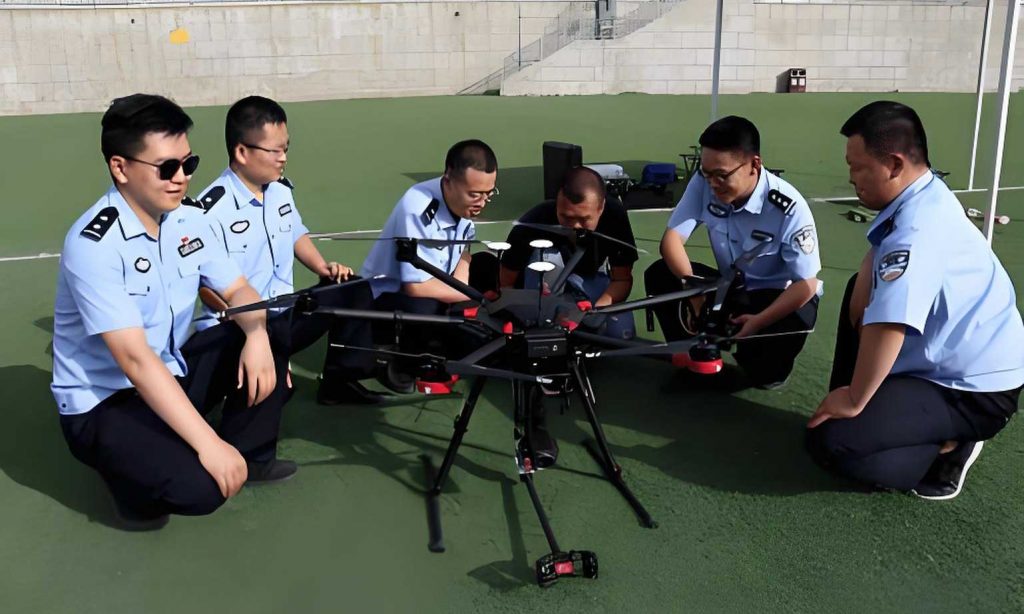
To systematically evaluate the drivers and outcomes of such drone training programs, I conducted a survey among participants who had completed an aerial photography drone training course. The core objective was to analyze their perceived value of the drone training and their subsequent training willingness (i.e., purchase intention for further drone training services). The theoretical framework drew upon established consumer behavior models, where perceived value is a multi-dimensional construct significantly influencing purchase decisions. For this study, perceived value in the context of drone training was operationalized into three distinct dimensions, as defined below.
| Dimension Name | Definition in Context of Drone Training |
|---|---|
| Functional Value (FV) | The value derived from the drone training’s ability to solve external problems, such as acquiring a certified skill, improving operational safety, and enhancing job performance. |
| Experiential Value (EV) | The value obtained from the affective and cognitive stimulation provided by the drone training, including feelings of excitement, enjoyment, and intellectual engagement. |
| Symbolic Value (SV) | The value associated with the drone training’s role in expressing social identity, status, or self-concept to others. |
Training willingness (TW) was measured through two behavioral tendencies: repurchase intention (willingness to enroll in advanced drone training) and word-of-mouth propagation (willingness to recommend the drone training to peers). The survey employed a Likert scale for measurement. Based on prior literature, I hypothesized that perceived value positively influences training willingness. This leads to the following formal hypotheses for the drone training context:
$$ H: \text{Perceived Value has a significant positive impact on Training Willingness.} $$
$$ H_1: \text{Functional Value (FV) has a significant positive impact on Training Willingness (TW).} $$
$$ H_2: \text{Experiential Value (EV) has a significant positive impact on Training Willingness (TW).} $$
$$ H_3: \text{Symbolic Value (SV) has a significant positive impact on Training Willingness (TW).} $$
The survey collected data from over a hundred trainees. A descriptive analysis revealed a demographic skew towards males (over 80%), with participants evenly distributed among teachers, students, and other professionals, predominantly aged 20-40. Regarding prior experience relevant to drone training—a crucial factor for targeting—the data showed a diverse background. The following table presents the percentage of trainees with experience in four key areas, indicating that most had some related skill set before enrolling in drone training.
| Related Skill Area | Percentage of Trainees with Experience (%) |
|---|---|
| Drone Piloting Experience | 41.3 |
| SLR Photography Experience | 61.9 |
| Professional Image Processing | 42.9 |
| Video Production & Editing | 54.0 |
Notably, 15.9% of trainees possessed all four experiences, while none reported a complete lack of any relevant experience. This suggests that drone training often attracts individuals seeking to formalize or augment existing hobbies or professional skills, rather than complete novices.
To ensure the reliability and validity of the survey instrument, I performed statistical tests using SPSS software. The Cronbach’s α coefficients for all scales were exceptionally high, indicating excellent internal consistency and reliability for the drone training evaluation metrics.
| Scale | Number of Items | Cronbach’s α |
|---|---|---|
| Overall Scale | 34 | 0.995 |
| Perceived Value Dimension | 10 | 0.995 |
| Training Willingness Dimension | 3 | 0.995 |
| Functional Value (Sub-dimension) | 4 | 0.993 |
| Experiential Value (Sub-dimension) | 3 | 0.994 |
| Symbolic Value (Sub-dimension) | 3 | 0.989 |
For validity assessment, the Kaiser-Meyer-Olkin (KMO) measure was 0.881, and Bartlett’s test of sphericity was significant (p < 0.05), confirming the data’s suitability for factor analysis. A principal component analysis with varimax rotation was conducted on the 13 core measurement items. The rotated factor loading matrix confirmed the expected four-factor structure corresponding to Functional Value, Experiential Value, Symbolic Value, and Training Willingness. All item loadings were above 0.64 on their respective factors, demonstrating strong convergent and discriminant validity for the drone training construct model.
To explore the relationships between variables, Pearson correlation analysis was performed. All correlation coefficients between the perceived value items and training willingness items exceeded 0.5 and were statistically significant (p < 0.05), indicating strong positive bivariate relationships. This preliminary finding supports the overarching hypothesis that perceived value is closely linked to training willingness in drone training.
The core of the empirical investigation involved testing the hypothesized impact using multiple linear regression analysis. The three perceived value dimensions (FV, EV, SV) were treated as independent variables, while Training Willingness (TW) was the dependent variable. The regression model yielded a high coefficient of determination, indicating a strong explanatory power for the drone training context.
$$ R^2 = 0.784 $$
This means that approximately 78.4% of the variance in trainees’ willingness to engage in further drone training can be explained by their perceived functional, experiential, and symbolic value.
The detailed regression coefficients are presented in the table below. The analysis revealed that both Functional Value (β = 0.527, p < 0.001) and Experiential Value (β = 0.402, p < 0.001) had significant positive effects on Training Willingness. However, the coefficient for Symbolic Value was negligible and statistically non-significant (β = -0.001, p = 0.995). The constant term was also non-significant (p = 0.080).
| Predictor Variable | Unstandardized Coefficient (B) | Standardized Coefficient (β) | Significance (p-value) |
|---|---|---|---|
| (Constant) | 0.508 | – | 0.080 |
| Functional Value (FV) | 0.473 | 0.527 | 0.000 |
| Experiential Value (EV) | 0.422 | 0.402 | 0.000 |
| Symbolic Value (SV) | -0.001 | -0.001 | 0.995 |
Given the non-significance of the Symbolic Value predictor, I refined the model by removing it. The subsequent regression analysis maintained the same high explanatory power (R² = 0.784) and confirmed the significant positive impacts of Functional and Experiential Value. The constant remained non-significant. Therefore, the final predictive model for training willingness in drone training can be expressed by the following standardized regression equation:
$$ TW = 0.526 \cdot FV + 0.402 \cdot EV $$
Where \( TW \) represents Training Willingness, \( FV \) represents Functional Value, and \( EV \) represents Experiential Value. This equation quantitatively summarizes the primary drivers behind a trainee’s decision to pursue further drone training. The results lead to the following conclusions regarding the hypotheses: Hypotheses H, H1, and H2 are supported. Hypothesis H3 is not supported. This implies that for participants in this drone training program, their willingness to repurchase or recommend the training is driven primarily by practical utility and enjoyable experiences, not by social status or image projection.
Reflecting on these findings offers several pivotal insights for the future of drone training. First, the emphasis on functional and experiential value suggests that marketing and curriculum design for drone training should rigorously highlight tangible outcomes—such as skill certification, safety proficiency, and career advancement—while simultaneously ensuring the learning process is engaging, exciting, and intellectually stimulating. Drone training providers must craft experiences that are both useful and enjoyable. Second, the diverse pre-existing skills among trainees indicate that effective drone training marketing should target individuals with adjacent interests in photography, videography, technology, or specific industries like agriculture or surveying. Drone training acts as a convergence point for these skills, offering a structured pathway for their application. Third, the lack of significance for symbolic value indicates that, in its current stage, drone training is predominantly perceived as a practical tool rather than a lifestyle or status symbol. This is characteristic of an early-market phase for a technological skill set. As drone training becomes more specialized and integrated into high-profile professions, its symbolic value may increase. Finally, for vocational colleges considering establishing dedicated drone programs, the findings advocate for a phased approach. Instead of creating entirely new standalone degrees initially, it may be more effective to integrate drone training modules or specializations into existing related programs (e.g., photography, cinematography, agriculture, engineering, logistics). This leverages existing faculty expertise and student interest, using drone training as an enhancing component that can later evolve into a full-fledged program based on demonstrated demand and success. In essence, the trajectory of drone training is one of immense potential, guided by the concrete values learners seek. By anchoring programs in functionality and positive experience, educators and trainers can ensure that drone training continues to grow, adapt, and meet the evolving needs of both individuals and industries. The empirical model derived here provides a valuable framework for evaluating and refining drone training initiatives globally, ensuring they deliver the value that fosters sustained engagement and professional development.