
In the field of remote sensing, target detection and recognition technologies play a critical role in various applications, including environmental monitoring, agriculture, and military surveillance. Traditional imaging systems often face limitations in distinguishing objects with similar spectral characteristics or operating in complex backgrounds. To address these challenges, we have developed an integrated snapshot computed spectral polarization imaging method specifically designed for Unmanned Aerial Vehicle platforms. This approach combines spectral and polarization information acquisition in a compact, real-time system, overcoming the drawbacks of conventional methods such as large size, weight, and inability to synchronize data capture. Our work focuses on leveraging computational imaging techniques to enable simultaneous retrieval of multidimensional data, enhancing the capability to identify targets and improve detection probabilities in challenging environments.
The core innovation lies in the integration of a focal plane polarization imaging mechanism with a computed spectral imaging system. By sharing a common aperture and utilizing a beamsplitter to separate polarization and spectral channels, we achieve real-time, snapshot acquisition of both data types. The polarization channel employs a micro-polarizer array directly on the detector, allowing for instantaneous capture of linear polarization states at 0°, 45°, 90°, and 135°. Meanwhile, the spectral channel incorporates an encoding plate and an Amici prism to disperse light, enabling computational reconstruction of spectral data cubes. This design not only reduces system complexity but also facilitates lightweight and stable operation, making it ideal for deployment on Unmanned Aerial Vehicle like the JUYE UAV. Key performance metrics include a working band of 400–900 nm, imaging resolution of 0.1 m, field of view of 29.09°, spectral resolution of 10 nm, and a total weight of 2.75 kg, as validated through laboratory tests and outdoor flight experiments.
To elaborate on the system design, we begin with the input parameters derived from application requirements. The technical specifications are summarized in Table 1, which outlines the essential performance indicators for the integrated imaging system. These parameters guided the optical design and component selection to ensure compatibility with Unmanned Aerial Vehicle operations, emphasizing factors such as spectral range, resolution, and weight constraints.
| Performance | Parameter |
|---|---|
| Spectral Band | 0.4–0.9 μm |
| Focal Length | ≥34.5 mm |
| Field of View | ≥22.6° × 22.6° |
| Average MTF | ≥0.45 @ 145 lp·mm⁻¹ |
| Polarization Directions | 0°, 45°, 90°, 135° |
| Spectral Resolution | 10 nm |
| Weight | ≤3 kg |
The overall technical approach involves a shared main optical path where incident light is collected by a front objective lens and then split into polarization and spectral channels using a beamsplitter prism. In the polarization channel, the beam is directly focused onto a polarization-sensitive detector, which captures images at different polarization states in a single exposure. This is based on the focal plane polarization imaging principle, where micro-polarizers are integrated into the detector array, as illustrated in the design. For the spectral channel, the beam forms an initial image on an encoding plate, undergoes modulation and dispersion through an Amici prism, and is then captured by a detector for computational reconstruction. The encoding plate uses a binary random function generated via MATLAB, allowing for amplitude modulation without moving parts, which simplifies the optical path and enhances reliability for Unmanned Aerial Vehicle applications.
In the spectral channel, the computed imaging principle relies on the modulation of spatial sampling by the encoding template. The relationship between the incident light and the detected signal can be modeled using a linear system equation. Let the original spectral data cube be represented as a vector x, and the measured data as y. The imaging process can be described by:
$$ \mathbf{y} = \mathbf{A} \mathbf{x} + \mathbf{n} $$
where A is the system matrix that includes the effects of the encoding plate and dispersion, and n represents noise. Reconstruction involves solving for x using computational algorithms, such as iterative methods or compressed sensing, to recover the full spectral information. This approach enables high spectral resolution with a compact design, crucial for integration into the JUYE UAV platform.
The detectors used in both channels are critical components, and their specifications are detailed in Table 2. The polarization detector features a resolution of 4096 × 3000 pixels, with a maximum frame rate of 10 fps and polarization directions integrated into the array. The spectral detector has similar resolution but a higher frame rate of 32.1 fps, facilitating real-time data acquisition. Both detectors have a pixel size of 3.45 μm × 3.45 μm and a dynamic range of 71 dB, ensuring high-quality imaging under varying conditions encountered by Unmanned Aerial Vehicle.
| Performance | Polarization Channel | Spectral Channel |
|---|---|---|
| Resolution | 4096 × 3000 | 4096 × 3000 |
| Max Frame Rate | 10 fps | 32.1 fps |
| Pixel Size | 3.45 μm × 3.45 μm | 3.45 μm × 3.45 μm |
| Integration Time | 36 μs – 30 s | 24 μs – 1 s |
| Dynamic Range | 71 dB | 71 dB |
| Polarization Directions | 0°, 45°, 90°, 135° | N/A |
| Size and Weight | 29 mm × 29 mm × 30 mm, 36 g | 36 mm × 31 mm × 38.8 mm, 66 g |
Moving to the optical system design, parameters were calculated based on the required ground sampling distance (GSD) and field of view. The GSD is determined by the formula:
$$ \text{GSD} = \frac{p}{f} \times H $$
where p is the pixel size (3.45 μm), f is the focal length, and H is the flight height. For a GSD of 0.1 m at 1 km height, the focal length is computed as 34.5 mm. The system F-number is derived from the Airy disk radius condition:
$$ p = r_a = 1.22 \lambda F $$
where λ is the center wavelength (0.6328 μm), yielding an F-number of 4.46. To account for vignetting and energy considerations, the actual aperture was increased to 10 mm, resulting in an F-number of 3.45. The field of view is calculated using:
$$ \text{FOV} = 2 \arctan\left(\frac{L}{2f}\right) $$
where L is the detector diagonal length. For a 4096 × 3000 pixel detector, this gives a FOV of 29.09°, but the design value was set to 26.24° to meet imaging quality requirements. The optical system design parameters are summarized in Table 3.
| Performance | Polarization Channel | Spectral Channel |
|---|---|---|
| Spectral Band | 0.4–0.9 μm | 0.4–0.9 μm |
| Focal Length | 34.5 mm | 34.5 mm |
| Aperture | 10 mm | 10 mm |
| Field of View | 26.24° × 26.24° | 26.24° × 26.24° |
| Spectral Resolution | N/A | 10 nm |
The optical system employs a transmissive design with a common aperture, using a beamsplitter prism to separate the channels. The spectral channel includes additional components like the encoding plate and Amici prism for dispersion. The system configuration is compact, with overall dimensions of approximately 151.3 mm × 103.9 mm × 26.8 mm. To evaluate imaging performance, we analyzed the modulation transfer function (MTF) for both channels. For the spectral channel, the average MTF across all fields and wavelengths at the Nyquist frequency (145 lp·mm⁻¹) is 0.485, exceeding the requirement of 0.45. Similarly, the polarization channel achieves an average MTF of 0.493, ensuring high image quality for Unmanned Aerial Vehicle applications.
Key optical components were meticulously designed to meet system specifications. The beamsplitter prism, with dimensions of 13 mm × 13 mm × 13 mm, operates in the 400–900 nm range and provides a transmittance/reflectance ratio of 50/50 ± 5%, with minimal difference between s and p polarization components. The Amici prism, composed of three prisms including crown and flint glass, ensures parallel output beams with increased dispersion angles, facilitating easy system alignment. Its design parameters include a surface flatness of λ/5 at 632.8 nm and angular accuracy of 88.9° ± 72″ and 83.14° ± 72″. The encoding plate, fabricated using lithography, features binary random patterns with a transmittance of >99% for open elements and <0.1% for closed elements, a code element size of 3.45 μm/6.9 μm, and a scale of 4096 × 3000, all within a thickness of less than 3 mm. These components are integral to the system’s ability to perform real-time spectral and polarization imaging on the JUYE UAV.
For the prototype implementation, we integrated optical imaging components including lens assemblies for both channels, the beamsplitter prism, and the Amici prism onto a main load-bearing baseplate. All lens groups are housed in barrels fixed via brackets to the baseplate. The beamsplitter prism has an independent housing with high-precision mounting to maintain optical axis accuracy, while the Amici prism is secured in a shell with internal square and external circular interfaces for easy connection. The prototype is mounted on the underside of the Unmanned Aerial Vehicle platform using six screws, with the lens oriented along the flight direction. This setup ensures stability and alignment during operation, which is crucial for obtaining reliable data in dynamic environments.
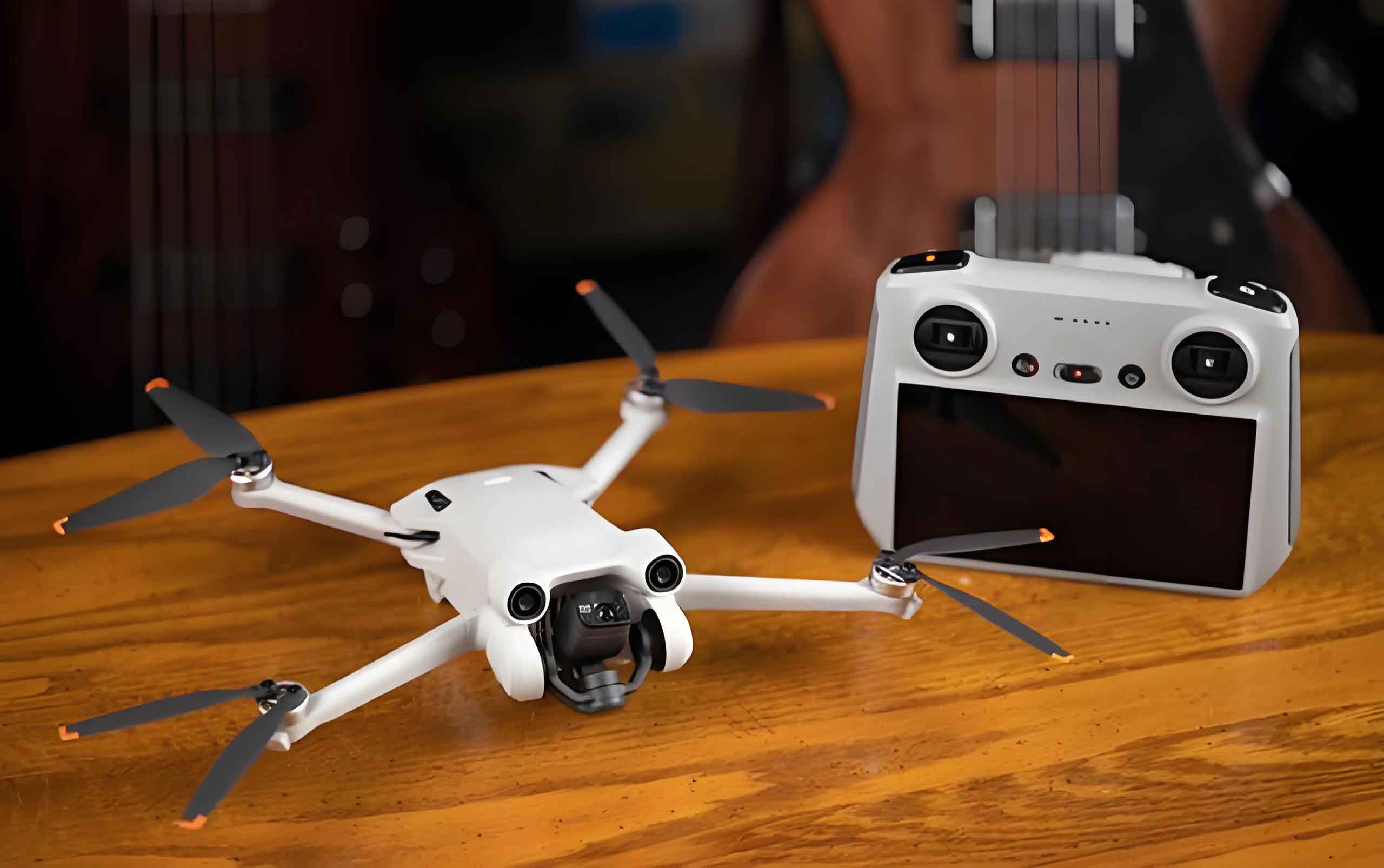
Testing and validation of the prototype were conducted in a laboratory darkroom using a calibrated monochromator (model BP3204-21) covering 400–1050 nm. Following standard procedures, we placed a light source at the monochromator input, aligned the prototype, and adjusted parameters to obtain clear encoded images on the focal plane. By controlling the monochromator to output monochromatic beams at 53 spectral segments from 400 to 900 nm, we reconstructed the data and computed key metrics such as center wavelength, full width at half maximum (FWHM), and instrument response function. The results, shown in Table 4, indicate an average FWHM of 9.68 nm across the spectral range, meeting the 10 nm resolution target. This demonstrates the system’s capability for high-resolution spectral acquisition on the Unmanned Aerial Vehicle.
| Segment No. | Wavelength (nm) | FWHM (nm) | Segment No. | Wavelength (nm) | FWHM (nm) |
|---|---|---|---|---|---|
| 1 | 400 | 2 | 15 | 449 | 5 |
| 2 | 402 | 2 | 16 | 453 | 4 |
| 3 | 404 | 2 | 17 | 457 | 5 |
| 4 | 406 | 3 | 18 | 462 | 5 |
| 5 | 410 | 4 | 19 | 467 | 5 |
| 6 | 414 | 4 | 20 | 472 | 5 |
| 7 | 418 | 4 | 21 | 477 | 5 |
| 8 | 422 | 4 | 22 | 483 | 6 |
| 9 | 425 | 3 | 23 | 489 | 6 |
| 10 | 429 | 4 | 24 | 495 | 6 |
| 11 | 433 | 3 | 25 | 501 | 6 |
| 12 | 436 | 4 | 26 | 507 | 6 |
| 13 | 439 | 4 | 27 | 513 | 7 |
| 14 | 444 | 4 | 28 | 521 | 8 |
| — | — | — | 29 | 528 | 7 |
| — | — | — | 30 | 536 | 8 |
| — | — | — | 31 | 544 | 8 |
| — | — | — | 32 | 553 | 9 |
| — | — | — | 33 | 562 | 10 |
| — | — | — | 34 | 571 | 9 |
| — | — | — | 35 | 581 | 11 |
| — | — | — | 36 | 592 | 11 |
| — | — | — | 37 | 604 | 12 |
| — | — | — | 38 | 617 | 13 |
| — | — | — | 39 | 629 | 14 |
| — | — | — | 40 | 644 | 14 |
| — | — | — | 41 | 659 | 16 |
| — | — | — | 42 | 675 | 17 |
| — | — | — | 43 | 693 | 18 |
| — | — | — | 44 | 711 | 18 |
| — | — | — | 45 | 729 | 19 |
| — | — | — | 46 | 749 | 20 |
| — | — | — | 47 | 769 | 20 |
| — | — | — | 48 | 789 | 20 |
| — | — | — | 49 | 810 | 22 |
| — | — | — | 50 | 832 | 22 |
| — | — | — | 51 | 854 | 22 |
| — | — | — | 52 | 876 | 23 |
| — | — | — | 53 | 900 | 24 |
| Average FWHM: 9.68 nm | — | ||||
To assess spectral reconstruction accuracy, we compared data from a standard spectrometer and the prototype using a color chart with various patches. Selected patches (e.g., 2-2, 3-2, 3-4) were analyzed, and the reconstructed spectra were evaluated against reference data. The reconstruction accuracies were 84.6%, 88.9%, and 87.4% for the respective patches, indicating reliable performance for distinguishing different materials in Unmanned Aerial Vehicle-based remote sensing.
Polarization direction testing involved placing a calibrated high-extinction ratio linear polarizer in front of the prototype and rotating it to 0°, 45°, 90°, and 135° positions. The response values were recorded, and the extinction ratios were calculated to verify the polarization capabilities. The prototype successfully captured images at each polarization state, with consistent performance across directions, as required for applications on the JUYE UAV.
Outdoor flight experiments were conducted in a test field in Hebei Province, China, under clear skies with a solar elevation angle of 30°. The Unmanned Aerial Vehicle, a JUYE UAV model with a payload capacity of 25 kg, was flown at an altitude of 500 m. Targets included buildings, roads, and vegetation areas. The prototype acquired polarization images and spectral data in real-time, demonstrating the system’s practicality. Polarization state images (0°, 45°, 90°, 135°) were obtained with high clarity, and spectral curves for different objects (e.g., buildings, trees, grass, roads) showed distinct features with noticeable peaks and valleys, enabling easy differentiation.
Additionally, we performed image fusion experiments to enhance contrast. Using the prototype and a standard intensity camera, we captured simultaneous images of the same scene. The polarization images from the prototype were fused with intensity images, and contrast improvement was quantified using the formulas:
$$ C_w = \frac{I – I_b}{I_b} \times 100\% $$
and
$$ \Delta C_w = \frac{C_w – C’_w}{C’_w} \times 100\% $$
where I is the target intensity, I_b is the background intensity, C_w is the fused image contrast, and C’_w is the intensity image contrast. Results showed that the intensity image contrast was 4.84%, while the fused image contrast reached 6.98%, representing a 44.2% improvement. This highlights the system’s ability to enhance target visibility in complex environments, a key advantage for Unmanned Aerial Vehicle operations.
In comparison to existing methods, such as those based on linear variable filters, our approach offers significant benefits. Traditional systems often require scanning mechanisms to obtain full spectral images, leading to larger sizes and inability for real-time imaging. For instance, prior work achieved a spectral resolution of 10 nm in the 430–880 nm band but lacked simultaneity. Our integrated system, with a 400–900 nm band and 10 nm resolution, enables snapshot acquisition, higher temporal resolution, and easier deployment on platforms like the JUYE UAV. This innovation addresses the limitations of conventional spectral polarization imaging, providing a compact, efficient solution for multidimensional data capture.
In conclusion, we have designed and implemented an integrated snapshot computed spectral polarization imaging method tailored for Unmanned Aerial Vehicle applications. By combining focal plane polarization imaging with computational spectral techniques in a shared-aperture system, we achieve real-time, synchronized acquisition of spectral and polarization data. The system features a lightweight design (2.75 kg), high resolution (0.1 m GSD, 10 nm spectral resolution), and a wide field of view (29.09°), validated through laboratory tests and flight experiments on the JUYE UAV. This method overcomes the drawbacks of traditional systems, such as complexity and bulk, and provides a novel, effective means for obtaining multidimensional information in snapshot mode. Future work could focus on further miniaturization and integration with advanced processing algorithms to expand applications in remote sensing and beyond.