
In recent years, the rapid expansion of the power industry has led to an increasingly complex and extensive grid infrastructure, making the safe and reliable operation of transmission lines a critical concern for power system maintenance. Traditional manual inspection methods are plagued by inefficiencies and high safety risks, struggling to keep pace with growing electricity demands and challenging grid environments. As a result, inspection technology based on multirotor drones has emerged as a transformative solution, offering a robust approach to address these issues. In this article, I will delve into the core aspects of this technology, exploring its components, applications, and future potential, with a focus on how multirotor drones are revolutionizing transmission line inspections.
The adoption of multirotor drones for transmission line inspections stems from their exceptional flexibility, ease of operation, and ability to perform comprehensive assessments of various components, such as transmission towers and conductors. By equipping these multirotor drones with advanced sensors and high-resolution cameras, they can capture high-definition imagery, enabling maintenance personnel to swiftly identify and address potential issues, thereby enhancing the overall safety and reliability of the power system. This technology not only improves efficiency but also reduces human exposure to hazardous conditions, marking a significant leap forward in grid maintenance practices.
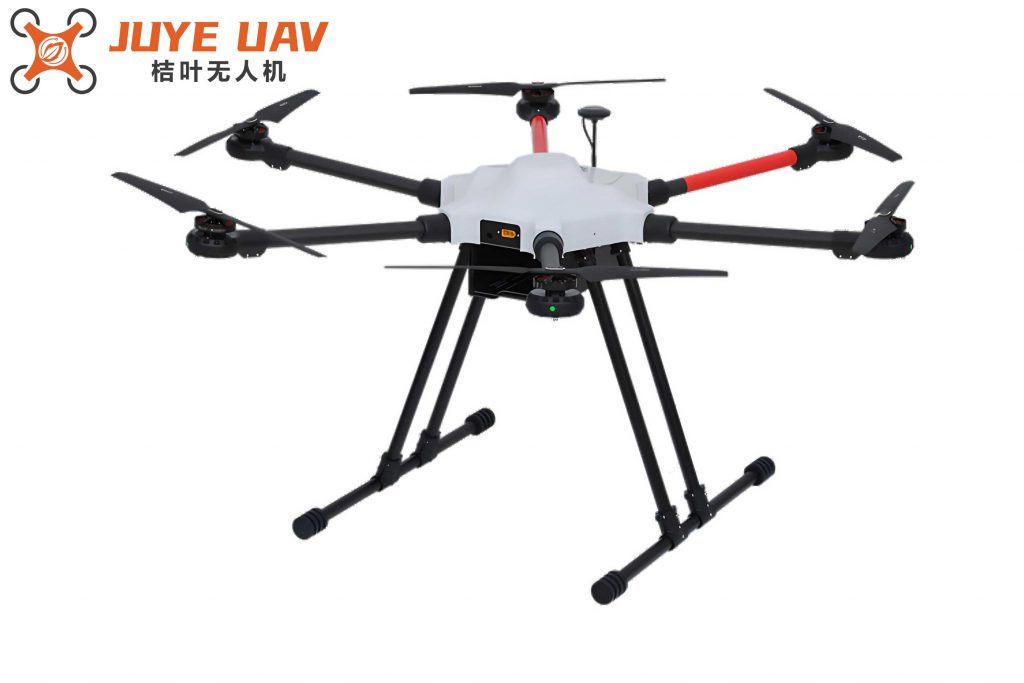
One of the foundational elements in deploying multirotor drones for transmission line inspections is the careful selection and configuration of the drone platform. This process involves evaluating multiple factors to ensure optimal performance and data quality. Typically, multirotor drones with six or eight rotors are preferred due to their enhanced stability, payload capacity, and redundancy, which are crucial for navigating the intricate environments of power lines. For instance, the payload capacity must accommodate various inspection devices, such as cameras and rangefinders, while battery life is optimized to extend flight duration. Advanced autonomous flight control systems and high-precision integrated navigation systems, combining satellite and inertial navigation, are essential for accurate positioning and control. Additionally, reliable data transmission links with low latency and anti-interference capabilities ensure real-time communication between the drone and ground stations. To illustrate the key considerations, I have summarized typical parameters for multirotor drone configurations in the table below.
| Parameter | Description | Typical Values for Multirotor Drones |
|---|---|---|
| Rotor Configuration | Number of rotors for stability and redundancy | 6 or 8 rotors |
| Flight Endurance | Maximum flight time on a single charge | 30-60 minutes |
| Payload Capacity | Weight of inspection equipment carried | 1-5 kg |
| Navigation System | Integration of GPS and inertial sensors | Combined GNSS and IMU |
| Data Transmission | Latency and reliability of communication | <100 ms latency, robust links |
Path planning and flight control technologies are pivotal to the success of multirotor drone-based inspections, as they directly influence the efficiency and reliability of the operation. Effective path planning involves task segmentation and route optimization, taking into account the transmission line’s layout and obstacles. Algorithms such as artificial potential fields or sampling-based methods are commonly used to generate collision-free paths. For example, the path planning can be formulated as an optimization problem minimizing the total flight distance while avoiding obstacles. Mathematically, this can be expressed using a cost function: $$ J = \int_{0}^{T} \left( \| \mathbf{p}(t) – \mathbf{p}_{\text{goal}} \|^2 + w \cdot \text{obstacle\_cost} \right) dt $$ where \( \mathbf{p}(t) \) is the drone’s position at time \( t \), \( \mathbf{p}_{\text{goal}} \) is the target position, and \( w \) is a weighting factor for obstacle avoidance. Flight control, on the other hand, relies on sophisticated systems that integrate sensor data for real-time adjustments. The dynamics of a multirotor drone can be modeled using equations of motion, such as: $$ m \ddot{\mathbf{p}} = \mathbf{R} \mathbf{F} – m \mathbf{g} $$ where \( m \) is the mass, \( \mathbf{R} \) is the rotation matrix, \( \mathbf{F} \) is the thrust force, and \( \mathbf{g} \) is gravity. By combining these with machine learning techniques, multirotor drones can achieve autonomous navigation and precise execution of inspection routes, ensuring high-quality data collection even in complex environments.
Image acquisition and processing technologies form the backbone of automated detection and condition assessment in multirotor drone-based inspections. High-quality image data is essential for identifying defects, and this begins with selecting appropriate cameras, such as industrial-grade models with high pixel counts and auto-focus capabilities. Image stitching algorithms are employed to merge multiple shots into a comprehensive view of the transmission line, while stabilization techniques, including gimbal control and software algorithms, mitigate motion blur. For instance, image stabilization can be enhanced using digital filters described by: $$ I_{\text{stable}}(x,y) = \sum_{i,j} w(i,j) I(x+i, y+j) $$ where \( I \) is the image intensity, and \( w \) is a weighting kernel for smoothing. In processing, deep learning models, particularly convolutional neural networks (CNNs), are leveraged for target detection and classification. A CNN for defect detection might involve layers defined by: $$ \mathbf{Y} = f(\mathbf{W} * \mathbf{X} + \mathbf{b}) $$ where \( \mathbf{X} \) is the input image, \( \mathbf{W} \) are the weights, \( \mathbf{b} \) is the bias, and \( f \) is an activation function. This enables the multirotor drone system to autonomously identify anomalies like cracks or loose hardware, facilitating rapid response and maintenance decisions.
Abnormal detection and fault diagnosis technologies are at the core of intelligent inspection systems using multirotor drones, directly impacting the accuracy and practicality of the entire process. These technologies encompass computer vision and pattern recognition to identify issues such as conductor damage or insulator failures. For abnormal detection, algorithms like YOLO (You Only Look Once) or Faster R-CNN are commonly applied, which can be summarized by a detection probability function: $$ P(\text{defect} | \mathbf{I}) = \sigma(\mathbf{\theta}^T \phi(\mathbf{I})) $$ where \( \mathbf{I} \) is the input image, \( \phi \) is a feature extractor, \( \mathbf{\theta} \) are model parameters, and \( \sigma \) is the sigmoid function. Fault diagnosis then builds on this by incorporating expert systems and machine learning for classification and severity assessment. For example, a rule-based system might use logical expressions to evaluate conditions, while a neural network-based approach could involve: $$ \hat{y} = \text{softmax}(\mathbf{W}_2 \cdot \text{ReLU}(\mathbf{W}_1 \mathbf{x} + \mathbf{b}_1) + \mathbf{b}_2) $$ where \( \mathbf{x} \) is the feature vector, and \( \hat{y} \) is the predicted fault class. By integrating multi-source data and continuous learning, multirotor drone systems can evolve to provide more reliable diagnostics, enhancing the overall resilience of power infrastructure.
| Technology Area | Key Components | Applications in Multirotor Drone Inspections |
|---|---|---|
| Path Planning and Flight Control | Algorithms for route optimization, sensor integration | Autonomous navigation, obstacle avoidance, precise positioning |
| Image Acquisition and Processing | High-resolution cameras, stitching algorithms, CNNs | Defect identification, image stabilization, condition monitoring |
| Abnormal Detection and Fault Diagnosis | Machine learning models, expert systems | Real-time anomaly detection, fault classification, risk assessment |
Looking ahead, the future development of multirotor drone-based transmission line inspection technology holds immense promise, driven by advancements in artificial intelligence, robotics, and data analytics. I envision several key directions that will shape this field. First, the evolution towards swarm intelligence and collaborative multirotor drone systems will enable more efficient and scalable inspections. By deploying fleets of multirotor drones that communicate and coordinate tasks, coverage can be expanded while providing fault tolerance. This can be modeled using cooperative control laws, such as: $$ \dot{\mathbf{p}}_i = \sum_{j \in \mathcal{N}_i} (\mathbf{p}_j – \mathbf{p}_i) $$ where \( \mathbf{p}_i \) is the position of drone \( i \), and \( \mathcal{N}_i \) is its neighborhood set, ensuring cohesive movement. Second, enhancing autonomy and intelligence through deep reinforcement learning will allow multirotor drones to make independent decisions and adapt to dynamic environments. For instance, a reward function in reinforcement learning could be defined as: $$ R = \alpha \cdot \text{inspection\_coverage} – \beta \cdot \text{energy\_consumption} $$ where \( \alpha \) and \( \beta \) are tuning parameters. Third, achieving all-weather and full-environment adaptability will require integrating technologies like thermal imaging and LiDAR, enabling inspections under adverse conditions. This could involve sensor fusion equations: $$ \mathbf{z}_{\text{fused}} = \mathbf{K} \cdot (\mathbf{z}_{\text{visual}} + \mathbf{z}_{\text{thermal}}) $$ where \( \mathbf{K} \) is a Kalman gain matrix. Overall, these advancements will propel multirotor drone-based systems towards greater efficiency and reliability, solidifying their role in modern power grid maintenance.
In conclusion, the integration of multirotor drones into transmission line inspection represents a significant advancement in ensuring the safety and efficiency of power systems. Through detailed exploration of platform configuration, path planning, image processing, and fault diagnosis, it is evident that multirotor drones offer a versatile and powerful tool for addressing the limitations of traditional methods. As technology continues to evolve, with trends like swarm robotics and enhanced autonomy on the horizon, I am confident that multirotor drone-based inspections will play an increasingly vital role in supporting sustainable energy infrastructure and societal progress. The ongoing innovation in this field promises to deliver even greater benefits, making multirotor drones indispensable for future grid operations.