
In recent years, the application of multirotor drone autonomous inspection based on RTK technology has significantly increased in the daily inspection of overhead transmission lines, greatly improving inspection efficiency. This article discusses the practical application effects of RTK-based multirotor drone autonomous inspection in high-altitude mountainous areas of Yunnan, focusing on challenges and solutions to ensure operational and equipment safety. The terrain in Yunnan is predominantly mountainous, with altitudes ranging from 1000 to 3500 meters, and slopes exceeding 25 degrees in many regions. Over 80% of the transmission lines managed by the local grid company are located in these areas, posing significant risks for traditional manual inspections. Since 2016, the use of multirotor drones for inspecting 35–500 kV transmission lines has grown, with drone-based inspections accounting for over 70% in some regions by 2023. To further enhance efficiency and reduce accidents caused by human error, the company has promoted 3D modeling, autonomous inspection, and automated route planning for multirotor drones, achieving full coverage by 2022. This marks a new era in inspection methods, leveraging RTK technology for precise multirotor drone operations.
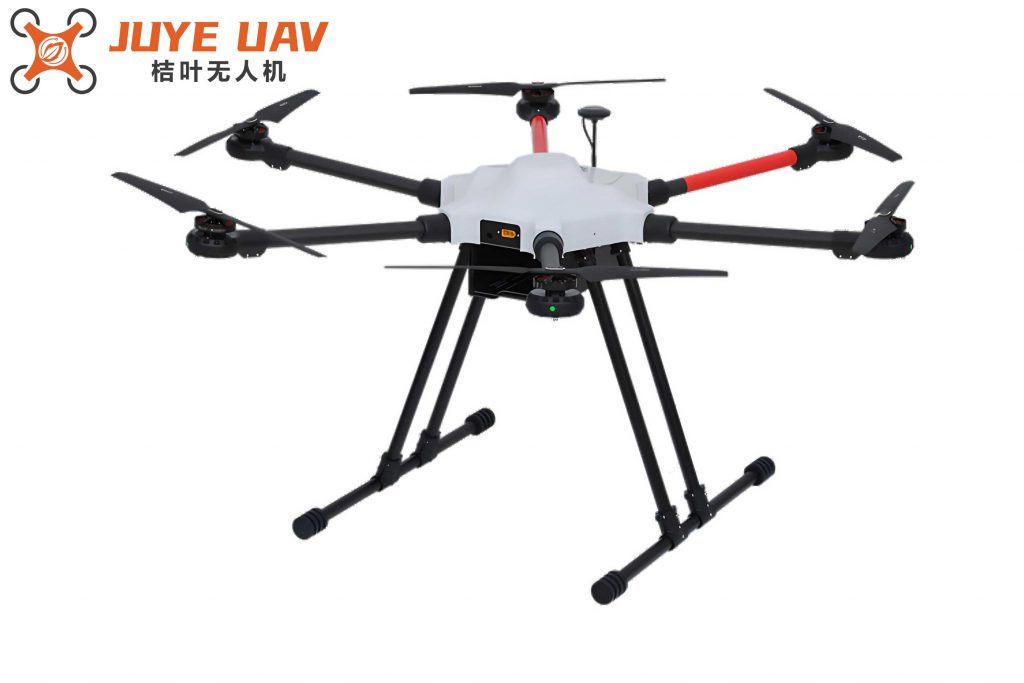
RTK (Real-Time Kinematic) technology is a differential method that processes carrier phase observations from a base station and a rover in real-time, enabling centimeter-level positioning accuracy. For multirotor drone inspections, RTK assists in achieving precise waypoint navigation, which is crucial for automated routes. The positioning error in RTK can be modeled using the following equation, where the carrier phase difference minimizes errors:
$$ \Delta \phi = \phi_r – \phi_b + \lambda N + \epsilon $$
Here, $\Delta \phi$ represents the phase difference, $\phi_r$ is the rover’s phase measurement, $\phi_b$ is the base station’s phase measurement, $\lambda$ is the wavelength, $N$ is the integer ambiguity, and $\epsilon$ denotes noise and multipath errors. By resolving this, multirotor drones can maintain stable flight paths even in complex environments. Automated inspection routes are generated primarily through two methods: 3D modeling-based planning and reverse route recording. Both rely on RTK for accurate waypoint arrival, ensuring high-quality image or video capture. However, in Yunnan’s high-altitude regions, factors like weak signals and terrain obstruct RTK performance, leading to issues such as signal loss or drone crashes.
The challenges in applying RTK technology for multirotor drone autonomous inspection in Yunnan’s high-altitude mountainous areas are multifaceted. Based on extensive fieldwork involving approximately 20000 km of inspections, with about 3700 km in high-altitude regions, several key issues have been identified. These include RTK signal loss in areas with no or weak 4G signals, low RTK coverage above 3000 meters altitude, and interference from dense vegetation in transmission corridors. For instance, in over 1000 recorded operations, RTK signals failed to converge in no-signal areas without using satellite-based RTK, while weak-signal areas experienced frequent失锁 (loss of lock) and instability. The table below summarizes the observed problems and their frequencies:
| Challenge Type | Frequency in Recorded Operations | Impact on Multirotor Drone Operations |
|---|---|---|
| No 4G Signal Areas | 10+ instances | RTK convergence impossible without satellite-based RTK |
| Weak 4G Signal Areas | 130+ instances | 46+ RTK失锁, 62+ failures to fix, 22 unstable convergences |
| Stable 4G Signal Areas | 100+ instances | Brief RTK失锁, minimal impact on safety |
| Altitude >3000m | Multiple occurrences | Low RTK signal coverage, often no convergence |
| Dense Vegetation Areas | 200+ instances | 80+ signal losses, 3 crashes due to失控 |
To address these issues, various RTK technologies have been applied in Yunnan’s high-altitude regions since 2020. The primary types include built-in network RTK in drone controllers, mobile communication module base station RTK, custom RTK via smartphone hotspots, and satellite-based RTK. Each has distinct operational methods and limitations. For example, built-in network RTK is user-friendly but depends on the proximity to base stations, often failing in remote areas. Mobile module RTK requires a fixed position and is less adaptable, while hotspot-based custom RTK relies on stable 4G signals and can be unstable in weak-signal zones. Satellite-based RTK, though requiring a “warm-up” period for signal convergence, performs reliably in no-signal areas but may still experience intermittent失锁. The effectiveness of these RTK types is evaluated based on convergence time, stability, and applicability, as shown in the following formula for signal reliability $R$:
$$ R = \frac{T_c}{T_t} \times S_e $$
Where $T_c$ is the time to convergence, $T_t$ is the total operation time, and $S_e$ is the environmental stability factor (ranging from 0 to 1). Higher $R$ values indicate better performance for multirotor drone operations.
A comparative analysis of the different RTK applications reveals their suitability for various environments. Built-in network RTK is convenient but limited by base station range; it often fails in high-altitude areas. Mobile module and hotspot-based RTK depend on cellular signal strength, with performance degrading in weak-signal regions. Satellite-based RTK, while requiring longer initialization, provides the most consistent coverage in challenging terrains. The table below summarizes the key characteristics and recommendations for each RTK type in the context of multirotor drone autonomous inspection:
| RTK Type | Convergence Time | Stability in High-Altitude Areas | Recommended Usage for Multirotor Drones |
|---|---|---|---|
| Built-in Network RTK | 1–5 minutes | Low above 2400m | Plains and urban areas with strong signals |
| Mobile Module RTK | 2–10 minutes | Moderate, depends on signal | Limited due to setup complexity |
| Hotspot-Based Custom RTK | 2–10 minutes | Moderate in low-altitude, poor above 2500m | Areas with stable 4G coverage |
| Satellite-Based RTK | 5–60 minutes | High, but may have intermittent失锁 | Mountainous and no-signal regions |
Based on the accumulated experience, several recommendations are proposed for selecting RTK technologies and multirotor drone models in Yunnan’s山区. For RTK applications, satellite-based RTK is preferred in mountainous environments due to its reliability, while other types can be used in plains and丘陵 with strong signals. In terms of multirotor drone models, the DJI M30 series offers advantages such as high-zoom cameras and improved safety over older models like the DJI Phantom and Mavic series. However, updating automated inspection routes remains a challenge with new multirotor drone iterations. It is advised to combine 3D modeling with reverse route recording for route optimization, ensuring compatibility across drone generations. The following equation illustrates the route update efficiency $E_r$ for multirotor drones:
$$ E_r = \frac{N_c}{N_t} \times A_f $$
Where $N_c$ is the number of compatible waypoints, $N_t$ is the total waypoints, and $A_f$ is the adaptation factor for new multirotor drone models (0 to 1). Higher $E_r$ values indicate smoother transitions during model upgrades.
In conclusion, the application of RTK technology in multirotor drone autonomous inspection has revolutionized the maintenance of overhead transmission lines in Yunnan’s high-altitude mountainous areas. Key suggestions include prioritizing satellite-based RTK for weak-signal regions, adopting advanced multirotor drone models like the DJI M30 series, and integrating multiple route planning methods for future-proofing. As RTK technology evolves, further research is needed to enhance signal stability in no-signal zones and standardize route protocols. This will ensure that multirotor drone inspections continue to improve in safety and efficiency, supporting the sustainable operation of power grids in challenging terrains.