
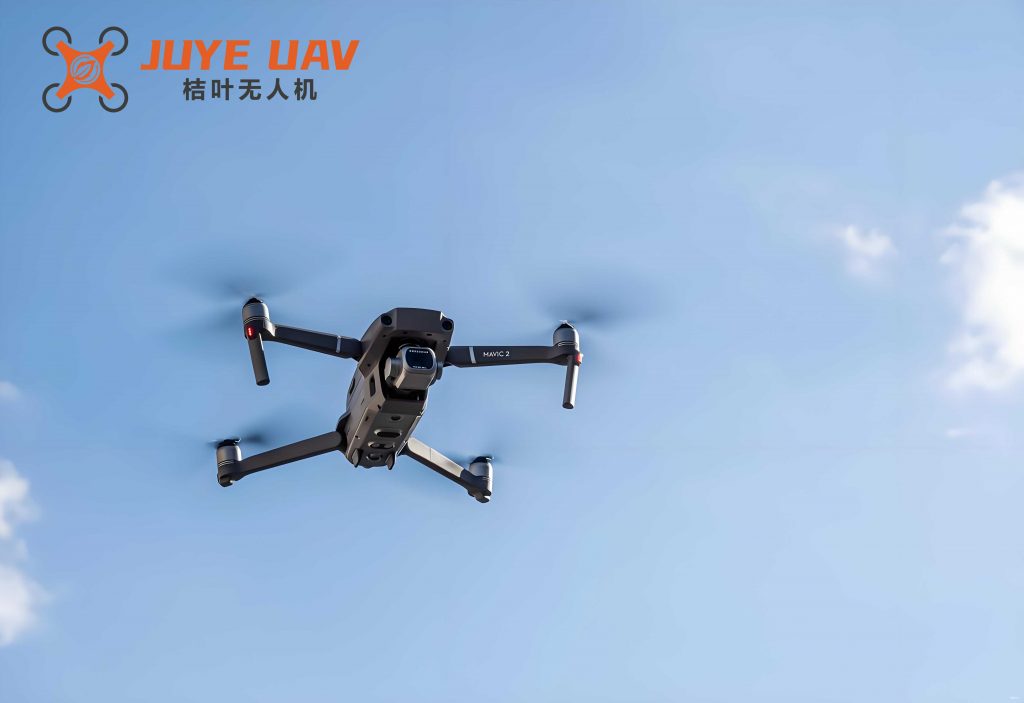
In recent years, quadcopters have gained significant attention due to their high maneuverability, stability, portability, and cost-effectiveness. These unmanned aerial vehicles are commonly deployed for reconnaissance, transportation, and delivery missions in low-altitude and confined environments. However, compared to traditional fixed-wing drones, quadcopters exhibit inferior flight performance, particularly in terms of speed and altitude, primarily because their rotors cannot directly propel forward motion, leading to inherent limitations as low-slow-small aerial systems. To address these challenges, we propose a novel fuselage design based on a lifting body shape, which aims to improve aerodynamic performance during level flight by integrating features from fixed-wing aircraft. This approach involves developing multiple fuselage configurations with varying contour characteristics and employing computational fluid dynamics (CFD) simulations for comparative analysis and selection of the optimal design. Our study focuses on enhancing key aerodynamic parameters such as lift, drag, and lift-to-drag ratio, thereby contributing to the advancement of quadcopter technology for high-speed applications.
The fundamental flight principles of a quadcopter rely on differential thrust between front and rear rotor groups to generate forward motion, resulting in a forward tilt during horizontal flight. This tilt increases aerodynamic drag, limiting overall efficiency. Additionally, rotor spacing and radius significantly influence lift characteristics due to inter-rotor flow interference, which causes vibration and thrust decay. For instance, smaller rotor spacings amplify turbulent kinetic energy between blades, leading to periodic vibrations, whereas larger spacings reduce interference but diminish overall thrust. In our research, we build upon an existing quadcopter structure equipped with a horizontal propulsion source, such as a turbojet engine, to enable two operational modes: vertical flight for hovering and rolling maneuvers, and high-speed level flight. The prototype quadcopter features an X-shaped four-arm configuration with ducted rotors, and we define key geometric parameters, including rotor diameter, arm length, and inter-rotor width, to establish a baseline for design improvements. The hover efficiency (FM) is maximized at an axis-to-diameter ratio of K = 2.1, which serves as a criterion for our rotor geometry optimization.
To enhance the aerodynamic performance of the quadcopter, we developed a lifting body fuselage that functions as an integrated lift-generating unit. In high-speed flight mode, the ducts are closed, and the rotors are inactive, allowing the fuselage to behave similarly to a fixed-wing aircraft. For the lateral contour of the fuselage, we adopted the NACA airfoil profile, specifically the NACA4415 template, which is known for its suitability in low-speed applications. The airfoil shape was parameterized using a dimensionless function and plotted in a two-dimensional coordinate system within MATLAB to derive the side-view outline. This contour was then used to create eight distinct fuselage designs, categorized into two groups based on leading-edge characteristics: blunt and pointed flanges. Blunt flanges generally provide higher lift but increased drag, whereas pointed flanges offer superior lift-to-drag ratios, making them ideal for high-speed configurations. Each design variant was developed by combining different wing-body contours with these flange types, resulting in a comprehensive set of models for analysis. The key geometric parameters, such as wingspan, mean aerodynamic chord length, and wing area, were calculated to ensure consistency and comparability across designs.
| Design Code | Wingspan (mm) | Mean Aerodynamic Chord (mm) | Wing Area (mm²) |
|---|---|---|---|
| 1 | 1600 | 110 | 3.05 × 10⁶ |
| 2 | 1600 | 110 | 3.25 × 10⁶ |
| 3 | 1700 | 120 | 3.31 × 10⁶ |
| 4 | 1500 | 90 | 2.89 × 10⁶ |
| 5 | 1680 | 120 | 3.20 × 10⁶ |
| 6 | 1680 | 120 | 3.40 × 10⁶ |
| 7 | 1780 | 130 | 3.46 × 10⁶ |
| 8 | 1500 | 90 | 3.12 × 10⁶ |
The mean aerodynamic chord length for each quadcopter design was computed using the integral formula: $$ \bar{c} = \frac{2}{S} \int_{0}^{l/2} (b_z z)^2 \, dz $$ where \( z \) represents the distance along the wingspan, \( b_z \) is the local chord length at spanwise position \( z \), and \( S \) is the total wing area. This parameter is critical for assessing the aerodynamic efficiency of the fuselage shapes. Our design process emphasized achieving a high lift-to-drag ratio, increased lift, reduced drag, and a gradual stall behavior to ensure stable flight performance across various angles of attack.
For the CFD simulations, we employed the Reynolds-Averaged Navier-Stokes (RANS) method with the Spalart-Allmaras (S-A) turbulence model to analyze the external flow field around the quadcopter fuselage. The S-A model is particularly effective for resolving turbulent boundary layers with curved surfaces and adverse pressure gradients, making it suitable for aircraft external flow calculations. We utilized a wall function approach with a Y+ value of 30 to handle near-wall viscous sublayers, and the grid was generated with 10 boundary layers, starting with a first-layer height of 0.15 mm. The computational domain was defined with dimensions 20 times the fuselage chord length in the flow direction and 10 times in width and height to minimize boundary effects. The simulation conditions were set for a flight altitude of 2,000 meters, with an air density of 1.18 kg/m³, dynamic viscosity of 1.78 × 10⁻⁵ Pa·s, and a Reynolds number of 1.33 × 10⁷ based on a design speed of 450 km/h (125 m/s). The angle of attack varied from 0° to 45° to evaluate aerodynamic performance across different flight attitudes.
The mesh generation process involved creating surface grids followed by volume grids, resulting in approximately 2.45 × 10⁴ surface elements and 6.02 × 10⁵ volume elements, with a mesh quality of 0.77 for surface and 0.1 for volume grids. Key aerodynamic coefficients—drag coefficient \( C_D \), lift coefficient \( C_L \), and pitching moment coefficient \( C_M \)—were calculated as functions of the angle of attack \( \alpha \) using the following equations: $$ C_D = \frac{F_D}{\frac{1}{2} \rho V_\infty^2 \bar{c} S} $$ $$ C_L = \frac{F_L}{\frac{1}{2} \rho V_\infty^2 \bar{c} S} $$ $$ C_M = \frac{M}{\frac{1}{2} \rho V_\infty^2 \bar{c} S} $$ where \( F_D \) is drag force, \( F_L \) is lift force, \( M \) is pitching moment, \( \rho \) is air density, \( V_\infty \) is freestream velocity, \( \bar{c} \) is mean aerodynamic chord, and \( S \) is reference wing area. These coefficients were used to compare the performance of the eight quadcopter designs against the prototype under level flight conditions (\( \alpha = 0^\circ \)) and across a range of angles.
| Design Code | Drag Coefficient (\( C_D \)) | Lift Coefficient (\( C_L \)) | Pitching Moment Coefficient (\( C_M \)) | Lift-to-Drag Ratio (\( C_L / C_D \)) |
|---|---|---|---|---|
| Prototype | 0.02531 | 0.00523 | 0.0135 | 0.20664 |
| 1 | 0.01568 | 0.01561 | 0.0047 | 0.99458 |
| 2 | 0.01458 | 0.01479 | 0.0068 | 1.01444 |
| 3 | 0.01598 | 0.01677 | 0.0032 | 1.04944 |
| 4 | 0.01992 | 0.01329 | 0.0066 | 0.66717 |
| 5 | 0.01193 | 0.02948 | 0.0098 | 2.47094 |
| 6 | 0.01185 | 0.02703 | 0.0102 | 2.28101 |
| 7 | 0.01221 | 0.02988 | 0.0096 | 2.44717 |
| 8 | 0.01809 | 0.02335 | 0.0112 | 1.29076 |
The CFD results for level flight (\( \alpha = 0^\circ \)) indicate that all designed quadcopter fuselages outperform the prototype in terms of reduced drag and increased lift. Specifically, the pointed flange group (designs 5–8) exhibits lower drag coefficients and higher lift coefficients compared to the blunt flange group (designs 1–4). For instance, design 5 achieves a drag coefficient of 0.01193, which is approximately 52.8% lower than the prototype, and a lift coefficient of 0.02948, representing an 81.2% improvement. The lift-to-drag ratio is highest for design 5 at 2.47, highlighting its superior aerodynamic efficiency. As the angle of attack increases, the pointed flange designs show a steeper gain in lift coefficient up to a certain angle, but they also experience a more rapid increase in pitching moment, which may affect stability. In contrast, blunt flange designs demonstrate more gradual changes in aerodynamic parameters, with better balance in pitching moment near zero angles. Flow visualization through velocity streamlines reveals that designs with convex side contours (e.g., designs 3 and 7) maintain uniform flow patterns, whereas concave contours (e.g., designs 4 and 8) generate significant turbulence in recessed areas, leading to nonlinear relationships between aerodynamic forces and angle of attack. This turbulence induces pressure differentials that increase drag and reduce lift, adversely affecting the quadcopter’s energy consumption and flight stability.
Based on the comprehensive analysis, design 5 is selected as the optimal quadcopter fuselage configuration due to its balanced performance in lift, drag, and lift-to-drag ratio. The integration of a pointed flange with a convex side contour minimizes resistance while maximizing lift generation during high-speed level flight. Furthermore, the aerodynamic coefficients exhibit linear variations with angle of attack within specific ranges, ensuring predictable behavior for control systems. For example, the lift coefficient for design 5 increases linearly up to \( \alpha = 30^\circ \), following the relation \( C_L \propto \alpha \), which simplifies flight dynamics modeling. Similarly, the drag coefficient and pitching moment show proportional gains, allowing for efficient maneuverability in quadcopter operations. However, it is important to note that this study focuses solely on the fuselage design with closed ducts, and future work should address the aerodynamic interactions during vertical flight with active rotors, as well as incorporate wing design elements to further enhance performance. In conclusion, our research demonstrates that leveraging NACA airfoil profiles and optimized contour features can significantly improve the aerodynamic characteristics of quadcopters, paving the way for more efficient and versatile unmanned aerial vehicles in various applications.