
In recent years, the rapid advancement of unmanned control technologies has significantly propelled the application of quadcopter unmanned aerial vehicles (UAVs) across various fields such as military operations, agricultural monitoring, and civil services. The quadcopter’s compact structure, agile maneuverability, and vertical take-off and landing capabilities make it an ideal platform for these tasks. However, the quadcopter is inherently susceptible to multiple external disturbances during trajectory tracking, which can severely degrade control accuracy and stability. Traditional control methods, including backstepping control, neural network control, and model predictive control, often struggle to maintain performance under such conditions due to their complexity and high computational demands. To address these challenges, I propose a novel control strategy that integrates an exponentially convergent disturbance observer with a dual-power reaching law sliding mode control. This approach aims to enhance the quadcopter’s robustness and precision in trajectory tracking, even in the presence of multifaceted disturbances.
The quadcopter dynamic model is derived using the Newton-Euler formulation, considering the system as a rigid body with symmetric mass distribution. The model is divided into two subsystems: the outer loop for position control and the inner loop for attitude control. The position subsystem governs the translational motion, while the attitude subsystem manages the rotational dynamics. The mathematical model is expressed as follows:
For the position subsystem:
$$ \ddot{x} = u_{1x} – \frac{K_1}{m} \dot{x} $$
$$ \ddot{y} = u_{1y} – \frac{K_2}{m} \dot{y} $$
$$ \ddot{z} = u_{1z} – g – \frac{K_3}{m} \dot{z} $$
where \( u_{1x} = u_1 (\cos \phi \sin \theta \cos \psi + \sin \phi \sin \psi) \), \( u_{1y} = u_1 (\sin \phi \sin \theta \cos \psi – \cos \phi \sin \psi) \), and \( u_{1z} = u_1 \cos \phi \cos \theta \). Here, \( m \) represents the mass of the quadcopter, \( g \) is the gravitational acceleration, and \( K_1, K_2, K_3 \) are drag coefficients for the respective axes.
For the attitude subsystem:
$$ \ddot{\theta} = u_{\theta} – \frac{l K_4}{I_1} \dot{\theta} + d_{\theta} $$
$$ \ddot{\psi} = u_{\psi} – \frac{K_5}{I_2} \dot{\psi} + d_{\psi} $$
$$ \ddot{\phi} = u_{\phi} – \frac{l K_6}{I_3} \dot{\phi} + d_{\phi} $$
where \( \theta, \psi, \phi \) denote the pitch, yaw, and roll angles, respectively; \( u_{\theta}, u_{\psi}, u_{\phi} \) are the virtual control inputs for moments; \( I_1, I_2, I_3 \) are the moments of inertia; \( l \) is the arm length of the quadcopter; and \( d_{\theta}, d_{\psi}, d_{\phi} \) represent the multi-source external disturbances affecting the attitude channels.
The control objective is to ensure that the quadcopter accurately tracks desired trajectories \( [x_d, y_d, z_d, \psi_d]^T \) while maintaining stability in pitch and roll angles within small ranges. To achieve this, I design a dual-loop control structure, where the outer loop handles position tracking and the inner loop manages attitude stabilization. The overall control system leverages sliding mode control for both subsystems, with a focus on the attitude loop using a dual-power reaching law to accelerate convergence and reduce chattering.
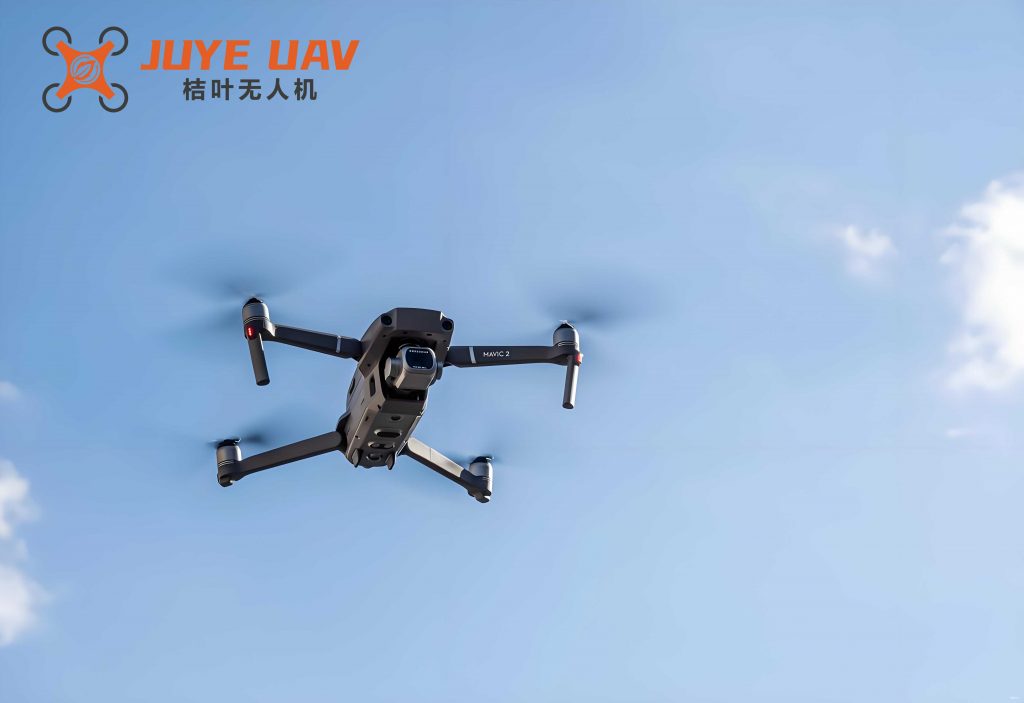
To counteract the effects of external disturbances, I develop an exponentially convergent disturbance observer for the attitude subsystem. This observer estimates the disturbances in real-time and compensates for them in the control law. The observer dynamics are defined as:
$$ \dot{\mu}_{\Theta} = n_{\Theta} \left( \frac{l K_j \dot{\Theta}}{I_i} – u_{\Theta} \right) – n_{\Theta} \dot{d}_{\Theta} $$
$$ \dot{d}_{\Theta} = \mu_{\Theta} + n_{\Theta} \Theta $$
where \( \Theta = \theta, \psi, \phi \), \( i = 1,2,3 \), \( j = 4,5,6 \), and \( n_{\Theta} \) is a design parameter that ensures exponential convergence. Assuming the disturbances are slowly time-varying, the observer error dynamics satisfy:
$$ \dot{\tilde{d}}_{\Theta} + n_{\Theta} \tilde{d}_{\Theta} = 0 $$
which implies \( \tilde{d}_{\Theta}(t) = \tilde{d}_{\Theta}(t_0) e^{-n_{\Theta} t} \), guaranteeing exponential decay of the estimation error.
For the position subsystem, I design a sliding mode controller based on an exponential reaching law. Defining the tracking error as \( E = [e_x, e_y, e_z]^T = [x – x_d, y – y_d, z – z_d]^T \), the sliding surface is chosen as:
$$ S_p = C_i E + \dot{E} $$
where \( p = x, y, z \) and \( C_i > 0 \) are constants. The reaching law is:
$$ \dot{S}_p = -\epsilon_p S_p – \eta_p \text{sgn}(S_p) $$
with \( \epsilon_p > 0 \) and \( \eta_p > 0 \). The control laws for the virtual inputs are derived as:
$$ u_{1x} = -C_x \dot{e}_x + \frac{K_1}{m} \dot{x} + \ddot{x}_d – \epsilon_x S_x – \eta_x \text{sgn}(S_x) $$
$$ u_{1y} = -C_y \dot{e}_y + \frac{K_2}{m} \dot{y} + \ddot{y}_d – \epsilon_y S_y – \eta_y \text{sgn}(S_y) $$
$$ u_{1z} = -C_z \dot{e}_z + \frac{K_3}{m} \dot{z} + g + \ddot{z}_d – \epsilon_z S_z – \eta_z \text{sgn}(S_z) $$
Stability is verified using Lyapunov analysis, ensuring that the sliding surfaces converge to zero.
For the attitude subsystem, I employ a dual-power reaching law sliding mode control to enhance convergence speed and minimize chattering. The sliding surface is defined as:
$$ S_{\Theta} = C_j E_{\Theta} + \dot{E}_{\Theta} $$
where \( E_{\Theta} = [e_{\theta}, e_{\psi}, e_{\phi}]^T = [\theta_d – \theta, \psi_d – \psi, \phi_d – \phi]^T \) and \( C_j > 0 \). The dual-power reaching law is:
$$ \dot{S}_{\Theta} = -\alpha_{\Theta} |S_{\Theta}|^{k_{\Theta 1}} \text{sgn}(S_{\Theta}) – \beta_{\Theta} |S_{\Theta}|^{k_{\Theta 2}} \text{sgn}(S_{\Theta}) $$
with \( \alpha_{\Theta} > 0 \), \( \beta_{\Theta} > 0 \), \( k_{\Theta 1} > 0 \), and \( k_{\Theta 2} > 0 \). The control law incorporates the disturbance estimate:
$$ u_{\Theta} = C_{\Theta} \dot{E}_{\Theta} + \frac{l K_j \dot{\Theta}}{I_i} + \ddot{\Theta}_d – \hat{d}_{\Theta} + \alpha_{\Theta} |S_{\Theta}|^{k_{\Theta 1}} \text{sgn}(S_{\Theta}) + \beta_{\Theta} |S_{\Theta}|^{k_{\Theta 2}} \text{sgn}(S_{\Theta}) $$
To further reduce chattering, the sign function is replaced with the hyperbolic tangent function \( \tanh(S) = \frac{e^S – e^{-S}}{e^S + e^{-S}} \). Lyapunov stability analysis confirms that the system errors are uniformly bounded.
Simulation experiments are conducted in MATLAB/Simulink to validate the proposed control strategy. The quadcopter parameters used in the simulation are summarized in Table 1.
| Parameter | Value | Unit |
|---|---|---|
| Mass \( m \) | 2 | kg |
| Gravity \( g \) | 9.8 | m/s² |
| Arm Length \( l \) | 0.2 | m |
| Moment of Inertia \( I_1, I_2, I_3 \) | 1.25 | kg·m² |
| Drag Coefficients \( K_1, K_2, K_3 \) | 0.01 | N·s²/m |
| Drag Coefficients \( K_4, K_5, K_6 \) | 0.012 | N·s²/m |
The external disturbances applied to the attitude subsystem are time-varying, as detailed in Table 2.
| Time Interval (s) | \( d_{\theta} \) | \( d_{\psi} \) | \( d_{\phi} \) |
|---|---|---|---|
| (0, 2] | 0 | 0 | 0 |
| (2, 6] | -8 | 6 | -8 |
| (6, 12] | -8 – 2.4 \sin(\frac{\pi}{4} t) | 6 + 2.4 \sin(\frac{\pi}{4} t) | -6 – 2.4 \sin(\frac{\pi}{4} t) |
The proposed method (ESO-DSMC) is compared with a conventional PD control scheme. The controller parameters are set as follows: \( C_x = C_y = C_z = 3 \), \( \epsilon_x = \epsilon_y = \epsilon_z = 2 \), \( \eta_x = \eta_y = \eta_z = 5 \), \( C_{\theta} = C_{\psi} = C_{\phi} = 5 \), \( \alpha_{\theta} = \alpha_{\psi} = \alpha_{\phi} = 2 \), \( \beta_{\theta} = \beta_{\psi} = \beta_{\phi} = 2 \), \( k_{\theta 1} = k_{\psi 1} = k_{\phi 1} = 2 \), \( k_{\theta 2} = k_{\psi 2} = k_{\phi 2} = 0.2 \). The initial conditions are \( x(0) = 2 \), \( y(0) = 1 \), \( z(0) = 0 \), with all velocities and angles initially zero. The desired trajectory is \( x_d = \cos(t) \), \( y_d = \sin(t) \), \( z_d = t + 2 \), and \( \phi_d = \pi/3 \).
The simulation results demonstrate that the ESO-DSMC method achieves superior trajectory tracking compared to PD control. Under multi-source disturbances, the PD controller exhibits significant errors and instability, whereas the proposed method maintains high accuracy and robustness. The position tracking errors converge within 2 seconds, and the attitude angles remain stable with minimal overshoot. The disturbance observer accurately estimates the disturbances, enabling effective compensation. The control inputs are smooth and continuous, indicating reduced chattering. Overall, the ESO-DSMC strategy enhances the quadcopter’s dynamic response and disturbance rejection capabilities.
In conclusion, the integration of an exponentially convergent disturbance observer with dual-power reaching law sliding mode control provides a robust solution for quadcopter trajectory tracking in disturbed environments. The control scheme ensures fast convergence, high precision, and strong anti-interference performance. Future work will focus on extending this approach to handle actuator faults and other uncertainties in quadcopter operations.