
In recent years, quadcopter unmanned aerial vehicles (UAVs) have gained significant attention due to their versatility in applications such as surveillance, payload delivery, and environmental monitoring. However, the attitude control of quadcopters is challenged by inherent nonlinearities, external disturbances, and actuator faults. This paper addresses these issues by proposing a novel finite-time fault-tolerant control scheme based on a backstepping framework. The core contributions include the design of a finite-time neural network disturbance observer (FTNNDO) that rapidly compensates for actuator faults and external disturbances, enhancing system robustness. Additionally, a first-order command filter with a compensation mechanism is introduced to circumvent computational complexity from virtual control law derivatives and mitigate filtering errors. To ensure practicality, a hyperbolic tangent function constrains the input torque, preventing excessive signals and singularity issues. Extensive simulations and real-world experiments validate the effectiveness of the proposed approach, demonstrating superior performance in tracking accuracy and disturbance rejection.
The dynamic model of a quadcopter is derived from Newton-Euler equations, considering the rigid body dynamics and actuator faults. The attitude subsystem is represented as:
$$
\begin{aligned}
\dot{\Theta} &= R(\Theta) \omega, \\
J \dot{\omega} &= – \omega \times J \omega + \tau_F + D,
\end{aligned}
$$
where $\Theta = [\phi, \theta, \psi]^T$ denotes the Euler angles (roll, pitch, yaw), $\omega \in \mathbb{R}^3$ is the angular velocity, $J = \text{diag}(I_{xx}, I_{yy}, I_{zz})$ is the inertia matrix, $\tau_F$ is the faulty actuator torque, and $D$ represents external disturbances. The rotation matrix $R(\Theta)$ is defined as:
$$
R(\Theta) = \begin{bmatrix}
1 & \sin(\phi)\tan(\theta) & \cos(\phi)\tan(\theta) \\
0 & \cos(\phi) & -\sin(\phi) \\
0 & \sin(\phi)/\cos(\theta) & \cos(\phi)/\cos(\theta)
\end{bmatrix}.
$$
Actuator faults are modeled as $\tau_F = \rho \tau + \kappa$, where $\rho = \text{diag}(\rho_1, \rho_2, \rho_3)$ is the fault gain matrix and $\kappa = [\kappa_1, \kappa_2, \kappa_3]^T$ is the bias vector. The total disturbance $\Delta$ combines faults and external effects, leading to the transformed system:
$$
\begin{aligned}
\dot{\Theta} &= R(\Theta) \omega, \\
J \dot{\omega} &= – \omega \times J \omega + \text{sat}(\tau) + \Delta,
\end{aligned}
$$
where $\text{sat}(\cdot)$ is the saturation function using hyperbolic tangent to limit input torque.
To handle uncertainties, a finite-time neural network disturbance observer is designed. The FTNNDO estimates the total disturbance $\Delta$ using a radial basis function (RBF) neural network. The observer dynamics are:
$$
\begin{aligned}
\hat{\Delta} &= \hat{w}^T H(\omega) + k_1 \frac{\omega}{\|\omega\|^{p_0/q_0}}, \\
J \dot{\hat{\omega}} &= – \omega \times J \omega + \text{sat}(\tau) + \hat{\Delta} + k_2 \frac{\omega}{\|\omega\|^{p_0/q_0}},
\end{aligned}
$$
with adaptive laws for the neural network weights $\hat{w}$ and error bound $\hat{\eta}$:
$$
\begin{aligned}
\dot{\hat{w}} &= k_3 H(\omega) \omega – k_4 \hat{w}, \\
\dot{\hat{\eta}} &= -k_5 \|\omega\| \hat{\eta}.
\end{aligned}
$$
This observer ensures finite-time convergence of estimation errors, enhancing the quadcopter’s resilience to disturbances and faults.
The control design employs a backstepping approach integrated with command filtering. Define tracking errors as $z_1 = \Theta – \Theta_d$ and $z_2 = \omega – \alpha$, where $\Theta_d$ is the desired trajectory and $\alpha$ is the virtual control law. A first-order command filter processes $\alpha$ to generate $\alpha_f$:
$$
\dot{\alpha}_f = -\xi (\alpha_f – \alpha),
$$
where $\xi > 0$ is the filter coefficient. To compensate for filtering errors, a compensation mechanism is introduced:
$$
\begin{aligned}
\dot{\zeta}_1 &= -r_1 \zeta_1 + R(\Theta)^T (\alpha_f – \alpha) – P l_1, \\
\dot{\zeta}_2 &= -r_2 \zeta_2 – R(\Theta)^T \zeta_1 – Q l_2,
\end{aligned}
$$
where $P$ and $Q$ are sign function matrices, and $l_1, l_2 > 0$. The compensated errors are $e_1 = z_1 – \zeta_1$ and $e_2 = z_2 – \zeta_2$.
The virtual control law $\alpha$ is designed as:
$$
\alpha = R(\Theta)^{-1} \left( \dot{\Theta}_d – r_1 z_1 – c_1 e_1^{p_1} \right),
$$
where $c_1 > 0$, $p_1 \in (0.5, 1)$, and $r_1 > 0$. The actual control torque $\tau$ is derived as:
$$
\tau = J \left( – \omega \times J \omega – \hat{\Delta} + \dot{\alpha}_f – r_2 z_2 – R(\Theta)^T e_1 – c_2 e_2^{p_2} \right),
$$
with $c_2 > 0$ and $p_2 \in (0.5, 1)$. This ensures finite-time convergence of tracking errors while respecting input constraints.
Stability analysis is conducted using Lyapunov theory. Consider the Lyapunov function $V = \frac{1}{2} e_1^T e_1 + \frac{1}{2} e_2^T e_2$. Its derivative yields:
$$
\dot{V} \leq -A_1 V – A_2 V^{(p+1)/2} + B,
$$
where $A_1, A_2 > 0$ and $B$ is a bounded term. By the finite-time stability lemma, the errors converge to a neighborhood of zero in finite time, ensuring robust attitude tracking for the quadcopter.
Numerical simulations and real-world experiments were conducted to validate the proposed method. The quadcopter parameters are listed in Table 1.
| Parameter | Value |
|---|---|
| Mass (m) | 2.6 kg |
| Gravity (g) | 10 m/s² |
| Arm length (j₁, j₂) | 0.5 m |
| Inertia (Ixx, Iyy, Izz) | 0.16, 0.16, 0.32 kg·m² |
| Torque constant (kτ) | 0.01 N·m·s² |
Controller and observer parameters are summarized in Table 2.
| Parameter | Value |
|---|---|
| k₁, k₂, k₃ | 3.4, 2.4, 2.3 |
| k₄, k₅ | 10, 4 |
| p, q | 0.95, 50 |
| r₁, r₂ | 9, 5 |
| c₁, c₂ | 5, 7 |
| ξ | 0.1 |
In simulations, the quadcopter tracks a reference trajectory $\Theta_d = [0.4\cos(t), 0.3, 0.1]^T$. Actuator faults and disturbances are introduced at t = 10 s, with $\rho = \text{diag}(0.5, 0.5, 0.5)$, $\kappa = 0.01$, and $D = 0.4\sin(t)$. The FTNNDO accurately estimates disturbances, as shown in Figure 1, while the attitude tracking performance outperforms conventional methods like adaptive backstepping and sliding mode control. The compensation signals $\zeta_1$ and $\zeta_2$ converge to zero rapidly, and the control inputs remain within saturation limits, minimizing chattering.
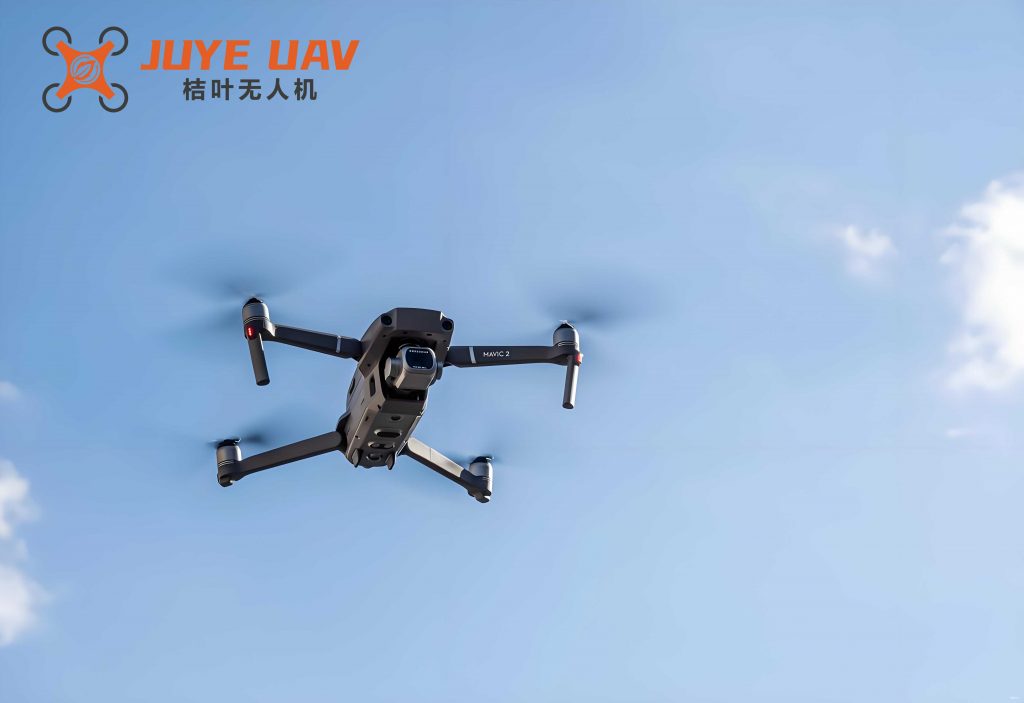
Experimental validation on a physical quadcopter platform confirms the practicality of the approach. The quadcopter successfully tracks a sinusoidal roll angle reference under induced faults and wind disturbances. The results demonstrate finite-time convergence and robustness, highlighting the scheme’s effectiveness for real-world quadcopter applications.
In conclusion, this paper presents a comprehensive solution for quadcopter attitude control under disturbances and actuator faults. The integration of a finite-time neural network disturbance observer and command filtering backstepping control ensures rapid and accurate tracking while maintaining input constraints. Future work will extend the approach to handle extreme fault scenarios and incorporate advanced nonlinear methods for enhanced quadcopter performance.