
In recent years, the rapid proliferation of civil drones has revolutionized various sectors, including agriculture, disaster management, and environmental monitoring, by offering unprecedented efficiency and accessibility. As a key node in information systems, civil drones have become indispensable tools for economic development and social progress. However, this technological advancement comes with significant risks, as malicious actors increasingly exploit civil drones for activities that threaten national security, disrupt public order, and infringe on individual rights. For instance, civil drones have been used in terrorist attacks, unauthorized surveillance, and smuggling operations, highlighting the urgent need for robust regulatory frameworks. The United States has emerged as a leader in addressing these challenges through comprehensive legislation, specialized enforcement agencies, and innovative management strategies across the entire lifecycle of civil drones. This article explores the U.S. approach to regulating civil drone abuse risks, drawing lessons for other nations, with a focus on enhancing legal systems,执法 capabilities, and technological oversight to ensure the safe integration of civil drones into national airspace.
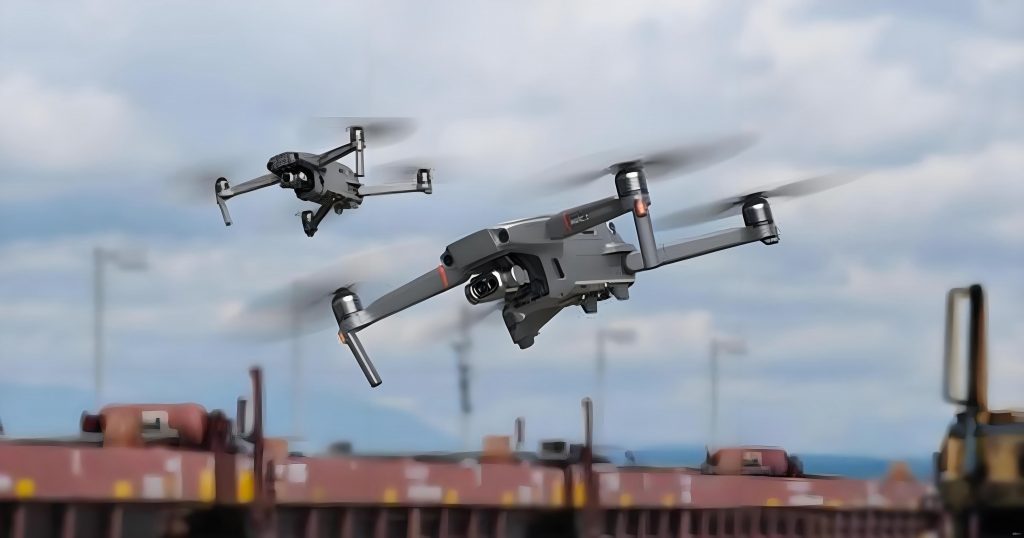
The dual nature of civil drones—as both enablers of progress and potential tools for harm—underscores the importance of proactive risk management. In the United States, the Federal Aviation Administration (FAA) plays a central role in overseeing civil drone operations, guided by a multi-layered legal framework that includes federal statutes, regulations, and local ordinances. This framework not only addresses immediate safety concerns but also anticipates emerging threats, such as the use of civil drones for espionage or attacks. By examining the U.S. model, we can identify best practices for mitigating the abuse of civil drones, including the implementation of geofencing, registration systems, and pilot training programs. Moreover, the integration of advanced technologies, like real-time tracking and electronic identification, has proven effective in curbing illicit activities involving civil drones. As civil drone usage continues to expand globally, adopting a holistic approach that combines legal, technical, and educational measures is essential for balancing innovation with security.
To quantify the risks associated with civil drone abuse, we can model the probability and impact of adverse events. Let $$ Risk = P \times I $$, where \( P \) represents the probability of a civil drone incident (e.g., unauthorized flight or malicious use), and \( I \) denotes the impact in terms of security breaches, economic losses, or privacy violations. For example, if the probability of a civil drone violating restricted airspace is 0.1 and the impact is estimated at $1 million in damages, the risk would be $100,000. This formula highlights the need for targeted interventions to reduce either \( P \) or \( I \) through regulatory measures.
The following table summarizes key aspects of the U.S. regulatory approach to civil drones, illustrating how different stages of the drone lifecycle are managed to minimize abuse risks:
| Lifecycle Stage | U.S. Regulatory Measures | Key Objectives |
|---|---|---|
| Research and Development | Airspace classification, real-time positioning, and categorization of civil drones | Ensure product safety and prevent misuse from design phase |
| Sales and Distribution | Mandatory registration, airworthiness certification, and pilot licensing | Verify ownership and operator competency |
| Usage and Operation | Flight requirements, training programs, and penalties for violations | Promote safe flying practices and deter illicit activities |
| Post-Sale Management | Monitoring platforms and data sharing with authorities | Track drone usage and address售后 issues |
In the research and development phase, the U.S. employs strict airspace划分 to control where civil drones can operate. For instance, the FAA defines multiple airspace classes (A through G) and restricts civil drone flights in sensitive areas, such as near military facilities or major events. This is complemented by technologies like geofencing, which uses GPS to create virtual boundaries. The effectiveness of such measures can be expressed mathematically: let \( A \) be the set of restricted airspaces, and \( D \) the set of civil drones. The compliance rate \( C \) can be calculated as $$ C = \frac{|D_{\text{compliant}}|}{|D|} \times 100\% $$, where \( D_{\text{compliant}} \) denotes drones adhering to airspace rules. By mandating that civil drones incorporate positioning systems, the U.S. reduces the likelihood of unauthorized incursions.
During the sales phase, the U.S. requires civil drone owners to register their devices with the FAA, particularly for models weighing between 0.55 and 55 pounds. This registration process helps authorities track civil drones and hold owners accountable. Additionally, airworthiness certifications ensure that civil drones meet safety standards before they are sold. The relationship between registration and risk reduction can be modeled as $$ R_{\text{risk}} = R_0 \cdot e^{-k \cdot N} $$, where \( R_{\text{risk}} \) is the residual risk after registration, \( R_0 \) is the initial risk, \( k \) is a constant representing the effectiveness of registration, and \( N \) is the number of registered civil drones. This exponential decay illustrates how widespread registration can significantly lower abuse risks.
In the usage phase, the U.S. enforces specific flight rules for civil drones, such as maintaining visual line-of-sight and avoiding operations over crowded areas. Training programs for civil drone pilots are crucial; for example, the FAA’s knowledge test covers topics like airspace regulations and emergency procedures. Penalties for violations, including fines and license revocations, serve as deterrents. The impact of training on incident rates can be quantified using a linear model: $$ I = a – b \cdot T $$, where \( I \) is the incident rate, \( T \) is the training hours, and \( a \) and \( b \) are coefficients. Data shows that increased training correlates with fewer incidents involving civil drones.
Post-sale management involves continuous monitoring through platforms that share data between manufacturers, regulators, and law enforcement. This allows for real-time responses to suspicious activities involving civil drones. For instance, if a civil drone enters a no-fly zone, authorities can quickly identify the operator and take action. The overall effectiveness of the U.S. approach can be assessed using a composite index: $$ E = w_1 L + w_2 T + w_3 M $$, where \( E \) is the effectiveness score, \( L \) represents legal framework strength, \( T \) technological integration, and \( M \) management efficiency, with weights \( w_1, w_2, w_3 \) summing to 1. Empirical studies suggest that the U.S. scores high on this index due to its comprehensive handling of civil drone risks.
Drawing from the U.S. experience, other countries can enhance their own regulatory frameworks for civil drones. Key recommendations include enacting overarching laws that address civil drone specifics, establishing dedicated enforcement agencies, and leveraging technology for lifecycle management. For example, implementing electronic identification systems for civil drones can facilitate tracking and reduce anonymity. Furthermore, international cooperation is vital, as civil drone threats often transcend borders. By adopting a proactive stance, nations can harness the benefits of civil drones while mitigating their abuse, ensuring that these devices contribute positively to society without compromising security.
In conclusion, the U.S. practice of regulating civil drone abuse risks offers valuable insights through its integrated legal, technical, and educational measures. As civil drone technology evolves, continuous adaptation of regulations will be necessary to address new challenges. By prioritizing safety and accountability, stakeholders can foster a sustainable ecosystem for civil drones, where innovation thrives alongside robust risk management. The lessons from the U.S. underscore the importance of a holistic approach that encompasses every stage of the civil drone lifecycle, from production to decommissioning, to prevent misuse and promote responsible usage.