
As a standardization professional, I am thrilled to discuss the recent approval of significant national standards by the Standardization Administration. These standards span multiple sectors, including renewable raw materials, livestock waste management, information security, biometric recognition, in-vehicle networks, electrical equipment safety, urban risk assessment, and critically, civil drone safety. In this comprehensive analysis, I will delve into each area, emphasizing how these standards foster innovation, enhance safety, and support sustainable development. The civil drone industry, in particular, stands to benefit immensely from these regulations, which address growing concerns about unauthorized operations and product reliability. Throughout this article, I will integrate tables and mathematical formulations to summarize key aspects, ensuring a detailed understanding of the implications for various industries, with repeated focus on civil drone applications to underscore their importance.
Starting with renewable raw materials, the three revised standards establish a clear distinction between waste and high-quality recycled inputs. This differentiation is crucial for improving the quality and process stability of recycled copper, copper alloys, and aluminum products. By setting precise benchmarks, these standards help phase out inefficient production methods and contribute to achieving carbon peak and neutrality goals. For instance, the standards define purity levels and processing techniques that minimize energy consumption and environmental impact. In my view, this approach not only boosts industry efficiency but also aligns with global sustainability trends. The following table summarizes the key elements of these standards:
| Standard Category | Key Parameters | Expected Impact |
|---|---|---|
| Recycled Copper | Purity ≥ 99.5%, Contaminant limits | Enhanced product consistency and reduced emissions |
| Recycled Copper Alloy | Alloy composition stability, Mechanical properties | Improved manufacturing reliability and resource efficiency |
| Recycled Aluminum | Metallic yield rate, Impurity thresholds | Higher quality outputs and support for circular economy |
Moreover, the standards incorporate mathematical models to assess material quality. For example, the purity of recycled copper can be evaluated using the formula: $$ P = \frac{M_p}{M_t} \times 100\% $$ where \( P \) is the purity percentage, \( M_p \) is the mass of pure copper, and \( M_t \) is the total mass. This equation helps manufacturers maintain consistency, and I believe it will drive advancements in recycling technologies, indirectly benefiting sectors that rely on sustainable materials, such as civil drone manufacturing for lightweight components.
Moving to livestock waste management, the two new standards focus on monitoring animal manure and managing waste resources. These guidelines promote scientific assessment of manure quality and encourage the transformation of waste into valuable products like fertilizers. From my perspective, this not only improves environmental management in agriculture but also reduces pollution risks. The standards include parameters for nutrient content and pathogen levels, which can be modeled mathematically. For instance, the nitrogen content in manure can be calculated as: $$ N = C \times V \times \rho $$ where \( N \) is the nitrogen mass, \( C \) is the concentration, \( V \) is the volume, and \( \rho \) is the density. This formula aids in optimizing resource use, and I see parallels in how civil drone technologies could be employed for aerial monitoring of farmlands to enforce these standards.
In information security, the series of standards address escalating cyber threats by specifying requirements for network intrusion prevention, security auditing, anti-spam measures, and incident classification. As an expert, I appreciate how these standards provide a framework for robust cybersecurity practices. They include technical specifications and testing methodologies that organizations can adopt to safeguard data. For example, the risk of a network breach can be quantified using: $$ R = T \times V \times I $$ where \( R \) is the risk level, \( T \) is the threat probability, \( V \) is the vulnerability index, and \( I \) is the impact factor. This equation helps in prioritizing security measures, and I find it relevant for protecting civil drone systems from cyber-attacks, ensuring safe operations in sensitive airspace.
| Security Aspect | Standard Requirement | Test Method |
|---|---|---|
| Network Intrusion Prevention | Real-time monitoring and blocking mechanisms | Penetration testing and simulation exercises |
| Security Auditing | Log analysis and anomaly detection | Automated audit tools and manual reviews |
| Anti-Spam | Filtering algorithms and user authentication | Message flow analysis and effectiveness metrics |
| Incident Classification | Severity levels based on impact and frequency | Case studies and statistical evaluation |
For biometric recognition, the three standards aim to standardize the market for individual identification, enhancing accuracy and security. I consider this vital for applications like access control and identity verification, where reliability is paramount. The standards define metrics for performance evaluation, such as the false acceptance rate (FAR) and false rejection rate (FRR), which can be expressed as: $$ FAR = \frac{FP}{FP + TN} \times 100\% $$ and $$ FRR = \frac{FN}{FN + TP} \times 100\% $$ where \( FP \) is false positives, \( TN \) is true negatives, \( FN \) is false negatives, and \( TP \) is true positives. These formulas ensure that systems meet minimum accuracy thresholds, and I observe that similar principles could be applied to civil drone operations for pilot identification and secure communication.
In the realm of road vehicle local area networks, the series of standards provide comprehensive test methods for the electrical physical layer and protocol consistency. As someone involved in automotive technologies, I value how these guidelines facilitate product design and improve development capabilities. The standards include conformance checks that can be summarized in a table:
| Network Component | Test Criteria | Compliance Method |
|---|---|---|
| Electrical Physical Layer | Signal integrity, Voltage levels | Oscilloscope measurements and protocol analyzers |
| Protocol Consistency | Data frame structure, Error handling | Simulation software and field trials |
Additionally, mathematical models like the bit error rate (BER) can be used: $$ BER = \frac{N_e}{N_t} $$ where \( N_e \) is the number of erroneous bits and \( N_t \) is the total bits transmitted. This ensures reliable communication, which I relate to the data link protection requirements in civil drone systems, highlighting the interconnected nature of modern standards.
The revised mandatory national standard for electrical equipment safety covers low-voltage devices up to AC 1,000 V and DC 1,500 V, establishing common safety requirements to protect users. From my standpoint, this standard is essential for preventing electrical hazards and ensuring public safety. It includes provisions for insulation resistance and leakage current, which can be evaluated using: $$ I_l = \frac{V}{R_i} $$ where \( I_l \) is the leakage current, \( V \) is the voltage, and \( R_i \) is the insulation resistance. By adhering to such formulas, manufacturers can design safer products, and I see this as complementary to the power energy system requirements in civil drone standards, where battery safety is critical.
Urban safety risk assessment standards offer methodological guidance for evaluating public safety risks, enhancing emergency management systems, and strengthening resilience against major threats. I believe these standards are pivotal for modern city planning, as they incorporate probabilistic risk models. For example, the overall risk score for an urban area can be computed as: $$ S_r = \sum (P_i \times C_i) $$ where \( S_r \) is the risk score, \( P_i \) is the probability of event \( i \), and \( C_i \) is the consequence severity. This approach helps prioritize mitigation efforts, and I find it analogous to risk assessments for civil drone operations in densely populated zones, ensuring that flight paths minimize public exposure.
Now, turning to the civil drone sector, which has experienced exponential growth in applications like agriculture, forestry, power inspection, meteorology, ocean monitoring, remote sensing, logistics, and emergency response. However, the absence of unified safety standards has led to challenges such as “black flying” and product-related risks. The newly released mandatory national standard for civil unmanned aircraft systems is a landmark development. As the first of its kind in China, it applies to micro, light, and small civil drones, excluding model aircraft, and sets 17 mandatory technical requirements. I am particularly impressed by how this standard addresses critical safety aspects, from electronic fencing to data protection, which will undoubtedly shape the future of civil drone operations.
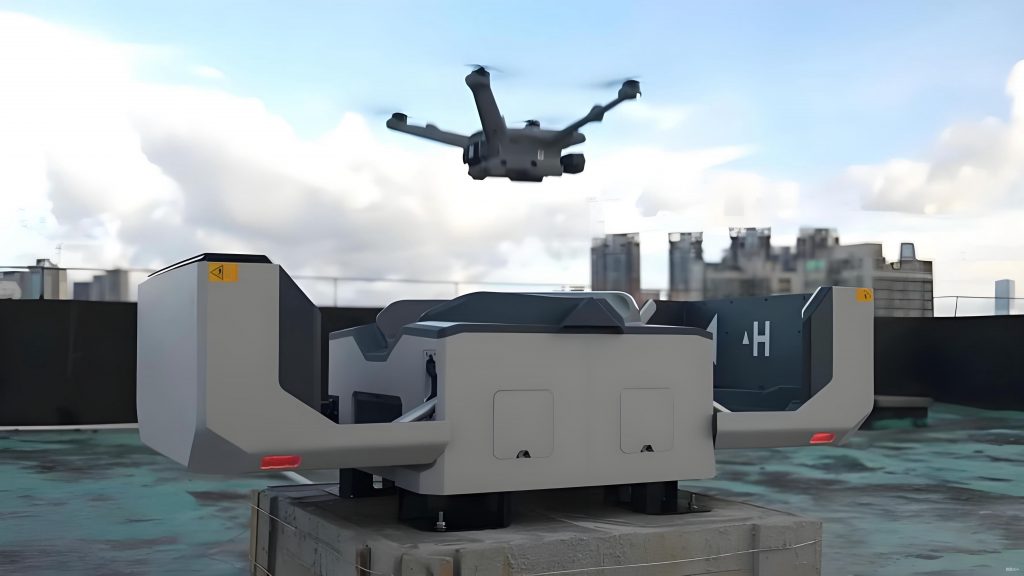
The civil drone standard encompasses various technical domains, each with specific requirements and test methods. For instance, electronic fencing involves geofencing technologies to restrict drones from entering prohibited zones. The distance calculation for such fences can be modeled as: $$ d = \sqrt{(x_d – x_f)^2 + (y_d – y_f)^2} $$ where \( d \) is the distance between the drone at coordinates \( (x_d, y_d) \) and the fence center at \( (x_f, y_f) \). If \( d \) falls within a predefined radius, the drone must be prevented from proceeding. This mathematical approach ensures compliance with no-fly zones, and I advocate for its integration in all civil drone systems to enhance airspace security.
Remote identification is another key requirement, enabling real-time tracking of civil drones. This can be achieved through broadcast mechanisms that transmit identity codes, which I consider essential for accountability. The standard specifies test methods involving signal strength and integrity, which can be assessed using formulas like the signal-to-noise ratio (SNR): $$ SNR = 10 \log_{10} \left( \frac{P_s}{P_n} \right) $$ where \( P_s \) is the signal power and \( P_n \) is the noise power. A high SNR ensures reliable identification, reducing the risk of unauthorized civil drone activities.
Emergency handling procedures are mandated to address in-flight failures. For example, the standard requires drones to have contingency plans for power loss, which can be analyzed using probability theory. The likelihood of a failure event can be expressed as: $$ P_f = 1 – e^{-\lambda t} $$ where \( P_f \) is the failure probability, \( \lambda \) is the failure rate, and \( t \) is the time. This formula helps designers incorporate redundant systems, and I emphasize its importance for civil drone safety in urban environments.
Structural strength and body integrity are critical to withstand operational stresses. The standard defines load tests and material properties, which can be evaluated using stress-strain relationships: $$ \sigma = E \epsilon $$ where \( \sigma \) is the stress, \( E \) is the Young’s modulus, and \( \epsilon \) is the strain. By meeting these mechanical criteria, civil drone manufacturers can ensure durability, minimizing accidents caused by structural failures.
Whole machine drop tests simulate crash scenarios to assess impact resistance. The energy absorbed during a drop can be calculated as: $$ E = m g h $$ where \( E \) is the energy, \( m \) is the mass, \( g \) is gravity, and \( h \) is the height. This equation guides the design of shock-absorbing features, and I recommend its use in civil drone development to protect both the device and surrounding property.
Power energy systems must comply with safety standards for batteries and propulsion. For instance, the energy density of a battery can be given by: $$ \rho_e = \frac{E}{V} $$ where \( \rho_e \) is the energy density, \( E \) is the energy capacity, and \( V \) is the volume. High energy density supports longer flight times for civil drones, but must balance with safety margins to prevent overheating or explosions.
Controllability requirements ensure that civil drones respond accurately to commands. This can be modeled using control theory, such as the transfer function for stability: $$ G(s) = \frac{Y(s)}{U(s)} $$ where \( G(s) \) is the transfer function, \( Y(s) \) is the output, and \( U(s) \) is the input. Proper controllability reduces the risk of erratic behavior, which I deem crucial for integrating civil drones into shared airspace.
Error prevention mechanisms aim to minimize human or system mistakes. The probability of an error can be quantified as: $$ P_e = \frac{N_e}{N_o} $$ where \( P_e \) is the error probability, \( N_e \) is the number of errors, and \( N_o \) is the number of operations. Low error rates are vital for reliable civil drone missions, especially in automated modes.
Perception and avoidance systems enable civil drones to detect and evade obstacles. The detection range can be expressed as: $$ R_d = v \times t_r $$ where \( R_d \) is the detection range, \( v \) is the relative velocity, and \( t_r \) is the reaction time. Advanced sensors and algorithms are required to meet this standard, and I foresee innovations in civil drone technology as a result.
Data link protection safeguards communication channels from interception or jamming. The encryption strength can be measured using key length in bits, with longer keys providing better security: $$ S_e = 2^k $$ where \( S_e \) is the number of possible keys and \( k \) is the key length. This is essential for protecting sensitive data in civil drone operations, such as in surveillance or delivery services.
Electromagnetic compatibility (EMC) ensures that civil drones do not interfere with other electronic devices. The interference level can be modeled as: $$ I = \frac{P_t}{d^2} $$ where \( I \) is the interference intensity, \( P_t \) is the transmitted power, and \( d \) is the distance. Compliance with EMC standards prevents disruptions, which I consider critical for widespread civil drone adoption.
Wind resistance tests verify that civil drones can operate in adverse weather. The force exerted by wind can be calculated as: $$ F_w = \frac{1}{2} \rho_a v_w^2 C_d A $$ where \( F_w \) is the wind force, \( \rho_a \) is air density, \( v_w \) is wind velocity, \( C_d \) is the drag coefficient, and \( A \) is the cross-sectional area. Meeting wind resistance criteria ensures stability, reducing accident risks for civil drones.
Noise limits are imposed to minimize acoustic pollution. The sound pressure level (SPL) can be given by: $$ SPL = 20 \log_{10} \left( \frac{p}{p_0} \right) $$ where \( p \) is the sound pressure and \( p_0 \) is the reference pressure. Quieter civil drones are more acceptable in residential areas, and I support this environmental consideration.
Lighting requirements enhance visibility during night operations. The luminous intensity can be described as: $$ I_v = \frac{\Phi}{\omega} $$ where \( I_v \) is the luminous intensity, \( \Phi \) is the luminous flux, and \( \omega \) is the solid angle. Proper lighting improves safety for civil drones and other airspace users.
Markings and user manuals provide essential information for operators. The clarity of instructions can be assessed through readability scores, such as the Flesch-Kincaid grade level: $$ GL = 0.39 \left( \frac{words}{sentences} \right) + 11.8 \left( \frac{syllables}{words} \right) – 15.59 $$ Lower grade levels indicate easier understanding, which I argue is vital for reducing misuse of civil drones.
To summarize the civil drone requirements, the following table outlines the 17 technical aspects:
| Technical Requirement | Description | Associated Formula or Metric |
|---|---|---|
| Electronic Fence | Geofencing to restrict flight zones | \( d = \sqrt{(x_d – x_f)^2 + (y_d – y_f)^2} \) |
| Remote Identification | Real-time ID broadcasting | \( SNR = 10 \log_{10} \left( \frac{P_s}{P_n} \right) \) |
| Emergency Handling | Contingency plans for failures | \( P_f = 1 – e^{-\lambda t} \) |
| Structural Strength | Load-bearing capacity | \( \sigma = E \epsilon \) |
| Body Structure | Material integrity and design | Stress tests and finite element analysis |
| Whole Machine Drop | Impact resistance testing | \( E = m g h \) |
| Power Energy System | Battery and propulsion safety | \( \rho_e = \frac{E}{V} \) |
| Controllability | Response accuracy to commands | \( G(s) = \frac{Y(s)}{U(s)} \) |
| Error Prevention | Minimization of operational errors | \( P_e = \frac{N_e}{N_o} \) |
| Perception and Avoidance | Obstacle detection and evasion | \( R_d = v \times t_r \) |
| Data Link Protection | Secure communication channels | \( S_e = 2^k \) |
| Electromagnetic Compatibility | Non-interference with other devices | \( I = \frac{P_t}{d^2} \) |
| Wind Resistance | Operability in windy conditions | \( F_w = \frac{1}{2} \rho_a v_w^2 C_d A \) |
| Noise | Acoustic emission limits | \( SPL = 20 \log_{10} \left( \frac{p}{p_0} \right) \) |
| Lights | Visibility enhancements | \( I_v = \frac{\Phi}{\omega} \) |
| Markings | Identification labels | Compliance with size and contrast ratios |
| User Manual | Instruction clarity | Readability scores like Flesch-Kincaid |
In conclusion, these national standards represent a holistic approach to improving safety, quality, and sustainability across multiple industries. The civil drone standards, in particular, set a precedent for regulatory frameworks that balance innovation with public safety. As I reflect on these developments, I am confident that they will drive technological advancements, reduce environmental impacts, and enhance global competitiveness. The integration of mathematical models and standardized testing, as illustrated in this article, provides a solid foundation for future innovations. Ultimately, the widespread adoption of these standards, especially for civil drones, will foster a safer and more efficient ecosystem, benefiting society as a whole.