
In the evolving landscape of the low-altitude economy, civil drones have emerged as pivotal tools driving innovation and economic growth. As a first-person observer in this field, I recognize that the integration of civil drones into various sectors—such as logistics, agriculture, surveillance, and environmental monitoring—has unlocked unprecedented data generation and utilization opportunities. However, this rapid expansion brings forth complex challenges in data governance, where the balance between security and development often becomes skewed. The improper use of data and disordered technological applications create a governance paradox, threatening both individual privacy and public safety. In this article, I explore the governance pathways for civil drone data applications, emphasizing the need for agile and inclusive frameworks to foster sustainable growth in the low-altitude economy. By leveraging theoretical insights and practical strategies, I aim to outline a holistic approach that mitigates risks while maximizing data utility.
The low-altitude economy, characterized by operations in airspace below 1,000 feet, relies heavily on civil drones for data collection, analysis, and transmission. These devices capture vast amounts of data, including geospatial information, personal identifiers, and operational metrics, which are essential for optimizing services and driving economic value. For instance, in precision agriculture, civil drones monitor crop health through multispectral imaging, generating datasets that inform irrigation and fertilization decisions. Similarly, in urban logistics, they facilitate last-mile delivery by processing real-time traffic and weather data. The data lifecycle of a civil drone encompasses collection, storage, processing, sharing, and disposal, each stage presenting unique governance challenges. As I delve into this topic, I will use tables and formulas to summarize key aspects, such as risk categorizations and governance models, to enhance clarity and applicability.
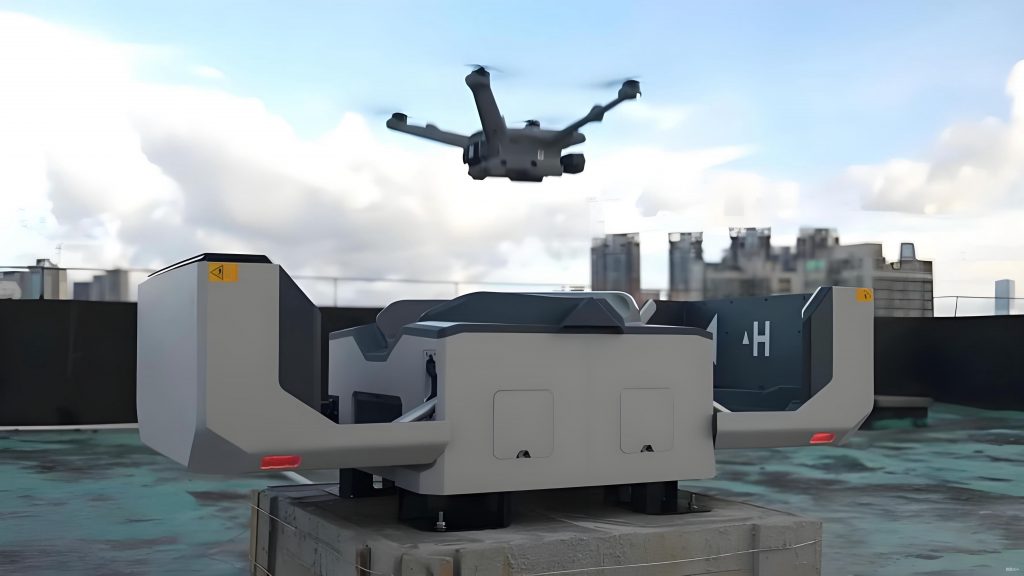
One of the primary concerns in civil drone data applications is the internal dilemma of data misuse. This includes unauthorized access to personal information and public data breaches. For example, civil drones often capture sensitive data like facial recognition patterns or location trajectories during routine flights, leading to potential privacy violations. The shared usage models of civil drones exacerbate this, as multiple users access the same device, creating complex data ownership and accountability issues. To illustrate the scope of these risks, I present a table summarizing common data misuse scenarios in civil drone operations:
| Data Type | Risk Scenario | Potential Impact |
|---|---|---|
| Personal Information | Unauthorized collection of user identities and flight logs | Identity theft and privacy infringement |
| Geospatial Data | Illegal mapping of restricted areas | National security threats |
| Operational Metrics | Data interception during transmission | Service disruption and financial losses |
In parallel, external dilemmas arise from technological disorders, such as data hijacking and algorithmic opacity. Civil drones are vulnerable to GPS spoofing attacks, where malicious actors manipulate navigation signals to divert drones and steal data. This can be modeled using a formula for signal interference: $$ I = \frac{P_m}{P_o} \times \alpha $$ where \( I \) represents the interference level, \( P_m \) is the malicious signal power, \( P_o \) is the original signal power, and \( \alpha \) is an attenuation factor. Such attacks highlight the fragility of civil drone ecosystems, necessitating robust encryption and authentication mechanisms. Additionally, the integration of artificial intelligence in civil drones introduces “black box” algorithms, where decision-making processes are opaque, undermining trust and accountability. For instance, an AI-driven civil drone might autonomously adjust its flight path based on data analytics, but without transparent algorithms, users cannot verify the rationale behind these changes, leading to ethical and legal quandaries.
The root causes of these governance challenges lie in outdated regulatory frameworks and structural inefficiencies. Traditional data security theories, which focus on static protection measures, are inadequate for the dynamic nature of civil drone operations. Instead, I advocate for a paradigm shift toward agile governance, which emphasizes adaptability, stakeholder collaboration, and proactive risk management. Agile governance theory, when applied to civil drone data applications, promotes a balance between innovation and regulation. For example, it encourages the use of sandbox testing environments where new civil drone technologies can be evaluated in controlled settings, allowing for iterative improvements without stifling creativity. This approach aligns with data security theory, which I expand to include not only the protection of data subjects and objects but also the enhancement of data carriers through advanced technologies like blockchain and homomorphic encryption.
To quantify the effectiveness of governance measures, I propose a formula for data security efficiency in civil drone systems: $$ E_s = \frac{\sum_{i=1}^{n} (C_i \times R_i)}{T} $$ where \( E_s \) is the security efficiency score, \( C_i \) represents the compliance level for each data protection control, \( R_i \) denotes the risk reduction factor, and \( T \) is the total implementation time. This formula can help policymakers assess the impact of governance interventions on civil drone data integrity. Furthermore, the integration of agile governance requires a multidimensional framework, as summarized in the following table:
| Dimension | Description | Application Example |
|---|---|---|
| Structural | Adaptive organizational hierarchies | Decentralized data management units |
| Processual | Iterative policy development | Real-time monitoring and feedback loops |
| Functional | Goal-oriented governance tools | Predictive analytics for risk assessment |
In terms of governance pathways, I emphasize three core elements:理念调适 (conceptual adaptation), legislative structuring, and institutional configuration. First, the governance philosophy must evolve from imported theories to endogenous models that reflect local contexts. For civil drone data governance, this means tailoring agile principles to address specific regional needs, such as urban density or rural connectivity. By fostering a culture of rapid response and mutual trust among regulators, industry players, and citizens, we can create a resilient ecosystem for civil drone operations. Second, legislative frameworks should combine hard laws with soft laws to form a cohesive system. Hard laws, such as stringent data protection regulations for civil drones, provide enforceable standards, while soft laws, including industry codes of conduct, offer flexibility for innovation. I recommend drawing insights from international best practices, such as the EU’s General Data Protection Regulation (GDPR) and the U.S. Federal Aviation Administration (FAA) guidelines, which emphasize risk-based approaches and stakeholder engagement for civil drone data management.
Third, the governance system must be inclusive and审慎 (prudent), involving multiple actors like government agencies, private enterprises, and civil society. For instance, establishing a dedicated data governance body under aviation authorities can streamline oversight for civil drone activities, while行业协会 (industry associations) can develop self-regulatory mechanisms. This multi-stakeholder approach enhances the legitimacy and effectiveness of governance measures. To support this, I introduce a formula for governance inclusivity: $$ G_i = \frac{N_p}{N_t} \times \beta $$ where \( G_i \) is the governance inclusivity index, \( N_p \) is the number of participating stakeholders, \( N_t \) is the total potential stakeholders, and \( \beta \) is a collaboration factor. A higher \( G_i \) value indicates a more balanced and representative governance structure for civil drone data applications.
Moreover, innovative governance tools, such as digital platforms and sandbox testing, are crucial for managing civil drone data risks. For example, a centralized data platform can integrate real-time monitoring, compliance checks, and incident reporting for civil drone operations, enabling proactive interventions. Sandbox testing allows developers to experiment with new civil drone technologies in a controlled environment, assessing data security and ethical implications before full-scale deployment. The process for sandbox testing can be represented as: $$ S_t = f(A, E, R) $$ where \( S_t \) is the sandbox testing outcome, \( A \) is the application robustness, \( E \) is the ethical compliance score, and \( R \) is the risk mitigation level. By iterating this process, stakeholders can refine civil drone systems to align with governance standards.
In conclusion, the governance of civil drone data applications in the low-altitude economy requires a synergistic approach that harmonizes security and development. As I have discussed, this involves adopting agile governance理念, constructing robust legislative systems, and fostering inclusive institutional arrangements. The repeated emphasis on civil drone throughout this article underscores its centrality to the low-altitude economy’s growth. By implementing these pathways, we can mitigate data-related risks while unlocking the full potential of civil drones for societal benefit. Future research should focus on empirical validations of these frameworks, ensuring that governance models evolve alongside technological advancements in the civil drone sector.
To further elaborate, consider the economic implications of effective civil drone data governance. The low-altitude economy is projected to generate significant value through civil drone applications, but this hinges on trustworthy data practices. For instance, in emergency response, civil drones provide critical data for disaster management, but without secure data handling, public trust erodes. Thus, investing in governance not only safeguards interests but also stimulates innovation. I encourage policymakers and industry leaders to prioritize these strategies, leveraging formulas and tables as decision-support tools. Ultimately, a proactive and adaptive governance paradigm will ensure that civil drones continue to drive progress in the low-altitude economy, balancing risks with rewards in an increasingly data-driven world.