
In recent years, the rapid advancement of unmanned aerial vehicle (UAV) technology has introduced new challenges for on-site security operations, particularly with the emergence of first person view (FPV) drones. As a security professional, I have observed that FPV drones, characterized by their high speed, custom assembly, and lack of comprehensive flight control systems, pose significant risks to public safety and critical infrastructure. In China, the management of these devices is hampered by vague legal definitions, overlapping regulatory responsibilities, and inadequate countermeasures. This article explores the complexities of FPV drone threats in security contexts, analyzes existing gaps in管控, and proposes comprehensive strategies to mitigate these risks. By leveraging tables, formulas, and empirical data, I aim to provide a detailed framework for enhancing security protocols against FPV drone incursions, with a focus on the unique aspects of China FPV operations.
FPV drones, often referred to as racing drones, are a subset of UAVs designed for agility and speed, typically operated through a first person view interface that allows pilots to experience real-time video feeds. Unlike conventional drones, which prioritize stability and autonomous features, FPV drones rely heavily on manual control, making them prone to accidents if operated by untrained individuals. In China, the popularity of FPV drones has surged among hobbyists, leading to increased incidents of unauthorized flights near sensitive areas. For instance, their ability to reach speeds of up to 230 km/h enables rapid incursions that can bypass traditional security measures. The following table summarizes key characteristics of FPV drones compared to standard UAVs, highlighting why they are particularly concerning for security personnel like myself.
| Feature | FPV Drone | Standard UAV |
|---|---|---|
| Maximum Speed | 120-230 km/h | 50-80 km/h |
| Flight Control System | Basic or absent; manual operation | Advanced with GPS and autonomy |
| Assembly | Often self-assembled from components | Typically factory-built |
| Regulatory Status in China | Ambiguous; not clearly defined | Governed by civil aviation rules |
| Common Uses | Racing, aerial filming, potential misuse | Photography, surveillance, delivery |
The core of the problem lies in the legal ambiguity surrounding FPV drones. In my assessment, China’s current regulations, such as the “Unmanned Aircraft Flight Management Interim Regulations,” fail to explicitly categorize FPV drones, leading to enforcement gaps. For example, while standard UAVs are subject to registration and flight restrictions, FPV drones often fall into a gray area as they lack GPS and autonomous capabilities, resembling model aircraft more than regulated UAVs. This has resulted in instances where individuals exploit these loopholes to conduct unauthorized flights, endangering security operations. To quantify the risk, consider the probability of an FPV drone breaching a security perimeter, which can be modeled using a basic intrusion formula: $$ P_b = \frac{N_i \times V_d}{A_s} $$ where \( P_b \) is the breach probability, \( N_i \) is the number of intrusion attempts, \( V_d \) is the drone velocity, and \( A_s \) is the area covered by security measures. In high-profile events, this probability increases significantly due to the FPV drone’s speed and agility.
Management issues are compounded by the fragmented oversight across multiple agencies, including civil aviation, public security, and military bodies. From my perspective, this lack of a centralized authority leads to inconsistent enforcement and delayed responses to incidents. For instance, when an FPV drone is spotted near a secured site, it may take precious minutes to determine which department is responsible for intervention, during which the drone could cause harm. Moreover, the DIY nature of FPV drones means that components are easily sourced from online platforms, making it difficult to track and regulate their production. The table below outlines the primary channels for acquiring FPV drone parts in China, illustrating the challenges in supply chain control.
| Channel Type | Description | Regulatory Challenges |
|---|---|---|
| Online Marketplaces | Platforms like Taobao or JD.com selling individual parts | Limited oversight; counterfeit products common |
| Social Media Influencers | DIY tutorials and sales via platforms such as Douyin | Hard to monitor; promotes unregulated assembly |
| Brand Websites | Official sites offering motors, frames, and FPV systems | Some compliance, but often bypasses registration |
| Second-hand Markets | Used drones sold on platforms like Xianyu | No quality checks; potential for malicious use |
Countering FPV drones presents unique difficulties due to their high velocity and small size. As a security expert, I have found that traditional anti-drone methods, such as signal jammers or net guns, are often ineffective against FPV drones because of their rapid acceleration and ability to evade detection. For example, the reaction time of security personnel, typically around 0.3-0.5 seconds, is insufficient to intercept an FPV drone moving at over 200 km/h. This can be expressed mathematically using the time-to-intercept formula: $$ t_i = \frac{d}{v_r} $$ where \( t_i \) is the interception time, \( d \) is the distance to the drone, and \( v_r \) is the relative velocity. If \( t_i \) exceeds the security team’s response threshold, the drone may reach its target unimpeded. Additionally, FPV drones’ lack of GPS makes them immune to geo-fencing technologies, further complicating efforts to contain them within no-fly zones.
The threats posed by FPV drones in security scenarios are multifaceted and evolving. Based on my experience, I categorize these threats into four main types: intelligence gathering, accidental crashes, deliberate disruptions, and targeted attacks. Intelligence gathering involves using FPV drones equipped with cameras to conduct surveillance on secure facilities, potentially leaking sensitive information. Accidental crashes occur due to operator error or mechanical failures, which can cause injuries or damage during events. Deliberate disruptions include using FPV drones to broadcast propaganda or disperse materials, creating chaos. Targeted attacks, though rare, involve weaponizing FPV drones for assaults, leveraging their speed to inflict harm. The following formula estimates the kinetic energy of an FPV drone in a collision, highlighting its destructive potential: $$ KE = \frac{1}{2} m v^2 $$ where \( KE \) is the kinetic energy, \( m \) is the mass of the drone, and \( v \) is its velocity. For a typical FPV drone weighing 0.5 kg and traveling at 200 km/h (approximately 55.6 m/s), the kinetic energy would be $$ KE = \frac{1}{2} \times 0.5 \times (55.6)^2 \approx 772 \text{ Joules} $$, sufficient to cause significant impact damage.
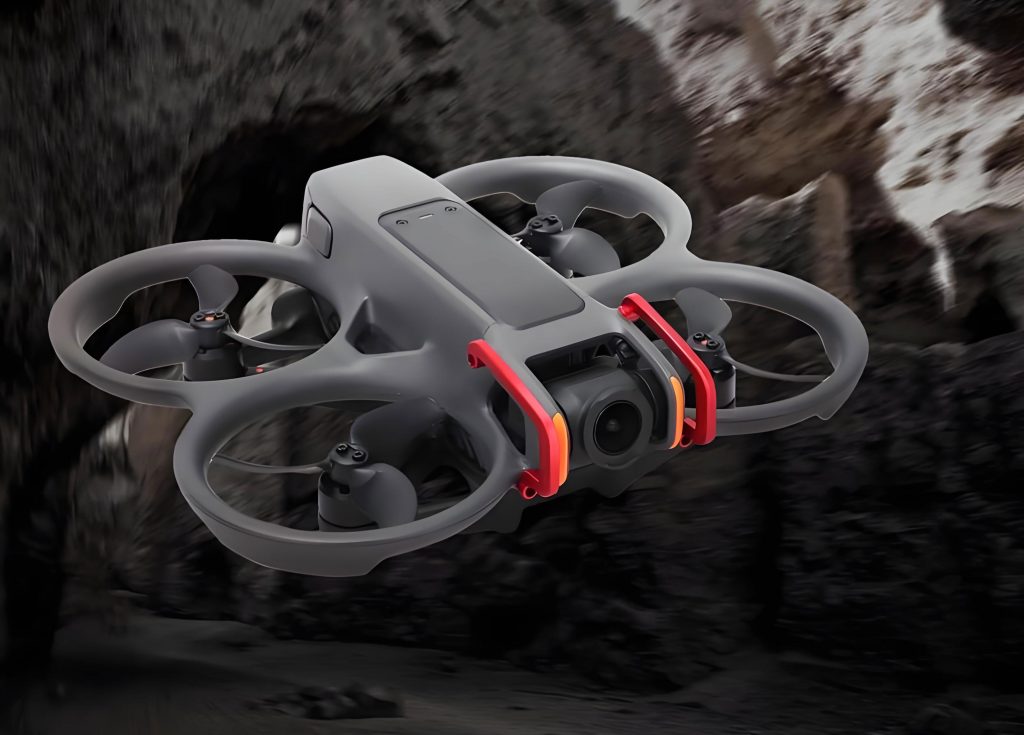
To address these challenges, I propose a multi-faceted approach to optimizing FPV drone management in China. First, legal frameworks must be clarified to explicitly include FPV drones under UAV regulations, requiring mandatory registration and operator licensing. This would involve amending existing laws to define FPV drones based on parameters like speed and weight, ensuring they are subject to the same oversight as other UAVs. For instance, setting a threshold for maximum speed, such as 150 km/h, could help categorize high-risk devices. Second, establishing specialized counter-drone units within security forces is essential. These units should be trained in advanced detection and neutralization techniques, including electronic warfare and kinetic interceptors. The effectiveness of such units can be modeled using a resource allocation formula: $$ E_d = \frac{R_s \times T_e}{C_d} $$ where \( E_d \) is the detection efficiency, \( R_s \) is the resource investment in sensors, \( T_e \) is the training level of personnel, and \( C_d \) is the complexity of the drone threat. By increasing \( R_s \) and \( T_e \), security agencies can enhance their capability to respond to FPV drone incidents.
Third, strengthening control over the production and sale of FPV drone components is critical. In my view, China should implement standardized technical specifications for key parts, such as motors and flight controllers, to prevent modifications that enhance speed or payload capacity. For example, limiting motor RPM to a safe threshold could reduce the risk of high-speed attacks. The relationship between motor performance and drone speed can be described by $$ v \propto \sqrt{\frac{P}{m}} $$ where \( v \) is the velocity, \( P \) is the power output of the motor, and \( m \) is the mass of the drone. By capping \( P \) through regulations, authorities can curb excessive speeds. Additionally, requiring GPS modules on all FPV drones would enable better tracking and geo-fencing, as shown in the table below, which outlines proposed technical standards.
| Component | Standard | Rationale |
|---|---|---|
| Motor RPM | Max 20,000 RPM | Limit speed and acceleration |
| GPS Module | Mandatory for all drones | Enable tracking and no-fly zones |
| Weight Limit | Under 1 kg for registration | Reduce impact energy |
| Communication Range | Restricted to visual line-of-sight | Prevent long-range attacks |
Fourth, fostering a collaborative “comprehensive security” framework involving public awareness and inter-agency coordination is vital. From my perspective, this includes launching educational campaigns to inform citizens about the risks of FPV drones and encouraging reporting of suspicious activities. For example, using social media to disseminate information on legal requirements can reduce unintentional violations. Moreover, integrating various detection methods—such as radar, radio frequency scanning, and optical sensors—can create a layered defense system. The overall detection probability \( P_d \) for an FPV drone can be calculated using $$ P_d = 1 – \prod_{i=1}^{n} (1 – p_i) $$ where \( p_i \) is the detection probability of each sensor type, and \( n \) is the number of sensors deployed. By combining multiple technologies, security teams can achieve higher coverage and earlier warnings.
In conclusion, the rise of FPV drones presents a clear and present danger to on-site security operations in China, necessitating immediate and comprehensive countermeasures. As I have outlined, addressing the legal ambiguities, enhancing technical controls, and building specialized response teams are crucial steps toward mitigating these threats. The integration of advanced detection systems and public cooperation will further strengthen security postures. Looking ahead, continuous innovation in anti-drone technology and adaptive regulations will be essential to keep pace with the evolving capabilities of FPV drones. By adopting a proactive approach, China can harness the benefits of UAV technology while safeguarding against its misuse, ensuring a secure environment for all. The journey toward effective FPV drone management requires sustained effort, but with the right strategies, it is achievable.