
As an avid enthusiast of first person view technology, I have spent countless hours exploring the intricacies of FPV drones, particularly in the context of China FPV communities where this hobby has seen exponential growth. The essence of first person view flying lies in the immersive experience it provides, allowing pilots to feel as if they are onboard the drone, navigating through skies with precision and speed. In this article, I will delve into the reasons why analog video transmission remains the preferred choice for many FPV drone setups, despite the advent of digital alternatives. We will examine the technical foundations, compare transmission methods, and use mathematical models and tables to illustrate key points, all while emphasizing the relevance of China FPV trends and the broader first person view ecosystem.
FPV, or first person view, refers to a method where a pilot controls a drone or other remote vehicle while viewing a live video feed from an onboard camera. This first person view experience is central to activities like drone racing, aerial photography, and exploratory flights, where real-time feedback is crucial. The core components of an FPV drone include the frame, control system (comprising flight controllers, remote receivers, and transmitters), power system (with ESCs, motors, propellers, and batteries), and the video transmission system (which includes cameras, video transmitters, and receivers). In China FPV circles, the DIY nature of assembling these components is highly valued, as it allows for customization based on flight requirements, whether for high-speed maneuvers or long-distance journeys.
The video transmission system, often called the “eyes” of the drone, is what enables the first person view by wirelessly sending video from the drone’s camera to the pilot’s display, such as goggles or screens. This system can be broadly categorized into analog and digital transmission technologies. Analog transmission has been the traditional choice for FPV drones due to its simplicity and reliability, while digital options like OFDM (Orthogonal Frequency Division Multiplexing) and HDZero have emerged with promises of higher quality. However, as I have observed in many China FPV setups, analog transmission continues to dominate for several compelling reasons, which we will explore in depth.
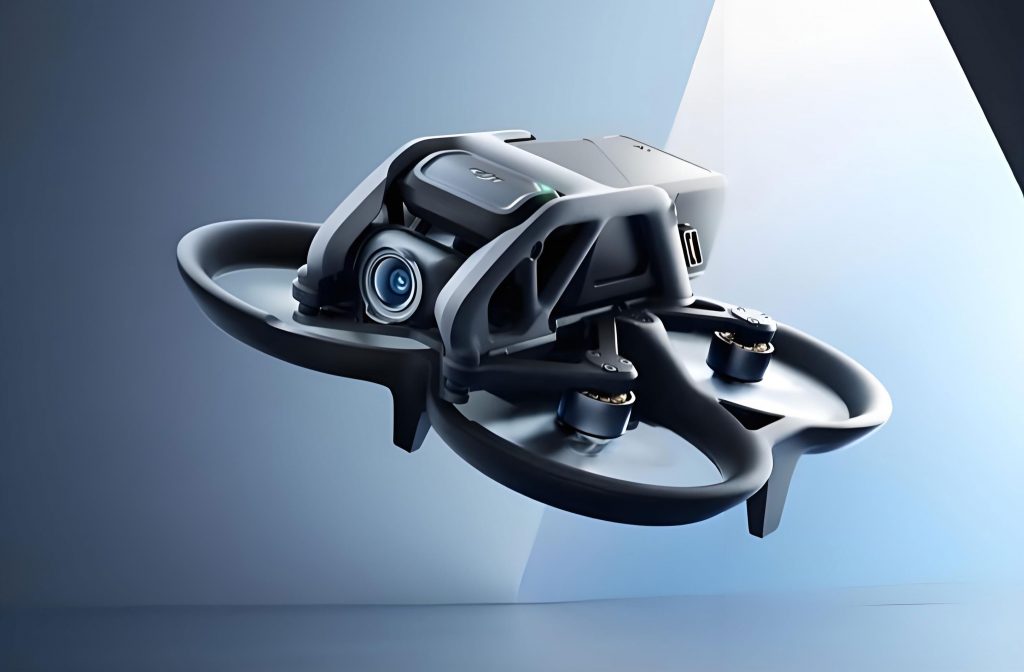
To understand why analog transmission is favored, let’s first look at the fundamental principles of video transmission in FPV drones. Analog transmission involves modulating the video signal directly onto a carrier wave, typically in the 5.8GHz band, and transmitting it without digital compression. This results in a continuous signal that can be received and displayed with minimal processing. The latency, or delay, in analog systems is remarkably low, often in the range of 10 to 20 milliseconds. This is critical for first person view flying, where split-second decisions can mean the difference between a smooth flight and a crash. In contrast, digital transmission requires encoding the video into a digital format, compressing it using algorithms like H.264 or H.265, and then transmitting it as data packets. This process introduces additional latency due to encoding, decoding, and error correction mechanisms.
Mathematically, the latency in digital transmission can be modeled using formulas that account for processing times. For instance, the total latency $L_{\text{digital}}$ can be expressed as:
$$L_{\text{digital}} = T_{\text{encode}} + T_{\text{transmit}} + T_{\text{decode}} + T_{\text{buffer}}$$
where $T_{\text{encode}}$ is the time taken to compress the video, $T_{\text{transmit}}$ is the wireless transmission time, $T_{\text{decode}}$ is the decompression time, and $T_{\text{buffer}}$ is the buffering delay to ensure smooth playback. In analog transmission, the latency $L_{\text{analog}}$ is primarily dominated by the signal propagation and minimal processing:
$$L_{\text{analog}} = T_{\text{propagation}} + T_{\text{display}}$$
This simplicity allows analog systems to achieve latencies as low as 10ms, which is essential for the dynamic environments where FPV drones operate. In China FPV racing events, for example, pilots rely on this low latency to navigate through obstacles at high speeds, making first person view flying an adrenaline-pumping experience.
Another key advantage of analog transmission is its reliability in weak signal conditions. When the signal degrades, analog video may exhibit noise or static, but it remains viewable, allowing pilots to maintain control. Digital transmission, on the other hand, can suffer from complete signal loss or freezing when the signal drops below a threshold, as it relies on packet integrity. This reliability makes analog transmission ideal for long-range FPV flights, which are popular in China FPV communities for exploring remote areas. The transmission distance for analog systems can be extended with higher power transmitters and directional antennas, often reaching over 80 km in optimal conditions.
To illustrate the differences between analog and digital transmission, consider the following table that summarizes their characteristics based on my experiences and technical analyses:
| Feature | Analog Transmission | Digital Transmission |
|---|---|---|
| Latency | Low (10-20 ms) | Higher (30-100 ms) |
| Signal Degradation Behavior | Gradual noise and static | Sudden freezing or dropouts |
| Transmission Distance | Long-range capable | Limited by compression and bandwidth |
| Cost | Low | High |
| Compatibility | High (standard 5.8GHz bands) | Varies (proprietary systems common) |
| Image Quality | Standard definition | High definition |
As shown, analog transmission excels in scenarios where low latency and reliability are paramount, which is why it remains a staple in FPV drone setups. In China FPV markets, the affordability of analog components makes them accessible to a wide range of enthusiasts, from beginners to experts. A typical analog setup includes a camera with a high number of TV lines (e.g., 1000 lines for better resolution), a transmitter with power ratings like 200mW or 400mW, and receivers integrated into goggles or screens. For instance, popular choices in China FPV include brands like “Xiao Fei Shou” for screens and “Ying Yan Rui Shi” for receivers, which offer cost-effective solutions for immersive first person view experiences.
Now, let’s delve deeper into the technical aspects of why digital transmission has higher latency. Digital systems use modulation schemes like OFDM, which divides the signal into multiple subcarriers to improve robustness against interference. The OFDM signal can be represented as:
$$s(t) = \sum_{k=0}^{N-1} X_k e^{j2\pi f_k t}$$
where $X_k$ is the data symbol on the $k$-th subcarrier, $f_k$ is the frequency of that subcarrier, and $N$ is the number of subcarriers. While this allows efficient use of bandwidth, it requires complex processing, including Inverse Fast Fourier Transform (IFFT) for transmission and Fast Fourier Transform (FFT) for reception, adding to the latency. Moreover, digital systems often employ joint source-channel coding (JSCC), as seen in HDZero, which maps video data directly to OFDM symbols. Although this reduces bandwidth usage, it introduces delays due to the computational overhead.
In analog transmission, the signal is typically frequency-modulated (FM) or amplitude-modulated (AM), with a simpler representation:
$$s_{\text{analog}}(t) = A_c \cos(2\pi f_c t + \phi(t))$$
where $A_c$ is the carrier amplitude, $f_c$ is the carrier frequency, and $\phi(t)$ is the phase modulation proportional to the video signal. This direct approach minimizes processing steps, resulting in lower latency. For FPV drones operating in fast-paced environments, this difference is critical; I have often found that in first person view flying, even a slight delay can disrupt the pilot’s ability to react to obstacles.
Cost is another significant factor driving the preference for analog transmission in FPV drones. Analog components are generally cheaper to produce and purchase, making them ideal for hobbyists who may need to replace parts frequently due to crashes or upgrades. In China FPV communities, where the culture emphasizes practicality and affordability, analog systems allow more people to participate in first person view activities. A basic analog FPV setup, including a camera, transmitter, and receiver, can cost as little as $50-$100, whereas digital systems often start at $200 or more. This cost-effectiveness extends to accessories like antennas, where omnidirectional or directional types can be used to enhance range without breaking the bank.
Compatibility and ecosystem maturity also play a role. Analog transmission has been around for decades, leading to a well-established standard in the 5.8GHz band. This means that components from different manufacturers are generally interoperable, allowing pilots to mix and match parts easily. In contrast, digital systems often use proprietary protocols, which can limit flexibility. For example, in China FPV events, pilots frequently share equipment and advice, and the universal compatibility of analog systems facilitates this collaboration. Additionally, the widespread use of analog in first person view racing leagues ensures that equipment standards remain consistent.
Despite the advantages of analog transmission, digital options are improving, offering higher resolution and additional features like telemetry data overlay. However, for many FPV drone applications, the trade-offs are not yet favorable. To further illustrate the performance differences, let’s consider a table comparing the key parameters affecting video transmission in FPV drones:
| Parameter | Analog Transmission | Digital Transmission | Impact on FPV Flying |
|---|---|---|---|
| Latency (ms) | 10-20 | 30-100 | Critical for high-speed maneuvers |
| Bandwidth Usage | Low | High | Affects transmission range and interference |
| Error Resilience | High (graceful degradation) | Low (packet loss leads to artifacts) | Essential for reliable control in varied environments |
| Power Consumption | Moderate | High | Influences flight time and battery choice |
| Setup Complexity | Low | High | Appeals to DIY enthusiasts in China FPV |
From this table, it’s clear that analog transmission aligns well with the needs of FPV drone pilots, particularly in contexts like China FPV where first person view flying often involves challenging conditions. The low latency and error resilience ensure that pilots can maintain a seamless connection, even when flying through urban landscapes or dense forests. Moreover, the moderate power consumption of analog systems helps extend flight times, which is crucial for long-range expeditions that are popular among China FPV adventurers.
In terms of video quality, analog transmission typically offers standard definition, which may not match the high definition of digital systems. However, for first person view purposes, the priority is often on responsiveness rather than resolution. I have participated in many FPV drone flights where the analog feed, though not crystal clear, provided enough detail to navigate effectively. The human brain can adapt to the slight noise in analog signals, whereas digital artifacts like blockiness or freezing can be more disorienting. This is why in competitive first person view racing, analog remains the gold standard.
To quantify the reliability of analog transmission, we can use statistical models. For instance, the signal-to-noise ratio (SNR) in analog systems decreases gradually with distance, allowing for a predictable degradation. The SNR can be modeled as:
$$\text{SNR} = \frac{P_t G_t G_r \lambda^2}{(4\pi d)^2 N_0 B}$$
where $P_t$ is the transmit power, $G_t$ and $G_r$ are the antenna gains, $\lambda$ is the wavelength, $d$ is the distance, $N_0$ is the noise density, and $B$ is the bandwidth. As $d$ increases, SNR drops, but the video remains usable due to the analog nature. In digital systems, the bit error rate (BER) must be kept low to maintain video quality, and it can be expressed as:
$$\text{BER} = Q\left(\sqrt{\frac{2E_b}{N_0}}\right)$$
where $Q$ is the Q-function, and $E_b$ is the energy per bit. When BER exceeds a threshold, the video may freeze, highlighting the fragility of digital transmission in weak signal areas.
In conclusion, the choice of analog video transmission for FPV drones is driven by its low latency, reliability, cost-effectiveness, and compatibility, all of which are essential for a seamless first person view experience. As someone deeply involved in the China FPV scene, I have seen how these factors make analog the preferred option for both beginners and seasoned pilots. While digital transmission continues to evolve, offering improvements in image quality, the core requirements of FPV flying—speed, responsiveness, and accessibility—keep analog at the forefront. For anyone entering the world of first person view drones, understanding these trade-offs is key to building a setup that delivers thrilling and reliable flights.
Looking ahead, the future of FPV drone technology may see hybrid systems that combine the best of both analog and digital, but for now, analog transmission remains the backbone of the first person view community. In China FPV, innovation continues to thrive, with enthusiasts pushing the boundaries of what’s possible with analog systems. Whether you’re racing through gates or exploring vast landscapes, the low-latency, reliable feed of analog video ensures that every flight is an immersive adventure. As I reflect on my own experiences, I am confident that analog transmission will continue to play a vital role in the evolution of FPV drones and the first person view phenomenon.