
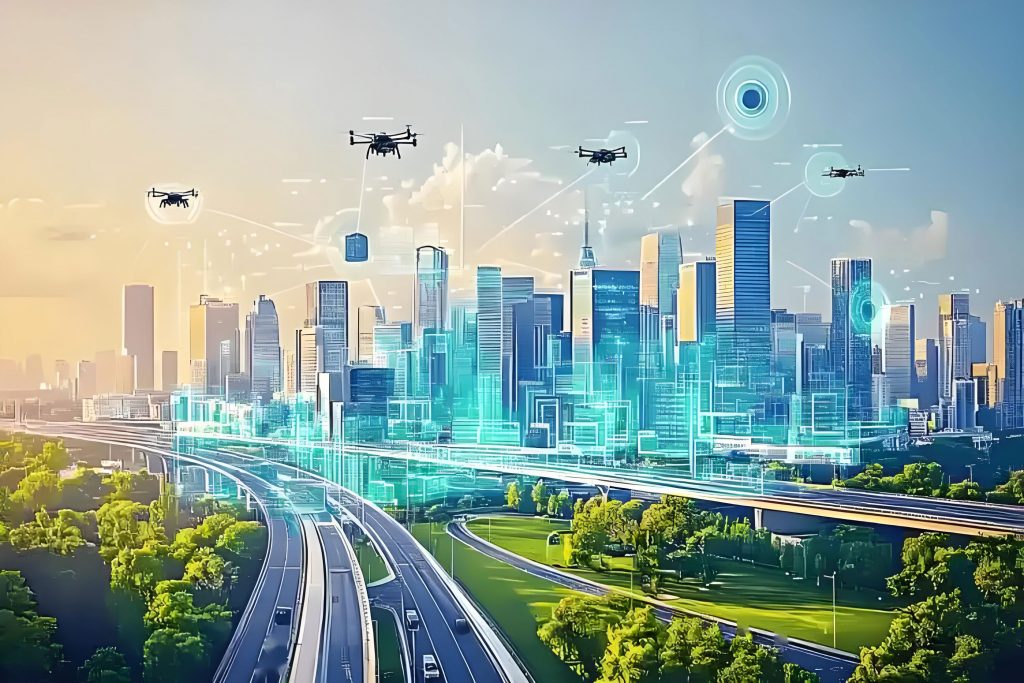
The rapid emergence of the low altitude economy, characterized by sub-1000-meter aerial activities such as urban air mobility and unmanned logistics, has fundamentally reshaped the landscape of aircraft manufacturing and maintenance. As a strategic emerging industry, the low altitude economy integrates cutting-edge technologies like 5G, AI, and new energy, driving unprecedented demand for lightweight, high-reliability, and cost-effective aviation structures. Aviation materials welding, as a core manufacturing process, faces significant challenges in adapting to new materials, advanced processes, and stringent airworthiness standards. This article explores the innovative reforms in aviation materials welding course teaching, driven by the demands of the low altitude economy, focusing on curriculum restructuring, pedagogical innovation, and practical training enhancements.
The low altitude economy is projected to grow into a trillion-dollar market by 2030, with annual growth rates exceeding 20%. This expansion necessitates a skilled workforce capable of handling advanced welding techniques for materials like aluminum-lithium alloys and titanium matrix composites, which are critical for electric vertical take-off and landing (eVTOL) vehicles and heavy-lift drones. For instance, eVTOL structures require a 30% reduction in weight, pushing the adoption of lightweight materials to over 65% of the composition. Additionally, welding joints must comply with airworthiness standards such as CCAR-23, demanding fatigue life cycles of up to 10^7. However, traditional welding education lags behind these industrial needs, with outdated content, limited practical exposure, and a lack of integration with digital tools and airworthiness protocols.
To address these gaps, a comprehensive reform strategy has been developed, centered on “demand-driven, ability-oriented, virtual-real integration, and multi-party collaboration.” This approach involves reconstructing course objectives, modularizing content, innovating teaching methods, building integrated practice platforms, and establishing dynamic evaluation systems. The reform aims to cultivate talents with robust technical skills, innovation capabilities, and a deep understanding of the low altitude economy’s requirements. For example, welding heat input, a critical parameter, can be optimized using the formula: $$ Q = \eta \cdot I \cdot V / v $$ where \( Q \) is the heat input, \( \eta \) is the arc efficiency, \( I \) is the current, \( V \) is the voltage, and \( v \) is the welding speed. This equation is integral to teaching students how to control welding quality and minimize defects in lightweight materials.
Reform Strategies for Aviation Materials Welding Education
The low altitude economy demands a seamless alignment between industry needs and educational outputs. A dynamic coupling mechanism between the industrial chain and the educational chain is essential. This involves collaborating with leading enterprises to define competency standards for key roles, such as eVTOL laser welding technicians and UAV maintenance engineers. The competency matrix emphasizes material analysis (30%), process optimization (40%), and airworthiness compliance (30%), with regular updates based on technological advancements. For instance, the focus in 2024 includes welding of titanium matrix composites for eVTOL applications. The integration of low altitude economy requirements ensures that graduates are job-ready and adaptable to evolving industry trends.
Ability-based education forms the cornerstone of the reform, with a three-dimensional goal system encompassing knowledge, skills, and素养. Knowledge dimensions cover material properties, welding metallurgy, and airworthiness standards; skills focus on process design, equipment operation, and quality control; and素养 emphasize safety, innovation, and teamwork. This holistic approach prepares students for the complexities of the low altitude economy, where welding must balance precision, efficiency, and regulatory compliance. The table below summarizes the three-dimensional goal system and its alignment with low altitude economy demands.
| Dimension | Core Components | Alignment with Low Altitude Economy Needs |
|---|---|---|
| Knowledge | Material properties, welding principles, airworthiness standards, digital basics | Mastery of lightweight materials and compliance with airworthiness regulations |
| Skills | Process design, equipment operation, simulation, defect analysis, maintenance | Ability to handle advanced welding techniques and ensure structural integrity |
| 素养 | Safety awareness, craftsmanship, cost control, innovation, teamwork | Fostering a culture of quality and adaptability in fast-evolving sectors |
Virtual-real integration tackles the high costs and risks associated with traditional welding training. By combining VR simulations, AR guidance, and physical equipment, students can practice hazardous operations like electron beam welding in a safe environment. For example, VR systems reduce training costs by 90% and allow parameter experimentation without material waste. The four-tier training system includes virtual layers for risk-free scenarios, augmented layers for real-time guidance, physical layers for hands-on practice, and innovation layers for project-based challenges. This method enhances learning efficiency by 300% and eliminates safety incidents, crucial for the low altitude economy where precision and reliability are paramount.
Multi-party collaboration establishes a “production-education-research-application” community, involving regulatory bodies, industry associations, enterprises, and universities. This ecosystem facilitates course co-development,师资 exchanges, and shared基地. For instance, enterprises contribute real-world cases, such as eVTOL wing beam welding defects, while universities update curricula annually. Joint evaluation mechanisms, incorporating industry certifications, ensure that graduates meet practical standards. This synergy reduces talent supply costs and accelerates technology transfer, directly supporting the growth of the low altitude economy.
Restructured Course Content: Modular and Four-New Integration
The course content is reorganized into modular units that progress from fundamentals to advanced topics, integrating new materials, processes, standards, and technologies. The modular design includes: (1) Foundation and Cognition: basics of aviation materials, welding metallurgy, and safety; (2) Core Processes and Skills: welding of high-strength aluminum alloys, titanium alloys, and composite materials; (3) Quality Assurance and Maintenance: non-destructive testing, defect analysis, and repair techniques; and (4) Frontiers and Expansion: additive manufacturing, digital simulation, and smart welding. Each module incorporates elements relevant to the low altitude economy, such as laser welding for UAV components or airworthiness compliance for drone structures.
The “Four-New Integration” injects contemporary elements into the curriculum. New materials like Al-Li alloys and CFRP are emphasized; new processes such as friction stir welding (FSW) and laser beam welding (LBW) are taught in depth; new standards including NADCAP and CCAR-23 are embedded in quality modules; and new technologies like AI-based defect detection and digital twins are introduced. The table below provides an example of modular content with Four-New Integration.
| Module | Key Content | Four-New Integration Elements |
|---|---|---|
| Core Skills: High-Strength Aluminum Welding | 7xxx/2xxx series properties, GTAW parameters, FSW principles, distortion control | New materials: Focus on aviation alloys; New processes: FSW hands-on; New standards: HB acceptance criteria; New tech: GTAW automation |
| Quality Assurance: NDT | PT, UT, RT, DR methods, defect identification, airworthiness requirements | New standards: NADCAP NDT rules; New materials/processes: Special detection for advanced welds; New tech: Digital radiography |
Mathematical models support the teaching of welding parameters. For instance, the cooling rate in welding, critical for microstructure control, can be expressed as: $$ \frac{dT}{dt} = -k (T – T_0) $$ where \( T \) is temperature, \( t \) is time, \( k \) is a constant, and \( T_0 \) is ambient temperature. Such equations help students optimize processes for the low altitude economy’s demand for high-performance joints.
Innovative Teaching Methods: Virtual-Real Integration and Task-Driven Learning
The teaching model adopts a “pre-class, in-class, post-class” continuum, leveraging MOOC/SPOC resources, virtual simulations, and real-world projects. Pre-class activities include micro-lectures on new materials and VR safety drills; in-class sessions use case-based tasks, such as UAV wing beam failures, combined with AR-guided实操; post-class assignments involve literature reviews and simulation practice. Task-driven learning, centered on low altitude economy scenarios like logistics drone landing gear repair, fosters problem-solving skills. For example, students might use the formula for weld strength: $$ \sigma = \frac{F}{A} $$ where \( \sigma \) is stress, \( F \) is force, and \( A \) is cross-sectional area, to design and test welding procedures.
Core pedagogical methods include virtual simulation for exploratory learning, project-driven practice for real-world application, case studies for critical analysis, and flipped classrooms for active engagement. These approaches ensure that students gain hands-on experience with low altitude economy-relevant technologies, such as programming automated welding cells for eVTOL production.
Integrated Practice Platform: Three-in-One System
The practice platform combines virtual simulation centers, physical training labs, and industry partnerships. Virtual centers feature high-fidelity simulators for risk-free training, while physical labs are equipped with advanced welding machines and NDT equipment. Industry collaborations provide access to real production lines, such as eVTOL assembly facilities. This triad enables students to transition from virtual rehearsals to actual operations, mastering skills essential for the low altitude economy. For instance, virtual welding trainers allow parameter optimization without cost, described by the efficiency equation: $$ \eta = \frac{Q_{\text{actual}}}{Q_{\text{input}}} $$ where \( \eta \) is process efficiency.
Dynamic Evaluation System: Multi-Dimensional and Multi-Stakeholder
Evaluation incorporates diverse stakeholders—teachers, peers, industry mentors—and assesses knowledge, skills, innovation, and素养. Formative tracking throughout the course, combined with summative exams and project defenses, ensures comprehensive feedback. Industry standards, such as IIW certifications, are integrated into assessments, aligning with low altitude economy job requirements. Metrics include virtual operation scores, defect detection accuracy, and airworthiness compliance rates.
Enhanced师资 Development
师资 are trained as “dual-qualified” professionals through enterprise internships, industry certifications, and collaborative research. Regular updates on low altitude economy trends and technologies keep teaching relevant. For example, teachers participate in workshops on AI-driven welding quality control, reinforcing the curriculum’s alignment with industrial advancements.
Practice Case and Effect Analysis
A pilot reform was implemented at a leading university, focusing on the “Materials Science and Engineering” program. Starting with the 2020 cohort, the reform involved revising syllabi with industry input, building VR simulation labs, and introducing comprehensive projects like UAV landing gear FSW. Enterprise experts were hired as adjunct instructors, and a blended teaching model was adopted. Results showed a 25% improvement in welding pass rates, higher employer satisfaction, and increased student innovation in competitions. Challenges included limited access to top-tier equipment and the need for continuous virtual system upgrades. Future directions include seeking more funding, deepening industry partnerships, and expanding airworthiness training modules.
The reform has demonstrated tangible benefits in preparing students for the low altitude economy, with enhanced practical skills and a stronger grasp of airworthiness standards. For instance, graduate employment rates in relevant sectors have risen, and student projects have led to industry adoptions, such as optimized welding schemes for drone components.
Conclusion
The low altitude economy presents both opportunities and challenges for aviation materials welding education. By embracing innovative reforms that integrate demand-driven goals, virtual-real methods, and collaborative ecosystems, educational institutions can cultivate a new generation of welding professionals equipped with the skills, knowledge, and素养 to drive the industry forward. Future reforms should further incorporate green materials, intelligent technologies, and international standards, ensuring that graduates contribute sustainably to the low altitude economy’s growth. Continuous adaptation and investment in teaching innovations will be key to building a robust talent pipeline for this dynamic sector.