
In recent years, the rapid evolution of drone technology has revolutionized various sectors, from military operations to civilian applications. Among these advancements, the tiltrotor Unmanned Aerial Vehicle (UAV) stands out due to its unique ability to combine the vertical take-off and landing (VTOL) capabilities of rotorcraft with the high-speed cruise efficiency of fixed-wing aircraft. This hybrid design addresses critical limitations in traditional drones, such as restricted take-off areas and limited endurance, making it a focal point in modern aerospace engineering. Our research focuses on the design and optimization of a tilting mechanism for a 30 kg tiltrotor UAV, emphasizing structural integrity, lightweight construction, and rapid transition between flight modes. The tilting mechanism is a cornerstone of this drone technology, enabling seamless mode shifts and enhancing operational flexibility in diverse environments.
The tiltrotor UAV operates through a sophisticated tilting mechanism that rotates the rotor nacelles, allowing transitions from vertical to horizontal flight. This process involves complex aerodynamic and structural considerations, particularly during the transition phase, where dynamic forces can impact stability. In our design, we prioritized a rapid transition time of 0.5 seconds to minimize aerodynamic interference and simplify control systems. The core of this mechanism is a torsion bar that synchronizes the movement of two rotor nacelles, driven by a worm gear system for its self-locking properties. This approach not only ensures reliability but also reduces the risk of mechanical failure, which is crucial for the widespread adoption of Unmanned Aerial Vehicle systems in demanding scenarios like surveillance, logistics, and emergency response.
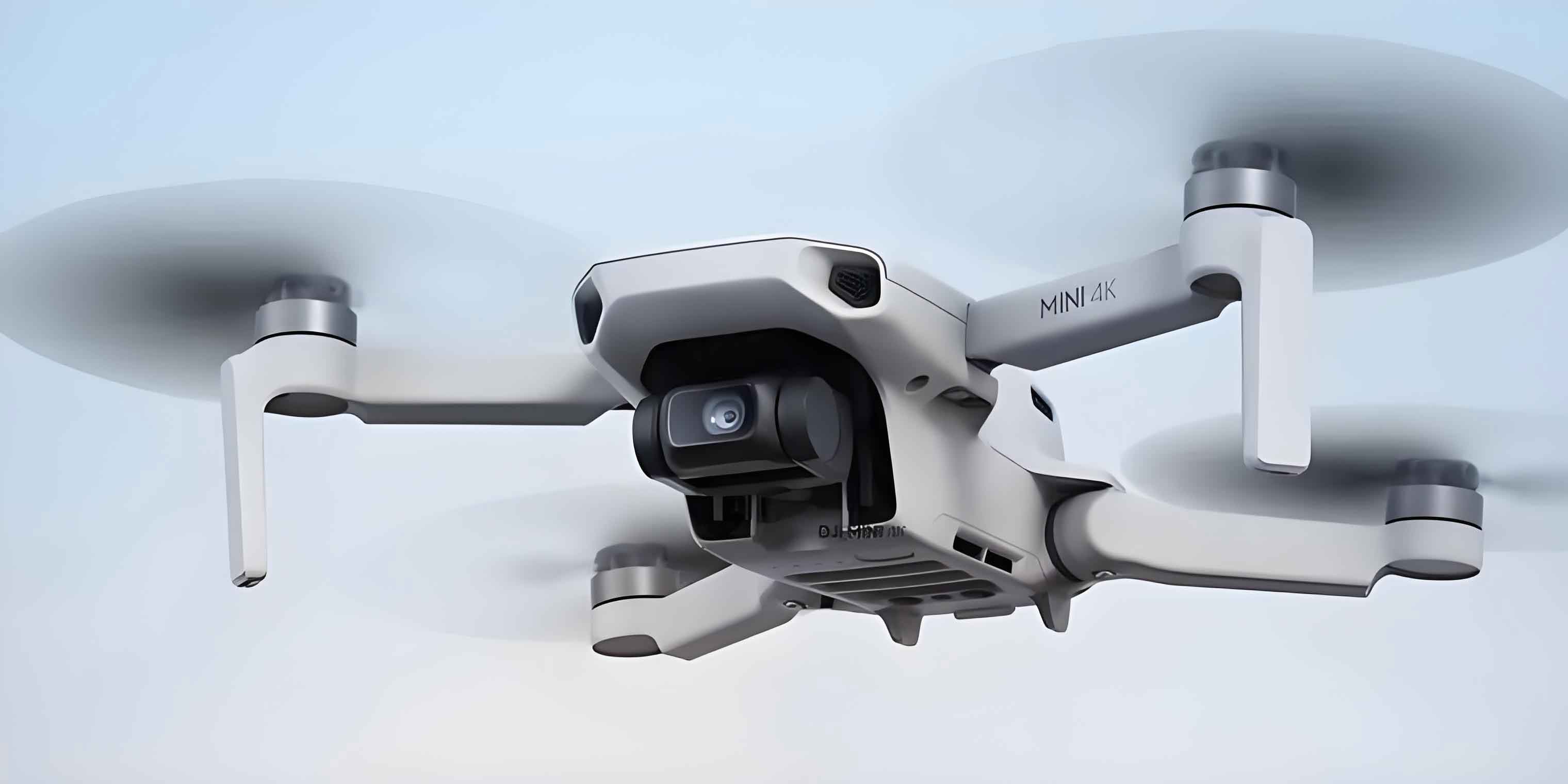
To achieve an efficient design, we began with the overall configuration of the UAV, adopting a tailless layout that integrates the wings and fuselage into a single lifting surface. This design enhances aerodynamic efficiency by reducing drag and improving the lift-to-drag ratio, which is essential for long-endurance missions in drone technology. The UAV features four rotors, with the front two being tiltable and the rear two fixed, providing balanced thrust distribution. The power system incorporates high-performance brushless motors and electronic speed controllers, selected to meet the demanding requirements of both hover and cruise phases. For instance, the front tiltrotors use Scorpion SII-6530-180 kV motors capable of delivering up to 4.8 kW of power, while the fixed rotors employ T-MOTOR MN805S motors. The propellers are two-bladed with a diameter of 26 inches and a pitch of 10 inches, optimized for generating sufficient lift and thrust. The battery system consists of a 12S 30 Ah lithium polymer pack, ensuring adequate energy storage for extended operations. This integration of components underscores the advancements in Unmanned Aerial Vehicle design, where energy efficiency and power density are paramount.
The heart of our tiltrotor UAV lies in the tilting mechanism, which employs a worm gear drive to rotate the torsion bar and, consequently, the rotor nacelles. The worm gear system offers a high transmission ratio and self-locking capability, preventing unintended reversals during flight. We selected a 57 stepper motor as the actuator, providing a torque of 2.4 N·m, which is amplified through a 12:1 gear ratio in the worm gear setup. The torsion bar, made from T300 carbon fiber for its high strength-to-weight ratio, connects the two nacelles and ensures synchronous tilting. The dynamic forces acting on this mechanism include rotor lift, gyroscopic moments, and reaction torques, which must be carefully managed to avoid structural failure. The gyroscopic moment, for example, arises during tilting and can be calculated using the formula for a rotating rigid body: $$ T = I_Z \omega_1 \omega_2 $$ where \( I_Z \) is the moment of inertia, \( \omega_1 \) is the angular velocity of rotor spin, and \( \omega_2 \) is the tilting angular velocity. For our design, with \( I_Z = 0.025 \, \text{kg} \cdot \text{m}^2 \), \( \omega_1 = 837.76 \, \text{rad/s} \) (equivalent to 8000 RPM), and \( \omega_2 = 0.5 \, \text{rad/s} \), the gyroscopic torque is approximately 14.2 N·m. This torque, combined with other loads, dictates the structural requirements for the torsion bar, highlighting the intricate balance needed in drone technology between performance and durability.
To validate the design, we conducted a structural analysis of the torsion bar using finite element methods in ANSYS Workbench. The torsion bar is subjected to multiple forces, including lift forces from the rotors (each up to 150 N), gyroscopic moments, and the driving torque from the worm gear. The material properties of T300 carbon fiber are summarized in the table below, which were input into the simulation environment to assess stress and deformation.
| Property | Value |
|---|---|
| Density | 1.79 g/cm³ |
| Elastic Modulus | 120 GPa |
| Poisson’s Ratio | 0.33 |
| Yield Strength | 493 MPa |
The simulation results indicated a maximum deformation of 0.58339 mm at the ends of the torsion bar, with minimal deformation (8e-6 mm) at the center where it connects to the worm gear. The maximum von Mises stress was 55.783 MPa, well below the material’s yield strength, confirming the design’s safety margin. However, this also revealed opportunities for weight reduction, as the structure was over-designed for the applied loads. In drone technology, minimizing mass is critical for enhancing payload capacity and flight endurance, prompting us to pursue optimization techniques.
We implemented a response surface optimization methodology to achieve lightweight design goals while maintaining structural integrity. The optimization process began with defining a mathematical model that includes design variables, constraints, and an objective function. The design variables were the outer and inner diameters of the torsion bar, with initial values of 40 mm and 25 mm, respectively, and allowable ranges of 35–45 mm and 20–30 mm. The objective function was to minimize the mass \( G(x) \), subject to constraints on maximum stress \( \sigma_{\text{max}} \leq [\sigma] \) and maximum deformation \( \epsilon_{\text{max}} \leq [\epsilon] \), where \( [\sigma] = 493 \, \text{MPa} \) and \( [\epsilon] = 2 \, \text{mm} \) (based on practical limits for Unmanned Aerial Vehicle components). The optimization problem can be formally stated as:
$$ \min G(x) $$
$$ \text{subject to} \quad \sigma_{\text{max}} \leq [\sigma], \quad \epsilon_{\text{max}} \leq [\epsilon], \quad d \in (d_L, d_H) $$
where \( d \) represents the design variables within their lower and upper bounds. To build an accurate response surface, we used the Central Composite Design (CCD) method for sampling, which includes center points, cube points, and axial points to cover the design space efficiently. For response surface modeling, we compared two approaches: the standard full quadratic polynomial and the Kriging method. The quadratic model is expressed as:
$$ y_1(x) = a_0 + \sum_{i=1}^{m} a_i x_i + \sum_{i=1}^{m} a_{ii} x_i^2 + \sum_{i=2}^{m} \sum_{j=1}^{i-1} a_{ij} x_i x_j $$
where \( x_i \) are the design variables, \( m \) is the number of variables, and \( a_0, a_i, a_{ii}, a_{ij} \) are coefficients determined through regression. The Kriging model, on the other hand, is given by:
$$ y_2(x) = f(x) \cdot \beta + Z(x) $$
where \( f(x) \) provides a global approximation, \( \beta \) is a regression coefficient, and \( Z(x) \) captures local deviations. We evaluated the fit quality using the coefficient of determination \( R^2 \), where values closer to 1 indicate better accuracy. The Kriging method achieved \( R^2 = 1 \) for all responses, outperforming the quadratic model, which had \( R^2 > 0.98 \). Thus, we proceeded with Kriging for its superior predictive capability in optimizing the Unmanned Aerial Vehicle component.
Using the multi-objective genetic algorithm (MOGA) in ANSYS Workbench, we iteratively solved the optimization problem to find the best design parameters. The results showed that the optimized torsion bar had an outer diameter of 37 mm and an inner diameter of 27 mm, reducing the mass by 33.3% compared to the initial design. The table below summarizes the comparison between the original and optimized parameters, demonstrating the effectiveness of the approach in drone technology for achieving lightweight structures without compromising performance.
| Parameter | Original Design | Optimized Design |
|---|---|---|
| Outer Diameter (mm) | 40.000 | 37.000 |
| Inner Diameter (mm) | 25.000 | 27.000 |
| Maximum Stress (MPa) | 55.783 | 103.610 |
| Maximum Deformation (mm) | 0.58339 | 1.40920 |
| Mass (kg) | 1.4529 | 0.9686 |
The optimized torsion bar maintained stresses within safe limits (103.61 MPa < 493 MPa) and deformations below the allowable threshold, ensuring that the tilting mechanism operates reliably. This lightweight design contributes significantly to the overall efficiency of the Unmanned Aerial Vehicle, allowing for longer flight times and increased payload capacity. Moreover, the rapid tilting capability of 0.5 seconds reduces transitional aerodynamic effects, simplifying control algorithms and enhancing stability—a critical advantage in real-world applications of drone technology, such as urban air mobility or disaster response.
In conclusion, our work on the tiltrotor Unmanned Aerial Vehicle underscores the importance of integrated design and optimization in advancing drone technology. The tilting mechanism, with its worm gear drive and synchronized torsion bar, enables swift and stable mode transitions, while the response surface optimization method achieves a 33.3% weight reduction in the torsion bar. This approach not only meets structural requirements but also pushes the boundaries of lightweight engineering in UAVs. Future research could explore advanced materials, such as composites with higher strength ratios, or incorporate real-time control systems to further improve performance. As drone technology continues to evolve, innovations in tilting mechanisms will play a pivotal role in expanding the capabilities of Unmanned Aerial Vehicle for both commercial and defense sectors, driving progress toward autonomous and efficient aerial systems.