
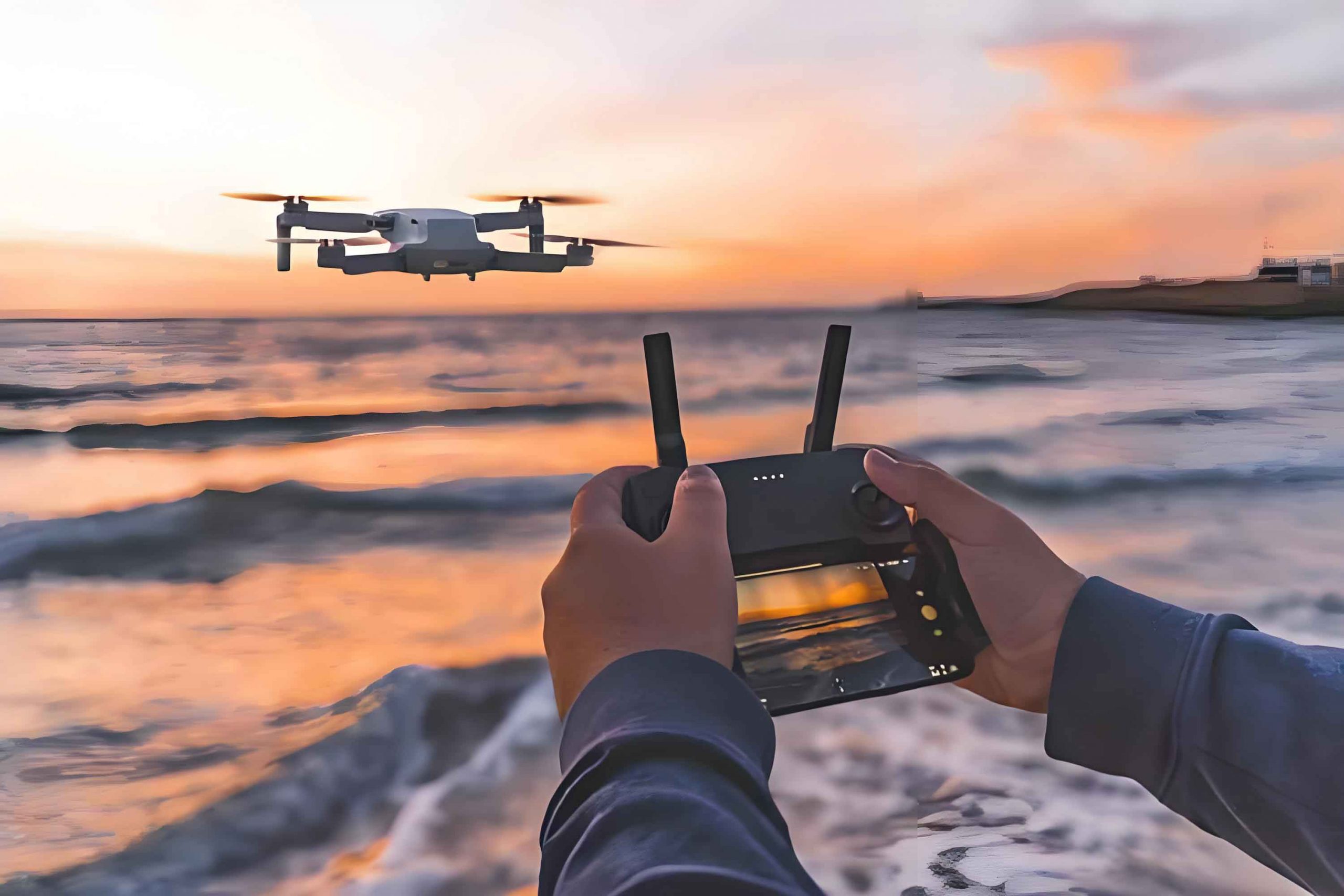
In the fading light over Lingding Bay, a silver-gray eVTOL aircraft cuts swiftly through the air, its AI system dynamically adjusting to sea breezes and air currents, charting the most efficient course from Tangjia Port to Guishan Island. This is not a scene from science fiction but a living snapshot of Zhuhai’s rapidly evolving low-altitude economy. While many cities are still gazing skyward with curiosity, Zhuhai has decisively activated its low-altitude economic engine, igniting what can only be described as a revolution in the skies above the Pearl River Delta. At the heart of this transformation is the burgeoning China drone industry, a sector that is redefining urban mobility, logistics, and economic competitiveness.
The rise of low-altitude economies globally has positioned China as a pivotal player, with Zhuhai emerging as a trailblazer. The city’s unique blend of aerospace heritage, strategic location within the Greater Bay Area, and innovative policy frameworks has created a fertile ground for the China drone ecosystem to thrive. This article delves into Zhuhai’s journey, exploring how policy initiatives, industrial diversification, technological advancements, and financial mechanisms are collectively propelling the China drone narrative forward. From unmanned cargo deliveries to passenger-ready eVTOLs, Zhuhai is not just participating in the low-altitude economy—it is actively shaping its future, setting benchmarks that could influence national and global standards.
As a journalist observing these developments, it is clear that the China drone phenomenon in Zhuhai represents more than technological achievement; it symbolizes a broader shift towards integrated, smart urban ecosystems. The following sections provide an in-depth analysis of the multidimensional strategies employed by Zhuhai to secure its position at the forefront of the China drone revolution. Through detailed examinations of policy foundations, industrial frameworks, technological infrastructures, and financial ecosystems, this report aims to capture the essence of Zhuhai’s low-altitude ascent, underscoring the critical role of the China drone sector in this transformative era.
Policy Foundations: Crafting a Conducive Environment for China Drone Innovation
The acceleration of Zhuhai’s low-altitude economy is deeply rooted in proactive and forward-thinking policy measures. In recent years, the concept of low-altitude economy has been emphasized in national government work reports, outlining a vision for a trillion-yuan market. For Zhuhai, this national directive provided a catalyst to leverage its inherent strengths. The city, long known for its aviation legacy through the internationally acclaimed China Airshow, has embarked on a meticulous journey to build a robust regulatory and supportive environment specifically tailored for the China drone industry.
One of the cornerstone initiatives was the introduction of the Zhuhai Special Economic Zone Low-Altitude Traffic Construction Management Regulation. This legislation provided a legal foundation for the development and operation of low-altitude activities, addressing critical aspects such as airspace management, safety protocols, and operational standards for unmanned aerial vehicles. By establishing clear guidelines, the regulation not only mitigated potential risks but also instilled confidence among investors and innovators in the China drone sector. It signaled Zhuhai’s commitment to creating a structured and secure ecosystem where low-altitude technologies could flourish.
Complementing the regulatory framework, the city government released the “Zhuhai City Measures to Support High-Quality Development of the Low-Altitude Economy.” This policy package offered substantial financial incentives, including subsidies, tax breaks, and grants, aimed at reducing the entry barriers for startups and scale-ups within the China drone landscape. These measures are designed to attract a diverse range of players—from hardware manufacturers to software developers—ensuring that the entire value chain benefits from governmental support. The tangible nature of these incentives has been instrumental in accelerating research and development, enabling companies to focus on innovation rather than financial constraints.
To streamline implementation, Zhuhai established a dedicated task force and a municipal-level professional operating company. These entities work collaboratively to oversee project executions, coordinate between different stakeholders, and ensure that policy objectives translate into actionable outcomes. The task force acts as a single window for the China drone industry, facilitating approvals, resolving disputes, and promoting cross-sector collaborations. This centralized approach has enhanced efficiency, reducing bureaucratic delays that often plague emerging technological sectors.
The upcoming 8th Global Unmanned Systems Conference and Zhuhai International Low-Altitude Economy Expo, scheduled for November 2025, further underscore the city’s ambitions. This event is poised to be a global platform where the latest advancements in the China drone domain will be showcased, fostering international partnerships and knowledge exchange. By hosting such high-profile gatherings, Zhuhai aims to solidify its reputation as a hub for low-altitude innovation, attracting global attention and investment into the China drone ecosystem.
The policy landscape in Zhuhai is thus characterized by a holistic and integrated approach. It is not merely about creating rules but about building an enabling environment where the China drone industry can experiment, scale, and evolve. This strategic foresight has been crucial in positioning Zhuhai as a national pioneer, demonstrating how policy instruments can unlock the potential of emerging technologies like drones and eVTOLs.
Industrial Development: Building the Backbone of the China Drone Ecosystem
The theoretical foundations laid by policy measures have been brought to life through Zhuhai’s concerted efforts in industrial development. The city has embarked on a multidimensional strategy to build a comprehensive low-altitude industrial cluster, with the China drone sector at its core. This involves creating physical infrastructures, fostering enterprise growth, and pioneering new application scenarios that demonstrate the practical utility of unmanned systems.
A prime example is the Tangjia Port Unmanned Aerial Vehicle Logistics Operations Base. As the nation’s first integrated passenger and cargo eVTOL operations base, this facility represents a significant milestone in the China drone logistics narrative. Here, dozens of drones operate in a synchronized manner, managed by an intelligent dispatch system that plots real-time flight paths over a dynamic network. On any given day, hundreds of parcels are transported via low-altitude routes to islands like Guishan, effectively solving long-standing challenges associated with maritime logistics. The efficiency gains are substantial—what once took hours now takes minutes, revolutionizing supply chain dynamics in the region. This operational success story is a testament to the viability of China drone technologies in addressing real-world problems.
Simultaneously, the Guishan Island Low-Altitude Economy Demonstration Base has pioneered a novel model combining tourism and logistics. Visitors can experience breathtaking aerial tours aboard manned flight vehicles, soaring over pristine blue waters, while below, the same air corridors are used to transport fresh seafood directly to urban markets. This dual-use approach maximizes infrastructure utilization, creating economic value while enhancing consumer experiences. The demonstration base serves as a living lab for the China drone industry, testing new concepts and refining operational models in a controlled yet realistic setting.
The industrial aggregation effect in Zhuhai is increasingly evident. By October 2024, the city was home to 73 aviation and supporting enterprises, which collectively generated an output value of 15.564 billion yuan, marking a growth rate of 27.6%. This impressive trajectory is fueled by key industrial zones. In the Jinwan District, the general aviation industrial chain is maturing rapidly, with leading firms such as AVIC General Aircraft and MTU Maintenance leveraging their expertise to drive innovation. These companies are integral to the China drone supply chain, producing critical components and providing maintenance services that ensure operational reliability.
In the High-Tech Zone, the Low-Altitude Economy Industrial Park hosts over 40 upstream and downstream enterprises engaged in collaborative innovation. The park functions as an ecosystem where engine manufacturers, software developers, and control system designers work in tandem. This collaborative environment accelerates the development of integrated solutions, from propulsion technologies to advanced flight control software. The presence of such a dense network of specialized firms underscores Zhuhai’s capacity to nurture a self-sustaining China drone industrial cluster, reducing dependency on external inputs and enhancing local value addition.
The expansion of the China drone industry in Zhuhai is not limited to logistics and tourism. Applications are diversifying into areas such as agricultural monitoring, emergency response, and urban management. For instance, drones equipped with multispectral sensors are being deployed for precision agriculture, enabling farmers to monitor crop health and optimize resource use. In emergency scenarios, unmanned systems provide rapid aerial assessments, delivering critical data to first responders. These varied applications highlight the versatility of China drone technologies and their potential to permeate multiple sectors of the economy.
Moreover, the city is actively promoting cross-border collaborations within the Greater Bay Area. Initiatives are underway to establish low-altitude traffic corridors that connect Zhuhai with Hong Kong and Macao, facilitating seamless cross-boundary operations for the China drone fleet. Such integrations are crucial for scaling operations, as they create larger markets and standardized operational protocols. The vision is to develop a regional low-altitude network that serves as a model for other metropolitan areas, further cementing the role of the China drone industry in regional economic integration.
In summary, Zhuhai’s industrial strategy is characterized by pragmatism and innovation. By building physical infrastructures, fostering enterprise clusters, and diversifying applications, the city has created a vibrant ecosystem where the China drone sector can thrive. The tangible outcomes—from enhanced logistics efficiency to new tourism experiences—demonstrate the transformative impact of low-altitude technologies, positioning Zhuhai as a benchmark for other cities aspiring to develop their own China drone capabilities.
Technological and Financial Synergies: Powering the China Drone Revolution
The ascent of Zhuhai’s low-altitude economy is underpinned by a powerful synergy between technological innovation and financial support. The city has made significant strides in developing advanced technological infrastructures that enable safe, efficient, and scalable operations for the China drone industry. Concurrently, financial institutions have devised innovative mechanisms to fuel growth, ensuring that technological advancements are matched by adequate capital infusion.
On the technological front, a landmark achievement is the launch of the Zhuhai City Low-Altitude Three-Dimensional Traffic Management Service System Version 2.0. This sophisticated platform provides comprehensive management capabilities for low-altitude operations across maritime domains. It ensures that every drone flight is visible, manageable, and recallable—critical features for maintaining safety and regulatory compliance. The system represents a significant leap in the China drone management paradigm, incorporating real-time data analytics, predictive modeling, and automated control functions. By offering a holistic city-level solution, it facilitates the integration of low-altitude operations into the broader urban transport network.
A key component of this technological ecosystem is the development of a low-altitude digital base. Zhuhai has completed the creation of a realistic 3D map covering 120 square kilometers of the main urban area, with an impressive precision of 5 centimeters. This high-definition mapping provides drones with the data necessary for obstacle avoidance, route optimization, and navigation in complex environments. The availability of such precise geospatial information is a game-changer for the China drone industry, enabling operations in densely populated areas where accuracy is paramount. This digital infrastructure acts as the backbone, supporting a wide array of applications from parcel delivery to aerial surveillance.
The integration of these technologies is not occurring in isolation. Zhuhai is actively promoting interoperability within the Greater Bay Area, conducting cross-border flight tests that involve coordination with Hong Kong and Macao. These trials are essential for developing standardized protocols that ensure seamless operations across jurisdictions. The success of these initiatives enhances the credibility of the China drone sector, demonstrating its readiness for regional and eventually global deployment.
While technology provides the tools, finance supplies the fuel. The convergence of financial capital and technological innovation in Zhuhai’s low-altitude economy is creating dynamic growth opportunities. Banks and other financial institutions have recognized the potential of the China drone industry and are deploying tailored financial products to support its development. Low-interest loans are available to established companies seeking to expand their operations or invest in new technologies. These loans reduce the cost of capital, making it easier for firms to undertake large-scale projects and accelerate their growth trajectories.
Perhaps more innovatively, financial institutions are adopting a “credit + investment” model. This involves not only providing debt financing but also making equity investments in startups with core technological competencies. By taking equity stakes, banks and their investment subsidiaries share in the risks and rewards of innovation, aligning their interests with those of the companies they support. This model is particularly beneficial for early-stage China drone ventures that may have groundbreaking ideas but lack the collateral for traditional loans. The infusion of patient capital allows these firms to focus on research and development, overcoming technical hurdles that might otherwise stall their progress.
This dual approach of credit and investment embeds financial institutions deeply into the China drone value chain. They become partners in innovation rather than mere lenders, gaining insights into industry dynamics and building long-term relationships with key players. This embeddedness not only drives enterprise growth but also opens new business avenues for financial entities, positioning them at the forefront of an emerging economic sector.
Moreover, venture capital and private equity firms are increasingly active in the Zhuhai low-altitude landscape. They bring not only capital but also mentorship, network access, and strategic guidance, helping China drone companies scale rapidly and navigate market complexities. The presence of a diverse financial ecosystem—comprising banks, investment firms, and government-backed funds—creates a robust support structure that mitigates funding gaps and fosters sustainable growth.
The technological and financial synergies in Zhuhai are thus creating a virtuous cycle. Advanced technologies enhance the attractiveness of the China drone sector to investors, while financial support accelerates technological advancements. This interplay is crucial for maintaining momentum, ensuring that Zhuhai remains at the cutting edge of the low-altitude economy. As these synergies deepen, they are likely to catalyze further innovations, solidifying the city’s status as a global leader in the China drone domain.
Future Prospects: Envisioning the Next Frontier for China Drone Technologies
The journey of Zhuhai’s low-altitude economy is far from complete; in many ways, it is just beginning. The future holds immense potential for the China drone industry, with visions of fully integrated aerial mobility networks that redefine urban transportation. Current developments provide a glimpse into this future, showcasing technologies that are rapidly transitioning from concept to reality.
The recent China Airshow featured a dedicated low-altitude economy pavilion, where cutting-edge exhibits captivated audiences. Smart cargo drones, modular “land aircraft carriers,” and passenger airships were among the displays, highlighting the diversity and sophistication of the China drone portfolio. These innovations are not mere prototypes; many are in advanced stages of testing and are poised for commercial deployment. The airshow served as a powerful platform for demonstrating Zhuhai’s capabilities, attracting interest from global stakeholders and reinforcing the city’s image as an innovation hub.
Looking ahead, the integration of drones and eVTOLs with traditional transport modes is a key priority. The goal is to create a seamless multimodal network where aerial vehicles complement ground-based systems, reducing congestion and travel times. For instance, commuters might use eVTOLs for short-haul trips between urban centers and suburbs, connecting seamlessly with metros or buses. Such integrations require not only technological interoperability but also regulatory harmonization and public acceptance. Zhuhai is actively working on these fronts, conducting pilot projects that test integrated mobility solutions and engage communities through awareness campaigns.
The development of low-altitude traffic corridors is another critical initiative. Plans are underway to establish dedicated aerial routes connecting eastern and western urban areas, as well as links to outlying islands. These corridors will form the arteries of the regional low-altitude network, enabling efficient and predictable operations for the China drone fleet. Within the Greater Bay Area, efforts are focused on creating a unified low-altitude traffic management system that coordinates flights across Zhuhai, Hong Kong, and Macao. This regional approach amplifies the economic impact, creating a larger market and fostering collaborative innovation.
Expert insights underscore the significance of these developments. As noted by Zhu Keli, Director of the Greater Bay Area Low-Altitude Economy Research Institute, the region possesses unique advantages that position it as a national testbed and trendsetter for low-altitude economies. The concentration of technological talent, financial resources, and policy support creates an environment where the China drone industry can experiment, learn, and scale. This sentiment is echoed by industry leaders who view Zhuhai as a critical node in the global low-altitude landscape.
The potential economic impacts are substantial. As the China drone industry matures, it is expected to generate significant employment opportunities, from high-skilled roles in R&D to operational positions in logistics and maintenance. The spillover effects will benefit adjacent sectors, such as telecommunications, data analytics, and cybersecurity, creating a broader ecosystem of innovation. Moreover, the export of Zhuhai’s low-altitude solutions—dubbed the “Zhuhai Model”—could provide a template for other cities, both within China and internationally, further amplifying the city’s influence.
However, challenges remain. Regulatory frameworks must evolve to keep pace with technological advancements, ensuring safety without stifling innovation. Public concerns regarding privacy, noise, and visual pollution need to be addressed through transparent communication and community engagement. Additionally, the scalability of operations requires continuous investment in infrastructures, both physical and digital. Zhuhai is aware of these challenges and is adopting a proactive approach, leveraging its experiences to refine strategies and mitigate risks.
In the long term, the vision for Zhuhai’s low-altitude economy extends beyond transportation. Concepts such as aerial data collection for smart city management, drone-based environmental monitoring, and even urban air mobility for personal transport are on the horizon. The China drone industry is poised to become an integral part of daily life, enhancing efficiency, sustainability, and quality of life. As these possibilities unfold, Zhuhai is well-positioned to lead the charge, demonstrating how cities can harness the power of low-altitude technologies to build smarter, more connected futures.
Conclusion: Zhuhai as the Vanguard of the China Drone Era
The story of Zhuhai’s low-altitude economy is one of vision, execution, and transformation. From the serene skies above Lingding Bay to the bustling operations at Tangjia Port, the city has embarked on a remarkable journey to harness the potential of the China drone industry. Through strategic policy interventions, diversified industrial development, technological innovations, and synergistic financial support, Zhuhai has created an ecosystem where low-altitude technologies can flourish.
The implications extend far beyond the city’s boundaries. Zhuhai’s experiences offer valuable lessons for other regions seeking to develop their own low-altitude economies. The emphasis on holistic policy frameworks, the creation of physical and digital infrastructures, and the fostering of public-private partnerships are replicable models that can be adapted to different contexts. As the China drone sector continues to evolve, Zhuhai’s pioneering efforts are likely to influence national standards and international best practices.
The rapid growth of the China drone industry in Zhuhai underscores a broader trend: the convergence of aviation, digitalization, and urban planning. This convergence is giving rise to new economic paradigms where the skies become extensions of urban spaces, offering solutions to terrestrial challenges. Zhuhai’s ability to navigate this complex landscape—balancing innovation with regulation, and ambition with practicality—exemplifies its leadership in the low-altitude domain.
As the city prepares to host international events and expand its cross-border collaborations, the momentum is set to accelerate. The upcoming expo and conference will not only showcase Zhuhai’s achievements but also catalyze new partnerships and innovations. The future of the China drone industry in Zhuhai is bright, filled with possibilities that promise to redefine mobility, logistics, and urban living.
In conclusion, Zhuhai’s ascent in the low-altitude economy is more than an economic success story; it is a testament to the power of strategic vision and collaborative effort. The city has not only embraced the China drone revolution but has become one of its primary architects. As more cities look to the skies for solutions, Zhuhai stands as a beacon, illuminating the path toward a future where the heavens are an integral part of our everyday lives. The era of the sky city is dawning, and Zhuhai is leading the way, with the China drone industry at the heart of this transformative journey.