
The hum of propellers is becoming a familiar sound over the lush, island-dotted orchards of Gaozhou in Guangdong province. Here, baskets of freshly picked lychees, once reliant on slow boat journeys, are now swiftly ferried by drones across five kilometers of water to logistics centers. This scene, repeated with cherries and other perishable goods across China, encapsulates a quiet revolution. It is the sound of China’s drone economy maturing, decisively breaking free from its initial identity as a niche tool for aerial photography or a futuristic transport concept and embedding itself into the very fabric of industry and public service.
The narrative of unmanned aerial vehicles (UAVs) in China is being rewritten. No longer just about moving objects from point A to B, the China drone ecosystem is rapidly diversifying, demonstrating tangible value in agriculture, logistics, urban management, and tourism. This expansion signals a pivotal shift from technological demonstration to widespread, practical application, driven by a concerted push to solve core industrial challenges and meet evolving societal needs.
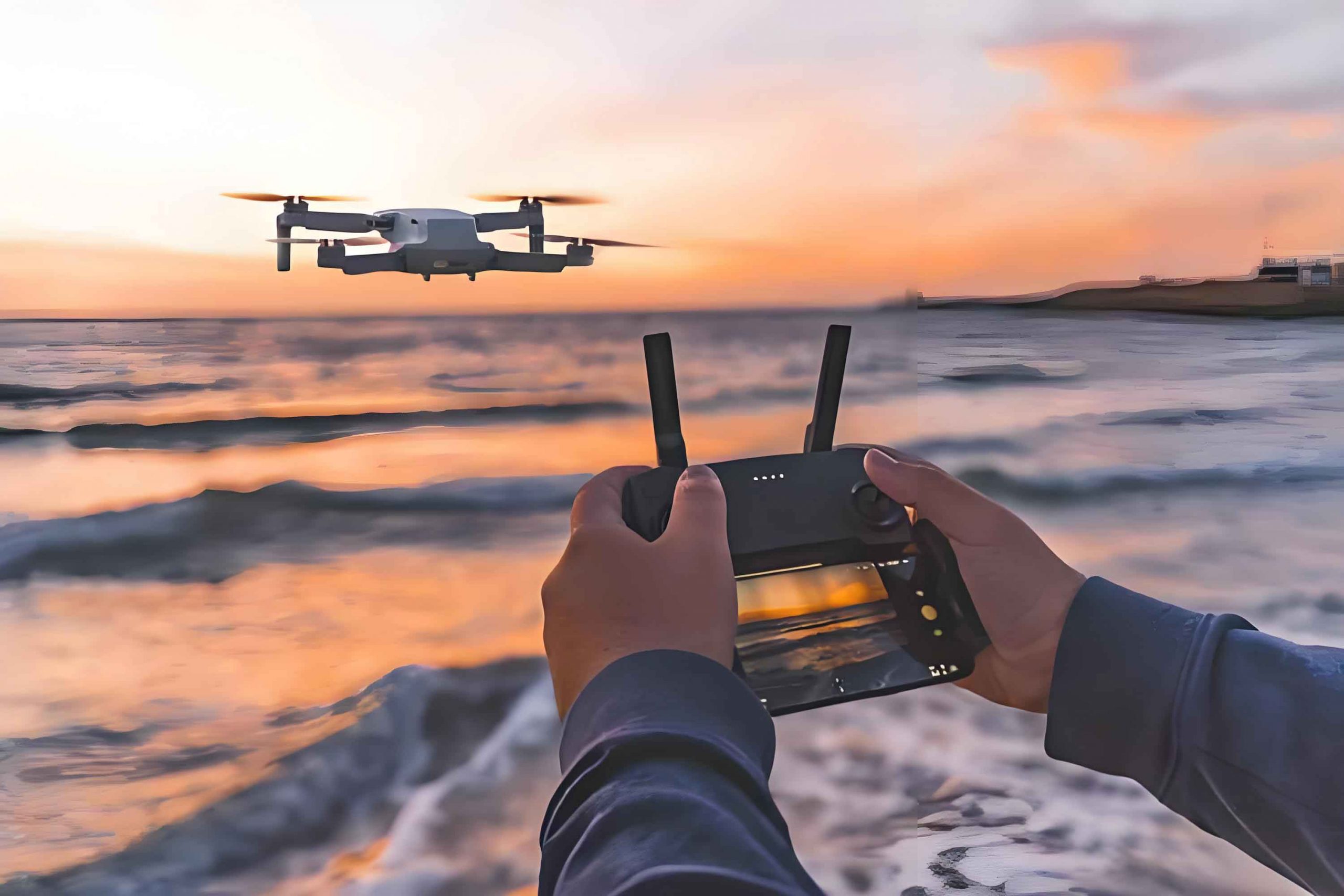
From Orchard to Doorstep: The Proliferation of Applied Scenarios
The proof of this transformation is visible on the ground—and in the air. In Gaozhou’s Pingshan Town, a core production area for sugar honey lychees, the challenge was existential for farmers. Their orchards, scattered across islands, required arduous early-morning boat trips to transport the delicate fruit, leading to high spoilage rates. The introduction of China drone transport services, though carrying smaller loads per trip, has been a game-changer. It enables “pick-and-send” immediacy, drastically reducing spoilage and maximizing freshness, a critical factor for premium fruit markets. The model has generated significant interest among growers, showcasing how the China drone industry directly addresses agricultural logistics pain points.
The logistics sector is undergoing a parallel transformation. In Chongqing’s Banan District, JD Logistics recently inaugurated four regular drone delivery routes from its Asia No. 1 smart warehouse to local delivery stations. The longest route spans 16.8 kilometers, with drones carrying parcels of up to 15 kilograms. This system is not for bulk transport but is strategically deployed for high-value, urgent, and small packages, slashing single-trip delivery times to under ten minutes and reducing overall transport duration by nearly 70%. This represents a strategic evolution of the China drone logistics model, focusing on efficiency and speed for specific, high-value segments.
Simultaneously, the integration of drones into urban life and tourism is accelerating. In Beijing’s Yanqing District, a collaboration between the Badaling General Aviation Airport and Meituan has resulted in the city’s first regular drone delivery route for takeaway food, effectively granting visitors “takeout freedom” even on the Great Wall. Beyond food delivery, Yanqing is pioneering the “low-altitude + tourism” model. Drones are now commonplace for scenic area inspection, aerial shows, and performance displays at sites like the Beijing World Garden International Tourism Resort and the Badaling Great Wall, enhancing both management efficiency and the visitor experience. In 2024, low-altitude tourism activities, including aerial tours and skydiving, attracted 17,000 tourists in Yanqing, establishing itself as a vibrant new service consumption hotspot.
This proliferation of use cases underscores the nature of the low-altitude economy as a strategic emerging industry: tech-intensive, innovative, and characterized by a long industrial chain and complex application scenarios. The continuous emergence and scaling of these scenarios, from small-scale pilots to widespread deployment, marks a critical phase of technological commercialization, directly empowering consumers and businesses.
Digging Deeper: The Hard Work of Perfecting Each Scenario
Despite the exciting momentum, industry leaders caution that the path to mature, deeply integrated applications is complex and requires sustained effort. “Scenario is the fundamental element for drone development. Everyone talks about developing scenarios, but to deeply cultivate within a scenario and truly solve its pain points and difficulties is extremely challenging,” remarked Fan Bangkui, an academician of the Chinese Academy of Engineering and vice president of the Chinese Institute of Electronics, at a recent industry conference. He urged governments to adopt a long-term perspective, avoiding a rush for quick wins. “Drones can do many things, but thoroughly researching each application scenario is a long-term task.”
He illustrated this challenge with the example of drone-enabled precision fertilization in agriculture. While it is widely accepted that drones equipped with multispectral or hyperspectral sensors can collect field data, and AI can theoretically deduce nutrient levels for precise fertilizer application, the practical execution is fraught with difficulties. “Data collection is influenced by local climate, weather conditions, and light intensity throughout the day,” Fan explained. “To perfect this scenario requires extensive analysis and practice to determine the most suitable flight angles, speeds, altitudes, and spraying rates. It needs both unified standards and the flexibility to adapt to specific conditions.”
This meticulous, scenario-specific refinement is the unglamorous but essential work happening behind the scenes of the China drone revolution. It involves a continuous cycle of testing, data collection, and algorithm optimization to ensure that drone technology delivers reliable and economically viable results.
Broadening the Horizon: New Frontiers for Low-Altitude Technology
While perfecting existing applications, the search is on for entirely new domains where low-altitude technology can rebuild industry ecosystems. A significant step in this direction was the recent release of the “Low-Altitude Technology Industry Innovation Scenario List” by the Beijing Institute of Technology and the Chinese Institute of Electronics. This comprehensive list outlines fourteen major potential application areas, including intelligent low-altitude applications in industrial settings, low-altitude tourism, and emergency rescue at ski resorts, highlighting the vast potential for deeper integration into production, daily life, and public services.
Echoing this top-down approach to fostering innovation, the Jiangsu Provincial Development and Reform Commission publicly called for proposals for low-altitude economic application scenarios. It sought “capability lists” from enterprises, institutions, and universities, and “opportunity lists” from government departments and state-owned enterprises, focusing on areas like urban and rural governance, emergency response, production operations, and cultural tourism. This initiative not only provides a platform for promoting viable China drone applications but also uses real-world problems from various industries as a foundation for cultivating new, sustainable business models within the low-altitude economy.
This aligns with the vision articulated by Academician Fan Bangkui: “The technological application of the low-altitude economy must break through the single attribute of transportation and deeply integrate with industries like urban governance, emergency response, and geographic mapping to form a three-dimensional network of comprehensive low-altitude services.” The goal is a ubiquitous, multi-role China drone ecosystem.
Building the Foundation: The Ecosystem Takes Shape
The sustainable growth of this ambitious economy hinges on a robust supporting ecosystem. Concurrent with application development, a full-chain industrial ecosystem—encompassing aircraft R&D and manufacturing, flight operation services, and critical low-altitude infrastructure—is being rapidly assembled.
Industry consensus holds that low-altitude intelligent network infrastructure, often termed the “low-altitude,” is the bedrock for safe and scalable development. “To develop the low-altitude economy, we must intensify efforts to build a new smart low-altitude infrastructure featuring ‘Jiang Tian Jiang’ (landing fields), ‘Zhu Tian Wang’ (sky networks), and ‘Zao Tian Che’ (sky vehicles),” stated Xiang Jinwu, another Chinese Academy of Engineering academician and professor at Beihang University.
Safety, particularly during the critical takeoff and landing phases, is a primary concern. A representative from Weihai Guangtai noted that 60-80% of drone system incidents occur during these stages. Addressing this, the company is developing intelligent, intensive, and digitalized low-altitude traffic ground system solutions, drawing on civil aviation protocols but adapted for the unique characteristics of the low-altitude economy. This includes researching lightweight, miniaturized ground support equipment compatible with small drones and electric Vertical Take-Off and Landing (eVTOL) aircraft.
Infrastructure innovation is also focusing on flexibility. At a recent low-altitude economy ecosystem conference, Shengxiang Aviation unveiled its “Mobile Airport 2.0” product and a “Hundred Cities, Thousand Pads” plan. This vehicle-mobile landing pad effectively solves the problem of site constraints associated with traditional fixed pads and is suitable for eVTOL aircraft weighing under 6.5 tons. This technology promises to enable the rapid deployment of a dense low-altitude infrastructure network, a crucial enabler for the sector’s growth.
Professor Xiang Jinwu also emphasized the critical importance of coordinated airspace management. “Currently, different departments and provinces are not fully coordinated,” he noted. “Low-altitude flight involves many departments like airspace management and quality supervision, and requires connectivity between the ‘sky roads’ and ‘sky networks’ of different provinces. Therefore, to avoid detours, we need a unified guiding department to establish low-altitude airspace management standards.” This call for standardization and national-level coordination is seen as vital to prevent a fragmented, inefficient development path for the entire China drone and low-altitude industry.
As these foundational elements fall into place—the maturing applications, the relentless focus on solving specific scenario challenges, the exploration of new frontiers, and the construction of a physical and regulatory ecosystem—the China drone economy is positioning itself not merely as a technological marvel, but as an indispensable component of the nation’s future economic and social infrastructure. The journey beyond a singular transport identity is well underway, promising a more efficient, connected, and innovative future, powered from above.