
In my research, I address the challenging problem of task offloading and resource scheduling in UAV-assisted mobile edge computing systems where both terminal devices and edge devices are mobile. Traditional fixed monitoring systems suffer from limited coverage, severe terrain interference, and rigid resource scheduling, which cannot satisfy the real-time and reliability requirements of emergency scenarios such as forest fire monitoring. UAV drones have become key carriers for disaster monitoring due to their mobility and flexibility. However, existing studies mostly focus on static or single-device mobile scenarios, ignoring the collaborative mobility of terminal devices and edge devices, dynamic communication links, and real-time constraints such as safe distances between UAV drones and upper limits of computing resources. Moreover, most works optimize only a single metric, such as delay or energy consumption, neglecting the joint optimization of task completion time, energy efficiency, and load balancing.
To overcome these challenges, I propose UAV-assisted edge computing based on mobile terminals and edges, focusing on task offloading and resource scheduling optimization in forest fire monitoring scenarios. My work includes two main parts. First, I establish an edge computing model based on parallel-moving UAV drones and circular-moving mobile terminals, and I use a genetic algorithm to realize the computation offloading strategy. Second, I build an edge computing model based on multiple motion modes of UAV drones and mobile terminals, and I optimize the motion modes of UAV drones and the movement strategies of mobile terminals.
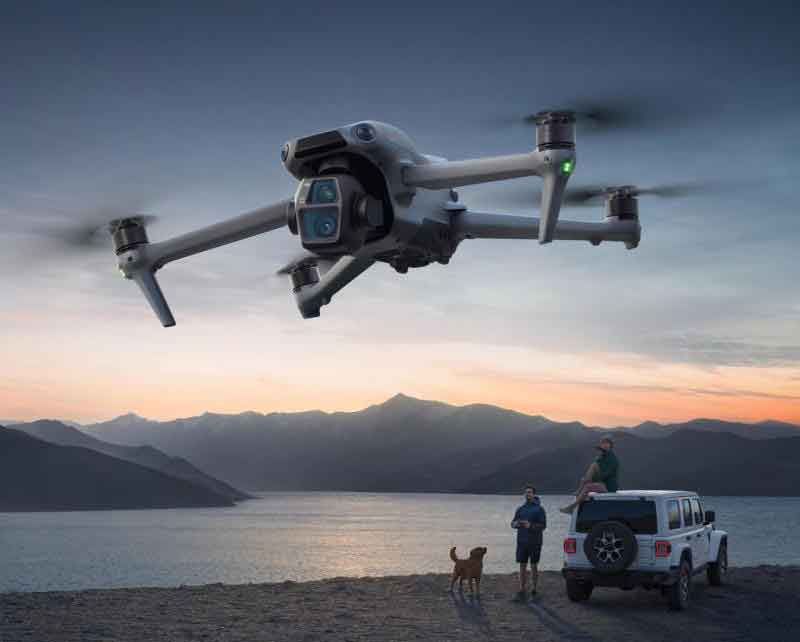
UAV drones are highly suitable for dynamic and complex environments because they can be rapidly deployed, flexibly programmed, and easily scaled. They can carry various payloads such as cameras, small base stations, and embedded computing modules to perform sensing, communication, and computation tasks. The high altitude of UAV drones enables line-of-sight communication links with ground devices, reducing signal blockage and shadowing. Therefore, UAV drones can serve as wireless relays or aerial base stations to improve connectivity and extend coverage for ground wireless devices. In my system, UAV drones act as edge devices that provide computation offloading services to mobile terminals.
I consider a mobile edge computing system composed of a set of mobile terminals denoted by \(\mathcal{M}=\{1,2,\dots,M\}\) and a set of UAV drones denoted by \(\mathcal{U}=\{1,2,\dots,U\}\). The system operates over \(T\) time periods, and the set of time periods is \(\mathcal{T}=\{1,2,\dots,T\}\). In each time period, each mobile terminal generates a computation task that must be offloaded to a UAV drone. The UAV drones move according to predefined trajectories and hover at the beginning of each time period to serve the mobile terminals. Table 1 summarizes the key parameters used in my model.
| Parameter | Meaning |
|---|---|
| \(M\) | Set of mobile terminals |
| \(U\) | Set of UAV drones |
| \(T\) | Set of time periods |
| \(\Delta\theta\) | Angular increment of mobile terminal circular motion |
| \(t_u\) | Flight time of a UAV drone |
| \(r_u\) | Coverage radius of a UAV drone |
| \(q_u(t)\) | Horizontal coordinate of UAV drone \(u\) |
| \(p_u(t)\) | Propulsion power of UAV drone \(u\) |
| \(E_u^{fly}(t)\) | Propulsion energy consumption of UAV drone \(u\) |
| \(L_m(t)\) | Data size of computation task |
| \(C_m\) | CPU cycles required for computation task |
| \(f_{m,u}(t)\) | Computing resource allocated by UAV drone to mobile terminal |
| \(z_{m,u}(t)\) | Binary variable indicating whether mobile terminal \(m\) connects to UAV drone \(u\) |
| \(d_{m,u}(t)\) | Distance between mobile terminal and UAV drone |
| \(g_{m,u}(t)\) | Wireless channel power gain |
| \(r_{m,u}(t)\) | Offloading rate from mobile terminal to UAV drone |
| \(D_{m,u}^{comm}(t)\) | Transmission time for offloading |
| \(E_{m,u}^{comm}(t)\) | Communication energy consumption for offloading |
| \(D_{m,u}^{comp}(t)\) | Computation time on UAV drone |
| \(D_{u,m}^{down}(t)\) | Transmission time for result downlink |
| \(D_{u,m}^{wait}(t)\) | Waiting time for reconnection |
| \(E_{u,m}^{down}(t)\) | Energy consumption for result downlink |
| \(D_{m,i}(t)\) | Completion time of task \(i\) on mobile terminal \(m\) |
| \(D_m(t)\) | Total completion time of all tasks on mobile terminal \(m\) |
| \(D_{total}(t)\) | Total completion time of all mobile terminals |
| \(E_{total}(t)\) | Total energy consumption of the system |
The mobile terminals move in circular paths within a rectangular monitoring area. The lower-left corner of the area is \((x_{\min}, y_{\min})\), and the upper-right corner is \((x_{\max}, y_{\max})\). Each mobile terminal \(m\) has an initial position generated randomly:
$$x_m^{center} = x_{\min} + \text{rand}() \cdot (x_{\max} – x_{\min})$$
$$y_m^{center} = y_{\min} + \text{rand}() \cdot (y_{\max} – y_{\min})$$
The angular increment for each step is:
$$\Delta\theta = \frac{2\pi}{\text{movesteps}}$$
At each time period \(t\), the new position of mobile terminal \(m\) is computed as:
$$x_m^{next} = x_m^{center} + r \cos(\theta_{current})$$
$$y_m^{next} = y_m^{center} + r \sin(\theta_{current})$$
where \(r\) is the radius of the circular motion, and \(\theta_{current}\) is the current angle. The angle is updated as \(\theta_{current} = \theta_{current} + \Delta\theta\).
For UAV drones, I consider translational motion in the first model. The horizontal coordinate of UAV drone \(u\) at time \(t\) is \(q_u(t) = (x_u(t), y_u(t))\). The position update follows:
$$x_u(t) = x_u(t-1) + v_u t_u \cos(\alpha_u(t))$$
$$y_u(t) = y_u(t-1) + v_u t_u \sin(\alpha_u(t))$$
where \(v_u\) is the flight speed, \(t_u\) is the flight time, and \(\alpha_u(t)\) is the flight angle. The propulsion energy consumption of UAV drone \(u\) in time period \(t\) is:
$$E_u^{fly}(t) = p_u(t) t_u$$
The communication distance between mobile terminal \(m\) and UAV drone \(u\) is:
$$d_{m,u}(t) = \sqrt{H^2 + \|S_m(t) – q_u(t)\|^2}$$
where \(H\) is the flight altitude, and \(S_m(t)\) is the position of mobile terminal \(m\). The wireless channel power gain is:
$$g_{m,u}(t) = \beta d_{m,u}^{-\alpha}(t)$$
where \(\beta\) is the channel power gain at a reference distance of 1 meter, and \(\alpha\) is the path loss exponent. The offloading rate from mobile terminal \(m\) to UAV drone \(u\) is:
$$r_{m,u}(t) = \frac{B_M}{M} \log_2\left(1 + \frac{P_M g_{m,u}(t)}{\sigma^2}\right)$$
where \(B_M\) is the total bandwidth, \(P_M\) is the transmit power of the mobile terminal, and \(\sigma^2\) is the noise power. The transmission time for offloading is:
$$D_{m,u}^{comm}(t) = \frac{z_{m,u}(t) L_m(t)}{r_{m,u}(t)}$$
and the corresponding communication energy consumption is:
$$E_{m,u}^{comm}(t) = D_{m,u}^{comm}(t) P_M$$
After the task is computed, the UAV drone sends the result back to the mobile terminal. The downlink transmission time is:
$$D_{u,m}^{down}(t) = \frac{D_{m,i}^{result}(t)}{r_{u,m}(t)}$$
where \(r_{u,m}(t)\) is the downlink rate:
$$r_{u,m}(t) = \frac{B_U}{M} \log_2\left(1 + \frac{P_U g_{m,u}(t)}{\sigma^2}\right)$$
The downlink energy consumption is:
$$E_{u,m}^{down}(t) = D_{u,m}^{down}(t) P_U$$
If the UAV drone has moved out of the coverage range, the mobile terminal must wait for the UAV drone to return. The waiting time is approximated as:
$$D_{u,m}^{wait}(t) = \frac{2 d_{toboundary}}{v_u}$$
where \(d_{toboundary}\) is the distance from the current position of the UAV drone to the boundary.
The computation time on UAV drone \(u\) for task offloaded by mobile terminal \(m\) is:
$$D_{m,u}^{comp}(t) = \frac{L_m(t) C_m z_{m,u}(t)}{f_{m,u}(t)}$$
where \(f_{m,u}(t)\) is the computing resource allocated by UAV drone \(u\) to mobile terminal \(m\). The total completion time of task \(i\) on mobile terminal \(m\) is:
$$D_{m,i}(t) = D_{m,i}^{gene}(t) + D_{m,u}^{comm}(t) + D_{m,u}^{comp}(t) + D_{u,m}^{down}(t) + D_{u,m}^{wait}(t)$$
The completion time of all tasks on mobile terminal \(m\) is:
$$D_m(t) = \max(D_{m,1}(t), D_{m,2}(t), \dots, D_{m,I}(t))$$
The total completion time of all mobile terminals is:
$$D_{total}(t) = \max(D_1(t), D_2(t), \dots, D_M(t))$$
The total energy consumption of the system is:
$$E_{total}(t) = \sum_{m=1}^{M} \sum_{u=1}^{U} \left( E_{m,u}^{comm}(t) + E_{u,m}^{down}(t) \right) + \sum_{u=1}^{U} E_u^{fly}(t)$$
The system total cost is defined as the weighted sum of total completion time and total energy consumption:
$$C_{total} = \omega_D D_{total}(t) + \omega_E E_{total}(t)$$
where \(\omega_D\) and \(\omega_E\) are weight coefficients. The optimization problem is formulated as:
$$\min C_{total} = \omega_D D_{total}(t) + \omega_E E_{total}(t)$$
subject to:
$$0 \leq \alpha_u(t) \leq 2\pi, \quad \forall u \in \mathcal{U}$$
$$\sum_{u=1}^{U} z_{m,u}(t) \leq 1, \quad \forall m \in \mathcal{M}, t \in \mathcal{T}$$
$$f_{m,u}(t) \geq 0, \quad \sum_{m \in \mathcal{M}} f_{m,u}(t) \leq f_u^{\max}$$
$$\|q_u(t) – q_{u’}(t)\| \geq d_{\min}, \quad \forall u, u’ \in \mathcal{U}, u \neq u’$$
To solve this problem, I design a genetic algorithm. The chromosome is a three-dimensional matrix of size \(\text{movesteps} \times M \times U\), where each element \(z_{m,u}(t)\) is a binary variable. The fitness function is:
$$Fitness = \omega_D D_{total}(t) + \omega_E E_{total}(t)$$
The algorithm uses roulette wheel selection, single-point crossover, and mutation. The detailed steps are given in Algorithm 1.
| Parameter | Value |
|---|---|
| Population size | 100 |
| Generations | 200 |
| Crossover rate | 0.8 |
| Mutation rate | 0.2 |
In the second part of my work, I extend the model to multiple motion modes. For UAV drones, I consider circular motion, zigzag motion, and translational motion. For mobile terminals, I consider circular motion and linear motion. The position of a UAV drone in circular motion is:
$$x_u^{uav}(t) = x_u^{center} + R_{uav} \cos(\omega_{uav} t + \phi_0)$$
$$y_u^{uav}(t) = y_u^{center} + R_{uav} \sin(\omega_{uav} t + \phi_0)$$
For zigzag motion, the position is:
$$x_u^{uav}(t) = x_0 + A \sin\left(\frac{2\pi}{T_{zigzag}} t\right)$$
$$y_u^{uav}(t) = y_0 + v_y t$$
For linear motion of mobile terminals, the position is:
$$x_m(t) = x_0 + v_m t \cos(\theta)$$
$$y_m(t) = y_0 + v_m t \sin(\theta)$$
I design a new fitness function that considers task completion time, energy consumption, and load balancing:
$$Fitness = \alpha \frac{\sum_{i=1}^{m} T_{completion,i}}{\max T_{completion,i}} + \beta \frac{\sum_{j=1}^{u} E_{uav,j}}{\max E_{uav,j}} + \gamma \frac{\sum_{k=1}^{u} |L_{uav,k} – \bar{L}|}{\max |L_{uav,k} – \bar{L}|}$$
where \(\alpha\), \(\beta\), and \(\gamma\) are weight coefficients, \(T_{completion,i}\) is the completion time of task \(i\), \(E_{uav,j}\) is the energy consumption of UAV drone \(j\), \(L_{uav,k}\) is the computing load of UAV drone \(k\), and \(\bar{L}\) is the average load. I use tournament selection, partial mapping crossover, and targeted mutation to optimize the task offloading and resource scheduling.
| Parameter | Value |
|---|---|
| Number of mobile terminals | 40 |
| Radius of circular motion | 20 m |
| Number of movement steps | 25 |
| Number of UAV drones | 10 |
| Coverage radius of UAV drone | 50 m |
| Number of iterations | 50 |
| Monitoring area | (0,0) to (100,100) m |
I perform 30 independent runs to verify the correctness of the algorithm. The average fitness value decreases as the generation increases, which proves the stability and global search capability of my genetic algorithm. Table 4 shows the best task allocation scheme for one complete experiment. Each row represents a mobile terminal, and each column represents a time period. The numbers in the table indicate the UAV drone index.
| Terminal | t0 | t1 | t2 | t3 | t4 | t5 | t6 | t7 | t8 | t9 |
|---|---|---|---|---|---|---|---|---|---|---|
| m0 | 0 | 2 | 4 | 1 | 1 | 4 | 1 | 0 | 0 | 0 |
| m1 | 4 | 4 | 4 | 0 | 2 | 2 | 4 | 0 | 2 | 3 |
| m2 | 3 | 0 | 2 | 3 | 2 | 2 | 1 | 0 | 1 | 3 |
| m3 | 4 | 2 | 0 | 1 | 1 | 3 | 0 | 0 | 3 | 4 |
| m4 | 2 | 0 | 2 | 0 | 4 | 3 | 1 | 4 | 3 | 3 |
| m5 | 0 | 3 | 0 | 0 | 1 | 1 | 1 | 2 | 0 | 0 |
| m6 | 2 | 1 | 2 | 4 | 0 | 2 | 3 | 4 | 1 | 3 |
| m7 | 1 | 0 | 1 | 3 | 3 | 3 | 4 | 1 | 3 | 0 |
| m8 | 2 | 0 | 4 | 4 | 1 | 4 | 2 | 0 | 3 | 4 |
| m9 | 4 | 4 | 2 | 1 | 3 | 1 | 1 | 4 | 0 | 2 |
I also analyze the sensitivity of the model to key parameters. Table 5 shows the impact of the number of mobile terminals on computation time, energy consumption, and total cost. As the number of mobile terminals increases, the total cost increases significantly. Table 6 shows the impact of the number of UAV drones. Increasing the number of UAV drones reduces the total cost, but the marginal benefit decreases.
| Number of terminals | Completion time (s) | Energy consumption (J) | Total cost |
|---|---|---|---|
| 5 | 420.04 | 5073.14 | 88.54 |
| 10 | 904.67 | 17284.04 | 254.26 |
| 15 | 1388.38 | 36515.03 | 490.10 |
| 20 | 2159.38 | 90315.16 | 1097.50 |
| 25 | 2506.48 | 132105.02 | 1546.63 |
| 30 | 3265.32 | 192538.55 | 2219.26 |
| 35 | 3685.97 | 244449.52 | 2776.23 |
| 40 | 4300.01 | 325141.12 | 3638.41 |
| Number of UAV drones | Completion time (s) | Energy consumption (J) | Total cost |
|---|---|---|---|
| 5 | 2084.77 | 87516.72 | 1062.80 |
| 10 | 2117.40 | 75733.32 | 947.90 |
| 15 | 2022.08 | 59199.87 | 773.99 |
| 20 | 1970.17 | 39966.09 | 576.98 |
| 25 | 1927.46 | 35673.98 | 530.21 |
I compare my genetic algorithm with the traditional strongest signal scheme. The traditional scheme is a greedy strategy that only considers signal strength and ignores global load balancing. Table 7 shows the comparison results. When the number of mobile terminals is small, the traditional scheme may have lower cost. However, as the number of mobile terminals increases, the cost of the traditional scheme increases dramatically due to uneven task allocation and overloaded UAV drones. In contrast, my genetic algorithm achieves global optimization and maintains balanced task allocation.
| Number of terminals | Cost of genetic algorithm | Cost of strongest signal scheme |
|---|---|---|
| 5 | 48 | 3607 |
| 10 | 2608 | 10013 |
| 15 | 23120 | 16489 |
| 20 | 21163 | 22751 |
| 25 | 47921 | 37188 |
| 30 | 59959 | 36046 |
| 35 | 58480 | 44805 |
| 40 | 65972 | 53862 |
| 45 | 95664 | 65391 |
| 50 | 104690 | 68646 |
In the multi-motion mode model, I evaluate six motion mode combinations. Table 8 shows the total cost comparison for different combinations. The combination of zigzag motion for UAV drones and circular motion for mobile terminals achieves the lowest total cost. The linear motion of UAV drones results in the highest total cost because fixed paths cannot adapt to dynamic terminal positions, leading to signal blind zones and load imbalance.
| Combination | Total cost (20 terminals) | Total cost (50 terminals) |
|---|---|---|
| UAV zigzag + terminal circular | 32 | 105 |
| UAV zigzag + terminal linear | 45 | 130 |
| UAV circular + terminal circular | 38 | 120 |
| UAV circular + terminal linear | 52 | 145 |
| UAV linear + terminal circular | 480 | 2700 |
| UAV linear + terminal linear | 520 | 2900 |
My experimental results demonstrate that the proposed optimization strategies effectively reduce the average task execution delay, improve computational efficiency, and reduce total system energy consumption in forest fire monitoring scenarios. The system can dynamically adapt to environmental changes in complex scenarios. The research outcomes provide new ideas for the application of UAV drones in disaster monitoring, emergency communication, and other disaster scenarios, and also provide theoretical support for subsequent research on intelligent optimization methods.
For future work, I plan to introduce more accurate environmental perception models that consider geographic information and signal propagation characteristics. I will also combine genetic algorithms with other heuristic algorithms to reduce computational complexity and improve convergence speed. Moreover, I will validate the universality of my models in more complex and diverse real-world scenarios, such as smart logistics in urban environments and emergency communication in remote areas.
In conclusion, my research contributes to the field of UAV-assisted mobile edge computing by addressing the collaborative mobility of terminal devices and edge devices. The proposed models and algorithms provide efficient and economical solutions for dynamic complex environments, especially for forest fire monitoring, post-disaster search and rescue, and wartime reconnaissance. The extensive use of UAV drones in these scenarios can significantly enhance the real-time performance and reliability of the monitoring systems.