
In recent years, the rapid evolution of information and communication technologies, flight control systems, and intelligent navigation has dramatically accelerated the deployment of UAV drones across civilian and military domains. These UAV drones are now widely used for traffic patrol, forest fire monitoring, aerial mapping, and even combat operations. However, the proliferation of UAV drones has also introduced serious security concerns. Malicious actors may operate UAV drones in restricted airspace, invade personal privacy, smuggle contraband, or conduct surveillance and attacks against critical infrastructure such as military bases, nuclear power plants, and airports. Consequently, the rapid and accurate detection of small UAV drones in complex environments has become a pressing research priority for governments and security agencies worldwide.
Traditional UAV drone detection techniques primarily rely on radar, acoustic sensors, and radio frequency spectrum analysis. Each of these modalities suffers from inherent limitations. Radar detection depends on micro-Doppler signatures, but UAV drones typically exhibit low-altitude, slow-speed, and small-size characteristics, resulting in weak Doppler effects that are difficult to detect. Acoustic detection captures specific frequency signatures emitted by UAV drones during flight, yet sound waves attenuate rapidly with distance, limiting detection range and making the system vulnerable to environmental noise. Radio frequency detection uses high-sensitivity receivers to scan and capture communication signals between UAV drones and their ground control stations, employing direction-finding to localize both the UAV drone and its operator. As a passive technique, however, its recognition capability is highly dependent on pre-built spectrum databases, leaving it unable to cover silent UAV drones or those using unknown control protocols or out-of-band frequencies.
Although computer vision itself faces challenges such as sensitivity to illumination and weather conditions, as well as difficulty distinguishing small targets in cluttered backgrounds, its core advantages fundamentally circumvent the bottlenecks of traditional methods. Computer vision does not rely on electromagnetic or acoustic emissions from the target; instead, it analyzes visual appearance and motion characteristics to detect and recognize UAV drones. This enables effective handling of radio-silent and low-slow-small targets. Moreover, computer vision provides rich information beyond mere detection, including UAV drone model classification, flight trajectory tracking, and behavioral intent analysis, which are essential for threat assessment. By fusing information with other sensors such as infrared and radar, computer vision is becoming a central component of all-weather, high-reliability UAV drone surveillance systems.
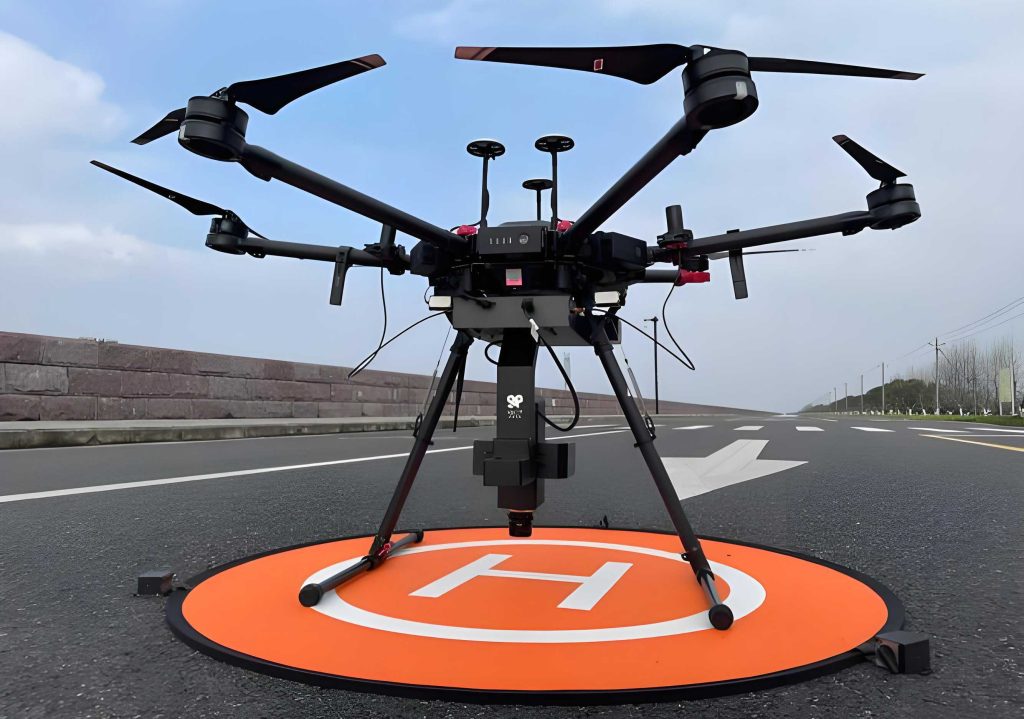
Despite these advantages, mainstream small object detection methods—such as multi-scale feature fusion, super-resolution enhancement, and attention mechanisms—are primarily designed for generic scenes. When directly transferred to UAV drone detection, they struggle to cope with extreme scale variations, severe motion blur, and complex aerial backgrounds. To address these issues, researchers have proposed numerous improvements. In feature extraction and representation, constructing multi-scale feature extraction capabilities adapted to small targets is a core optimization direction. Some works employ Res2Net to extract multi-receptive-field features and propose hybrid feature pyramid structures. Others deploy SPD-Conv modules in both backbone and neck networks to reduce information loss during downsampling and improve detection accuracy for UAV drone imagery. Further studies confirm that fine-grained information loss during feature downsampling and transmission is a key bottleneck limiting the representation capability for small UAV drones. Simply increasing backbone depth without a complementary information flow enhancement mechanism cannot fully unlock architectural potential. These works demonstrate that improving feature extraction architectures to enhance representation of UAV drone targets is an effective path. However, existing methods still insufficiently exploit information flow during feature integration, and the model’s ability to learn deep semantic features of UAV drone images remains limited.
In multi-scale feature fusion, researchers have proposed many structural improvements. Some models integrate residual attention modules with lightweight downsampling structures to compress parameters while strengthening multi-scale feature expression. Others use attention-guided upsampling and downsampling to reduce feature transmission loss, combined with parallel dilated convolutions to capture multi-scale context, thereby improving perception of distant UAV drones. Heterogeneous selective feature pyramids and cross-enhancement fusion modules have been introduced to alleviate semantic bias across hierarchical features. International UAV drone detection challenge winning solutions also confirm that multi-scale patch processing can effectively improve recall for extremely small distant targets. These studies have advanced multi-scale processing, but for UAV drones with drastic scale changes and diverse motion patterns, existing methods still lack sufficient semantic correlation and integration efficiency across hierarchical features.
In detection head design, optimizing branch structures and improving task adaptability is an important breakthrough for UAV drone detection accuracy. Some works introduce lightweight multi-scale feature aggregation into the detection head to enhance small target feature expression. Others propose shared-weight detail-enhanced detection heads for infrared UAV drone scenarios, improving boundary regression accuracy through detail-aware convolutions. These efforts have advanced detection head performance from different angles, but most detection heads still adopt relatively independent classification and localization branches, failing to fully resolve spatial misalignment between the two tasks and limiting further accuracy improvements.
In loss function optimization, constructing bounding box regression losses adapted to small targets is a key lever for improving detection accuracy. Some researchers propose DGW-IoU, which increases sensitivity of bounding box regression to the central region of small targets, effectively improving adaptability and reducing missed detections. Focal-EIoU loss has been proposed specifically for aerial small target scenarios, optimizing gradient allocation and confirming that mainstream IoU loss systems still have room for improvement in extremely small UAV drone scenarios. Overall, however, existing improved loss functions still suffer from slow convergence and insufficient adaptability to irregular shapes such as elongated targets in UAV drone detection, increasing training cost and optimization difficulty.
In summary, although substantial research has been conducted in UAV drone detection, existing solutions still have room for improvement in multi-module collaborative adaptation, cross-scale feature information integration, and inter-task feature interaction. To address these gaps, we propose UAV-Net, a detection network that performs collaborative optimization. Our key contributions are as follows: First, we design an Edge Aware Convolution (EAC) module that optimizes feature extraction and information integration, enhancing the model’s ability to learn image feature representations. Second, we optimize and reconstruct a Multi-scale Feature Focusing (MFF) network, whose innovative architecture improves multi-level feature extraction, strengthens semantic correlation across feature expression levels, and significantly enhances cross-scale feature integration. Third, we design a Dynamic Task Decomposition and Alignment (DTDA) detection head that resolves spatial misalignment between classification and localization tasks through a bidirectional parallel task alignment path, strengthening feature interaction between the two tasks. Finally, we replace the CIoU loss with a GIoU loss function to improve bounding box regression for UAV drones with variable flight attitudes and small sizes.
The YOLO11 model, released in September 2024, is a representative single-stage detector supporting object detection, instance segmentation, and pose estimation. It achieves a better balance among detection speed, accuracy, and model size. YOLO11 comes in five versions (n, s, m, l, x) with increasing complexity. Considering the limited computing power of edge devices, we select the lightest YOLO11n for improvement and name the improved model UAV-Net. The overall network architecture integrates EAC modules in the backbone, an MFF network in the neck, DTDA detection heads, and GIoU loss.
The EAC module addresses the limitation that standard convolutions in YOLO11’s C3k2 module lack explicit modeling of UAV drone contour information. Distant UAV drones often occupy only a few pixels, with limited internal texture and semantic information. The rigid structures of their fuselage, arms, and rotors form contour features that are often the primary basis for distinguishing targets from sky, clouds, and birds. Related studies show that after continuous convolution and downsampling, edge details of small targets gradually attenuate, affecting feature expression and bounding box localization accuracy. In UAV drone detection, strengthening target morphology and edge information modeling can effectively improve target identification in complex backgrounds. To address this, we combine a SobelConv branch for extracting edge gradient information with a Conv branch for extracting spatial structure information, designing the EAC module.
The EAC module has three main characteristics. First, edge response enhancement: standard convolutions effectively extract texture and semantic features but their perception of edge gradients mainly relies on data-driven learning. When targets are small or background interference is strong, contour response may be insufficient. Therefore, EAC introduces a SobelConv branch built on the Sobel operator to extract horizontal and vertical gradient information separately, then combines them via element-wise addition to form comprehensive edge features. This branch explicitly perceives local pixel intensity changes, strengthening contour responses of UAV drone fuselage, arms, and rotors, providing clearer boundary information for subsequent localization. Second, spatial structure preservation: edge information helps precisely locate target boundaries, but relying solely on gradient features may cause loss of internal texture and spatial relationships. Thus, EAC retains a standard Conv branch to extract texture details, corner distributions, and internal structural information using local receptive fields and parameter sharing. This branch compensates for the SobelConv branch’s deficiency in semantic expression. Third, heterogeneous complementary fusion: EAC concatenates edge features from the SobelConv branch and spatial structure features from the Conv branch along the channel dimension, then performs cross-channel information interaction and feature compression through a first 1×1 convolution. Compared to direct addition, channel concatenation more completely preserves heterogeneous features, allowing the network to adaptively learn the importance of different feature channels. Subsequently, the fused feature is added to the original input feature via a residual connection, and a second 1×1 convolution completes output mapping. The residual connection provides a direct transmission path for original information, reducing information loss during fusion and helping suppress background texture and irrelevant edges.
Specifically, the input feature map first enters two parallel feature extraction paths: the SobelConv branch extracts horizontal and vertical edge gradients, fusing them into comprehensive edge features; the Conv branch extracts local texture and spatial structure features through standard convolution. Then, the two types of features are concatenated along the channel dimension and passed through a 1×1 convolution for heterogeneous feature interaction and channel integration. The fusion result is added to the input feature via residual connection, and a final 1×1 convolution produces the output. Since EAC is embedded at different scale stages of the backbone, it continuously strengthens target contour information in different levels of features, providing more discriminative base features for subsequent multi-scale feature fusion and bounding box localization.
Mathematically, let the input feature map be \(F_{in}\). The SobelConv branch computes horizontal and vertical gradients:
$$G_x = S_x * F_{in}, \quad G_y = S_y * F_{in}$$
where \(S_x\) and \(S_y\) are Sobel kernels. The comprehensive edge feature is:
$$F_{edge} = G_x + G_y$$
The Conv branch produces spatial structure features:
$$F_{spatial} = Conv(F_{in})$$
The concatenated feature is:
$$F_{cat} = Concat(F_{edge}, F_{spatial})$$
After a 1×1 convolution for channel interaction:
$$F_{fuse} = Conv_{1\times1}(F_{cat})$$
The final output with residual connection is:
$$F_{out} = Conv_{1\times1}(F_{fuse} + F_{in})$$
Compared to methods requiring separate edge detection branches, EAC does not need additional edge annotations or loss functions. It can be directly embedded into C3k2 modules and trained end-to-end with the entire detection network. The module combines edge information with spatial structure features, enhancing the model’s ability to recognize UAV drone contours and overall structures while controlling parameter count and computational cost.
For small UAV drones, the number of pixels in the image is limited. Shallow features contain rich position, edge, and texture information, while deep features have stronger semantic expression. Therefore, fully fusing features from different levels is key to improving small UAV drone detection performance. Traditional Feature Pyramid Networks (FPN) mainly transfer deep semantic information to shallow layers through top-down paths, while Path Aggregation Networks (PAN) add bottom-up information transfer paths, improving utilization of localization information. However, such networks typically use adjacent-layer progressive fusion, requiring multiple convolutions and size transformations for non-adjacent layers to interact, causing gradual attenuation of small target details. Moreover, semantic differences between different levels make simple concatenation or addition insufficient to fully exploit complementary features. Gold-YOLO research shows that although FPN and PAN improve multi-scale feature fusion, insufficient cross-layer information interaction remains. Related UAV drone detection studies also show that strengthening bidirectional transfer between shallow spatial details and deep semantic information helps improve small target feature expression and reduce missed detections. Based on this, we reconstruct the neck network of YOLO11 and propose the Multi-scale Feature Focusing (MFF) network to shorten cross-layer feature transmission paths and enhance interaction between different scales.
Specifically, the MFF network uses the intermediate scale \(P_4\) as the feature interaction center, constructing a “multi-scale focusing—bidirectional diffusion—re-focusing” feature transmission pattern. First, the backbone outputs \(P_3\), \(P_4\), and \(P_5\) are simultaneously input into the FocusFeature module, where the three scales are unified to the \(P_4\) resolution for fusion, allowing direct interaction between spatial details in high-resolution features and high-level semantic information in low-resolution features. Then, the fused feature is transmitted upward and downward to \(P_3\) and \(P_5\) through upsampling and downsampling, respectively, and concatenated with corresponding backbone features for refinement, forming a semantic deepening path and a detail supplementation path. On this basis, the network again uses the FocusFeature module for cross-scale aggregation and redistributes the enhanced features to each output layer. Compared to adjacent-layer progressive transmission, this structure shortens information transmission paths between different scales and reduces loss of small target details during transmission.
The main improvement of MFF is performing two multi-scale aggregations centered on \(P_4\) and achieving continuous interaction between detail information and semantic information through symmetric bidirectional paths, thereby improving detection capability for distant and scale-varying UAV drones.
YOLO11 mainly achieves multi-scale information fusion through feature map scale transformation and channel concatenation. Although concatenation can aggregate features from different levels, it only combines along the channel dimension without further interaction and screening of fused features, making it difficult to fully exploit the complementary roles of shallow spatial details and deep semantic information. Especially for distant small UAV drones, target features are weak, and edge, texture, and position information easily attenuate during continuous downsampling and feature transmission. To address this, we design the FocusFeature module to perform targeted alignment and multi-receptive-field enhancement on different scale features.
First, according to the characteristics of different level features, the backbone outputs \(P_3\), \(P_4\), and \(P_5\) are unified to the \(P_4\) scale. The high-resolution feature \(P_3\) contains abundant edge, texture, and position information and is downsampled through an ADown module. The intermediate scale feature \(P_4\) adjusts channel number through a 1×1 convolution. The deep feature \(P_5\) contains strong semantic information and is upsampled via nearest-neighbor interpolation to increase spatial resolution, followed by a 1×1 convolution for channel mapping. Then, the aligned three-scale features are concatenated along the channel dimension to obtain the initial fused feature:
$$F_{fuse1} = Concat(ADown(P_3), Conv(P_4), Conv(Upsample(P_5)))$$
After scale alignment and feature concatenation, \(F_{fuse1}\) is input into four parallel depthwise convolutions. Smaller kernels focus on local texture and edge features, while larger kernels capture broader contextual information, forming multi-receptive-field feature expression from local to global. Each branch output is added to the original fused feature, and then pointwise convolution completes information interaction between channels:
$$F_{fuse2} = PWConv\left( \sum_{k \in \{5,7,9,11\}} DWConv_k(F_{fuse1}) + F_{fuse1} \right)$$
Depthwise convolution performs spatial feature extraction for each channel separately, reducing parameters and computation compared to standard large-kernel convolution while expanding receptive field. Pointwise convolution integrates information from different receptive fields and channels. Finally, the enhanced feature is added to the initial fused feature via a residual path to obtain the module output:
$$F_{out} = F_{fuse1} + F_{fuse2}$$
In summary, compared to fusion methods using only concatenation, FocusFeature not only unifies sizes of different level features but also further strengthens interaction between local features and contextual information through multi-scale depthwise convolution. The improvement focuses on combining hierarchical feature alignment, multi-receptive-field spatial modeling, and residual information preservation, improving the network’s representation ability for distant and scale-varying UAV drones without introducing complex attention computation.
Object detection is typically viewed as a multi-task learning problem of joint classification and localization optimization. Classification focuses on discriminative semantic regions inside the target, while localization relies more on target edges, corners, and overall geometric structure. Because the two tasks have different optimization objectives, their spatial positions and feature distributions often differ. Studies show that when one-stage detectors use relatively independent classification and regression branches, spatial inconsistency between classification confidence and localization accuracy may occur. Moreover, salient regions of the target are more favorable for classification, while boundary regions are more favorable for localization, so fully sharing the same spatial features for both tasks is not optimal. For small UAV drones, target features are sparse, and posture changes, tilted arms, and rotating rotors make these issues more prominent. To address this, we design the DTDA detection head, which improves utilization of small UAV drone features through shared feature extraction, dynamic task decomposition, and branch-specific alignment.
The detection head first extracts features at different depths through shared convolutional layers. Let the neck network output the \(i\)-th layer feature map as \(X_i\), and let \(H_1\) and \(H_2\) denote shared convolutional layers. The two convolution outputs are concatenated and fused via a 1×1 convolution to obtain the shared feature \(F_i\):
$$F_i = Conv_{1\times1}(Concat(H_1(X_i), H_2(X_i)))$$
Here, shallow convolution outputs contain more local details, while deep convolution outputs have stronger contextual expression. Fusing them provides relatively complete base features for classification and regression tasks. Shared convolution also reduces repeated feature extraction in the two branches, helping control detection head parameters.
Then, global average pooling \(P(\cdot)\) is used to obtain global description information of the shared feature, which serves as guidance for the TaskDecomposition module. The classification decomposer \(T_{cls}\) and regression decomposer \(T_{reg}\) dynamically select features relevant to their respective tasks based on current input, yielding classification features and regression features:
$$F_i^{cls} = T_{cls}(F_i, P(F_i))$$
$$F_i^{reg} = T_{reg}(F_i, P(F_i))$$
This process does not simply average the shared feature to the two branches; rather, it uses global information to dynamically adjust the contribution of different features, making the classification branch focus more on semantic discriminative information and the regression branch focus more on edge and position features, thereby alleviating mutual interference during feature learning.
In the regression branch, standard convolution uses a fixed regular sampling grid, which cannot fully adapt to irregular contours formed by UAV drone rotation, tilt, and posture changes. To address this, DTDA introduces Dynamic Deformable Convolution Version 2 (DyDCNv2) and a spatial offset generation mechanism. First, sampling offsets \(\Delta p_i\) and modulation masks \(m_i\) are generated from the shared feature \(F_i\) through an offset prediction convolution layer \(\Theta(\cdot)\). Then, these are used to dynamically adjust the sampling positions and response strengths of regression features:
$$F_i^{\mu reg} = DyDCNv2(F_i^{reg}, \Delta p_i, m_i)$$
$$[\Delta p_i, m_i] = \Theta(F_i)$$
By dynamically adjusting convolution sampling regions, the regression branch can better fit the fuselage, arms, and rotors of UAV drones, reducing localization errors caused by mismatch between fixed sampling grids and actual target contours, thereby improving the tightness and accuracy of predicted bounding boxes.
In the classification branch, DTDA designs a spatial attention screening mechanism. This mechanism first uses a 1×1 convolution to compress channels of the shared feature \(F_i\), then passes through ReLU activation and a 3×3 convolution to generate a single-channel spatial response map, which is converted to a spatial probability weight map \(G_i\) via a Sigmoid function:
$$G_i = \sigma(Conv_{3\times3}(ReLU(Conv_{1\times1}(F_i))))$$
Then, the spatial probability weight map is multiplied element-wise with the classification feature to achieve spatial recalibration of classification features:
$$F_i^{\mu cls} = F_i^{cls} \odot G_i$$
where \(\sigma\) is the Sigmoid activation function and \(\odot\) denotes element-wise multiplication. The spatial probability weight map enhances feature responses in UAV drone target regions while suppressing irrelevant backgrounds such as sky, clouds, birds, and complex ground textures. For small UAV drones with low contrast against the background, this mechanism guides the classification branch to focus more on effective foreground regions, reducing background interference in classification decisions. Finally, the dynamically spatially aligned regression features and spatially recalibrated classification features are used for bounding box distribution prediction and category prediction, respectively. The regression branch also sets learnable scaling coefficients for different detection scales to adapt to differences in target size distribution across feature layers.
In summary, the DTDA detection head forms a “shared feature—task decomposition—branch alignment” processing flow. Shared convolution reduces repeated computation while fusing features at different depths. The task decomposition module generates task-specific features according to different needs of classification and localization. The regression branch adapts to UAV drone posture and shape changes through dynamic sampling, while the classification branch highlights foreground and suppresses background through spatial probability maps. Compared to detection heads using only fixed dual branches, DTDA does not simply separate classification and regression tasks but dynamically adjusts features for the two task requirements, balancing false detection suppression and localization accuracy in small UAV drone detection.
The YOLO11 model uses the CIoU loss function as the bounding box regression loss. It considers position, shape, and direction, enabling the model to learn target box features more comprehensively. However, when detecting targets such as UAV drones, CIoU exposes several problems. First, UAV drone flight posture and camera viewpoint change frequently, causing dynamic aspect ratios. The CIoU penalty term continuously fits this changing target, easily producing unstable gradients and interfering with optimization direction. Second, UAV drones often have centrally symmetric structures, and predicted boxes with different aspect ratios are often geometrically equivalent in coverage, but CIoU forcibly requires strict consistency, causing optimization oscillation and slowing convergence. Third, pixel-level deviations of distant small targets are amplified by the arctangent function, inducing abnormal gradients and forcing the model to overfit tiny signals, which harms localization accuracy.
To solve these problems, we replace CIoU with the GIoU loss function. Its formulas are:
$$IoU = \frac{A \cap B}{A \cup B}$$
$$GIoU = IoU – \frac{C – A \cup B}{C}$$
$$L_{GIoU} = 1 – GIoU$$
where \(A\) is the ground truth box area, \(B\) is the predicted box area, and \(C\) is the area of the smallest box enclosing both the predicted and ground truth boxes. The GIoU loss completely abandons strong constraints on target aspect ratio. Its loss design based on spatial coverage not only avoids optimization conflicts caused by dynamic morphology and eliminates redundant constraints for symmetric targets, but also suppresses error propagation for small targets through enclosing region normalization, thereby improving detection performance for UAV drones.
To ensure fairness and reliability, all experiments in this study maintain consistency with the YOLO11n baseline model. The experimental platform uses Windows 11, an i9-14900HX processor, 32 GB memory, and an NVIDIA GeForce RTX 4060 Laptop GPU with 8 GB VRAM. The programming language is Python 3.10.16, the deep learning framework is PyTorch 2.1.0, and the CUDA version is 11.8. The dataset split follows the original literature, and data augmentation methods are the same as the official Ultralytics implementation. Considering that small targets are prevalent in sample images, the image size is uniformly set to 640×640, enabling effective deployment on edge devices while preserving necessary image information. During ablation and comparison experiments, no pretrained weights are used to ensure that comparisons between baseline and improved models are not affected by initialization differences. The key hyperparameters are summarized in Table 1.
| Parameter | Configuration |
|---|---|
| Optimizer | SGD |
| Batch_Size | 16 |
| Epochs | 200 |
| Image_Size | 640×640 |
| Learning rate | 0.01 |
| Amp | True |
| Workers | 2 |
| NMS IoU | 0.7 |
| Momentum | 0.937 |
| Weight-Decay | 5×10⁻⁴ |
| Pretrained | False |
| Patience | 100 |
| Mosaic | 1.0 |
| Close Mosaic | 0 |
This study validates the improved model on multiple public datasets to ensure effectiveness and generalization. The primary experiment uses the DUT Anti-UAV dataset, which contains detection and tracking subsets; we use the detection subset. The dataset includes 10,000 annotated images, covering a training set (5,200 images), test set (2,200 images), and validation set (2,600 images), with a total of 10,109 detection objects. This large-scale data volume ensures sufficient training, and the clear split facilitates comprehensive evaluation. Image resolutions range from 160×240 to 5,616×3,744, allowing the model to adapt to different input sizes and avoid overfitting caused by fixed-resolution training. UAV drone targets are typically small, with an average target area ratio of 0.013, a minimum of 1.9×10⁻⁶, and a maximum not exceeding 0.7. This full coverage of small targets effectively improves detection capability for small-scale objects, especially for tiny targets in outdoor environments. The dataset covers more than 35 different types of UAV drones and multiple complex outdoor environments (sky, jungle, high-rise buildings), lighting conditions (day, night, dusk), and weather conditions (sunny, cloudy, snowy), ensuring stronger generalization. In addition, to verify generalization and applicability in air-to-air anti-UAV drone detection and small target detection tasks, we also use the Det-Fly dataset and Visdrone2019 dataset.
Evaluation metrics are crucial for measuring model performance. We select Precision (P), Recall (R), Average Precision (AP), and mean Average Precision (mAP) as primary metrics. Considering that false detections and missed detections are particularly prominent in UAV drone detection, and mAP comprehensively reflects detection capability across multiple categories, we choose mAP50 and mAP50-95 as key metrics. Model size and computational cost are also evaluated using GFLOPs and Params. The formulas for AP and mAP are:
$$AP = \int_{0}^{1} P(R) \, dR$$
$$mAP = \frac{1}{N} \sum_{i=1}^{N} AP_i$$
To verify the effectiveness of the proposed EAC module in UAV drone detection, we compare it with the C3 module of YOLOv5, the C2f module of YOLOv8, the C3k2 module of YOLO11, the A2C2f module of YOLO12, and the RepC3 module of RT-DETR under the same experimental environment. The results are shown in Table 2. Different Block modules have a certain impact on detection performance. Among them, after adopting the EAC module, the model achieves the highest mAP50 while maintaining low parameter count and computational cost. Compared with the RepC3 module with higher parameters, EAC reduces parameter count by 13.8% and also reduces computation. In terms of P, R, and mAP50-95, EAC is overall comparable to other modules, indicating that it can maintain model lightweight while achieving good detection performance.
| Block Module | P | R | mAP50 | mAP50-95 | GFLOPs | Params/106 |
|---|---|---|---|---|---|---|
| EAC | 0.942(0.02) | 0.830(0.01) | 0.900(0.02) | 0.598(0.02) | 6.4 | 2.57 |
| RepC3 | 0.946(0.01) | 0.825(0.01) | 0.898(0.01) | 0.598(0.01) | 6.9 | 2.98 |
| C3 | 0.925(0.02) | 0.840(0.02) | 0.897(0.01) | 0.592(0.01) | 5.5 | 2.42 |
| C2f | 0.934(0.02) | 0.816(0.01) | 0.893(0.02) | 0.591(0.02) | 6.1 | 2.63 |
| C3k2 | 0.933(0.01) | 0.818(0.02) | 0.890(0.01) | 0.587(0.01) | 6.3 | 2.58 |
| A2C2f | 0.919(0.02) | 0.796(0.03) | 0.879(0.02) | 0.571(0.02) | 6.4 | 2.97 |
To compare the impact of different bounding box regression loss functions on detection performance, we conduct experiments on the model integrating EAC, MFF, and DTDA, using CIoU, GIoU, Inner-DIoU, Inner-ShapeIoU, Focaler-EIoU, Focaler-MPDIoU, Wise-WIoU, and Wise-Inner-SIoU. Since different loss functions do not change model structure, only P, R, mAP50, and mAP50-95 are compared in Table 3. The results show that performance differences among loss functions are generally small. For the original model using CIoU, P, R, mAP50, and mAP50-95 reach 95%, 84.9%, 91.5%, and 61.8%, respectively. Although Inner-DIoU shows higher precision, its recall and mAP are relatively low. Wise-WIoU and GIoU both achieve 85.7% recall, with similar precision, but Wise-WIoU has slightly lower mAP50-95, indicating slightly inferior performance under strict localization accuracy requirements. Overall, GIoU achieves the best values in both mAP50 and mAP50-95, improving by 0.6 and 0.5 percentage points over the CIoU baseline, while balancing precision and recall. It is more suitable for UAV drone detection with variable flight attitudes and small sizes, so we finally select GIoU as the bounding box regression loss function.
| Loss Function | P | R | mAP50 | mAP50-95 |
|---|---|---|---|---|
| CIoU | 0.950(0.01) | 0.849(0.01) | 0.915(0.02) | 0.618(0.01) |
| GIoU | 0.948(0.02) | 0.857(0.01) | 0.921(0.01) | 0.623(0.01) |
| Inner-DIoU | 0.959(0.01) | 0.840(0.01) | 0.913(0.02) | 0.611(0.01) |
| Inner-ShapeIoU | 0.946(0.02) | 0.846(0.01) | 0.915(0.01) | 0.611(0.01) |
| Focaler-EIoU | 0.936(0.02) | 0.842(0.02) | 0.906(0.01) | 0.606(0.01) |
| Focaler-MPDIoU | 0.942(0.01) | 0.845(0.01) | 0.904(0.02) | 0.603(0.02) |
| Wise-WIoU | 0.950(0.01) | 0.857(0.01) | 0.919(0.01) | 0.612(0.02) |
| Wise-Inner-SIoU | 0.949(0.01) | 0.842(0.02) | 0.920(0.01) | 0.614(0.01) |
To verify the effectiveness of each improved module in UAV drone detection, we conduct ablation experiments on the DUT Anti-UAV dataset. Using YOLO11n as the baseline, we quantitatively evaluate the impact of each module on detection accuracy and efficiency through single-module tests and sequential integration of modules. The results are shown in Table 4.
| Model | P | R | mAP50 | mAP50-95 | GFLOPs | Params/106 | FPS |
|---|---|---|---|---|---|---|---|
| Baseline | 0.933 | 0.818 | 0.890 | 0.587 | 6.3 | 2.58 | 428 |
| +I1 | 0.942 | 0.830 | 0.900 | 0.598 | 6.4 | 2.57 | 433 |
| +I2 | 0.932 | 0.855 | 0.908 | 0.595 | 7.6 | 2.73 | 351 |
| +I3 | 0.955 | 0.842 | 0.905 | 0.605 | 7.3 | 2.61 | 294 |
| +I4 | 0.936 | 0.842 | 0.900 | 0.596 | 6.3 | 2.58 | 426 |
| +I1+I2 | 0.943 | 0.843 | 0.902 | 0.603 | 7.6 | 2.72 | 320 |
| +I1+I2+I3 | 0.950 | 0.849 | 0.915 | 0.618 | 7.7 | 2.60 | 265 |
| +I1+I2+I3+I4 | 0.948 | 0.857 | 0.921 | 0.623 | 7.7 | 2.60 | 261 |
Note: I1—EAC; I2—MFF; I3—DTDA; I4—GIoU.
In single-module tests, replacing C3k2 in the backbone with EAC steadily improves all accuracy metrics. With nearly identical computation and parameter count, mAP50 and mAP50-95 increase from 89.0% and 58.7% to 90.0% and 59.8%, respectively, and detection speed also slightly improves. From a mechanism perspective, the visual discriminability of small UAV drones highly depends on rigid contour edges of the fuselage and arms, while standard convolution has weak edge gradient capture capability, easily causing blurred boundary features for small targets. The EAC module explicitly strengthens edge feature extraction through the SobelConv branch, enhancing both target-background discrimination and boundary response of small targets. This improves precision while reducing missed detection probability, driving recall up as well, demonstrating the effectiveness of edge enhancement in UAV drone detection.
The introduction of the MFF network greatly increases recall from 81.8% to 85.5%, and mAP50 reaches the highest value of 90.8% among all models. However, this improvement comes with increased computational overhead: GFLOPs increase from 6.3 to 7.6, and inference speed drops to 351 FPS. The core reason is that in traditional feature pyramid networks, fine-grained spatial information of small targets continuously attenuates during long-distance upsampling transmission, making weak features of distant, extremely small UAV drones difficult to utilize effectively. The MFF network achieves focused fusion of multi-scale features through the FocusFeature module, directly injecting low-level detail information into deep feature maps and supplementing spatial details in deep semantic features, effectively improving detection of difficult samples. Thus, recall improvement is relatively significant. However, enhancement of weak features also introduces background noise candidate boxes, causing a slight decrease in precision, consistent with the typical trade-off between recall and precision in object detection.
The model with the DTDA detection head achieves the highest precision among all models, reaching 95.5%, and mAP50-95 also reaches 60.5%. The performance improvement stems from the dual design of task decoupling and spatial alignment. The spatial attention screening mechanism in the classification branch suppresses feature responses in background regions, focusing classification weights on foreground target regions, effectively reducing false alarms, so precision improvement is most prominent. The regression branch introduces dynamic deformable convolution, which can adaptively fit the variable flight postures and irregular contours of UAV drones, breaking the limitation of fixed sampling grids and improving bounding box regression tightness, so mAP50-95, which demands higher localization accuracy, is also significantly improved.
Replacing the loss function with GIoU improves recall from 81.8% to 84.2% under the ideal premise that model computational complexity, parameter count, and inference speed remain consistent with the baseline. The core mechanism of this zero-overhead performance optimization is that UAV drone flight postures are variable and aspect ratios change dynamically. The aspect ratio penalty term in CIoU loss easily produces unstable gradients for dynamically shaped targets, causing optimization oscillation. GIoU loss abandons aspect ratio constraints and constructs optimization objectives solely based on spatial coverage, eliminating gradient interference from redundant constraints. This makes boundary regression for small targets and posture-changing targets more stable, allowing more predicted boxes to reach the IoU threshold, thereby effectively improving recall. The more stable training process also allows the model to converge more fully, driving slight improvement in mAP.
In sequential integration, after first integrating EAC and then introducing the MFF network, precision changes little, but recall further improves, and mAP50 and mAP50-95 remain at high levels. This is because EAC strengthens edge feature output at the backbone bottom, while MFF efficiently transmits these detail features to deeper layers through short-path fusion, preventing edge features from attenuating with network depth. Thus, detection capability for difficult samples is further improved while maintaining stable precision.
On this basis, further introducing the DTDA detection head significantly improves all key metrics: precision rises to 95.0%, recall to 84.9%, mAP50 to 91.5%, and mAP50-95, which demands stricter localization accuracy, from 60.3% to 61.8%. This performance gain stems from collaborative optimization between the feature fusion module and the detection head. The multi-scale rich features output by MFF provide more sufficient feature input for DTDA’s dynamic deformable convolution, amplifying the precision advantage of dynamic regression. Meanwhile, the spatial attention mechanism in DTDA’s classification branch filters background noise introduced by MFF, compensating for the precision decrease caused by feature enhancement. Together, they alleviate the traditional trade-off between recall and precision. The shared convolution design in the detection head also slightly reduces model parameters, further demonstrating structural efficiency.
Finally, after replacing with GIoU loss, precision fluctuates only slightly, but recall further improves to 85.7%, and mAP50 and mAP50-95 reach the optimal values of this experiment. This is because GIoU’s spatial coverage optimization objective highly matches the contour fitting capability of DTDA’s dynamic regression, avoiding gradient interference from CIoU’s aspect ratio penalty. The regression branch optimization direction better aligns with the actual morphology of UAV drones, forming directional alignment between prediction capability and optimization objective, ultimately driving overall detection performance to the optimum.
At this point, all improved modules work synergistically, raising the core detection performance mAP50 from the baseline 89.0% to 92.1% (+3.1%), and mAP50-95 from 58.7% to 62.3% (+3.6%). P and R also increase to 94.8% and 85.7%, respectively, fully validating the effectiveness of each improved module in sequentially integrated form for enhancing the comprehensive detection performance of YOLO11n.
To evaluate the detection performance of UAV-Net, we compare it with representative object detection networks in recent years, including the two-stage Faster-RCNN, multiple lightweight versions of the YOLO series, and YOLO26. We also include networks optimized for UAV drone small target detection scenarios, such as Hyper-YOLO, HSP-YOLOv8, F-YOLOv7, DCR-YOLO, and RT-DETR. Except for HSP-YOLOv8, all comparison models are based on official public implementations or author-released implementations, retrained and tested on the same DUT Anti-UAV dataset split and experimental platform. Input image size is uniformly 640×640, training epochs are 200, batch size is 16, and no pretrained weights are used. Other general training parameters remain consistent with Table 1, while model-specific structures and configurations retain their original settings. HSP-YOLOv8 results are directly cited from the literature. The test results are shown in Table 5.
| Model | mAP50 | mAP50-95 | GFLOPs | Params/106 | FPS |
|---|---|---|---|---|---|
| Faster-RCNN | 0.889 | 0.598 | 444.6 | 59.23 | 46 |
| YOLOv5n | 0.881 | 0.581 | 5.8 | 2.18 | 517 |
| YOLOv6n | 0.896 | 0.592 | 11.5 | 4.16 | 512 |
| YOLOv8n | 0.893 | 0.592 | 6.8 | 2.68 | 513 |
| YOLOv9t | 0.886 | 0.584 | 6.4 | 1.73 | 422 |
| YOLOv10n | 0.907 | 0.611 | 6.5 | 2.27 | 605 |
| YOLO11n | 0.890 | 0.587 | 6.3 | 2.58 | 428 |
| YOLO11s | 0.920 | 0.628 | 21.3 | 9.41 | 260 |
| YOLO12n | 0.880 | 0.583 | 5.8 | 2.51 | 269 |
| YOLOv13n | 0.877 | 0.575 | 6.2 | 2.45 | 318 |
| YOLO26n | 0.914 | 0.619 | 5.2 | 2.38 | 516 |
| HSP-YOLOv8 | 0.730 | 0.497 | – | 5.98 | – |
| F-YOLOv7 | 0.917 | 0.622 | 38.0 | 169 | 5.72 |
| DCR-YOLO | 0.888 | 0.586 | 6.1 | 457 | 2.43 |
| RT-DETR (ResNet50) | 0.903 | 0.520 | 125.6 | 41.94 | 136 |
| Hyper-YOLO | 0.907 | 0.606 | 9.5 | 3.62 | 316 |
| UAV-Net | 0.921 | 0.623 | 7.7 | 2.6 | 261 |
Note: Except for YOLO11, all compared YOLO series models are the smallest models in their respective generations.
An ideal detection model should have high accuracy, high speed, and low resource consumption. However, these attributes often conflict. This comparison experiment clearly reveals the trade-offs among different models, and UAV-Net successfully achieves the optimal balance between accuracy and efficiency.
Compared with lightweight models such as YOLOv5n, YOLOv8n, and YOLOv9t, although these models have unique advantages in parameter count and computational cost and extremely fast inference speed, their detection accuracy has a clear upper limit. UAV-Net has extremely small parameter count and moderate computational cost, with significantly improved detection accuracy that far exceeds this group of models. Moreover, its inference speed still fully meets real-time application requirements, indicating that our method effectively breaks the performance bottleneck of lightweight models.
Compared with high-accuracy models such as Faster-RCNN, RT-DETR, and YOLO11s, which aim for extremely high detection accuracy, YOLO11s indeed achieves top accuracy but at the cost of large parameter count and computation. Although its FPS is comparable to UAV-Net, its parameter count is four times that of UAV-Net. Faster-RCNN and RT-DETR are also typical representatives of large computation models, with GFLOPs far beyond the reasonable range for real-time detection. In contrast, UAV-Net, with its lightweight architecture, achieves precision comparable to or even higher than these computationally heavy models, fully demonstrating the efficiency of the model design.
Compared with similar improved models, we use Hyper-YOLO as a key comparison baseline. As a cutting-edge method in small target detection, it shows significant advantages in handling high-order feature correlations and complex scene small target detection, which is highly consistent with the core challenges of anti-UAV drone detection. Therefore, selecting it as a strong baseline effectively tests the advancement of UAV-Net. In addition, we include HSP-YOLOv8, F-YOLOv7, and DCR-YOLO, which are optimized for small target detection pain points. HSP-YOLOv8 aims to enhance spatial information of small targets, F-YOLOv7 focuses on improving real-time detection capability, and DCR-YOLO introduces a lightweight convolution module with channel distillation to balance detection accuracy and speed. From Table 5, although these models have different emphases, the resource consumption and model size of Hyper-YOLO, F-YOLOv7, and DCR-YOLO are significantly higher than UAV-Net, and the inference speeds of F-YOLOv7 and DCR-YOLO (5.72 FPS and 2.43 FPS, respectively) cannot meet the real-time requirements of airborne platforms. Notably, HSP-YOLOv8 achieves only 73.0% mAP50 and 49.7% mAP50-95 on our dataset, and its specific improvement strategy fails to perform ideally in such complex scenarios, even lower than the base YOLOv8n. In contrast, UAV-Net achieves 92.1% mAP50 and 62.3% mAP50-95 with only 2.6M parameters and 7.7 GFLOPs, while maintaining 261 FPS high-speed inference. This fully demonstrates that UAV-Net has superior generalization ability and more comprehensive cost-effectiveness compared to the above similar improved methods when facing complex small target scenarios.
Based on the above analysis, UAV-Net does not pursue absolute optimality in a single metric but aims for the optimal solution in comprehensive performance. It breaks the traditional dilemma that “high accuracy always comes with large models and high latency,” while maintaining lightweight size and real-time high-speed inference, and raising detection accuracy to a higher level.
To evaluate the performance of UAV-Net on other public UAV drone datasets, we validate it on the Det-Fly dataset. This dataset contains over 13,000 images captured by another UAV drone platform. Although it covers only a single type of UAV drone, its unique viewpoint compensates for the limitations of most UAV drone datasets in shooting angle. Det-Fly directly captures various postures of aerial target UAV drones, covering scenarios such as pitch-up, dive, and below-horizon flight, thus posing challenges for object detection in terms of UAV drone posture and angle changes. Therefore, it is selected to test model adaptability to such scene changes. The test results of UAV-Net on the Det-Fly dataset are shown in Table 6.
| Model | P | R | F1 | mAP50 | mAP50-95 | Params/106 | FPS |
|---|---|---|---|---|---|---|---|
| YOLO11n (baseline) | 0.939 | 0.800 | 0.864 | 0.872 | 0.530 | 2.58 | 480 |
| UAV-Net (ours) | 0.952 | 0.842 | 0.894 | 0.888 | 0.548 | 2.60 | 271 |
Compared with the baseline YOLO11n, our proposed UAV-Net achieves comprehensive performance improvement on the Det-Fly dataset. As shown in Table 6, the improved model achieves 95.2% precision, 84.2% recall, 88.8% mAP50, and 54.8% mAP50-95. Compared with the baseline, it shows unique advantages in all four key metrics. This fully proves that the improvement strategy is effective in enhancing detection accuracy and generalization ability. Although the inference speed of the improved model decreases due to increased computational complexity, it still meets real-time detection requirements. Overall, UAV-Net achieves significant optimization in detection accuracy, with only 0.02M additional parameters, achieving a better balance between accuracy and efficiency.
We use the VisDrone2019 dataset to evaluate UAV-Net’s ability to detect small objects in different domains. This dataset covers various scenes and contains numerous small object instances, including pedestrians, cars, trucks, buses, etc., across ten categories. It is recognized as an authoritative dataset in the field of small object detection. The experimental results are shown in Table 7. The improved model improves all precision metrics, with recall even increasing by 2 percentage points. Although FPS drops from 282 to 209, it still meets real-time requirements. These results indicate that compared with the baseline, UAV-Net improves detection accuracy and reduces missed detection rate.
| Model | P | R | F1 | mAP50 | mAP50-95 | Params/106 | FPS |
|---|---|---|---|---|---|---|---|
| YOLO11n (baseline) | 0.385 | 0.290 | 0.314 | 0.268 | 0.150 | 2.58 | 282 |
| UAV-Net (ours) | 0.390 | 0.310 | 0.324 | 0.278 | 0.157 | 2.60 | 209 |
To evaluate the actual performance of UAV-Net in UAV drone target detection scenarios, we analyze detection results in different scenes and compare YOLO11n, YOLO26n, and UAV-Net. Across different lighting conditions, obstacle occlusions, and complex distant backgrounds, UAV-Net demonstrates superiority. In scenes with four different backgrounds, the improved model UAV-Net shows higher confidence and higher detection accuracy. In scenes with insufficient light and long distance, where UAV drone targets are very small, the baseline YOLO11n fails to detect the UAV drone targets, while UAV-Net successfully detects them under the same conditions. This indicates that although both models may miss detections, the proposed model has a lower miss rate due to higher recall. In scenes where the baseline YOLO11n incorrectly identifies buildings as UAV drones, UAV-Net does not classify them as UAV drones under the same conditions. This indicates that although both models may have false detections, the improved model has a lower false detection rate due to higher precision. This is attributed to the EAC module enhancing the model’s ability to capture UAV drone edges and contours, the MFF network effectively alleviating semantic information loss of small targets in deep networks caused by downsampling, and the DTDA detection head achieving collaboration between localization and classification tasks and improving detection performance.
In this work, we addressed the challenges of motion blur, small size, and variable posture in UAV drone target images in long-distance and complex environments, which greatly limit detection performance. We proposed a new UAV drone target detection model, UAV-Net. First, we introduced the EAC module in the backbone network, which not only enhances the model’s ability to learn image features but also eliminates a large amount of redundant information, strengthening specificity for specific detection tasks. Second, we designed the MFF network to improve deep feature extraction, enhance semantic correlation across feature expression levels, and significantly improve interaction and fusion of multi-scale features, providing rich information flow for subsequent detection tasks. Third, we constructed the DTDA detection head, using task interaction features as a link, and through feature decomposition and dual-path dynamic alignment, effectively alleviating feature-level conflicts and spatial misalignment between classification and regression tasks, improving the model’s localization accuracy and classification robustness for small UAV drone targets. Finally, we adopted the GIoU loss function based on spatial coverage, which not only avoids optimization conflicts caused by dynamic shapes but also eliminates redundant constraints for symmetric targets, and further suppresses error propagation of small targets through closed region normalization, thereby improving detection performance for UAV drone targets.
Experimental results on the DUT Anti-UAV dataset show that UAV-Net achieves superior performance in UAV drone target detection tasks. Compared with the baseline model YOLO11n, UAV-Net achieves significant improvements in all key metrics: P reaches 94.8% (+1.5%), R reaches 85.7% (+3.9%), mAP50 reaches 92.1% (+3.1%), and mAP50-95 reaches 62.3% (+3.6%). These technical advances directly reduce the risk of missed and false detections, laying a solid foundation for building efficient and reliable UAV drone monitoring and response systems. Experimental results on the Det-Fly and Visdrone2019 datasets demonstrate that UAV-Net has generalization ability in air-to-air anti-UAV drone target detection tasks and small target detection tasks. Therefore, UAV-Net not only validates the effectiveness of the proposed improvement modules but also provides strong technical support for developing more accurate and practical anti-UAV drone target detection models.
In future work, we plan to collect more UAV drone images under different backgrounds and incorporate video frame extraction images to expand the dataset. At the same time, we will adopt model pruning and distillation techniques to further optimize the model structure, reduce model complexity, and achieve higher efficiency when deployed on edge computing devices. Furthermore, we will combine the proposed algorithm with target tracking technology to achieve continuous tracking of UAV drone targets in complex scenarios.