
In the contemporary security landscape, the proliferation and application of military UAVs have emerged as a defining phenomenon, particularly in the Middle East. As I observe the region, the rapid spread of these unmanned systems has fundamentally altered military strategies, conflict dynamics, and security governance. This article delves into the historical progression, driving forces, operational modalities, and security implications of military UAV diffusion in the Middle East, emphasizing the critical role of these systems in shaping regional stability. The analysis is grounded in a comprehensive review of trends, with an emphasis on incorporating tables and formulas to synthesize key insights. Throughout, the term ‘military UAV’ will be repeatedly highlighted to underscore its centrality to the discourse.
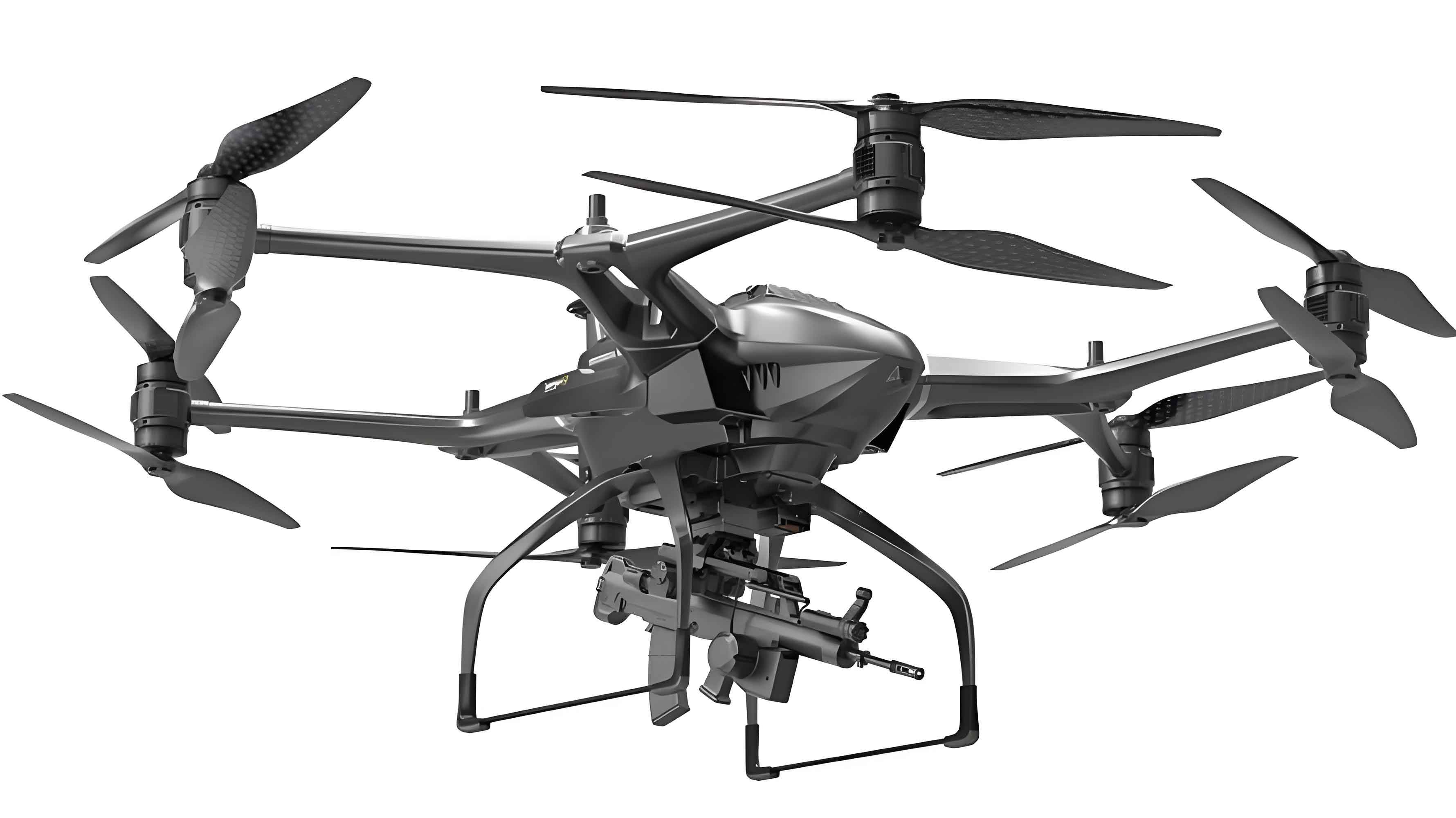
The Middle East, often characterized as a ‘security洼地’ or security lowland, has witnessed an unprecedented surge in military UAV adoption post-2014. This proliferation is not merely a technological shift but a strategic response to evolving threats. From my perspective, understanding this phenomenon requires examining its phases, motivations, and consequences. The diffusion of military UAVs can be modeled using a logistic growth function, which captures the transition from slow to rapid adoption: $$N(t) = \frac{K}{1 + e^{-r(t-t_0)}}$$ where \(N(t)\) represents the number of actors possessing military UAVs at time \(t\), \(K\) is the carrying capacity or saturation level in the region, \(r\) is the intrinsic growth rate of proliferation, and \(t_0\) is the inflection point marking accelerated diffusion. This formula aptly describes the shift from monopoly to widespread access, as detailed in the following sections.
Historical Progression and Characteristics of Military UAV Diffusion
The diffusion of military UAVs in the Middle East has evolved through three distinct phases, each marked by changes in horizontal spread (number of actors) and vertical spread (technological capabilities). From my analysis, this progression reflects broader geopolitical and technological trends.
Phase 1: Initial Diffusion Period (1971–2004)
During this era, military UAVs were predominantly used for reconnaissance and surveillance, with only a handful of states possessing them. Israel and Iran led in indigenous development, while others like Egypt and Turkey imported systems from the United States. The military UAV capabilities were limited, focusing on non-offensive roles. The diffusion rate was low, as captured by the early slow growth in the logistic model where \(r\) is minimal.
Phase 2: Slow Diffusion Period (2004–2014)
This period saw the emergence of offensive applications, with Israel conducting the first drone strike in the region in 2004. Non-state actors, such as Hezbollah, began employing military UAVs, highlighting asymmetric warfare potentials. Technological advancements improved, but the number of actors remained relatively stable. The growth rate \(r\) started to increase, indicating a gradual shift toward broader adoption.
Phase 3: Rapid Diffusion Period (2014–Present)
Post-2014, there has been an exponential rise in both horizontal and vertical diffusion. Numerous states and non-state actors have acquired military UAVs through imports, local production, or external support. The capabilities have expanded to include strike missions, with systems like Turkey’s Bayraktar TB2 and Iran’s Shahed series becoming prominent. This phase aligns with the steep ascent in the logistic curve, where \(r\) is high and \(N(t)\) approaches \(K\).
To summarize these phases, Table 1 outlines the key characteristics, emphasizing the transformation from monopoly to multi-actor possession, from surveillance to combined ISR-strike functions, and from self-reliance to diversified acquisition strategies.
| Phase | Time Frame | Key Features | Representative Military UAV Actors | Diffusion Rate (\(r\)) Estimate |
|---|---|---|---|---|
| Initial Diffusion | 1971–2004 | 少数垄断, surveillance-focused, limited actors | Israel, Iran, Egypt, Turkey | Low (~0.05/year) |
| Slow Diffusion | 2004–2014 | Emergence of strikes, non-state actors enter, technological upgrades | Israel, Iran, Hezbollah | Moderate (~0.1/year) |
| Rapid Diffusion | 2014–present | 多数持有, 察打一体, rapid horizontal spread, advanced capabilities | Turkey, UAE, Saudi Arabia, Houthis, ISIS | High (~0.3/year) |
The carrying capacity \(K\) for the region can be estimated based on the number of potential actors. As of recent data, over 9 states and 14 non-state actors in the Middle East possess military UAVs, suggesting \(K \approx 23\) for non-state actors and \(K \approx 15\) for states, though these values are dynamic. The proliferation of military UAVs is driven by a complex interplay of factors, as explored next.
Drivers Behind the Rapid Proliferation of Military UAVs
From my viewpoint, the accelerated diffusion of military UAVs in the Middle East stems from a confluence of security needs, technological affordances, and strategic calculations. The demand for these systems can be expressed through a demand function: $$D = f(T, C, A, S)$$ where \(D\) is the demand for military UAVs, \(T\) represents security threats, \(C\) denotes cost-effectiveness, \(A\) indicates accessibility, and \(S\) stands for strategic imperatives. Each variable contributes to the overall proliferation dynamics.
Security Threats (\(T\))
The Middle East’s precarious security environment, exacerbated by events like the Arab uprisings, has heightened perceived threats. States and non-state actors face terrorism, insurgencies, and interstate rivalries. Military UAVs offer a means to address these challenges with reduced risk. For instance, the rise of ISIS after 2014 prompted countries like Iraq and Saudi Arabia to acquire military UAVs for counter-terrorism. The threat level can be quantified as an index \(T_i\) for actor \(i\), influencing procurement decisions.
Cost-Effectiveness (\(C\))
Military UAVs provide significant advantages over traditional manned aircraft in terms of cost. The relative cost ratio can be modeled as: $$R_c = \frac{C_{\text{manned}}}{C_{\text{UAV}}}$$ where \(C_{\text{manned}}\) is the cost of a manned fighter jet (e.g., F-16 at $2 billion) and \(C_{\text{UAV}}\) is the cost of a military UAV (e.g., Wing Loong I at $2 million). Typically, \(R_c \gg 1\), making military UAVs economically attractive. This cost efficiency lowers barriers to entry, especially for non-state actors with limited resources.
Accessibility (\(A\))
The Fourth Industrial Revolution has democratized technology, enabling local production and modification of military UAVs. Additionally, international markets have become more open, with countries like China exporting systems to the Middle East. The accessibility factor \(A\) can be represented as a function of technological diffusion and alliance networks: $$A = \alpha \cdot \text{Tech} + \beta \cdot \text{Alliances}$$ where \(\alpha\) and \(\beta\) are coefficients, Tech denotes technological availability, and Alliances reflect support from patrons like Iran or Turkey. This has facilitated rapid horizontal spread.
Strategic Imperatives (\(S\))
Different actors pursue military UAVs for varied strategic reasons, such as achieving asymmetric advantages, balancing against adversaries, or enhancing prestige. For example, Turkey views military UAVs as tools for regional leadership, while Houthis use them for coercion against Saudi Arabia. This strategic utility boosts demand.
To illustrate the interplay of these drivers, Table 2 categorizes key actors by their primary motivations for acquiring military UAVs, highlighting how threat perceptions and strategic goals shape diffusion patterns.
| Actor Type | Primary Motivation | Exemplary Military UAV Systems | Demand Driver Emphasis |
|---|---|---|---|
| Regional Powers (e.g., Turkey, Israel) | Strategic dominance, force projection | Bayraktar TB2, Heron TP | High \(S\), moderate \(T\) |
| Threatened States (e.g., Iraq, Egypt) | Counter-terrorism, internal security | CH-4B, Wing Loong I | High \(T\), high \(C\) |
| Non-state Actors (e.g., Houthis, Hezbollah) | Asymmetric warfare, coercion | Qasef-1, Mohajer series | High \(A\), high \(S\) |
| Status-seekers (e.g., Jordan) | Prestige, symbolic capability | CH-4B (limited use) | Low \(T\), moderate \(S\) |
The proliferation of military UAVs is not an end in itself; rather, it enables diverse operational applications that reshape conflict dynamics. As I analyze these uses, the coercive logic underlying each modality becomes evident.
Operational Modalities and Coercive Logic of Military UAVs
Military UAVs in the Middle East are employed in three primary ways: tactical support, punishment strategy, and denial strategy. Each modality serves distinct coercive objectives, leveraging the unique attributes of military UAVs to influence adversaries. The effectiveness of these strategies can be evaluated using a coercion success function: $$E = g(P, D, R)$$ where \(E\) is effectiveness, \(P\) represents precision and capability of the military UAV, \(D\) denotes the defender’s vulnerability, and \(R\) stands for the resolve of the coercer. This framework helps assess why some uses of military UAVs yield strategic gains while others falter.
Tactical Support
This involves using military UAVs for intelligence, surveillance, and reconnaissance (ISR) to aid military operations without direct attack. It enhances situational awareness and decision-making. For example, Israel employs military UAVs like the Hermes 450 for pre-strike reconnaissance in Gaza, improving target acquisition. The coercive logic here is indirect: by optimizing battlefield knowledge, actors can weaken opponents or force concessions through superior information. The effectiveness \(E\) tends to be high when \(P\) is high (e.g., advanced sensors) and \(D\) is low (e.g., poorly defended targets).
Punishment Strategy
In this approach, military UAVs target civilian infrastructure or populations to inflict pain and compel political让步. Non-state actors like Houthis frequently use military UAVs to attack Saudi oil facilities or airports, aiming to erode morale and pressure governments. The coercive logic relies on imposing costs, but success often depends on the defender’s resilience. Using the coercion function, \(E\) may be low if \(R\) (coercer’s resolve) is weak or \(D\) (defender’s vulnerability) is mitigated by defensive measures. For instance, despite numerous military UAV strikes, Houthis have not forced Saudi Arabia to fully withdraw from Yemen, indicating limited strategic efficacy.
Denial Strategy
This entails using military UAVs to destroy military assets, such as command nodes or supply lines, to degrade an adversary’s capability to fight. Turkey’s use of Bayraktar TB2 drones in Syria and Libya exemplifies this, where they neutralized air defenses and armored units, leading to tactical victories. The coercive logic focuses on directly reducing the opponent’s military power, making continued resistance futile. Here, \(E\) can be high if \(P\) is sufficient to overcome defenses (high \(D\) vulnerability) and the coercer demonstrates strong \(R\). The impact often hinges on integrating military UAVs with other systems, like electronic warfare.
To compare these modalities, Table 3 summarizes their characteristics, coercive mechanisms, and typical outcomes in Middle Eastern conflicts, emphasizing the role of military UAV capabilities.
| Modality | Primary Targets | Coercive Logic | Exemplary Military UAV Systems | Effectiveness (\(E\)) Estimate |
|---|---|---|---|---|
| Tactical Support | Enemy positions, movements | Enhance information superiority to enable coercion | Hermes 450, Scout (Israel) | High (0.8-1.0) |
| Punishment Strategy | Civilian infrastructure, populations | Inflict costs to erode political will | Qasef-2K (Houthis), improvised drones | Low to Moderate (0.3-0.6) |
| Denial Strategy | Military assets, command centers | Degrade military capacity to force让步 | Bayraktar TB2 (Turkey), Shahed-129 (Iran) | Moderate to High (0.6-0.9) |
The effectiveness \(E\) can be further refined with a formula incorporating military UAV parameters: $$E = \frac{P \cdot R}{D + \delta}$$ where \(\delta\) represents external factors like international norms. This highlights that military UAVs alone are not decisive; their strategic impact depends on contextual integration. Moreover, the proliferation of military UAVs has spurred tactical innovations, such as swarm attacks using multiple low-cost drones, which can be modeled as a swarm efficacy function: $$S_e = n \cdot c \cdot s$$ where \(S_e\) is swarm effectiveness, \(n\) is the number of military UAVs, \(c\) is coordination capability, and \(s\) is individual strike probability. Such innovations underscore the evolving nature of warfare driven by military UAV diffusion.
Security Implications of Military UAV Proliferation
From my perspective, the widespread adoption of military UAVs in the Middle East has profound security implications, affecting risk distribution, deterrence paradigms, and governance structures. These impacts can be analyzed through a security risk framework: $$R_{\text{total}} = \sum_i (R_{\text{offensive},i} – R_{\text{defensive},i})$$ where \(R_{\text{total}}\) is the net security risk in the region, \(R_{\text{offensive},i}\) is the offensive risk posed by actor \(i\)’s military UAVs, and \(R_{\text{defensive},i}\) is the defensive capability against such threats. The diffusion of military UAVs tends to increase \(R_{\text{offensive}}\) for many actors, potentially destabilizing the balance.
Changes in Risk Identification and Offensive-Defensive Capabilities
Military UAVs redistribute security risks between users and targets. For users, the separation of operator from platform reduces physical risk, but may increase psychological stress, as seen in Israeli drone operators. This can be expressed as: $$R_{\text{user}} = \alpha_p \cdot \text{physical risk} + \alpha_m \cdot \text{mental risk}$$ where \(\alpha_p\) decreases while \(\alpha_m\) may rise with prolonged military UAV use. For targets, military UAVs lower the threshold for attack, especially when defenses are inadequate. The offensive-defensive balance shifts, with attackers gaining advantage due to the low detectability and cost of military UAVs. This asymmetry is captured by an offense-defense ratio: $$ODR = \frac{\text{Offensive efficacy of military UAVs}}{\text{Defensive efficacy against military UAVs}}$$ Currently, \(ODR > 1\) in many Middle Eastern contexts, favoring offensive actions and increasing vulnerability.
Impact on Deterrence Paradigms and Conflict Intensity
Military UAVs influence deterrence by altering threat credibility and conflict dynamics. The use of military UAVs can lower the perceived cost of aggression, encouraging more frequent interventions. This can be modeled using a deterrence failure probability: $$P_f = 1 – e^{-\lambda \cdot U}$$ where \(P_f\) is the probability of deterrence failure, \(\lambda\) is a constant reflecting regional tensions, and \(U\) represents the utility of military UAVs for coercion. As \(U\) increases with proliferation, \(P_f\) rises, leading to more conflicts. However, military UAVs may also reduce escalation risks in some cases, as their use avoids pilot casualties, but this can prolong conflicts by making warfare less costly. The net effect often intensifies regional rivalries and arms races, as actors seek to counter military UAV threats through anti-drone systems or their own military UAV programs.
Increased Difficulty in Regional Security Governance
The proliferation of military UAVs challenges existing norms and mechanisms. Traditional principles like sovereignty are undermined by cross-border strikes, while accountability for civilian harm is often blurred. The governance gap can be quantified as: $$G = N_{\text{violations}} – N_{\text{accountability actions}}$$ where \(G\) is the governance deficit, \(N_{\text{violations}}\) is the number of norm violations involving military UAVs (e.g., illegal strikes), and \(N_{\text{accountability actions}}\) is the number of enforcement actions. In the Middle East, \(G\) is significant due to weak regulatory frameworks. Moreover, international regimes like the MTCR have limited reach, failing to curb the spread of tactical military UAVs. This exacerbates security dilemmas and complicates efforts to build cooperative security architectures.
To encapsulate these implications, Table 4 outlines key security challenges posed by military UAV proliferation, linking them to specific actors and trends.
| Security Dimension | Key Challenges | Affected Actors | Risk Metric (\(R_{\text{total}}\) component) |
|---|---|---|---|
| Risk Redistribution | Increased offensive capabilities, reduced defender security | States like Saudi Arabia, non-state groups | High \(R_{\text{offensive}}\) for non-state actors |
| Deterrence Dynamics | Lowered conflict threshold, arms races, prolonged wars | Turkey, Iran, Israel, Houthis | Elevated \(P_f\) and \(ODR\) |
| Governance Deficits | Erosion of sovereignty, accountability gaps, norm violations | All military UAV users, international bodies | High \(G\) value |
The security landscape is further complicated by externalities, as military UAV proliferation in the Middle East spills over to other regions through exports and emulation. For instance, Turkey’s sale of Bayraktar TB2 drones to conflicts in the Caucasus amplifies global instability. This underscores the urgent need for governance solutions, as discussed in the conclusion.
Conclusion and Pathways for Governance
In reflection, the proliferation and application of military UAVs in the Middle East represent a pivotal shift in regional security. From my analysis, this trend is driven by multifaceted factors and manifests in diverse operational strategies with varying efficacy. The diffusion follows a logistic pattern, accelerating post-2014 due to heightened threats, cost advantages, and increased accessibility. The use of military UAVs for tactical support, punishment, and denial strategies reveals a coercive logic that often enhances tactical gains but yields mixed strategic results. Importantly, the security implications are profound, reshaping risk perceptions, deterrence, and governance in ways that exacerbate instability.
Looking ahead, the trajectory of military UAV diffusion is likely to continue, with states and non-state actors pursuing more advanced systems. The future may see greater integration of artificial intelligence, leading to autonomous military UAVs that further lower intervention thresholds. This evolution can be projected using a technology advancement curve: $$T_a = T_0 \cdot e^{k t}$$ where \(T_a\) is technological advancement in military UAV capabilities, \(T_0\) is the initial level, \(k\) is the innovation rate, and \(t\) is time. With \(k\) positive, capabilities will grow, potentially increasing the \(ODR\) and \(R_{\text{total}}\) unless mitigated.
To address these challenges, governance measures must prioritize respect for legitimate security interests while establishing robust constraints. From my viewpoint, a feasible approach involves:
- Strengthening Norms: Develop international frameworks that regulate military UAV use, emphasizing compliance with international humanitarian law. This could reduce \(G\) by increasing \(N_{\text{accountability actions}}\).
- Enhancing Transparency: Promote mechanisms for reporting and investigating military UAV strikes to clarify accountability, particularly for civilian harm.
- Building Defensive Capabilities: Encourage cooperation on anti-drone technologies to restore the offense-defense balance, lowering \(ODR\).
- Fostering Dialogue: Initiate regional talks on military UAV proliferation to address security dilemmas, potentially reducing \(\lambda\) in the deterrence failure model.
Ultimately, the military UAV phenomenon in the Middle East underscores the complex interplay between technology and security. By adopting a cooperative and norm-based governance strategy, the region can mitigate the risks posed by these systems while harnessing their potential for legitimate defense. As military UAVs continue to evolve, their impact will remain a critical area for scholarly and policy engagement, demanding ongoing analysis and adaptive responses.
In summary, the proliferation of military UAVs is not merely a technical issue but a strategic imperative that defines contemporary Middle Eastern security. Through detailed examination of its phases, drivers, applications, and implications, this article highlights the need for nuanced understanding and proactive governance. The formulas and tables presented herein offer a structured way to comprehend the dynamics, emphasizing that the future of regional stability hinges on how actors manage the opportunities and threats posed by military UAVs.