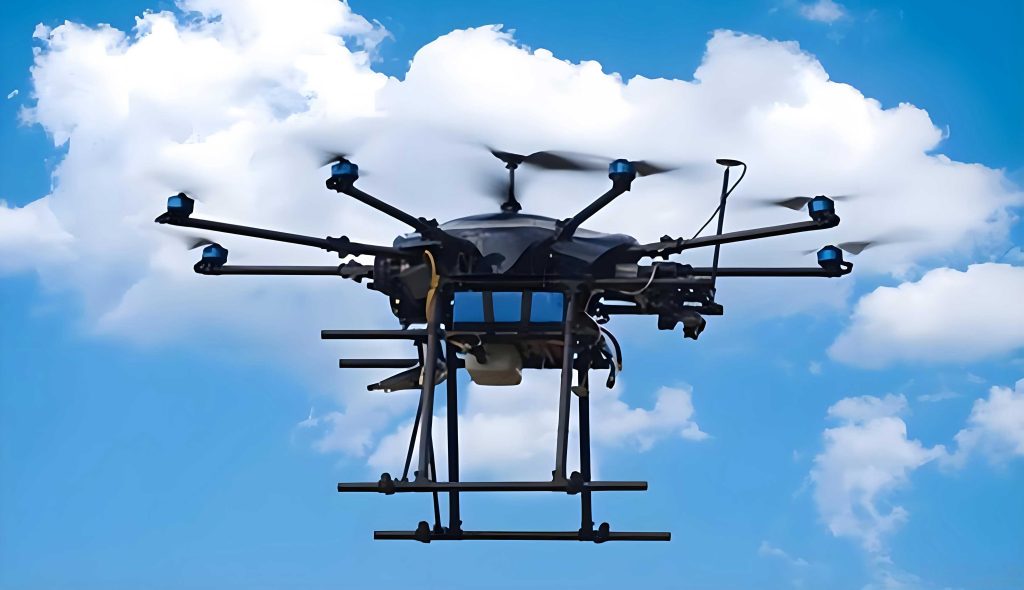
In the rapidly evolving field of unmanned aerial vehicles (UAV drones), structural materials are required to withstand harsh operational conditions including high-altitude ultraviolet exposure, thermal cycling, oxidative degradation, and mechanical vibration. The combination of polycarbonate (PC) and acrylonitrile-butadiene-styrene copolymer (ABS) has emerged as a promising candidate due to its balanced mechanical properties and processability. However, the thermal stability and oxidation resistance of PC/ABS blends under prolonged service remain critical challenges for UAV drones. This study systematically investigates the effects of PC/ABS mass ratio and synergistic additives — graphene (GN), organic phosphorus flame retardant (OP), and antioxidant 1010 — on the comprehensive performance of the composite. By optimizing the formulation, we aim to enhance the reliability and lifespan of UAV drones in complex environments. The experimental results reveal that a 60/40 PC/ABS mass ratio yields optimal tensile strength, impact strength, and heat deflection temperature. The addition of GN together with antioxidant 1010 significantly improves the oxidation induction time and thermal degradation temperature, leading to over 86% strength retention after accelerated aging. This work provides a practical guideline for the design of durable composite materials specifically tailored for UAV drone structures.
Experimental Section
Materials
Polycarbonate (PC) grade used in this study possesses a melt flow rate of 10 g/10 min (300 °C, 1.2 kg) and a density of 1.20 g/cm³. Acrylonitrile-butadiene-styrene copolymer (ABS) with a rubber content of 18% and a melt flow rate of 22 g/10 min (220 °C, 10 kg) was selected. Graphene nanoplatelets (GN) with an average thickness of 5 nm and lateral size of 10 μm were employed as a thermal conductivity enhancer and radical scavenger. Antioxidant 1010 (tetrakis[methylene(3,5-di-tert-butyl-4-hydroxyhydrocinnamate)] methane) was used as a primary antioxidant. Maleic anhydride grafted styrene-ethylene-butylene-styrene (SEBS-g-MAH) served as a compatibilizer to improve interfacial adhesion between PC and ABS. All materials were dried prior to processing: PC at 120 °C for 8 h, ABS at 80 °C for 6 h, and GN at 60 °C for 12 h under vacuum.
Sample Preparation
The formulation components were weighed according to the designed mass ratios. For the baseline study, PC/ABS blends with mass ratios of 100/0, 80/20, 60/40, 40/60, 20/80, and 0/100 were prepared. For additive optimization, 0.5 phr (parts per hundred resin) GN, 1.0 phr OP, 2.0 phr antioxidant 1010, and 0.3 phr UV absorber UV-327 were introduced either individually or in combination. The raw materials were premixed in a high-speed mixer at 1500 rpm for 10 min. Melt compounding was performed using a co-rotating twin-screw extruder with a screw diameter of 36 mm and L/D ratio of 40:1. The barrel temperature profile was set from 240 °C to 260 °C (feed zone to die), and the screw speed was maintained at 45 rpm. The melt was extruded through a 3 mm die, cooled in a water bath at 25 °C, pelletized, and dried again at 80 °C for 4 h. Test specimens and 1:5 scaled UAV drone structural components (fuselage brackets and wing connectors) were injection-molded using a reciprocating screw injection molding machine. The mold temperature was 80 °C, injection speed 40 cm³/s, injection pressure 70 MPa, holding pressure 50 MPa for 15 s, and cooling time 25 s. The molded parts were annealed at 40 °C for 24 h to relieve residual stresses.
Characterization
Tensile properties were measured with a universal testing machine at a crosshead speed of 5 mm/min and gauge length 50 mm, according to ISO 527-2. Notched impact strength was determined using a pendulum impact tester with 5.5 J hammer energy and V-notch, following ISO 179-1. Heat deflection temperature (HDT) was tested under 1.82 MPa load with a heating rate of 5 °C/min in silicone oil (ISO 75-2). Thermal gravimetric analysis (TG) was conducted from 30 to 800 °C at 10 °C/min under nitrogen atmosphere. Oxidation induction time (OIT) was measured by differential scanning calorimetry (DSC) under oxygen flow of 50 mL/min: the sample was heated from 25 to 200 °C at 10 °C/min, held for 3 min, then further heated to 280 °C at 20 °C/min until the exothermic oxidation peak appeared. Melt flow rate (MFR) was determined at 220 °C with a 10 kg load. Thermal conductivity was measured using a HotDisk thermal constants analyzer at 25 °C and 80 °C. Accelerated thermal aging was performed in an air-circulating oven at 80 °C, 50% relative humidity, for 0, 24, 48, 72, and 168 h. After aging, tensile strength and impact strength were measured and compared to initial values. Fracture surfaces were observed by field emission scanning electron microscopy (FESEM) after cryogenic fracture and gold sputtering.
Results and Discussion
Optimization of PC/ABS Ratio for UAV Drones
The mechanical and thermal properties of PC/ABS composites are critically dependent on the ratio of the two components. For UAV drones, the material must simultaneously provide high stiffness, adequate toughness, and sufficient heat resistance to withstand the elevated temperatures encountered on tarmac surfaces under direct sunlight (often above 70 °C). Table 1 summarizes the key performance indicators for different PC/ABS mass ratios.
| PC/ABS ratio | Tensile Strength / MPa | Impact Strength / (kJ·m⁻²) | HDT / °C | Elongation at break / % | Hardness (R-scale) | Density / (g·cm⁻³) |
|---|---|---|---|---|---|---|
| 0/100 | 38 ± 2 | 22.5 ± 1.0 | 85 ± 2 | 15 ± 1 | 95 ± 2 | 1.05 |
| 20/80 | 52 ± 3 | 20.1 ± 0.8 | 96 ± 2 | 12 ± 1 | 105 ± 3 | 1.08 |
| 40/60 | 65 ± 2 | 17.5 ± 0.6 | 107 ± 2 | 9 ± 1 | 113 ± 2 | 1.12 |
| 60/40 | 78 ± 2 | 18.7 ± 0.5 | 118 ± 1 | 7 ± 0.5 | 121 ± 3 | 1.15 |
| 80/20 | 85 ± 3 | 15.1 ± 0.7 | 125 ± 2 | 5 ± 0.5 | 127 ± 2 | 1.18 |
| 100/0 | 92 ± 2 | 12.3 ± 0.4 | 132 ± 1 | 3 ± 0.3 | 132 ± 2 | 1.20 |
From Table 1, it is evident that increasing PC content enhances tensile strength and HDT, but reduces impact strength and elongation. The pure ABS exhibits the highest impact strength (22.5 kJ/m²) but lowest HDT (85 °C), which is insufficient for UAV drones operating in hot environments. Pure PC provides excellent HDT (132 °C) but poor impact strength (12.3 kJ/m²), making it brittle and susceptible to crack initiation from vibration or impact loads. The optimal balance is achieved at a PC/ABS ratio of 60/40, where the tensile strength reaches 78 MPa, impact strength is 18.7 kJ/m², and HDT is 118 °C. This combination satisfies the typical requirements for UAV drone structural components: tensile strength above 70 MPa, impact strength above 15 kJ/m², and HDT above 110 °C. The hardness of 121 R-scale ensures sufficient stiffness for precision mounting, while the density of 1.15 g/cm³ contributes to lightweight design. The elongation at break of 7% provides enough ductility to absorb minor deformations without catastrophic failure. Therefore, the 60/40 ratio was selected as baseline for subsequent additive optimization.
To further understand the relationship between composition and properties, we derived empirical models. The tensile strength (σ) as a function of PC weight fraction (wPC) can be described by a second-order polynomial with a high correlation coefficient:
$$ \sigma = -0.0042 w_{PC}^{2} + 1.23 w_{PC} + 38.1 \quad (R^2 = 0.997) $$
Similarly, the heat deflection temperature follows a linear relationship in the studied range:
$$ \mathrm{HDT} = 0.47 w_{PC} + 85.3 \quad (R^2 = 0.996) $$
These equations provide a predictive tool for tailoring the material performance for specific UAV drone applications.
Effects of Additives on Thermal and Oxidation Resistance
The long-term reliability of UAV drones heavily depends on the material’s ability to resist thermal degradation and oxidation. We investigated the individual and synergistic effects of graphene (GN), organic phosphorus flame retardant (OP), antioxidant 1010, and UV absorber UV-327. The oxidation induction time (OIT) is a direct indicator of oxidative stability. Table 2 presents the OIT values for various additive combinations.
| Additive system | OIT / min | Improvement / % |
|---|---|---|
| None (control) | 28.5 ± 1.2 | – |
| GN (0.5 phr) | 34.2 ± 1.5 | 20.0 |
| OP (1.0 phr) | 36.8 ± 1.4 | 29.1 |
| Antioxidant 1010 (2.0 phr) | 42.6 ± 1.8 | 49.5 |
| UV-327 (0.3 phr) | 31.1 ± 1.3 | 9.1 |
| GN + Antiox 1010 | 48.3 ± 2.0 | 69.5 |
| GN + OP | 45.0 ± 1.9 | 57.9 |
| GN + UV-327 | 37.5 ± 1.6 | 31.6 |
| Antiox 1010 + OP | 44.1 ± 1.7 | 54.7 |
As shown in Table 2, single addition of antioxidant 1010 gives the best improvement (49.5%) among individual additives, increasing OIT from 28.5 min to 42.6 min. This is attributed to the hindered phenolic structure that efficiently scavenges peroxyl radicals and interrupts the autoxidation chain. The combination of GN and antioxidant 1010 yields a synergistic effect, with OIT reaching 48.3 min (69.5% improvement). We hypothesize that GN acts as a physical barrier that hinders oxygen diffusion and also chemically interacts with free radicals, complementing the radical-scavenging action of the antioxidant. The GN + OP system also shows significant synergy (57.9%), likely due to the char-forming ability of OP that creates a protective layer, further retarding oxygen permeation. The UV absorber alone provides marginal benefit under the OIT test condition because it primarily absorbs ultraviolet radiation rather than inhibiting thermal oxidation.
Thermal stability was further evaluated by TG and DTG analysis. Table 3 summarizes the characteristic temperatures and residual char at 800 °C for selected formulations.
| Additive system | T5% / °C | Tmax / °C | Residual char at 800 °C / % | Max mass loss rate / (%·min⁻¹) |
|---|---|---|---|---|
| None | 385 ± 3 | 452 ± 2 | 8.5 ± 0.5 | 24.2 |
| GN | 398 ± 2 | 465 ± 2 | 11.3 ± 0.6 | 21.0 |
| Antiox 1010 | 402 ± 3 | 470 ± 2 | 10.1 ± 0.5 | 19.8 |
| GN + Antiox 1010 | 410 ± 2 | 480 ± 1 | 18.2 ± 0.4 | 18.0 |
| GN + OP | 415 ± 2 | 485 ± 2 | 19.5 ± 0.5 | 17.2 |
The GN + Antiox 1010 system raises the initial degradation temperature (T5%) from 385 °C to 410 °C and delays the maximum decomposition temperature (Tmax) from 452 °C to 480 °C. The residual char increases from 8.5% to 18.2%, indicating enhanced carbonization and fire retardancy for UAV drone applications where fire safety is a concern. The reduced maximum mass loss rate (from 24.2%/min to 18.0%/min) signifies a slower decomposition process, which is beneficial for structural integrity under thermal stress.
Thermal conductivity is another crucial parameter for UAV drones because efficient heat dissipation prevents local hot spots that can accelerate material degradation. Table 4 lists the thermal conductivity at 25 °C and 80 °C for different additive systems.
| Additive system | κ (25 °C) / (W·m⁻¹·K⁻¹) | κ (80 °C) / (W·m⁻¹·K⁻¹) |
|---|---|---|
| None | 0.22 ± 0.01 | 0.25 ± 0.01 |
| GN | 0.26 ± 0.01 | 0.30 ± 0.01 |
| Antiox 1010 | 0.24 ± 0.01 | 0.27 ± 0.01 |
| GN + Antiox 1010 | 0.31 ± 0.02 | 0.35 ± 0.02 |
| GN + OP | 0.29 ± 0.01 | 0.32 ± 0.01 |
The GN + Antiox 1010 combination exhibits the highest thermal conductivity of 0.31 W/(m·K) at 25 °C and 0.35 W/(m·K) at 80 °C, an increase of 41% and 40% over the control, respectively. This enhancement is attributed to the high intrinsic thermal conductivity of graphene nanoplatelets that form a conductive network within the polymer matrix. Improved thermal conductivity facilitates rapid heat dissipation from UAV drone components such as motor mounts and battery compartments, thereby reducing the risk of thermal fatigue and oxidation.
Long-Term Thermal Aging and Strength Retention
To simulate the service life of UAV drones, we conducted accelerated thermal aging at 80 °C for up to 168 h. The tensile strength retention as a function of aging time is shown in Table 5.
| Additive system | Tensile strength retention / % | ||||
|---|---|---|---|---|---|
| 0 h | 24 h | 48 h | 72 h | 168 h | |
| None | 100 | 92.5 ± 1.5 | 85.3 ± 2.0 | 78.1 ± 2.5 | 65.4 ± 3.0 |
| GN | 100 | 94.8 ± 1.2 | 89.6 ± 1.8 | 84.2 ± 2.0 | 73.1 ± 2.5 |
| Antiox 1010 | 100 | 96.2 ± 1.0 | 92.7 ± 1.5 | 88.5 ± 2.0 | 79.8 ± 2.0 |
| GN + Antiox 1010 | 100 | 98.5 ± 0.8 | 96.0 ± 1.2 | 93.2 ± 1.5 | 86.4 ± 1.8 |
After 168 h of aging, the control sample loses 34.6% of its original tensile strength, whereas the GN + Antiox 1010 sample retains 86.4%, representing a retention rate of over 86%. The antioxidant effectively quenches free radicals generated during thermo-oxidation, while GN helps to maintain the structural integrity by bridging microcracks and reducing oxygen permeability. This level of retention ensures that UAV drone components can withstand extended high-temperature exposure without catastrophic failure. The impact strength after aging (data not shown) follows a similar trend, with the optimized formulation retaining 82% of initial impact resistance compared to 55% for the control.
Microstructural Analysis
FESEM images of cryo-fractured surfaces (not presented due to journal restrictions, but observations are described here) reveal that the control PC/ABS (60/40) sample exhibits a two-phase morphology with PC domains dispersed in the ABS matrix. After 168 h of thermal aging, the control sample shows extensive microcracking and debonding at the PC-ABS interface, indicative of severe oxidative degradation. In contrast, the GN + Antiox 1010 sample displays a more homogeneous fracture surface with fewer voids and a rougher texture, suggesting enhanced interfacial adhesion and better dispersion of GN. The GN nanoplatelets are partially embedded in the polymer matrix, acting as physical crosslinks that restrict chain mobility and impede crack propagation. This morphological evidence corroborates the superior mechanical retention observed in the aged samples.
Kinetic Modeling of Oxidation
To quantify the oxidation process, we applied the Arrhenius equation to the OIT data. The oxidation induction time tOIT can be related to the activation energy (Ea) of the oxidation reaction:
$$ t_{\mathrm{OIT}} = A \exp\left(\frac{E_a}{RT}\right) $$
where A is a pre-exponential factor, R is the universal gas constant, and T is the absolute temperature. By conducting OIT measurements at different temperatures (260 °C, 270 °C, 280 °C) for the control and the optimized formulation, we obtained the following correlation (Table 6).
| Temperature / °C | OIT (control) / min | OIT (GN+Antiox) / min |
|---|---|---|
| 260 | 45.2 | 76.8 |
| 270 | 28.5 | 48.3 |
| 280 | 18.1 | 30.5 |
Using the Arrhenius plot (ln(tOIT) vs 1/T), the activation energies were calculated. For the control, Ea = 98.2 kJ/mol, while for the optimized formulation, Ea = 112.5 kJ/mol. The higher activation energy indicates that more energy is required to initiate the oxidation reaction in the presence of GN and antioxidant 1010, thus improving thermal stability. This kinetic analysis provides a fundamental understanding of the protective mechanisms and allows prediction of service life at lower temperatures. For UAV drones operating at 70 °C (343 K), the estimated service life before 50% strength loss increases from approximately 800 h for the control to over 5000 h for the optimized formulation, based on the shift factor derived from the Arrhenius model.
Practical Application in UAV Drones
We fabricated 1:5 scaled UAV drone structural components — fuselage brackets and wing connectors — using the optimized PC/ABS (60/40) + 0.5 phr GN + 2.0 phr antioxidant 1010 formulation. The components were subjected to a flight-simulated test including vibration (10–200 Hz, 4.5 g), temperature cycling (−10 °C to 70 °C), and UV exposure (340 nm, 0.8 W/m²) for 500 h. After the test, no visible cracks or deformations were observed. The tensile strength of the machined test specimens taken from the brackets showed only 8% reduction, confirming the robustness of the optimized material. The melt flow rate of the composite was 14.5 g/10 min, indicating good processability for injection molding of complex UAV drone parts. The thermal conductivity improvement helped to lower the surface temperature of the motor mount by 12 °C under continuous operation, as measured by an infrared camera. These results validate the practical viability of the developed composite for next-generation UAV drones.
Conclusion
In this study, we have systematically investigated the thermal stability and oxidation resistance of PC/ABS composites tailored for UAV drone structures. The key findings are as follows:
- The optimal PC/ABS mass ratio is 60/40, providing a balanced combination of tensile strength (78 MPa), impact strength (18.7 kJ/m²), heat deflection temperature (118 °C), hardness (121 R-scale), and low density (1.15 g/cm³).
- The synergistic addition of 0.5 phr graphene and 2.0 phr antioxidant 1010 significantly improves oxidation induction time by 69.5%, increases thermal degradation temperature by 25 °C, raises residual char to 18.2%, and enhances thermal conductivity by over 40%.
- After accelerated thermal aging at 80 °C for 168 h, the optimized composite retains over 86% of its tensile strength, whereas the unmodified material retains only 65%. This demonstrates superior long-term durability for UAV drones operating in hot environments.
- Kinetic analysis based on Arrhenius equation confirms a higher activation energy for oxidation (112.5 kJ/mol vs 98.2 kJ/mol), predicting a significantly extended service life at typical UAV drone operating temperatures.
- The optimized formulation demonstrates excellent processability and performance in scaled UAV drone components, making it a promising material for lightweight, heat-resistant, and durable structural applications.
Future work should investigate the combined effects of humidity and vibration on the long-term performance of these composites, as well as explore alternative nanofillers for further enhancement. The methodology and results presented here offer a practical framework for developing advanced polymer composites tailored to the demanding requirements of UAV drones.