
We are dedicated to improving the safety management of tailings ponds, wherein the unimpeded operation of drainage channels is critical to ensuring flood season safety and overall stability. Traditional manual inspection methods suffer from low efficiency, incomplete coverage, and high labor costs, especially in steep or hazardous terrains common on dam slopes. To address these limitations, we propose an intelligent detection framework that integrates UAV photogrammetry with a deep learning YOLO model for autonomous identification of channel blockages caused by debris, sedimentation, or vegetation encroachment.
Our approach leverages the flexibility and high-resolution capabilities of UAV drones to acquire large-scale orthophoto mosaics of tailings pond areas. By combining UAV-derived digital orthophoto maps (DOM) with a rotating object detection architecture (YOLO11m-OBB), we achieve precise localization and quantification of blocked drainage segments. The methodology is validated on two operational tailings ponds in Northeast and North China, demonstrating its effectiveness in real-world conditions.
1. Methodology
1.1 UAV Photogrammetry Data Acquisition
We utilize a DJI Matrice 4E UAV drone equipped with a 4/3-inch CMOS sensor (focal length 24 mm, pixel size 3.3 μm). To balance accuracy and efficiency, we set the flight altitude to 40 m with terrain-following mode enabled, achieving a ground sampling distance (GSD) of approximately 5.5 mm. The forward and side overlaps are configured at 80% and 70%, respectively, to ensure robust image matching and dense point cloud generation. Two datasets are collected: on November 19, 2024, we capture 964 images from Tailings Pond A (Northeast region), and on August 19, 2025, we capture 1508 images from Tailings Pond B (North region). The raw images are processed using DJI Terra photogrammetry software to generate high-resolution DOMs with a pixel resolution of 5.5 mm.
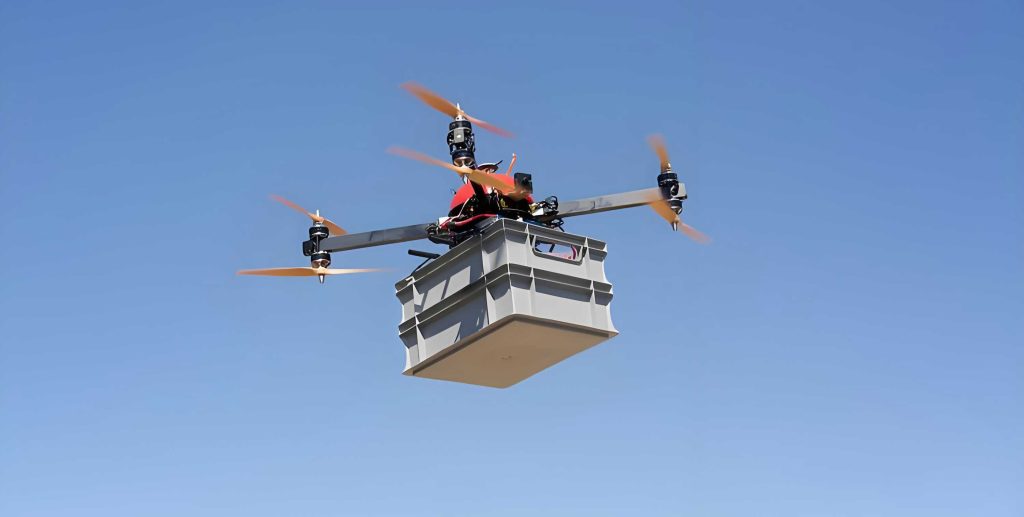
The UAV-based approach eliminates manual inspection blind spots, particularly in steep or eroded areas where access is dangerous. The resulting DOMs serve as the input for subsequent blockage detection.
1.2 Dataset Construction and YOLO11m-OBB Model
To detect drainage channel blockages appearing as elongated, non-horizontal features on the DOM, we adopt a rotated bounding box (OBB) strategy. The roLabelImg tool is employed to manually annotate all visible blockages in the imagery, with each annotation tightly fitted to the channel orientation. The annotations are converted from XML to TXT format required by the YOLO11m-OBB framework. Our dataset comprises 1032 images, each paired with a corresponding TXT label file. We split the dataset into training (70%) and validation (30%) sets, ensuring no overlap between segments. Table 1 summarizes the dataset composition.
| Subset | Number of images | Percentage |
|---|---|---|
| Training | 722 | 70% |
| Validation | 310 | 30% |
| Total | 1032 | 100% |
The YOLO11m-OBB model inherits the one-stage detection efficiency of the YOLO family while incorporating a rotated box regression head. The loss function comprises three components:
$$
L = \lambda_1 L_{\text{box}} + \lambda_2 L_{\text{cls}} + \lambda_3 L_{\text{dfl}}
$$
where \(L_{\text{box}}\) is the rotated IoU-based box regression loss, \(L_{\text{cls}}\) is the classification loss (binary cross-entropy for foreground/background), and \(L_{\text{dfl}}\) is the distribution focal loss for fine-grained box regression. We set the weights \(\lambda_1 = 7.5\), \(\lambda_2 = 0.5\), and \(\lambda_3 = 1.5\). Training is performed using SGD optimizer with an initial learning rate of 0.01 and batch size of 16. We apply early stopping with patience of 100 epochs and weight decay of 0.0005. After 200 total epochs, the final loss values are: \(L_{\text{box}} = 1.32\), \(L_{\text{cls}} = 0.96\), and \(L_{\text{dfl}} = 2.30\).
Model performance on the validation set is evaluated using precision (\(P\)), recall (\(R\)), and the confusion matrix. The formulas are:
$$
P = \frac{TP}{TP + FP}, \quad R = \frac{TP}{TP + FN}
$$
Table 2 lists the confusion matrix and derived metrics.
| Metric | Value |
|---|---|
| True Positives (TP) | 140 |
| False Positives (FP) | 25 |
| False Negatives (FN) | 15 |
| True Negatives (TN) | 130 |
| Precision | 84.8% |
| Recall | 90.3% |
Given our safety-oriented objective, we prioritize recall over precision to minimize missed blockages, even though this introduces some false positives that can be filtered by manual verification.
1.3 Grid-Based Detection Strategy
The entire dam area containing drainage channels spans several hundred meters. Directly applying the YOLO model on the full DOM would be inefficient and lead to poor detection due to scale variation. Therefore, we decompose the DOM into regular grid cells of 30 m × 30 m using a fishnet tool in ArcGIS. This cell size ensures each cell contains at least one continuous drainage segment while maintaining sufficient feature richness. Grid cells are numbered sequentially. Each cell is independently passed through the trained YOLO11m-OBB model to detect blockages. The inference is performed with a confidence threshold of 0.25 and an IoU threshold of 0.5 for non-maximum suppression. For Tailings Pond A, we obtain 332 grid cells; for Tailings Pond B, 662 grid cells. Total inference times are 53.59 seconds and 89.14 seconds, respectively, demonstrating real-time capability.
2. Experimental Results
2.1 Tailings Pond A
Applying the grid-based detection to Tailings Pond A, we identify 9 blockage instances distributed across 8 grid cells (cell No. 72 contains two blockages). All blockages are attributed to weed overgrowth, as typical for late autumn. Table 3 lists the detected blockages with their UTM projected coordinates (zone 51N) and measured lengths obtained from the DOM geographic referencing.
| Grid cell ID | X (m) | Y (m) | Length (m) |
|---|---|---|---|
| 2 | 703.757525 | 8159.08378 | 8.04 |
| 28 | 164.610468 | 8256.25423 | 10.06 |
| 30 | 210.237790 | 8247.78159 | 3.09 |
| 47 | 999.940538 | 8286.41361 | 6.38 |
| 51 | 124.071910 | 8263.51573 | 11.12 |
| 70 | 912.655116 | 8301.63274 | 5.06 |
| 72 | 962.651147 | 8293.28856 | 5.35 |
| 72 | 979.584514 | 8290.21939 | 4.98 |
| 73 | 995.306088 | 8313.45779 | 1.87 |
Total blockage length in Pond A is 55.95 m. The UAV drones enabled full coverage of the 3 km drainage network within minutes, whereas manual inspection would have required multiple hours and risked safety issues on the steep dam face.
2.2 Tailings Pond B
For Tailings Pond B, which has a longer (5 km) and more complex drainage network, the detection identifies 12 blockage instances across 10 grid cells (cell No. 248 and No. 571 each contain two blockages). All blockages are again caused by weed overgrowth. Table 4 presents the coordinates and lengths.
| Grid cell ID | X (m) | Y (m) | Length (m) |
|---|---|---|---|
| 245 | 726.446218 | 9553.16649 | 11.84 |
| 247 | 785.462941 | 9545.27973 | 6.06 |
| 248 | 811.525869 | 9544.99185 | 4.31 |
| 248 | 822.284847 | 9544.57335 | 15.50 |
| 249 | 859.843325 | 9544.55622 | 21.98 |
| 250 | 886.328263 | 9541.87537 | 8.89 |
| 302 | 616.392644 | 9588.32979 | 3.67 |
| 487 | 489.593657 | 9838.34403 | 5.46 |
| 540 | 318.891211 | 9966.95396 | 9.49 |
| 553 | 319.136495 | 9986.40231 | 19.82 |
| 571 | 456.120784 | 0020.42529 | 5.06 |
| 571 | 457.813933 | 0012.58401 | 2.83 |
Total blockage length in Pond B is 114.91 m. The detection time of 89.14 seconds for 662 grid cells underscores the computational efficiency of our pipeline, making it suitable for operational deployment.
3. Discussion
3.1 Operational Efficiency and Safety
Our integrated method reduces inspection time from hours (manual) to under 2 minutes per pond, including data acquisition (via pre-programmed UAV drones) and processing. The autonomous flight eliminates the need for personnel to traverse dangerous slopes, significantly reducing accident risks. Furthermore, the grid-based detection framework can be easily scaled to larger ponds or multiple ponds by parallelizing inference on GPU clusters.
3.2 Multi-Purpose Utilization of UAV Data
The photogrammetric outputs (DOM and DSM) from UAV drones serve beyond blockage detection. We have simultaneously applied them to monitor dam surface deformation, crack propagation, dry beach length, and ecological conditions (vegetation coverage, soil erosion). This multi-task capability maximizes the value of a single flight mission, enhancing overall tailings pond safety management. For instance, we combined the DOM with a CNN model for dry beach line extraction, achieving sub-meter accuracy. Table 5 summarizes the potential applications of UAV-derived data in tailings pond monitoring.
| Application | Data type | Method/Model |
|---|---|---|
| Drainage blockage detection | DOM (RGB) | YOLO11m-OBB |
| Dam surface deformation | DSM/DEM | Digital elevation comparison |
| Crack detection | DOM (high-res) | U-Net or YOLO-based |
| Dry beach length measurement | DOM (RGB) | CNN shoreline extraction |
| Vegetation health assessment | Multispectral | NDVI, Random Forest |
By reusing the same drone flight data for multiple analyses, we reduce operational costs and improve the timeliness of safety assessments.
3.3 Model Limitations and Future Improvements
While our YOLO11m-OBB model achieves 90.3% recall, the 84.8% precision indicates a 15.2% false positive rate. These false positives are primarily caused by shadows, reflective puddles, or debris accumulations that visually resemble blockages. We are exploring post-processing rules (e.g., incorporating channel geometry knowledge) to filter out implausible detections. Additionally, training on a larger and more diverse dataset covering different seasons, weather, and tailings pond configurations would enhance generalization. We are also investigating lightweight model variants for onboard real-time inference directly on UAV drones, enabling immediate alert generation during flight.
4. Conclusion
We have developed and validated an intelligent system that combines UAV drones photogrammetry with a YOLO11m-OBB deep learning model for autonomously detecting drainage channel blockages in tailings ponds. The method successfully identified 9 blockages (total 55.95 m) in Pond A and 12 blockages (total 114.91 m) in Pond B, with a per-pond processing time under 90 seconds. The geographic coordinates and blockage lengths extracted from the DOM enable precise planning of clearance operations. This approach overcomes the limitations of traditional manual inspections—low efficiency, incomplete coverage, and safety hazards—and provides a scalable, cost-effective solution for routine tailings pond maintenance. The integration of UAV drones with modern computer vision techniques marks a significant step toward fully automated tailings pond safety monitoring, contributing to accident prevention and environmental protection.