
In the rapidly evolving domain of military operations, the utilization of multiple unmanned aerial vehicles, commonly referred to as UAV drones, has become increasingly prevalent. These systems are deployed to execute complex missions, such as reconnaissance and attack on ground targets, where coordination and efficiency are paramount. However, the inherent uncertainties of real-world battlefields—such as fluctuating mission durations, unpredictable target disappearance times, and variable cruise speeds of the UAV drones—pose significant challenges to pre-planned task allocation schemes. Traditional deterministic optimization methods often fail under these conditions, leading to suboptimal or even infeasible plans. To address this, we propose a novel fuzzy chance-constrained programming model integrated with an advanced multi-strategy optimization algorithm to ensure robustness and efficiency in task allocation for heterogeneous UAV drones.
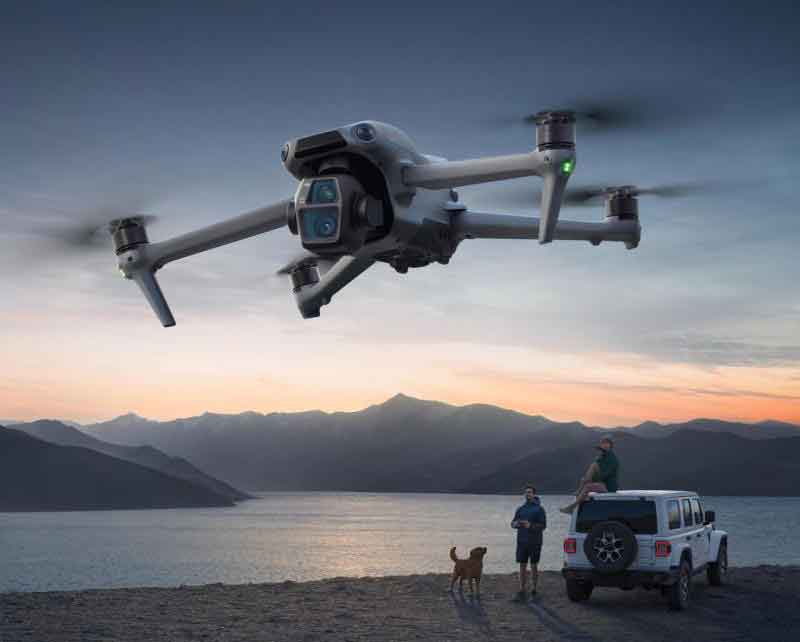
Our work focuses on a scenario where a fleet of heterogeneous UAV drones is tasked with striking a set of predetermined targets. The fleet consists of three types of platforms: reconnaissance-only UAV drones, attack-only UAV drones, and integrated reconnaissance-attack UAV drones. Each UAV drone is characterized by its speed, value, and capabilities. The mission involves two sequential tasks for each target: first, reconnaissance to identify and verify the target, followed by an attack to neutralize it. The execution times for these tasks, the time window within which a target remains available (its disappearance time), and the cruise speed of each UAV drone are all treated as uncertain parameters, modeled as triangular fuzzy numbers.
To manage these uncertainties, we employ fuzzy credibility theory. This approach allows us to convert the probabilistic constraints of time windows and task sequencing into deterministic equivalents with a predefined confidence level, expressed as a preference value \( c^*_r \). The problem is then formulated as a multi-objective fuzzy chance-constrained programming model, which minimizes a weighted sum of costs (threat cost and travel cost) while maximizing the benefit of destroying high-value targets. The core of our methodology is a Multi-Strategy Integrated Grey Wolf Optimization (IMSGWO) algorithm, designed to solve this complex assignment problem efficiently.
Problem Formulation and Mathematical Model
We consider a set \( U = \{U_1, U_2, \ldots, U_M\} \) of \( M \) heterogeneous UAV drones and a set \( T = \{T_1, T_2, \ldots, T_N\} \) of \( N \) ground targets, resulting in \( 2N \) tasks (reconnaissance and attack for each target). Each UAV drone \( i \) is defined by a tuple \( \langle U_{id,i}, U_{type,i}, U_{val,i}, AT_i, U_{pos,i}, \tilde{v}_i \rangle \), where \( \tilde{v}_i = (v_{1i}, v_{2i}, v_{3i}) \) is its fuzzy cruise speed. Similarly, each target \( j \) is associated with a tuple \( \langle T_{id,j}, T_{val,j}, PK_j, T_{pos,j}, \tilde{s}_j, \tilde{C}t^D_j, \tilde{C}t^A_j \rangle \), where \( \tilde{s}_j \) is the fuzzy disappearance time and \( \tilde{C}t^D_j \) and \( \tilde{C}t^A_j \) are the fuzzy durations for reconnaissance and attack tasks.
The objective function seeks to minimize the total weighted cost, balancing threat, travel, and target value. The model is formulated as follows:
$$ \min f = \sum_{i=1}^M \sum_{j=1}^N \sum_{h=1}^2 \left( \omega_1 \frac{C_1}{\max_{i \in U} U_{val,i}} + \omega_2 C_2 – \omega_3 \frac{C_3}{\max_{j \in T} T_{val,j}} \right) x_{ijh} $$
Subject to:
$$ Cr\{ \widetilde{BT}_{ik} \leq \tilde{s}_k \} \geq c^*_{r1}, \quad \forall i \in U, \forall k \in \{1,2,\ldots,|a_i|\} $$
$$ Cr\{ \widetilde{BT}_{jh} + \tilde{C}t_{jh} \leq \widetilde{ET}_{j(h+1)} \} \geq c^*_{r2}, \quad h=1, \forall j \in T $$
$$ \sum_{i=1}^M \sum_{j=1}^N \sum_{h=1}^2 x_{ijh} = 2N $$
$$ \sum_{i=1}^M x_{ijh} = 1, \quad \forall j \in T, h \in \{1,2\} $$
$$ V_i \leq V_{max,i}, \quad \forall i \in U $$
$$ x_{ijh} \in \{0,1\} $$
Here, \( C_1 \) represents the threat cost (risk of losing the UAV drone), \( C_2 \) is the normalized travel cost, and \( C_3 \) is the benefit from destroying a target. The weights \( \omega_1, \omega_2, \omega_3 \) reflect the decision-maker’s preferences. The first constraint ensures the UAV drone arrives before the target disappears, with a credibility greater than a threshold. The second constraint ensures that for each target, the reconnaissance task is completed before the attack task begins. The remaining constraints guarantee that all tasks are assigned exactly once, that each UAV drone respects its maximum range, and that the decision variable is binary. The time constraints are evaluated using the credibility measure for fuzzy numbers, which provides a robust way to handle uncertainty without requiring exact probability distributions.
The fuzzy arrival time \( \widetilde{BT}_{ik} \) for a UAV drone \( i \) to its \( k \)-th task is calculated as:
$$ \widetilde{BT}_{ik} = \sum_{l=1}^{k-1} \tilde{C}t_l + \sum_{l=0}^{k-1} \frac{D_{l,l+1}}{\tilde{v}_i} $$
where \( \tilde{C}t_l \) is the fuzzy duration of the \( l \)-th task and \( D_{l,l+1} \) is the Euclidean distance between consecutive tasks. The uncertainty is incorporated by using triangular fuzzy numbers for all time-related parameters. The credibility of a fuzzy event, \( Cr\{\tilde{A} \leq \tilde{B}\} \), is computed using a specific formula that depends on the relative positions of the fuzzy numbers. This allows the model to accept a certain risk level, controlled by the preference values \( c^*_{r1} \) and \( c^*_{r2} \).
Multi-Strategy Integrated Grey Wolf Optimization (IMSGWO)
To solve the complex combinatorial optimization problem described above, we developed the IMSGWO algorithm. This algorithm enhances the standard Improved Grey Wolf Optimization (IGWO) by incorporating several novel strategies to improve convergence speed, solution accuracy, and the ability to escape local optima. The algorithm mimics the social hierarchy and hunting behavior of grey wolves, where the three best solutions are designated as alpha (α), beta (β), and delta (δ), and the rest are omega (ω). The core improvements include an adaptive control parameter adjustment, an optimal learning update strategy, an adaptive inertia weight, and a mechanism for jumping out of local optima.
Encoding of Task Sequences
Each grey wolf in the population represents a potential solution. We use a real-number encoding scheme where the length of the wolf’s position vector equals the total number of tasks (2N). The integer part of each element indicates the ID of the UAV drone assigned to that task, and the fractional part indicates the priority of the task within that UAV drone’s schedule. This encoding ensures that the constraints of task sequencing and UAV drone capabilities are implicitly handled. For example, a wolf position with values {1.6, 2.4, 3.1} would be decoded as: task 1 to UAV drone 1 (priority 0.6), task 2 to UAV drone 2 (priority 0.4), and task 3 to UAV drone 3 (priority 0.1).
Algorithm Improvements
Our IMSGWO algorithm introduces four key modifications over the standard IGWO to enhance its performance in solving the uncertain task allocation problem for UAV drones. The improvements are detailed below:
| Strategy | Description | Mathematical Expression |
|---|---|---|
| 1. Adaptive Control Parameter | Adjusts the exploration-exploitation balance by making the control parameter \( a \) dependent on the fitness of each wolf. Wolves with better fitness (lower cost) get a smaller \( a \) to focus on local exploitation, while others explore more. This improves convergence speed without sacrificing global search. | $$ a_i = \begin{cases} 2(1 – \frac{t}{MaxIter}) \cdot \frac{f_i(t) – f_{min}(t)}{f_{avg}(t) – f_{min}(t)} & f_i(t) < f_{avg}(t) \\ 2(1 – \frac{t}{MaxIter}) & \text{otherwise} \end{cases} $$ |
| 2. Optimal Learning Position Update | Modifies the position update to incorporate the wolf’s personal best (p-best) and the global best (α solution). This creates a velocity-like term that guides the search more effectively towards promising regions, combining the memory of the wolf with the social learning of the pack. | $$ V_i(t+1) = \psi(t)V_i(t) + \xi_1\gamma_1(P_{i,best} – P_i(t)) + \xi_2\gamma_2(X_\alpha(t) – P_i(t)) $$ $$ P_i(t+1) = P_i(t) + \xi_3(X_i(t+1) – P_i(t)) + V_i(t) $$ |
| 3. Adaptive Inertia Weight | Uses a measure of population aggregation, \( H(t) \), to dynamically adjust the inertia weight \( \psi(t) \). When the wolf population is highly clustered (higher aggregation), the inertia weight increases to promote diversity and prevent premature convergence. | $$ \psi(t) = k \cdot H(t) $$ $$ H(t) = \frac{F_\delta(t) – f_{avg}(t)}{f_{avg}(t)^2} $$ where \( F_\delta(t) \) is the variance of fitness in the population. |
| 4. Jumping Out of Local Optima | Based on the simulated annealing concept, this strategy introduces a probability of accepting a worse solution from the DLH (Dimension Learning-based Hunting) search. This allows the algorithm to escape local minima and continue the search for a better global solution, especially in the later stages of optimization. | $$ \Delta F = f(X_{i,DLH}) – f(X_{i,GWO}) $$ $$ T(t+1) = \varepsilon T(t) $$ $$ X_i(t+1) = \begin{cases} X_{i,GWO}(t+1) & \Delta F > 0, \text{rand} > \exp(-\Delta F / T(t+1)) \\ X_{i,DLH}(t+1) & \text{otherwise} \end{cases} $$ |
The complete workflow of the IMSGWO algorithm involves initializing the wolf population, calculating fitness using the chance-constrained model, updating the alpha, beta, and delta positions, and then evolving each wolf’s position through the combined effects of the original GWO, the DLH search, and the four improvement strategies. The algorithm terminates after a maximum number of iterations and outputs the best-found position, which is decoded into the final task allocation plan for the heterogeneous UAV drones.
Experimental Validation and Results
We conducted extensive simulations to validate the performance of our proposed IMSGWO algorithm. The experiments were carried out on a standard computing platform using MATLAB. In a baseline scenario, we considered 4 heterogeneous UAV drones (one reconnaissance, one attack, and two integrated) operating in a 10×10 km area to service 10 targets. The missions lengths were diverse to ensure comprehensive evaluation.
Experiment 1: Baseline Feasibility
We first tested the IMSGWO on a 4-UAV, 10-target scenario with a decision-maker preference value \( c_r = 0.8 \). The algorithm successfully found a feasible solution after only 15 iterations, demonstrating a fast convergence rate. The final solution ensured that all tasks were assigned to capable UAV drones and that all fuzzy time constraints were met with a credibility of at least 0.8.
Experiment 2: Scalability Analysis
We analyzed the algorithm’s performance as the number of UAV drones and targets increased. The mission load was varied by changing the number of UAV drones (4, 6, 8) with a fixed number of targets (N=10), and by changing the number of targets (8, 10, 12) with a fixed number of UAV drones (M=4). The IMSGWO algorithm consistently found feasible solutions in all cases, although the cost increased with mission load due to higher travel and threat expenditures.
Experiment 3: Comparative Analysis Against Other Algorithms
We compared our IMSGWO algorithm against PSO, GWO, IGWO, and MOPSO on three different mission load settings. The performance was evaluated over 10 independent runs, measuring the best (BST), average (AVG), worst (WST) fitness values, standard deviation (STD), average iterations to first feasible solution (AvgIter), average flight distance (AvgDis), and average completion time (AvgComTime). The results are summarized in the table below.
| Setting | Algorithm | BST | AVG | WST | STD | AvgIter |
|---|---|---|---|---|---|---|
| M=6, N=8 | PSO | 2.59 | 6.58 | 22.31 | 8.29 | 225.5 |
| GWO | 2.64 | 2.69 | 2.74 | 0.04 | 55.5 | |
| IGWO | 2.60 | 2.67 | 2.71 | 0.03 | 21.2 | |
| MOPSO | 2.69 | 2.82 | 2.96 | 0.09 | 22.0 | |
| IMSGWO | 2.56 | 2.62 | 2.66 | 0.02 | 32.7 | |
| M=4, N=10 | PSO | 3.16 | 7.08 | 22.75 | 8.25 | 223.4 |
| GWO | 3.17 | 3.19 | 3.21 | 0.01 | 42.5 | |
| IGWO | 3.17 | 3.18 | 3.19 | 0.09 | 24.2 | |
| MOPSO | 3.19 | 3.46 | 4.37 | 0.37 | 31.0 | |
| IMSGWO | 3.10 | 3.15 | 3.19 | 0.03 | 35.5 | |
| M=4, N=12 | PSO | 3.73 | 23.37 | 33.33 | 8.05 | 362.7 |
| GWO | 3.76 | 7.94 | 13.62 | 4.53 | 439.5 | |
| IGWO | 3.73 | 4.53 | 7.95 | 1.51 | 173.0 | |
| MOPSO | 3.73 | 8.71 | 33.74 | 12.75 | 261.0 | |
| IMSGWO | 3.01 | 3.65 | 3.74 | 0.23 | 230.9 |
The results clearly demonstrate that IMSGWO outperforms the other four algorithms in terms of BST, AVG, and WST fitness values across all three settings. The IMSGWO algorithm also showed superior stability (lower STD) in most cases. While its average iterations to the first feasible solution was slightly higher than IGWO for the low-load case, it was significantly faster than PSO, GWO, and MOPSO, especially under heavier loads. The fitness convergence curves indicate that IMSGWO, due to its ‘jumping out’ strategy, could effectively escape local minima in the later stages of optimization, leading to a better final solution. The PSO algorithm, in contrast, frequently failed to find any feasible solution under heavy mission loads, highlighting the robustness of our proposed approach for managing uncertainties in UAV drone operations.
Experiment 4: Sensitivity Analysis of Preference and Uncertainty
We also studied the impact of the decision-maker’s preference value \( c_r \) and the degree of uncertainty \( \chi \) on the solution quality. As \( c_r \) increased (indicating a more conservative stance), the average task completion time and overall fitness of the solution increased. This is because stricter constraints require more safety margins, leading to longer travel and execution times. Similarly, as the degree of uncertainty \( \chi \) increased, the solutions became more costly to ensure constraint satisfaction. The results confirm that our fuzzy model correctly captures the trade-off between risk aversion and mission cost for operating UAV drones.
Experiment 5: Dynamic Performance and Re-allocation Analysis
Finally, to test the real-world applicability of the plans generated by IMSGWO, we performed a dynamic re-allocation simulation. Using a stochastic simulation algorithm to generate actual values for the uncertain parameters, we checked how often the initial plan required modifications (RePer) and how often such modifications were successful (ReSucPer). The results showed that with higher preference values, fewer re-allocations were needed, and the success rate of re-allocation was higher. This indicates that the more conservative plans generated by IMSGWO are inherently more robust.
| Setting | Performance | \( c_r=0.2 \) | \( c_r=0.5 \) | \( c_r=0.8 \) |
|---|---|---|---|---|
| M=4, N=10 | RePer (%) | 96 | 82 | 75 |
| ReSucPer (%) | 79 | 86 | 91 |
This analysis proves that our fuzzy programming model, solved by IMSGWO, does not just find an optimal plan but one that is resilient to the dynamic and uncertain nature of real-world missions for UAV drones. The integrated multiple strategies allow the algorithm to effectively balance the trade-off between optimality and robustness, ensuring that the task allocation for heterogeneous UAV drones can withstand unpredictable battlefield conditions.
Concluding Remarks
In this study, we have addressed the critical problem of task allocation for a team of heterogeneous UAV drones operating in an uncertain battlefield environment. We successfully formulated the problem using fuzzy credibility theory to model uncertain task durations, target disappearance times, and UAV drone cruise speeds. The resulting fuzzy chance-constrained programming model provides a realistic and robust framework for mission planning. To solve this complex model, we developed a novel Multi-Strategy Integrated Grey Wolf Optimization (IMSGWO) algorithm. By incorporating adaptive control parameters, optimal learning, inertia weight, and a local optima escape mechanism, the IMSGWO significantly improves upon existing algorithms in terms of convergence speed, solution quality, and stability. Extensive numerical experiments validated the effectiveness and robustness of our approach, demonstrating its ability to generate high-quality, resilient task allocation schemes for a variety of mission loads and uncertainty levels. Future work will extend this framework to handle additional uncertainties, such as resource consumption and dynamic target movement, and further refine the algorithm for real-time applications.