
Introduction
With the continuous development of industry, factory safety has become increasingly important. In the context of constructing green and low-carbon factories, large-capacity distributed photovoltaic panels and exhaust gas combustion treatment devices are often installed on factory rooftops. These installations effectively reduce external electricity demand, optimize the system’s energy structure, and alleviate environmental pressures. However, while generating economic benefits, they also pose certain threats to factory safety. The TFT-LCD (Thin Film Transistor Liquid Crystal Display) industry is characterized by large factory building areas, numerous equipment and pipelines, and complex operating conditions. In addition to large-area photovoltaic panels, the factory’s own exhaust gas treatment devices, air conditioning and cooling devices, etc., are all installed on the rooftop, which imposes high safety requirements on the rooftop area.
Photovoltaic panels on factory rooftops are prone to problems such as hot spot effects and junction box failures, and may even lead to fires due to the aging of some components or cables. Traditional manual inspection methods require high manpower, have low inspection efficiency, and cannot meet the increasing safety needs of factory rooftops. There is an urgent need for an efficient and feasible intelligent inspection method. This paper proposes an integrated application of a UAV drone-based factory intelligent inspection platform, including a long-life cycle management method for rooftop equipment, and studies the methods of UAV drone visible image analysis, infrared image analysis, and anomaly point confirmation. The feasibility of the method is verified in a factory in Anhui, which improves operational efficiency and has high economic and safety benefits.
Current Status
The installation of large-capacity photovoltaic panels and exhaust gas combustion treatment devices may bring significant fire risks, including fire hazards caused by hot spot effects of photovoltaic panels and abnormal electrical components of exhaust gas treatment devices. Currently, common rooftop equipment monitoring methods mainly involve installing sensors at key parts of photovoltaic panels or exhaust gas combustion treatment devices. When data feedback shows anomalies, maintenance personnel conduct on-site inspections and temperature tests to confirm whether there is an abnormality. This manual inspection method has the advantage of thorough and accurate fault detection, but due to cost constraints, it still has disadvantages such as slow fault response, low detection efficiency, and large manpower requirements. Moreover, since rooftop equipment often covers a large area and is high in height, manual inspection cannot cover all areas comprehensively, resulting in a small inspection coverage.
Under the background of increasing market competition pressure, not only has the cost of manpower increased, but there is also the hidden danger of failing to detect equipment faults in time, which may lead to fires. For example, in April 2024, a fire broke out in the factory building of an automotive electronics company in Zhejiang Province, with an area of about 210 m2. The cause was a fault in the line under the photovoltaic panel that ignited combustible materials below. In November 2021, a sudden fire occurred in a battery factory in Shaanxi Province, caused by an electrical fault in the electric heating tape of the rooftop washing tower, which ignited the tower body and surrounding combustibles.
At the same time, UAV drone technology has become increasingly mature and can serve as a new monitoring method in the field of factory safety. Compared with manual inspection, UAV drones have several advantages:
- High monitoring efficiency and low manpower requirements: UAV drone inspection requires only one operator to cover the monitoring area, and the inspection efficiency is often more than 40 times that of manual inspection.
- Wide field of view: UAV drone inspection uses aerial photography for monitoring, with a high flight altitude and a wider field of view than manual inspection, covering areas that manual inspection cannot reach, such as the top of exhaust gas treatment device chimneys and the middle of photovoltaic panels.
- Infrared perspective and other functions not available to manual inspection: UAV drones are equipped with dual-spectrum cameras and distance measurement functions, effectively compensating for the shortcomings of manual inspection and achieving multi-perspective high-efficiency inspection.
This paper presents a UAV drone-based factory intelligent inspection method. It uses a multi-spectral camera mounted on a UAV drone for efficient data collection, analyzes the collected data, combines infrared image comparison and visible light image comparison, determines the type of anomaly, and guides electrical and exhaust gas treatment professional maintenance personnel to handle the anomaly.
Methodology
Visible Light Image Analysis Method
UAV drones have a perspective advantage that manual inspection does not have. Based on the distribution of photovoltaic panels and equipment, and according to parameters such as lens and flight altitude, the algorithm can set an adaptive inspection route. Visible light images of the equipment under normal operation are collected by the UAV drone to establish a visible light image database. A safety checklist is formed in the form of a UAV drone inspection safety checklist. By compiling this checklist, inspectors can effectively compare items one by one, significantly improving inspection quality and efficiency.
| No. | Category | Item |
|---|---|---|
| 1 | General | No rust or damage on rooftop and pipeline surfaces |
| 2 | General | No abnormal smoke or fire on rooftop |
| 3 | General | No abnormal personnel behavior on rooftop |
| 4 | Photovoltaic Panel | No cracks or damage on photovoltaic panel surface |
| 5 | Photovoltaic Panel | No shading on photovoltaic panels |
| 6 | Photovoltaic Panel | No weeds, saplings, or other debris on photovoltaic panels |
| 7 | Exhaust Gas Treatment Device | No abnormal exhaust gas from the treatment device |
| 8 | Air Conditioning Device | No cooling water overflow from air conditioning unit |
| 9 | Air Conditioning Device | No pipeline ice formation |
Infrared Image Analysis Method
Based on the basic operating parameters and status of photovoltaic panels and exhaust gas treatment devices, equipment operating temperature standards are set. Using infrared image data from the UAV drone, the local gray level analysis method is applied to segment and extract hot spots in the infrared image, outputting a list of temperature anomaly points.
The local gray level analysis method is described as follows: According to the principle of infrared imaging, the abnormal hot spots of photovoltaic panels and equipment that we are concerned about mainly appear as local high-temperature points against a low-temperature background. Therefore, the infrared image collected by the UAV drone at a specified altitude is divided pixel by pixel into several local analysis units. Taking a certain local analysis unit, it is segmented and extracted according to gray values, obtaining the gray anomaly range \( w_1 \) within that local unit. Since this local analysis method may generate gray anomaly points caused by different temperatures at the edges of photovoltaic panels and equipment compared to the rooftop ground, i.e., noise that needs to be removed, to eliminate the influence of noise, as shown in Equation (1), the gray anomaly ranges \( w_1, w_2, \ldots, w_n \) of several local analysis units are combined to obtain the combined gray range value \( W \).
$$ W = w_1 + w_2 + \cdots + w_n $$
Then, the combined gray range value \( W \) is compared with the area of a single photovoltaic panel or equipment \( W_0 \):
$$ N = W_0 – W $$
If \( N \) is negative, i.e., \( W > W_0 \), it indicates that this combined gray range is noise and should be removed, not participating in subsequent calculations and anomaly localization. If \( N \) is positive, i.e., \( W < W_0 \), it indicates that this combined gray range is an anomaly point, i.e., the hot spot that needs attention. After detecting the hot spot area in the infrared image, based on the correspondence between the infrared image and the visible light image, combined with the visible light image, the defect type of the hot spot area is identified, including internal defects, cracks, or foreign object occlusion. This helps maintenance personnel quickly determine the repair plan, including cleaning, repair, or replacement.
Table 2 shows the equipment operating temperature control checklist used in this method.
| No. | Category | Item |
|---|---|---|
| 1 | General | No abnormal hot spots in infrared image |
| 2 | Photovoltaic Panel | Average temperature of photovoltaic panel < 90 °C |
| 3 | Photovoltaic Panel | Temperature of photovoltaic junction box < 80 °C |
| 4 | Exhaust Gas Treatment Device | Outer surface temperature of duct < 60 °C |
| 5 | Exhaust Gas Treatment Device | Outer surface temperature of combustion furnace < 80 °C |
| 6 | Air Conditioning Device | Motor operating temperature < 60 °C |
Long Life Cycle Monitoring and Management Method for Rooftop Equipment
Based on the above visible light and infrared image analysis methods, a long-life cycle monitoring and management method for rooftop equipment is proposed. By establishing rooftop equipment archives, collecting basic operating parameters of the equipment, and combining UAV drone flight monitoring data, equipment temperature change curves are drawn. Within the long life cycle, by analyzing the trend of the curve and changes in equipment appearance, the equipment operating status is dynamically monitored, reducing the possibility of fires caused by abnormal rooftop equipment.
The temperature change curve can be fitted using a linear or polynomial regression model. For example, the temperature \( T(t) \) over time \( t \) can be expressed as:
$$ T(t) = a \cdot t + b + \varepsilon(t) $$
where \( a \) is the trend coefficient, \( b \) is the baseline temperature, and \( \varepsilon(t) \) represents random fluctuations. When the temperature exceeds a predefined threshold or shows a consistent upward trend, an alarm is triggered for manual confirmation.
Application Practice
Scheme Overview
The above method was applied in an LCD factory in Anhui, with a rooftop building area of about 260,000 m2, equipped with 13.46 MW capacity photovoltaic panels, as well as exhaust gas combustion treatment devices, air cooling treatment devices, and other equipment. The UAV drone-based factory intelligent inspection platform includes software and hardware modules. The UAV drone flight control system and the gimbal camera together constitute the data acquisition hardware platform, combined with automatic route planning technology to form the data acquisition subsystem. The anomaly identification and localization module forms the data analysis subsystem.
A DJI Matrice 30T UAV drone was used as the flight platform. This platform, based on Real-Time Kinematic (RTK) technology, achieves centimeter-level precise positioning, with a single flight endurance of more than 41 minutes, providing effective support for efficient and reliable task execution. The platform carries a DJI Zenmuse H30T gimbal camera, which consists of one wide-angle camera, one zoom camera, one infrared camera, and one laser rangefinder. The visible light zoom camera has an effective resolution of 20 million pixels and can achieve 50x optical hybrid zoom. The infrared imaging camera has a resolution of 640 × 512 pixels and a thermal sensitivity of less than 50 mK, which can well meet the image quality requirements of the task. Using this gimbal camera, visible light and infrared images can be obtained simultaneously, facilitating anomaly localization and identification.
An adaptive cruise route was established. The planned inspection area is about 220,000 m2, with a total planned route length of more than 6,300 m. The estimated total task duration is about 0.5 hours, completing the data collection task within a single flight.
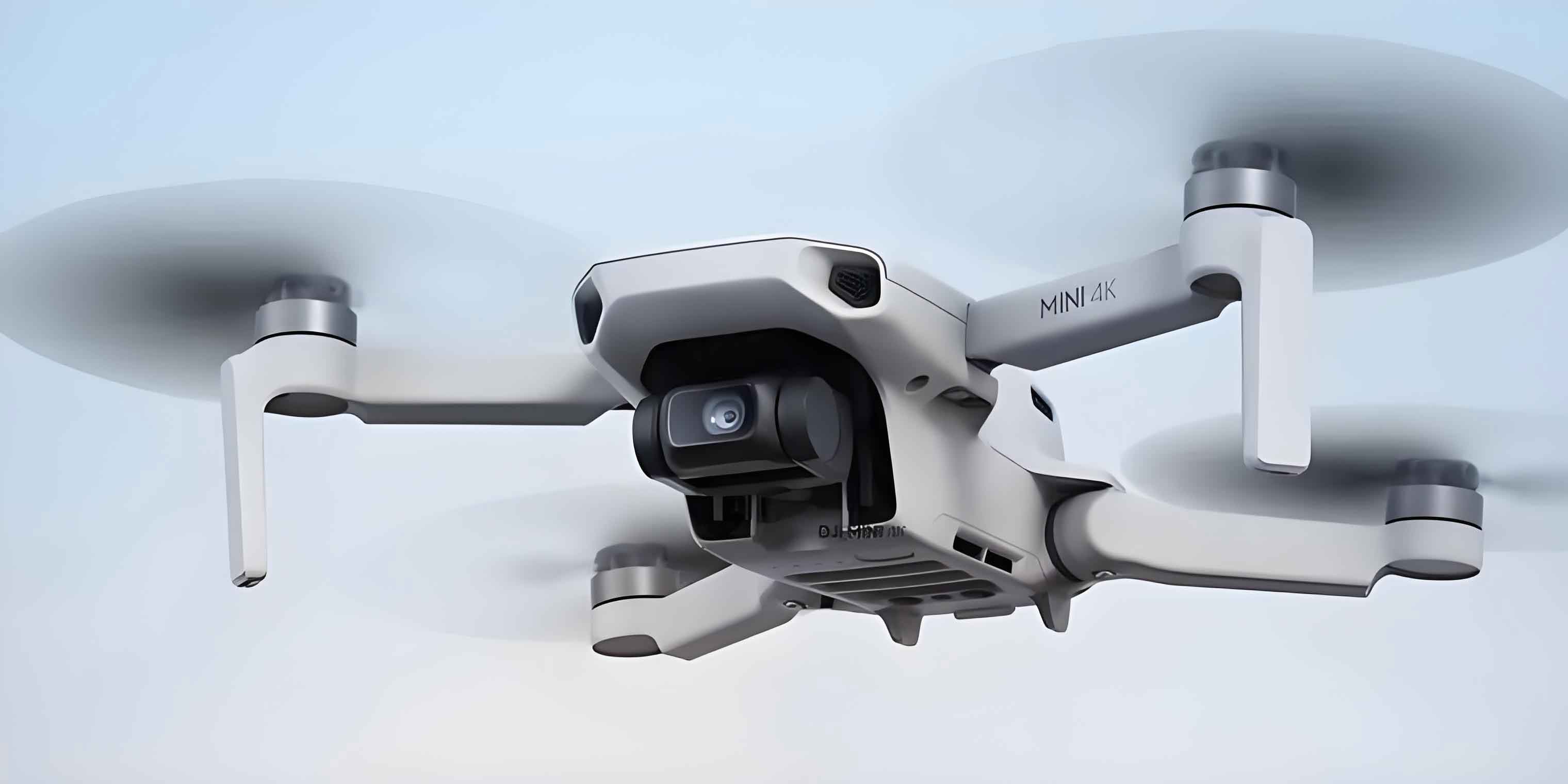
Table 3 summarizes the key parameters of the UAV drone platform and inspection route.
| Parameter | Value |
|---|---|
| UAV drone model | DJI Matrice 30T |
| Positioning accuracy | Centimeter-level (RTK) |
| Single flight endurance | > 41 min |
| Camera model | DJI Zenmuse H30T |
| Visible resolution | 20 MP (50x optical hybrid zoom) |
| Infrared resolution | 640 × 512 pixels |
| Thermal sensitivity | < 50 mK |
| Inspection area | ~220,000 m2 |
| Route length | > 6,300 m |
| Task duration | ~0.5 h |
Results and Observations
According to the local gray level analysis method, an anomaly point was detected on the rooftop of Building 2 of the LCD factory. The exhaust gas combustion treatment equipment showed a local hot spot on the infrared image. Upon confirmation by maintenance personnel, it was found that the outer surface temperature of the equipment reached 131 °C, which exceeded the standard value of 80 °C. The equipment was taken out of service for repair, preventing a potential fire.
Using the long life cycle monitoring method, the temperature variation curve of the photovoltaic panels on the rooftop of Building 1 was plotted over a period of one month. The average temperature was 44.7 °C, below the 90 °C threshold, but an upward trend was observed. This was attributed to the increasing ambient temperature in summer. Continuous monitoring was recommended to ensure the temperature remains below the standard.
Table 4 shows typical anomalies discovered during the UAV drone inspection over one month.
| No. | Location | Anomaly Description | Action Taken |
|---|---|---|---|
| 1 | Building 3 rooftop | Photovoltaic panel cracked | Replaced to prevent heat concentration and fire |
| 2 | Building 2 rooftop | Exhaust gas treatment device outer surface at 131 °C | Shutdown and repair, avoided fire hazard |
| 3 | Building 1 rooftop | General exhaust duct top rusted and damaged | Replaced rusted section, extended duct life |
Benefits Analysis
Manpower Efficiency
The manpower efficiency improvement is calculated as follows. The total inspection time \( T \) is given by:
$$ T = S \times t $$
where \( S \) is the total rooftop area to be inspected (220,000 m2), and \( t \) is the time required per 10,000 m2. For manual inspection, \( t_{\text{manual}} = 1 \) h per 10,000 m2, so \( T_{\text{manual}} = 22 \) h. For UAV drone inspection, \( t_{\text{UAV}} = 0.016 \) h per 10,000 m2 (1 minute), so \( T_{\text{UAV}} = 0.35 \) h. The efficiency improvement is:
$$ \text{Improvement} = \frac{T_{\text{manual}} – T_{\text{UAV}}}{T_{\text{manual}}} \times 100\% = \frac{22 – 0.35}{22} \times 100\% \approx 98.4\% $$
Thus, the UAV drone inspection platform improves inspection efficiency by 98.4% compared to manual inspection.
Safety Benefits
By applying the visible light and infrared image checklists (Tables 1 and 2), an average of 15 anomalies were discovered per month. Without the UAV drone platform, these anomalies would have been missed due to the limitations of manual inspection perspective. The indirect economic benefits depend on the value of the equipment and the production losses avoided by preventing fires. The safety benefits are immense and incalculable in terms of potential fire prevention.
Table 5 summarizes the benefit comparison between manual and UAV drone inspection.
| Item | Manual Inspection | UAV Drone Inspection | Benefit |
|---|---|---|---|
| Inspection time for 220,000 m2 | 22 h | 0.35 h | 98.4% reduction |
| Manpower required per inspection | 1 person (full day) | 1 person (0.5 h) | Significant manpower saving |
| Anomalies detected per month (average) | Limited by perspective | 15 (including hard-to-reach areas) | Enhanced safety coverage |
| Fire prevention capability | Moderate | High (early detection of hot spots) | Reduced fire risk |
Future Outlook
The UAV drone-based factory intelligent inspection platform, in addition to the above functions and applications, has potential for further expansion. For example, integrating AI technology can enhance its intelligence level. Through algorithms, the dual-spectrum image anomalies can be intelligently identified, and anomaly lists and reports can be output, further improving safety efficiency. For common external construction operations inspections, such as high-altitude maintenance and hot work operations, the high-resolution camera can monitor whether construction workers have unsafe behaviors such as not wearing safety belts while working at heights, and send corresponding alerts to safety managers. In the event of a chemical leakage accident in the factory, a UAV drone can be deployed to areas that emergency detection personnel cannot reach. It can also scan and inspect building structures for cracks, improving building safety.
Table 6 outlines potential future applications of the UAV drone platform.
| Application | Description | Benefits |
|---|---|---|
| AI-based anomaly recognition | Using deep learning to automatically classify hot spots, cracks, etc. | Faster response, reduced manual review |
| Construction safety monitoring | Detecting unsafe behaviors (no harness, no helmet) | Improved worker safety |
| Chemical leak emergency detection | Deploying UAV drone to hazardous zones with gas sensors | Reduced human exposure risk |
| Building structural inspection | Identifying facade cracks, roof leaks using visible and thermal imagery | Proactive maintenance, extended building life |
Conclusion
This paper proposed a comprehensive application method for a UAV drone-based factory intelligent inspection platform. The feasibility and advantages of the platform in terms of efficiency and perspective were analyzed. Anomaly detection methods using both visible and infrared images, as well as a long-life cycle equipment status monitoring and management method, were developed and applied in an LCD factory in Anhui. The results show that the UAV drone-based platform detects an average of 15 anomalies per month and improves inspection efficiency by 98.4%. The platform demonstrates high feasibility and economic benefits. Furthermore, future expansions such as AI recognition, construction monitoring, and chemical leak detection are promising. The integration of UAV drone technology into factory safety management offers a robust solution for modern industrial safety challenges.