
As a firefighting professional deeply involved in technological integration, I have witnessed firsthand the transformative impact of drone technology on our field. Over the years, we have moved from traditional, ground-based reconnaissance methods to leveraging aerial systems that provide unprecedented situational awareness. This shift is not merely a trend but a necessary evolution to enhance safety, efficiency, and effectiveness in灭火救援 scenarios. In this comprehensive discussion, I will delve into the intricacies of drone applications, emphasizing the critical role of drone training in maximizing their potential. Our experiences in deploying drones across various incidents—from urban fires to natural disasters—have shaped our understanding of their capabilities and limitations. Through this article, I aim to share insights on how drones are revolutionizing firefighting, supported by technical analyses, tables, and formulas that summarize key concepts. The integration of drones is a collaborative effort, requiring continuous learning and adaptation, which is why drone training remains a cornerstone of our operational readiness.
To begin, let us explore the fundamental aspects of drone technology. Drones, or unmanned aerial vehicles (UAVs), are aircraft operated without a human pilot onboard, controlled remotely or autonomously via pre-programmed plans. In firefighting, we primarily utilize multi-rotor drones due to their vertical take-off and landing capabilities, stability in hover, and ease of operation. These systems consist of four core components: the airframe, flight control system, radio communication link, and modular payloads. The payloads are customizable, enabling functions such as high-definition imaging, infrared sensing, and payload delivery. A comparative analysis of drone types is essential for selecting the right tool for specific rescue missions. The table below summarizes the key characteristics of fixed-wing and multi-rotor drones commonly used in our operations.
| Drone Type | Advantages | Disadvantages | Typical Applications in Firefighting |
|---|---|---|---|
| Fixed-Wing UAV | Long endurance (e.g., 2+ hours), high speed, large coverage area | Requires runway for launch, less maneuverable, higher cost | Large-scale forest fire monitoring, aerial mapping |
| Multi-Rotor UAV | Vertical take-off/landing, stable hover, compact size, lower cost | Shorter flight time (e.g., 30-60 minutes), sensitive to wind | Urban fire reconnaissance, close-range inspection, payload delivery |
The advantages of drones in firefighting are multifaceted. Firstly, they offer high precision and stability, allowing us to assess disaster zones with millimeter-level accuracy from altitudes of 100 to 1,000 meters. This capability reduces the need for personnel to enter hazardous environments, thereby minimizing risk. Secondly, drones are cost-effective over time; once equipped, they can be deployed repeatedly for various tasks without significant additional expenses. Thirdly, their modular design enables rapid configuration for specific missions. For instance, by attaching thermal cameras, we can detect heat signatures through smoke, while gas sensors measure toxic compound concentrations. The efficiency gain from drone use can be quantified using a simple formula for operational time savings: $$ \Delta T = T_{traditional} – T_{drone} $$ where \( \Delta T \) represents the time saved, \( T_{traditional} \) is the duration of traditional methods, and \( T_{drone} \) is the time taken with drone assistance. In many cases, we have observed \( \Delta T > 50\% \), drastically improving response times. However, realizing these benefits hinges on comprehensive drone training, as operators must master both piloting skills and data interpretation to make informed decisions.
In our实战应用, drones serve six primary functions that are integral to modern firefighting. Each function leverages specific technologies, and their effectiveness is enhanced through rigorous drone training programs. Below, I detail these functions with examples from our field experiences.
High-Definition Imaging: Drones equipped with 4K cameras and infrared sensors provide real-time visual data, day or night. This allows us to map fire spread, identify structural weaknesses, and monitor hotspots. The image resolution can be modeled by $$ R = \frac{f}{D} \times \alpha $$ where \( R \) is the resolution, \( f \) is the focal length, \( D \) is the distance to target, and \( \alpha \) is a sensor constant. By optimizing these parameters, we achieve clear imagery for tactical planning.
Disaster Reconnaissance: Beyond visuals, drones carry侦检 devices like gas detectors and anemometers. They can access confined or dangerous areas, transmitting data on temperature, wind speed, and hazardous gas levels. This information is crucial for assessing environmental conditions and predicting fire behavior. For instance, we use drones to measure gas concentrations using the formula $$ C = k \cdot \frac{I}{d^2} $$ where \( C \) is concentration, \( k \) is a calibration factor, \( I \) is sensor intensity, and \( d \) is distance from source. Such data feeds into our decision-making processes, reducing guesswork and enhancing safety.
Localization and Search: In search-and-rescue missions, drones with GPS and thermal imaging pinpoint trapped individuals or missing firefighters. We have successfully located victims in collapsed buildings or rugged terrains by analyzing thermal signatures. The localization accuracy \( A \) can be expressed as $$ A = \sqrt{(\Delta x)^2 + (\Delta y)^2} $$ where \( \Delta x \) and \( \Delta y \) are positional errors. With advanced drones, \( A \) can be less than 1 meter, speeding up rescues. This capability underscores the importance of drone training in interpreting thermal data and coordinating with ground teams.
Signal Coverage: Drones act as aerial communication relays in disasters where infrastructure is damaged. Equipped with mesh networking modules, they establish ad-hoc networks for voice, video, and data transmission. The communication range \( R_c \) can be estimated by $$ R_c = \frac{P_t G_t G_r \lambda^2}{(4\pi)^2 L} $$ where \( P_t \) is transmission power, \( G_t \) and \( G_r \) are antenna gains, \( \lambda \) is wavelength, and \( L \) is path loss. In practice, our drones extend coverage up to 40 km, ensuring uninterrupted command and control. This function is vital in large-scale incidents, and operators require specialized drone training to deploy and manage these networks effectively.
Warning and Illumination: Drones with high-luminosity LEDs provide aerial lighting for night operations, enabling continuous rescue efforts. They can also flash signals to communicate with personnel on the ground. The illumination area \( A_i \) depends on the light intensity \( I_l \) and altitude \( h \), given by $$ A_i = \pi \left( h \cdot \tan(\theta) \right)^2 $$ where \( \theta \) is the beam angle. We often use this to illuminate zones up to 500 m², improving visibility and safety.
Rescue Operations: Drones deliver payloads such as fire retardants, life vests, or medical supplies to inaccessible areas. For example, in high-rise fires, drones can eject灭火剂 to suppress flames before ground teams arrive. The payload capacity \( P_{max} \) is limited by drone thrust \( T \) and weight \( W \), following $$ P_{max} = T – W $$ With advancements, some drones now carry up to 20 kg, covering灭火面积 of 80 m² per drop. This direct intervention saves lives and property, but it demands precise drone training to handle payload dynamics and targeting.
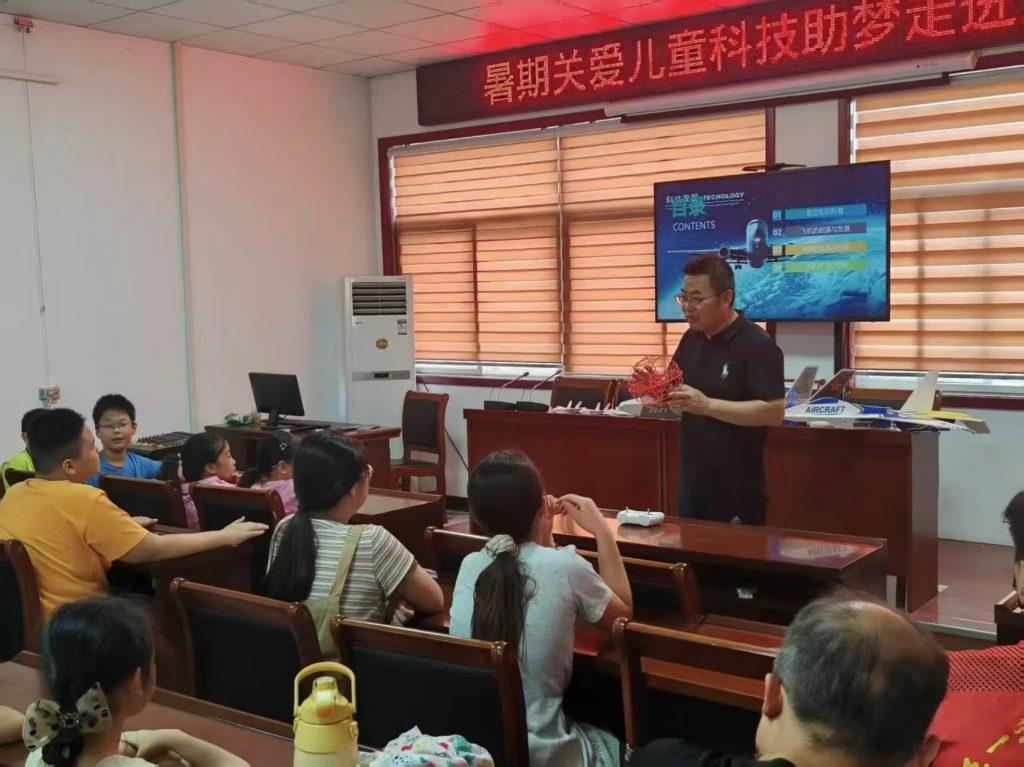
The image above illustrates a typical drone training session, where operators practice flight maneuvers and payload deployment in simulated environments. Such hands-on experience is indispensable for mastering the functions discussed. As we look to the future, several development directions will further enhance drone utility in firefighting. These include improving耐火隔热性能 through material science, enhancing flight flexibility via foldable designs, enabling集群协同 for multi-drone missions, establishing comprehensive灾情数据库 for data-driven decisions, and optimizing payload integration. Each area requires ongoing research and, critically, advanced drone training to implement new technologies safely. For instance, cluster coordination can be modeled using swarm algorithms, where each drone’s position \( \vec{r}_i(t) \) updates based on neighbor interactions: $$ \vec{r}_i(t+1) = \vec{r}_i(t) + \sum_{j \neq i} \left( \frac{\vec{r}_j – \vec{r}_i}{|\vec{r}_j – \vec{r}_i|^2} \right) $$ This allows autonomous formation flying for wide-area surveillance. Similarly, database systems will leverage machine learning to analyze historical incident data, aiding predictive analytics. However, without proper drone training, these advancements risk being underutilized or leading to operational failures.
To maximize the application effects of drone technology, we have adopted a multifaceted strategy centered on drone training. Our approach involves five key pillars, summarized in the table below, which outline how we integrate training into every aspect of drone deployment.
| Strategy Pillar | Description | Role of Drone Training | Expected Outcome |
|---|---|---|---|
| Intensive Training Programs | Implement certified courses covering flight regulations, emergency procedures, and scenario-based simulations. | Ensures operators are proficient in piloting, data analysis, and equipment maintenance; includes initial and recurrent training. | Reduced human error, improved mission success rates, compliance with safety standards. |
| Quality Assurance and Maintenance | Regular inspections,保养, and repairs of drones and payloads, with manufacturer partnerships for support. | Training focuses on diagnostic skills, preventive maintenance, and troubleshooting to extend drone lifespan. | Enhanced reliability, minimized downtime, cost savings over long-term use. |
| Rigorous Testing Protocols | Conduct pre-deployment tests, including flight stability, communication links, and payload functionality. | Operators learn to perform standard and专项测试, ensuring drones meet operational requirements in varied conditions. | Increased safety, confirmation of performance metrics, readiness for real incidents. |
| Software-Hardware Integration | Develop databases and analytics platforms to process drone-collected data, enabling real-time decision support. | Training covers software usage, data interpretation, and cross-referencing with historical databases for actionable insights. | Faster information processing, better situational awareness, optimized resource allocation. |
| Innovation in Fire-Specific Drones | Research and develop drones tailored for firefighting, with features like heat resistance, modular payloads, and swarm capabilities. | Advanced training modules on new drone models, payload configurations, and协同 tactics to leverage cutting-edge technology. | Expanded operational scope, higher efficiency in complex scenarios, future-proofing of firefighting capabilities. |
In our daily operations, we emphasize that drone training is not a one-time event but an ongoing process. We conduct monthly drills that simulate real火灾 scenarios, such as industrial blazes or wilderness searches, to keep skills sharp. These exercises often involve公式-based assessments, where we calculate performance indicators like response time \( t_r \) and accuracy \( \alpha \): $$ t_r = t_{detect} + t_{deploy} + t_{action} $$ and $$ \alpha = \frac{\text{correct decisions}}{\text{total decisions}} \times 100\% $$ By tracking these metrics, we refine our training curricula to address weaknesses. Moreover, we collaborate with academic institutions to integrate the latest research into our programs, ensuring that our drone training stays ahead of technological curves. This proactive approach has led to a significant reduction in incident-related injuries and improved outcomes in rescue missions.
Looking ahead, the potential for drones in firefighting is boundless. With advancements in artificial intelligence, we are exploring autonomous drones that can navigate complex environments without direct human control. However, this does not diminish the need for drone training; instead, it shifts the focus to supervision, ethics, and system management. We anticipate that within the next decade, drones will become standard equipment in every fire department, supported by robust training frameworks that ensure safe and effective use. Our commitment to continuous learning and adaptation will be key to harnessing these innovations.
In conclusion, as a firefighting professional, I firmly believe that drone technology is a game-changer for our industry. From enhancing侦查 capabilities to enabling direct救援行动, drones have proven their worth time and again. Yet, their success hinges on the human element—specifically, the quality of drone training that operators receive. By investing in comprehensive training programs, rigorous testing, and iterative improvement, we can unlock the full potential of drones, making灭火救援 safer, faster, and more efficient. The journey involves constant collaboration, innovation, and education, but the rewards—in terms of lives saved and property protected—are immeasurable. Let us embrace this technology with a commitment to excellence in training, ensuring that every flight contributes to a safer world.