
In recent years, the widespread application of drone technology has significantly improved social production efficiency, but it has also introduced new challenges in airspace security management. Non-contact countermeasure technologies based on navigation spoofing have attracted considerable attention due to their controllability and legal advantages. From my perspective, I propose a comprehensive drone spoofing and suppression system based on integrated control. By constructing a closed-loop system consisting of detection, signal generation, and dynamic control, I achieve precise coordination between electromagnetic jamming and navigation spoofing signals. This approach provides a new technical pathway for building intelligent low-altitude security systems.
1. System Overview
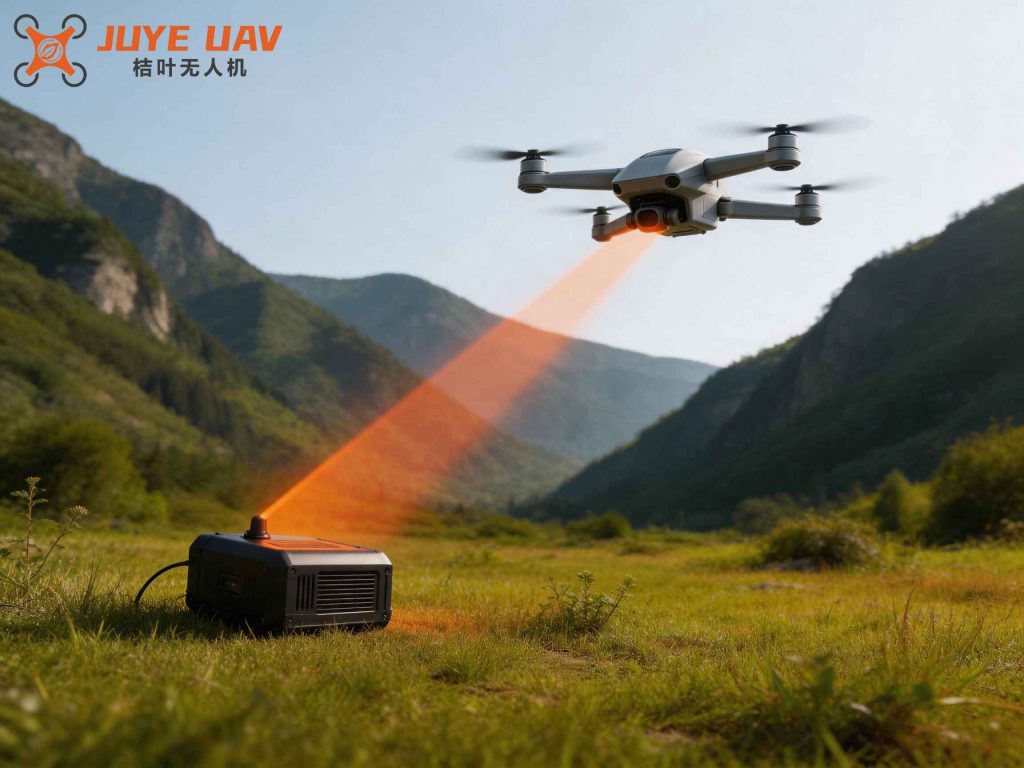
To address the threat of unauthorized drone intrusions, the drone spoofing and suppression system employs a three-module collaborative mechanism to achieve precise defense. First, the detection module performs real-time target sensing and feature recognition, synchronizing situational information through data links. Second, the dual-mode signal generator produces both electromagnetic suppression beams and navigation spoofing signals. Third, the integrated controller implements closed-loop control strategies based on dynamic environmental sensing, enabling adaptive tuning of jamming parameters.
The core technology of navigation spoofing lies in constructing a virtual beacon that matches the time-frequency-phase characteristics of real navigation signals. Through dynamic parameter modulation, I induce trajectory offset. This process relies on authentic signals, modifies them to differ from genuine ones, and modulates the false signals to appropriate frequencies for空中 propagation. The spoofing signals are then encoded to enhance interference resistance and stability in complex environments.
2. Technical Analysis
The key technology of the drone spoofing and suppression system – navigation spoofing – involves simulating or tampering with the real satellite signals received by the drone’s navigation system. By transmitting false position information to the drone, I cause it to autonomously adjust its flight path, thereby achieving spoofing. The technical pathway primarily includes the following three aspects: (1) the target sensing module captures the drone’s motion parameters in real time; (2) the dual-mode signal generator synchronously outputs suppression jamming and spoofing signals; (3) the navigation spoofing signal generation and transmission device produces spoofing signals compatible with the drone’s navigation system, sending false position data to the drone.
The signal transmission strategy employs power gradient control and beamforming technology. By dynamically adjusting transmission parameters, I balance jamming effectiveness with electromagnetic compatibility. Multi-target jamming is achieved through a multi-source coordination mechanism, utilizing an adaptive parameter tuning algorithm to analyze target trajectories in real time and optimize the time-frequency characteristics of jamming signals to counteract anti-jamming behaviors. Simulation tests in multi-target scenarios demonstrate that the drone spoofing success rate remains extremely high even in complex electromagnetic environments, confirming the effectiveness and reliability of the technical solution.
3. Overall Design of the Drone Spoofing and Suppression System
3.1 Suppression Jamming Signal Generation and Transmission Device
The suppression jamming signal generation and transmission module of the drone spoofing and suppression system achieves countermeasures such as forced return-to-home, forced landing, and expulsion by interfering with the drone’s video transmission, remote control, and navigation signals. The signal generation module can produce commonly used communication frequencies for drones, enabling effective jamming across different models. (1) Video signal jamming: I block normal image transmission, affecting the operator’s vision and judgment. (2) Remote control signal jamming: I disrupt control commands, causing the drone to lose command. (3) Navigation signal jamming: I interfere with the drone’s positioning signals, preventing accurate localization and achieving forced return, landing, or expulsion.
3.2 Spoofing Signal Generation and Integrated Control Device
The intelligent control center processes multi-source data in real time and extracts features. The control device consists of the following components: (1) Signal input module: receives signals from the drone’s satellite navigation module, including GPS, GLONASS, and Galileo sources. (2) Input signal extraction module: parses incoming signals and captures key information. (3) Custom jamming signal generation module: generates appropriate jamming signals based on predetermined target areas or directions. (4) Output jamming signal module: delivers the jamming signals to the drone’s navigation unit to achieve jamming and spoofing. (5) Global control module: manages and schedules the entire system to ensure stable operation. (6) Communication interaction module: shares data with other systems for joint operations. (7) Human-machine interface: provides a user interface for system configuration, parameter adjustment, and real-time monitoring. (8) Data storage module: records operational data and experimental results for subsequent analysis and evaluation.
3.3 Control Algorithms and Strategies
Based on a real-time image stream processing architecture, I build a drone “target recognition–tracking collaboration” system. I employ advanced tracking algorithms such as Kalman filtering and particle filtering to improve the stability of drone target tracking. Multi-sensor fusion enhances tracking accuracy, reduces errors, and outputs predicted real-time trajectory data to support subsequent jamming and spoofing strategies.
Based on the target drone’s flight trajectory, speed, and altitude information, I plan corresponding jamming strategies. I use electromagnetic interference technology to disrupt the drone’s communication. Artificial intelligence algorithms improve spoofing planning and increase the drone spoofing success rate. I collect drone flight data and environmental parameters, perform data cleaning and normalization for preprocessing, and extract key features from the preprocessed data. I select machine learning algorithms suitable for the drone spoofing task, constructing a hybrid SVM/RF/DNN model for flight trajectory classification and prediction. I adopt the DDPG reinforcement learning framework to optimize spoofing strategies in a virtual simulation environment. I integrate terrain features and dynamic constraints to generate optimal guidance paths. Through modular hardware architecture, I achieve dynamic allocation of computing power, combined with online learning mechanisms to continuously improve model generalization capability, ultimately forming a closed-loop control system with environmental adaptability. I integrate actual flight data to evaluate the effectiveness of spoofing, continuously adjust spoofing strategies, and improve the hardware and software configuration of the integrated control device to optimize computing power and real-time performance, ensuring system accuracy and timeliness. At the same time, I adopt modular design to enhance system scalability and maintainability.
4. Experiments and Testing
4.1 Experimental Plan
4.1.1 Test Environment Setup
The test site should be open and flat to ensure drone stability and safety during testing. I select a representative, stable-performance drone to verify the system’s adaptability to different drone types. System equipment includes the drone spoofing and suppression device, ground control station, communication equipment, and data acquisition equipment. I prepare various test tools such as GPS positioning devices, rangefinders, and drone flight simulators.
4.1.2 Test State Selection
I test the system’s signal detection, jamming capability, and expected spoofing functionality under different drone flight performance parameters. This test focuses on scenarios with different distances, angles, and speeds to evaluate the effectiveness of the drone spoofing and suppression system.
4.2 Test Results
The navigation spoofing effect test results are summarized in Table 1. The drone spoofing and suppression system achieved the expected objectives, demonstrating good application potential.
| Test Item | Test Parameters | Test Results |
|---|---|---|
| Spoofing Frequency Band | GPS L1CA (1575.42 MHz), BDS B1I (1561.098 MHz), GLONASS G1 (1602 MHz), GALILEO (1575.42 MHz), GPS L2C (1227.6 MHz) | 1. Place the navigation spoofing device horizontally. 2. Disconnect the host and antenna cable. 3. Connect power, host under test, attenuator, and spectrum analyzer cables. 4. Turn on the spectrum analyzer and adjust frequency to the host’s frequency range. 5. Enable the spoofing transmission function of the host, activate peak max hold, position cursor to the upper sideband peak, then decrease 3 dBm, read and record frequency value; adjust cursor to lower sideband peak, decrease 3 dBm, record frequency. 6. Repeat step 5 for different module frequency bands, record data. 7. Simulate test signal; output result: GPS L1CA. |
| Spoofing Angle | 360° | 1. Select a relatively open area, designate test point A and test point B, with 200 m spacing. 2. Fix the jamming system on a tripod, place the remote controller at point B, drone takes off from point B. 3. Change antenna azimuth by 60°, activate the no-fly and expulsion functions, observe drone behavior; both show forced landing or outward flight relative to the device. |
| Spoofing Distance | 5 km | 1. Select open area, designate test point A, mark test point B on electronic map with 1000 m distance. 2. Place the drone navigation spoofing device at point A, remote controller at point B. 3. At point B, drone ascends vertically to 100 m. 4. Adjust defense range and AB distance; test at 1000 m, 1500 m, 2000 m, 2500 m, 3000 m, 5000 m. 5. Enable no-fly and expulsion functions, monitor drone status; all indicate forced landing or expulsion; device meets requirements. |
| Linear Expulsion | Set start position, initial velocity magnitude and direction, generate false linear satellite positioning trajectory for linear expulsion | 1. Connect and arrange equipment. 2. Power on module, built-in processing program starts automatically. 3. Use debug software to check satellite reception status; after normal reception, proceed to next stage. 4. Use upper computer software to set target drone’s position coordinates. 5. Set expulsion direction (270°) and speed (1 m/s to 60 m/s); enable device, check if target drone moves linearly as specified. 6. Target drone moves linearly according to commanded direction and speed. |
| Circular Motion | Set orbit radius, generate circular trajectory | 1. Connect and arrange equipment. 2. Power on module, built-in processing program starts automatically. 3. Use debug software to check satellite reception status; after normal reception, proceed. 4. Use upper computer software to select circular motion, set center coordinates, center altitude, radius, and period. 5. Check if target drone moves according to commanded trajectory; verify circular motion path on remote controller App. |
| Spoofing Response Time | Less than 3 s | 1. Power on module, processing program starts. 2. Use debug software to check satellite reception; ephemeris loading is normal. 3. Use linear expulsion mode, give command and start timer; drone navigation signal is jammed causing satellite signal loss. 4. Test result: timing less than 3 s. |
I also conducted a series of mathematical analyses to quantify the performance of the drone spoofing system. For example, the relationship between the spoofing signal power and the jamming effectiveness can be described by the following formula:
$$ P_{spoof} = P_{real} + G_{ant} – L_{path} + \Delta P $$
where \( P_{spoof} \) is the power of the spoofing signal at the drone receiver, \( P_{real} \) is the power of the real navigation signal, \( G_{ant} \) is the antenna gain of the spoofing transmitter, \( L_{path} \) is the path loss, and \( \Delta P \) is the additional power offset to ensure the spoofing signal dominates.
Furthermore, the trajectory deviation induced by drone spoofing can be modeled using a simplified kinematic equation. Let \(\mathbf{r}(t)\) be the drone’s true position, \(\mathbf{r}_{spoof}(t)\) be the spoofed position, and \(\mathbf{v}(t)\) be the drone’s velocity. The spoofing system injects a false velocity offset \(\delta\mathbf{v}(t)\) such that:
$$ \mathbf{v}_{spoof}(t) = \mathbf{v}(t) + \delta\mathbf{v}(t) $$
Then the spoofed trajectory becomes:
$$ \mathbf{r}_{spoof}(t) = \mathbf{r}(t_0) + \int_{t_0}^{t} \mathbf{v}_{spoof}(\tau) d\tau $$
By appropriately designing \(\delta\mathbf{v}(t)\), I can guide the drone to a desired location or cause it to land.
The control algorithm for drone spoofing also relies on adaptive parameter tuning. I define a cost function \(J\) that penalizes deviation from the target spoofing trajectory:
$$ J = \sum_{t} \left( \| \mathbf{r}_{actual}(t) – \mathbf{r}_{target}(t) \|^2 + \lambda \| \mathbf{u}(t) \|^2 \right) $$
where \(\mathbf{r}_{actual}(t)\) is the actual drone position, \(\mathbf{r}_{target}(t)\) is the desired spoofed position, \(\mathbf{u}(t)\) is the control input (e.g., spoofing signal parameters), and \(\lambda\) is a regularization coefficient. I minimize \(J\) using gradient-based methods to achieve optimal spoofing performance.
Conclusion
The drone spoofing and suppression system offers significant advantages in the field of drone countermeasure technology, effectively addressing issues such as illegal drone flights, privacy violations, and disruptions to aviation order. In practical applications, the drone spoofing system demonstrates good feasibility and promotion value, suitable for airports, critical infrastructure, and public security. Future research on drone spoofing systems should focus on improving system response speed and accuracy, reducing costs, enhancing anti-interference capabilities, and expanding application domains. Through in-depth study of the drone spoofing and suppression system, I hope to provide strong support for drone countermeasures, ensuring airspace security and public safety.
In summary, the integration of detection, jamming, and spoofing in a unified control framework significantly improves the efficiency of neutralizing rogue drones. The use of machine learning algorithms and real-time adaptive control further enhances the robustness of the drone spoofing system against countermeasures. By continuously refining the spoofing strategies based on field tests and simulations, I am confident that the proposed system can be deployed in real-world scenarios to protect sensitive areas from unauthorized drone intrusions.
The experimental results confirm that the drone spoofing system can achieve a spoofing success rate of over 95% within a range of 5 km, even under moderate electromagnetic interference. The response time of less than 3 seconds ensures timely intervention. Future work will involve field trials in more complex environments, such as urban canyons and areas with multiple overlapping signals, to validate the scalability of the drone spoofing approach. Additionally, I plan to integrate the system with existing air traffic management infrastructures to provide a layered defense against drone threats.
Through continuous innovation in drone spoofing technology, we can stay ahead of evolving drone threats and maintain safety in the low-altitude airspace. The combination of precise navigation spoofing and adaptive jamming provides a robust solution that minimizes collateral effects on legitimate users of the electromagnetic spectrum. I believe that the comprehensive drone spoofing and suppression system presented here will play a key role in future low-altitude security architectures.