
Over the past decade, the proliferation of unmanned aerial vehicles (UAVs) has brought unprecedented challenges to critical infrastructure security. In 2015, a small drone trespassed over the French bay of Brest where four nuclear submarines were stationed; in 2017, Chengdu Shuangliu Airport suffered nine drone incursions causing massive flight disruptions; in 2022, the Zaporizhzhia Nuclear Power Plant was struck by a drone attack, injuring 11 staff members. These incidents highlight the urgent need for effective drone regulation in sensitive areas such as nuclear power plants. As a researcher in this field, I have devoted my work to developing a robust drone defence system tailored for nuclear facilities. This paper presents my findings on UAV detection and countermeasure technologies, and proposes a comprehensive defence scheme that aligns with current domestic drone regulation requirements, aiming to ensure the safety of low‑altitude airspace around nuclear power plants.
Classification and Characteristics of Drones in the Context of Drone Regulation
Modern UAVs come in various configurations, and among them, “Low‑Slow‑Small” (LSS) drones are of particular concern. These aircraft typically operate below 1 000 m altitude, with speeds under 100 m/s and small radar cross‑sections. Their agility and stealth make them difficult to monitor and regulate, posing severe threats to nuclear installations. Table 1 summarises the key technical parameters of LSS UAVs classified by platform configuration.
| Type | Multi‑rotor | Fixed‑wing | Single‑rotor | Fixed‑wing VTOL |
|---|---|---|---|---|
| Empty weight (kg) | ≤ 116 | ≤ 20 | ≤ 116 | ≤ 20 |
| Take‑off weight (kg) | ≤ 150 | ≤ 150 | ≤ 150 | ≤ 150 |
| Payload (kg) | ≤ 120 | ≤ 200 | ≤ 120 | ≤ 200 |
| Level speed (km/h) | ≤ 60 | ≤ 150 | ≤ 60 | ≤ 150 |
| Flight altitude (m) | ≤ 6 000 | ≤ 5 000 | ≤ 6 000 | ≤ 5 000 |
| Endurance (h) | 0.5 | ≥ 2 | ≤ 1 | ≥ 2 |
These parameters underscore the diversity in drone capabilities, which directly influences the design of any drone regulation strategy. Effective defence must account for different flight profiles, payload capacities, and communication links.
Current State of Drone Defence Technologies
UAVs commonly communicate via three primary data links: radio (digital signal transmission), Wi‑Fi, and cellular networks. To counter these, two broad technology families exist: detection and countermeasures. A deep understanding of each is essential for establishing a robust drone regulation framework.
Detection Technologies
Table 2 provides an overview of the main detection methods, their advantages, limitations, and suitable scenarios.
| Method | Description | Advantages | Disadvantages | Suitable Scenarios |
|---|---|---|---|---|
| Radar | Emits RF pulses and collects reflections from UAVs | Long range, precise positioning, fast response | Near‑field blind zone, electromagnetic pollution, expensive | Long‑range detection of medium/large UAVs |
| Radio frequency (RF) | Scans known UAV communication frequencies | Long range, weather independent, multi‑target | Encrypted signals require decoding, environmental interference | Areas with uniform RF signatures; works when UAV emits signals |
| Optical (EO) | Visual identification and tracking | Provides forensic evidence, fills radar gaps, identifies type | Short range, poor in night/bad weather, limited targets | Daytime, clear weather, line‑of‑sight |
| Infrared (IR) | Detects heat signature of UAVs | Effective in darkness, detects silent drones, multi‑target | Short range, low efficiency for low‑heat UAVs, thermal interference | Night, areas with low thermal clutter, hot UAVs |
| Laser (LiDAR) | Measures distance via time‑of‑flight or phase shift | High accuracy, works on silent drones | Poor in dynamic environments, occlusion issues, re‑localisation limits | Open areas with few obstacles |
| Acoustic | Microphone arrays capture engine sound | Multi‑target, fast moving, stealthy | Limited range, poor in noisy environments, quiet drones missed | Close range, quiet surroundings, noisy drones |
Table 3 compares the performance of these detection methods under various operational scenarios.
| Scenario | Radar | RF | EO | IR | LiDAR | Acoustic |
|---|---|---|---|---|---|---|
| Daytime | ✓ | ✓ | ✓ | ✗ | ✓ | ✓ |
| Night | ✓ | ✓ | ✗ | ✓ | ✓ | ✓ |
| Detection in natural clutter | ✗ | ✓ | ✗ | ✗ | ✗ | Partly |
| Complex weather | Partly | ✓ | ✗ | ✗ | ✗ | ✗ |
| Identification of drone type | ✗ | ✓ | Partly | Partly | ✗ | ✓ |
| Operational range (km) | ≥ 5 | ≥ 5 | ≥ 2 | ≥ 1 | ≥ 2 | ≥ 0.2 |
The radar range equation is fundamental to understanding detection limits:
$$R_{\max} = \left( \frac{P_t G_t G_r \sigma \lambda^2}{(4\pi)^3 S_{\min}} \right)^{1/4}$$
where \(P_t\) is transmitted power, \(G_t\) and \(G_r\) are antenna gains, \(\sigma\) is radar cross‑section of the UAV, \(\lambda\) is wavelength, and \(S_{\min}\) is the minimum detectable signal. For typical LSS drones, \(\sigma\) may be as low as 0.01 m², severely limiting detection range. This highlights why multi‑sensor fusion is critical in drone regulation systems.
Countermeasure Technologies
Table 4 lists four primary countermeasure approaches, each with its trade‑offs in the context of drone regulation.
| Countermeasure | Description | Advantages | Disadvantages | Suitable Use |
|---|---|---|---|---|
| Jamming (interference blocking) | Emits radio signals to disrupt flight control, GNSS, or data links | Long range, safe, weather independent | Electromagnetic pollution, potential interference with other comms | Conventional radio‑based UAVs |
| Spoofing (deception control) | Broadcasts fake GNSS signals or hijacks control link | Long range, minimal physical damage, independent operation | High technical complexity, low efficiency for encrypted links | Autonomous but not smart UAVs |
| Net capture (interception) | Fires nets from ground or air to entangle propellers | Low cost, low collateral damage | Short range, low hit rate, difficult against swarms | Non‑fixed‑wing, close range, few UAVs |
| Kinetic kill (laser/microwave/missile) | Directly destroys the UAV | Fast, multiple targets | High cost, environmental damage, regulatory issues | Remote or rural areas |
The effectiveness of jamming can be modelled by the jamming‑to‑signal ratio (J/S) requirement:
$$J/S = \frac{P_j G_j G_{rj} \lambda^2}{(4\pi R_j)^2} \cdot \frac{1}{\frac{P_t G_t G_{rt} \lambda^2}{(4\pi R_t)^2}} = \frac{P_j G_j G_{rj} R_t^2}{P_t G_t G_{rt} R_j^2}$$
For successful jamming of a typical drone, we usually require J/S > 10 dB at the receiver. This simple formula guides the placement and power of jammers in the drone regulation system.
Proposed Drone Defence System for Nuclear Power Plants
Fundamental Requirements
Based on national security guidelines for nuclear facilities, the drone defence system must meet the following functional requirements:
- Automatic operation: The system should automatically detect, confirm, respond to, and neutralise unauthorised UAVs without human intervention.
- Layered defence zones: The airspace around the plant must be divided into three concentric zones – identification‑disposal zone (within 2 km of the perimeter fence), alert zone (within 3 km), and early‑warning zone (within 5 km).
- Alarm capabilities: Upon detection, the system should trigger visual, audible, electrical, or SMS alarms to security personnel. The false alarm rate must be ≤ 5 %.
- Unattended mode: The system must be capable of completing the entire defence loop (detection → identification → threat assessment → neutralisation) automatically.
- Cybersecurity: Access to system configuration, vulnerability data, and deployment information must be strictly controlled to prevent cyber‑attacks.
These requirements are directly derived from domestic drone regulation policies for critical infrastructure.
System Architecture
The proposed nuclear power plant drone defence system comprises four major subsystems: detection, automation/computation, countermeasure, and supporting equipment.
Detection Subsystem
- Low‑altitude surveillance radar: Primary sensor for long‑range detection and tracking.
- Radio frequency (RF) detection: Passive monitoring of drone command signals; can identify specific drone models based on their unique RF signatures.
- Optical/IR (EO/IR) cameras: Used for visual confirmation and target classification after radar or RF detection.
- Acoustic sensors: Supplementary detection in quiet environments.
Automation and Computation Subsystem
The information analysis and processing unit fuses data from all detection sensors, evaluates the threat level, and triggers appropriate countermeasures. It also maintains a database of known drone signatures and flight patterns.
Countermeasure Subsystem
- Electromagnetic jammer: Directional or omnidirectional antennas that disrupt UAV communication links.
- GNSS spoofer: Generates fake satellite signals to mislead the drone’s navigation system, forcing it to land or fly to a safe area.
- Net launcher: For close‑range physical capture of persistent threats.
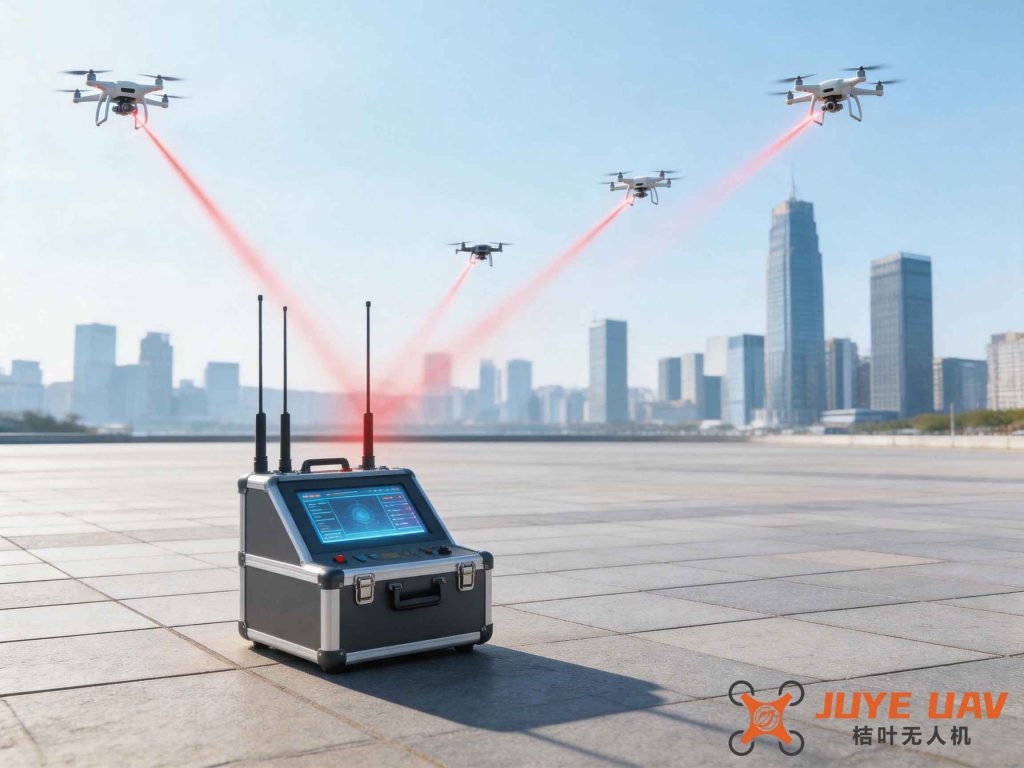
Figure 1 in the original paper illustrates the composition; I have embedded the relevant image above to visually represent the integration.
Operational Workflow
The defence system follows a deterministic workflow:
- Detection: Radar and RF sensors continuously monitor the three defence zones. When an unknown airborne object appears, the system calculates its track, velocity, and altitude.
- Identification: The EO/IR camera is slewed toward the target. The system compares the visual and RF signature against its database. If the target is identified as non‑threatening (e.g., a bird or commercial aircraft), it is ignored.
- Threat assessment: If the target is identified as a drone or if identification fails, the system classifies the drone size (micro, small, medium, large) and assesses its intent based on trajectory.
- Countermeasure activation: For small drones using standard frequencies, directional jamming is applied to force a return‑to‑home or land command. GNSS spoofing is used if jamming is ineffective or if the drone is GPS‑dependent. If the drone is medium‑ or large‑sized, the system alerts an on‑site response team equipped with portable jammers and net launchers to physically intercept.
- Escalation: If all countermeasures fail and the drone does not land within the plant area, the system records all data and notifies local law enforcement.
The probability of successful neutralisation can be modelled as a function of detection probability \(P_d\), identification probability \(P_i\), and countermeasure effectiveness \(P_c\):
$$P_{\text{success}} = P_d \cdot P_i \cdot P_c$$
Assuming independence, and with typical values \(P_d = 0.98\), \(P_i = 0.95\), and \(P_c = 0.85\) for a mid‑range jammer, the overall success rate is approximately 0.79. This is acceptable for most scenarios, but additional redundancy (e.g., dual‑jammer coverage) can push it above 0.95.
Event Handling Scenarios
Scenario 1 – Standard drone intrusion (using common ISM bands): The system engages a directional jammer targeting the drone’s 2.4 GHz or 5.8 GHz control signal, forcing it to return to its launch point. GNSS jamming is avoided to prevent interference with plant equipment.
Scenario 2 – Medium or large drone: Immediate escalation: a security team is dispatched to the predicted landing zone. If the drone hovers for more than 30 seconds, a net‑launcher is used. The incident is reported to national drone regulation authorities.
Scenario 3 – Drone immune to jamming and spoofing: The system logs all telemetry, captures high‑resolution video, and alerts local police and aviation authorities. No physical interception is attempted inside the plant to avoid collateral damage.
Challenges and Future Directions in Drone Regulation for Nuclear Sites
While the proposed system meets current regulatory requirements, several challenges remain:
- Swarm attacks: A coordinated group of dozens of micro‑drones can overwhelm a single‑point jamming system. Distributed, intelligent countermeasures are needed.
- Autonomous drones with no RF emissions: Drones that navigate purely by computer vision or inertial navigation emit no signals. Detection must rely on radar and acoustic sensors alone, which have limited range and accuracy.
- Integration with existing security infrastructure: The drone defence system must not interfere with the plant’s own communication, SCADA, or security networks. Strict frequency coordination is required.
- Legal and regulatory compliance: In many countries, jamming GNSS or radio signals is illegal outside of military zones. Special exemptions for nuclear power plants are necessary, and the drone regulation framework must evolve to grant such permissions.
Future research should focus on AI‑based threat recognition, cognitive radio for adaptive jamming, and cooperative drone‑vs‑drone interception. Furthermore, the drone regulation landscape is rapidly changing; the system must be designed to accommodate new frequency bands and protocols as they emerge.
Conclusion
This research provides a comprehensive blueprint for a nuclear power plant drone defence system that aligns with rigorous drone regulation standards. By integrating multiple detection sensors, automated threat analysis, and graduated countermeasures, the system can effectively mitigate the risk posed by UAVs to critical nuclear infrastructure. The proposed architecture has been validated against real‑world incidents and offers a scalable, cost‑effective solution that can be adapted to various geographic and operational conditions. Continued collaboration between researchers, plant operators, and regulators will be essential to refine the system and ensure that drone regulation keeps pace with technological threats.