
Based on the development laws of modern industrial systems, intelligent equipment and digital industrialization are the key areas of scientific research in the next stage. Currently, intelligent logistics has already benefited from relatively mature flight control systems, hardware manufacturing processes, and satellite-based navigation functions. However, research on the safe operation and flight conflict early warning technology for large fixed-wing drones remains largely blank. This gap prevents the fulfillment of construction requirements for intelligent equipment and its application standards, and fails to meet the foundational conditions for digital industries relying on big data and the Internet of Things. Through preliminary analysis and accumulated research, we summarize the current operational situation, flight methods, and verification conclusions, providing direction for further applied exploration.
Introduction
At present, small rotary-wing drones have achieved short-distance goods delivery on transportation platforms, solving the “last mile” problem in logistics. However, due to their low payload, short range, and unstable single navigation method, these platforms cannot be effectively incorporated into the civil aviation management system. The lack of relevant safety standards for drone flight restricts the development of intelligent aviation logistics technology. With advancements in drone manufacturing, large fixed-wing drones converted from manned transport aircraft have demonstrated clear advantages in payload capacity, flight range, and navigation positioning applications. This makes long-distance logistics transportation based on drone platforms technologically feasible. By establishing a safe operation mechanism for large fixed-wing drones and achieving intelligent flight conflict early warning technology, it is possible to meet the strict requirements of civil airspace flight standards and air traffic services. This ensures the safety of joint flights in mixed airspace and provides technical standard support for flight safety and operational collaboration, thereby promoting the development of the aviation intelligent logistics industry.
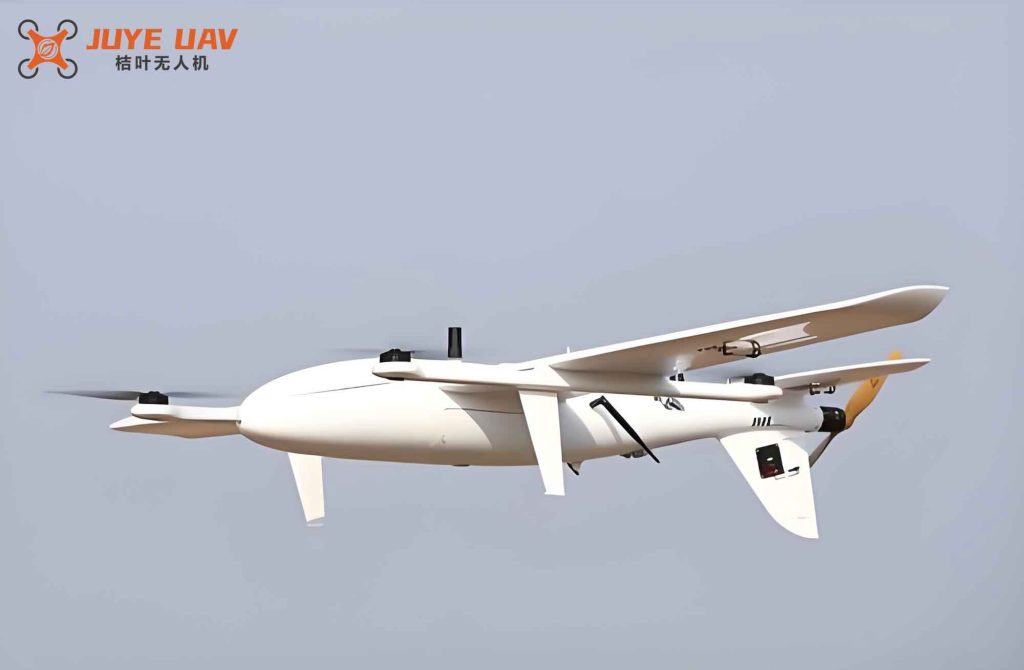
Prior Accumulation and Technology Trends
Current research on safe operation of fixed-wing drones can be roughly classified into three categories. The first category optimizes onboard navigation equipment by studying equipment types and performance, and by sorting navigation data and flight incident events to identify the environment, causes, and improvement measures for incidents caused by navigation factors, thereby improving detection sensitivity. Combined with the analysis of relative motion between static and dynamic objects, flight conflict avoidance measures are developed. The second category improves algorithms or introduces coordinate axes to implement target tracking and trajectory analysis of drones. By checking the correlation between flight trajectory and planned trajectory one by one, optimal solutions from relative distance are used to complete flight path planning. The third category studies safe aircraft operations within a unit airspace, establishes risk assessment parameters and evaluation indicators at various levels, and uses hierarchical management methods for accident factors. By finding distortion points, continuity points, and separation distances in navigation and flight data, relative positional relationships between aircraft are elevated to an evaluation stage through simulation experiments, thereby improving airspace operation efficiency and safety margins.
While the above studies further guarantee flight safety, they have not yet produced a quantitative assessment framework that comprehensively considers other airspace participants, air traffic service rules, and the working efficiency of onboard navigation equipment. Such a framework would be needed to demonstrate the airspace operating environment and flight safety status. The main problems lie in the numerous methods for processing flight and navigation data, none of which form a mathematical description of performance characteristics, making it impossible to effectively use data correlation for evaluation. Additionally, there is a lack of convergence between drone flight data and civil transport aircraft flight data, preventing manned transport aircraft from conducting joint flights with drones and lacking safe operation norms and conflict warning methods.
Therefore, we focus on flight data and navigation parameters, integrate various practical conditions, optimize the phased trajectory deviation (PTD) evaluation model, establish navigation norms and flight rules for fixed-wing drones, and use onboard performance monitoring and alerting (OPMA) features to set actual navigation performance (ANP) monitoring standards. This enables fixed-wing drones to have safe operation and flight conflict early warning capabilities, promoting the development and application of intelligent logistics technology.
Public data shows that the drone market size has reached 40.1 billion RMB in 2021, as shown in the table below.
| Year | Market Size |
|---|---|
| 2016 | 15.2 |
| 2017 | 21.8 |
| 2018 | 28.5 |
| 2019 | 35.6 |
| 2020 | 38.2 |
| 2021 | 40.1 |
Rapid development in agriculture, meteorology, surveying, disaster relief, logistics distribution, etc., drives the following trends:
- System Technology Trend: Intelligent logistics fixed-wing drones are moving toward larger size, extended endurance, and networked clusters. For payload and range requirements, the world’s first ton-class cargo drone was developed in October 2017 by the Institute of Engineering Thermophysics, Chinese Academy of Sciences, together with other institutions. Since then, large cargo drone manufacturing has emerged, and due to their larger fuselage size, installation of various onboard navigation and AI equipment becomes feasible, enabling precise flight and intelligent cluster flight.
- Low-Altitude Flight Safety Standard Trend: Although the concept of low-altitude flight originated in Germany, it is expected to be first realized by China’s EHang. By 2019, EHang had released a 26-ton concept aircraft capable of low-altitude manned and cargo flights. In 2019, German company Volocopter received investment from Micron Technology and began establishing low-altitude air traffic safety standards, which are expected to be stricter than helicopter operation standards. Volocopter is pursuing commercialized autonomous on-demand air taxi and cargo services.
- High Operational Complexity: As early as 2013, Amazon proposed using drones for delivery. Since then, companies such as SF Express, JD, Alibaba Cainiao, and Hangzhou Xunyi have successively deployed drone express delivery. This indicates that the number of participating enterprises in drone logistics transportation is large, each with different operational nature, and requires coordination with military and civil aviation personnel to fully leverage the advantages of large fixed-wing drones in payload, range, and safety.
Overall, the current trends in fixed-wing drone development both domestically and internationally focus on two aspects: first, the improvement of enterprise management methods and clarification of industry regulatory models; second, the establishment of flight safety standards and intelligent operation. Through our project, we can effectively establish navigation working efficiency standards and safe operation mechanisms, achieve flight conflict early warning, and further promote the development of intelligent logistics technology.
Current Technical Research Achievements
To promote the development and application of intelligent logistics technology based on large fixed-wing drones, and to construct safe operation mechanisms and key flight conflict early warning theories for joint flights in mixed airspace with manned transport aircraft, we have drawn on the design principles of Performance Based Navigation (PBN) norms for large transport aircraft from the International Civil Aviation Organization (ICAO). Our team has initially established a method using machine learning to analyze the working efficiency and accuracy of onboard navigation equipment for large fixed-wing drones. We have obtained OPMA features and required core functions, improved and optimized the flight conflict concept and PTD model for civil airspace, forming a safe operation mechanism for joint flights in mixed airspace. At the same time, using OPMA features combined with onboard and ground surveillance equipment, we have built a key theoretical framework for conflict early warning, established navigation norms and ANP monitoring to construct risk identification strategies, formed multi-level avoidance zones combining transport aircraft flight program protection zones and drone flight buffer zones, achieved the goal of joint flights in mixed airspace, and effectively guided the development of key intelligent logistics technologies. The specific achievements are divided into four parts: data processing and mining, safety mechanism establishment, conflict and decision-making, protection zone delineation and flight verification.
2.1 Flight Data Preprocessing and OPMA Feature Mining
Taking large fixed-wing drones as the research object, we preprocess historical flight trajectories, deviation influencing factors and deviation magnitudes, trajectory defects, the working efficiency of existing onboard navigation equipment, and multi-source data consistency. We sort types, degrees, and match environmental data for comprehensive analysis, providing reliability guarantees for later machine learning and feature mining.
Due to differences in working principles and surveillance positioning methods of onboard navigation equipment, OPMA data samples encompass various situations that can cause warnings. Since samples come from multiple types of equipment without classification and weight assignment for the principles causing trajectory deviations, the data samples exhibit openness, multi-source characteristics, and non-uniform features. By applying machine learning algorithms such as Support Vector Machine (SVM) and K-Means clustering, we can analyze each data type according to data quality, improving the accuracy of OPMA feature mining and the condensation of required core functions.
2.2 Establishment of Safety Operation Mechanism
The operation of fixed-wing drones involves multiple flight phases (takeoff, departure climb, cruise, approach descent, landing). It is necessary to distinguish the deviations between actual flight path and planned flight path, and then optimize the PTD evaluation model so that its evaluation results include classification of deviation degrees and consideration of deviation formation factors. Through calculation, we obtain correctable deviation data, form deviation value measurement standards, correlate them with navigation accuracy, and combine ICAO requirements for total system error and collision probability. Thus, we have preliminarily established navigation norms for fixed-wing drones.
The uncontrollable safety risk in drone flight is the main obstacle to joint flights in mixed airspace. Weight assignment for factors such as flight trajectory control, navigation accuracy correlation, deviation warning classification, and required core functions can mitigate risks. Using a multi-level model to extract data at specific levels, we identify and control risk points from the source, formulate joint flight rules, and thus build a safety operation mechanism integrated with navigation norms.
2.3 Formation of Key Theoretical Framework for Flight Conflict Early Warning
During actual flight, the real navigation accuracy is in a continuously varying interval, making it difficult to preprocess the working efficiency of surveillance equipment and trajectory identification data. By using Artificial Neural Networks (ANNs) combined with the theoretical accuracy intervals of major navigation equipment, and utilizing flight templates and the required navigation accuracy in navigation norms, we can obtain deviation extremes. This forms a reference standard that allows all types of major navigation equipment to execute flight tasks. Because ANNs computation has convergence properties, the actual flight navigation accuracy can be controlled within an acceptable range, and the extreme values of this controllable range are no weaker than the reference values of required navigation accuracy in the navigation norms. This ensures that trajectory deviations are relatively stable and small, providing a discriminant standard for potential flight conflicts and a theoretical basis for key flight conflict early warning technology.
ANP monitoring relies on the completeness, continuity, and precision of navigation equipment accuracy data for fixed-wing drones. Using fuzzy theory and grey system theory, we perform typification processing of navigation data, combined with the classification of theoretical accuracy in navigation norms, to achieve prediction of deviation trends. Through the drone’s ANP monitoring function, comparing with the safety operation mechanism, we can effectively monitor the formation trend of deviations, monitor the flight trajectory, and provide an implementation method for key flight conflict early warning technology, enabling intelligent joint flights.
2.4 Construction of Conflict Early Warning Risk Identification Strategy and Intelligent Joint Flight Verification
Since deviation accumulation leads to actual lateral deviations and can induce flight conflicts, it is one of the main early warning indicators. Because deviation accumulation is a process quantity, the weight setting of influencing factors is complex. Based on global optimization theory, we establish a Deep Belief Networks (DBNs) risk identification strategy. By continuously adjusting its own weights to capture data correlations and patterns, we achieve clustering optimization and decision tree establishment. Combining transport aircraft flight program protection zones and buffer zone design specifications, we formulate multi-level avoidance zones for drone navigation norms. This constructs lateral deviation trigger conditions, achieving intelligent joint flights where deviation accumulation is monitored, lateral deviation events are predictable, and flight conflicts can be warned.
The following table summarizes the key performance parameters of the PTD model and GBAS evaluation under different multi-level avoidance zone designs.
| Evaluation Method | Parameter | Value (km) |
|---|---|---|
| PTD Evaluation | r3 | 3.762 |
| GBAS Evaluation | rGBAS-2 | 4.607 |
| GBAS Evaluation | rGBAS-1 | 3.116 |
The relationship between airspace density and flight safety level frequency can be expressed by the following approximate formula derived from trajectory deviation analysis:
$$ \text{Safety Level Frequency} \approx \frac{1}{2\pi \sigma_x \sigma_y} \exp\left(-\frac{x^2}{2\sigma_x^2} – \frac{y^2}{2\sigma_y^2}\right) $$
where σ_x and σ_y are the standard deviations of lateral and vertical trajectory deviations, respectively.
Application of Current Research Achievements
Based on simulation experiments and flight verification conclusions, the main application areas are as follows.
3.1 Application in Intelligent Logistics Based on Fixed-Wing Drones
By establishing comprehensive navigation norms and safety operation mechanisms for large fixed-wing drones conducting joint flights in mixed airspace, and relying on the constructed multi-level avoidance zones, we have formed key technologies for monitoring, predicting, and warning flight conflicts. This reduces the uncontrollable risk of drone flight safety during joint operations, leverages the advantages of large payload and long range, and promotes research and development of intelligent logistics technology.
3.2 Application in Emergency Rescue Missions Using Fixed-Wing Drones
By constructing navigation norms and spatial position monitoring methods adapted for safe emergency rescue operations of large fixed-wing drones, we can alleviate operational impacts and coordination difficulties with other airspace participants. This solves problems such as poor communication and slow conventional logistics during emergency rescue, and leverages the advantages of large payload and long endurance to reduce risks and losses in emergency rescue implementation.
Innovations
Based on the application, we have summarized three main innovative points:
- Scientific handling of big data features to establish navigation norms for fixed-wing drones. Drone flight data and navigation positioning data are massive and complexly correlated. By combining machine learning SVM and K-Means algorithms with the PTD evaluation model, we can classify and statistically analyze open, multi-source, and non-uniform data, thereby obtaining their mathematical descriptions. This enables quantitative analysis conclusions of OPMA performance features and required core functions. On this basis, we use multi-level models to assign weights to relevant flight data, utilize phased flight trajectory evaluation, and achieve the formulation of basic structures and flight rules for fixed-wing drone navigation norms. Through the innovation of computational methods, we provide a new approach for analyzing massive and dispersive data, and from the two aspects of flight implementation preconditions and coordination rules among all flight participants, we form a safe operation mechanism for fixed-wing drones to ensure flight safety.
- Innovative establishment of navigation deviation calculation method and accuracy classification standard. Navigation data and flight trajectory data of fixed-wing drones are often presented in interval form, making it difficult to form directly usable operational standards. By combining ANNs with flight templates, we establish analysis and calculation methods for data with spatial position intervals, such as navigation equipment working efficiency and trajectory identification. Relying on the convergence function of ANNs, we can effectively delineate and classify data intervals and satisfy the required navigation accuracy correlation in navigation norms, thereby establishing accuracy classification standards. Through the innovation of computational methods, we provide a new idea for the analysis and identification of spatial position data features, and offer quantifiable conclusions and reference standards for subsequent intelligent conflict prediction research.
- Design and implementation of intelligent conflict early warning method for joint flights. Since flight trajectories have a deviation accumulation effect, there are facts such as uncontrollable accumulation processes and difficult feature screening of accumulation data. To enable deviation data to participate effectively in safety evaluation, we use fuzzy theory and grey system theory to perform typification processing of navigation data and trajectory data. Combined with theoretical accuracy classification and ANP monitoring in navigation norms, we can achieve prediction of lateral deviation trends. Through the innovation of computational methods, we provide a new method for data classification and feature capture with cumulative characteristics, and also provide conflict early warning capability for fixed-wing drones, realizing intelligent conflict early warning for joint flights.
Conclusion
Large fixed-wing drones converted from manned transport aircraft perform excellently in payload, airworthiness, and performance. The maximum takeoff weight can reach 3–10 tons or more, with endurance of up to 8 hours at full load and full fuel, and a range of about 2500 km. At the same time, the full promotion of the BeiDou satellite system and 5G communication technology already supports most regions, providing reliable support for the flight of large fixed-wing drones.
Currently, due to the rigorous flight standards and air traffic service requirements in civil airspace, and the lack of safe and reliable navigation norms and digital intelligent flight participation methods for fixed-wing drones, the development of intelligent logistics transportation based on drone platforms has been slow. Through our project implementation, focusing on trajectory data and navigation data, we use the optimized PTD evaluation model and navigation accuracy classification standards, data preprocessing, feature screening, data quality control, and classification methods. This enables data monitoring, accumulation identification, and trend prediction of flight trajectory deviations for fixed-wing drones, providing safe operation mechanisms and flight conflict early warning methods for joint flights in mixed airspace. It effectively controls safety risks and improves the feasibility of joint drone flights.
In summary, by establishing navigation norms and ANP monitoring methods for fixed-wing drones, we fully leverage active flight monitoring and risk identification capabilities, providing basic safety operation guarantees for drone flights. This promotes the implementation progress of joint flights in mixed airspace, highlights the advantages of rapid, convenient, and precise delivery in medium- and low-altitude airspace aviation logistics transportation, and facilitates the development of intelligent logistics technology.