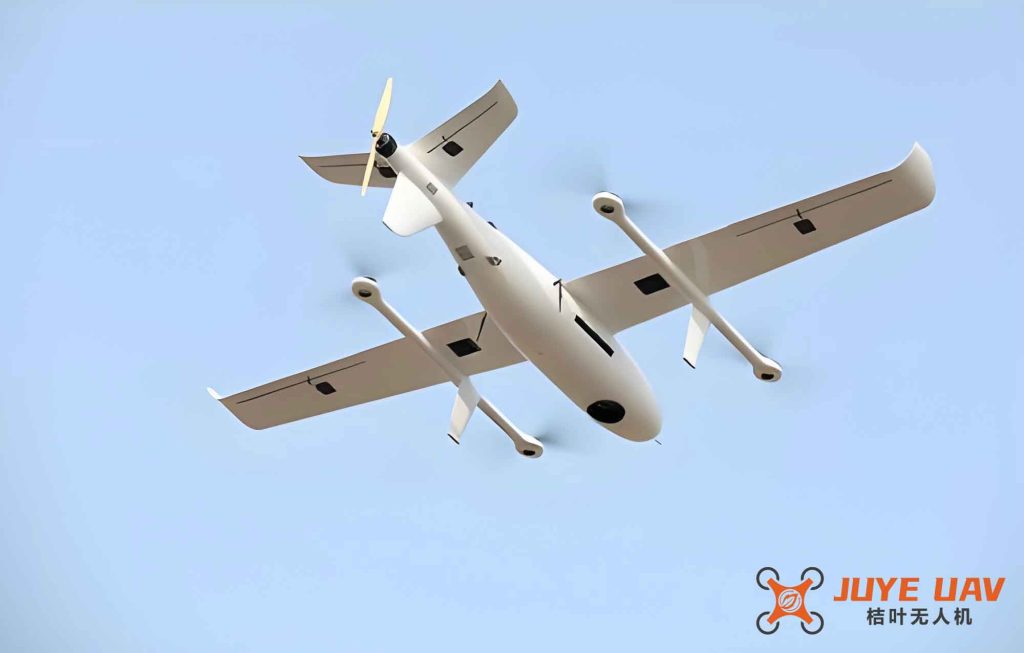
In recent decades, the concept of Micro Air Vehicles (MAVs) has garnered significant attention from researchers worldwide, particularly since its inception during a high-level military technology symposium in the early 1990s. The evolution of MAVs has led to three primary categories: fixed-wing, rotary-wing, and flapping-wing. Among these, non-fixed-wing MAVs—encompassing rotary and flapping-wing configurations—have emerged as a focal point of contemporary research due to their unique ability to operate in low-Reynolds-number environments, such as confined spaces or cluttered urban settings. Unlike their fixed-wing drone counterparts, which rely on continuous forward motion for lift generation, non-fixed-wing MAVs offer unparalleled maneuverability, hovering capability, and vertical takeoff and landing (VTOL) potential. However, achieving robust autonomous landing remains a formidable challenge, especially for flapping-wing MAVs that mimic biological flight. This article presents a comprehensive personal review of the state-of-the-art methods for autonomous landing of micro non-fixed-wing UAVs, drawing from an extensive survey of recent literature. I have systematically categorized the approaches into control-theoretic, sensor-driven, bio-inspired, and hardware-assisted strategies, while deliberately emphasizing comparisons with fixed-wing drone paradigms to highlight the distinct challenges and solutions.
Autonomous landing is a critical capability for any unmanned aerial system, as it directly impacts mission safety, repeatability, and operational autonomy. For fixed-wing drone systems, landing typically involves a long glide path, precise alignment with a runway, and often requires ground-based infrastructure such as arresting gear or net recovery. In contrast, non-fixed-wing MAVs must contend with highly nonlinear aerodynamics, unstable dynamics, and the need to dock onto stationary or moving platforms in unpredictable environments. I have observed that the research community has made remarkable strides in addressing these issues, particularly for rotary-wing MAVs, where mature PID-based controllers, vision-guided approaches, and advanced filtering techniques have enabled successful autonomous landing on both static and dynamic surfaces. Nevertheless, flapping-wing MAVs remain in an earlier stage of development, with ongoing efforts to understand their complex unsteady aerodynamics and to design landing strategies that emulate the perching behavior of birds and insects.
This review is structured as follows: First, I discuss foundational control methods for rotary-wing MAV autonomous landing, including PID and fuzzy-logic controllers. Second, I delve into sensor-driven techniques that leverage vision, ultrasonic signals, and inertial measurement units. Third, I explore bio-inspired and tau-theory-based guidance strategies. Fourth, I examine landing mechanisms and hardware designs that facilitate soft landing and perching. Finally, I summarize the key challenges and future directions, with a particular focus on bridging the gap between theoretical developments and practical deployment for non-fixed-wing platforms, while frequently contrasting with fixed-wing drone solutions.
| Category | Method | Key Innovation | Reference Year |
|---|---|---|---|
| PID-Based | Two-stage PID | Displacement and velocity control with attitude correction | 2015 |
| Fuzzy PID | Fuzzy-PID with visual navigation | Adaptive error tuning without GPS dependency | 2020 |
| Vision-Guided | Apriltags + Kalman filter | Real-time moving target tracking and landing | 2017 |
| Bio-Inspired | Tau-G and Tau-H strategies | Time-to-contact based guidance for smooth closing motion | 2014–2018 |
| Machine Learning | Adaptive tracking + iterative learning | Self-optimizing perching on vertical walls | 2017 |
| Hardware-Assisted | Biomimetic claws (SNAG) | Dynamic grasping on irregular surfaces | 2021 |
1. Control-Theoretic Approaches for Rotary-Wing MAV Landing
The most fundamental approach to autonomous landing of rotary-wing MAVs relies on classical control theory. I have found that the two-stage Proportional-Integral-Derivative (PID) controller, as described in the literature, remains a workhorse due to its simplicity and real-time performance. The controller architecture typically consists of an outer loop for position and velocity regulation and an inner loop for attitude stabilization. For a typical quadrotor, the dynamic model can be expressed as:
$$
\mathbf{\ddot{p}} = g \mathbf{e}_3 – \frac{T}{m} \mathbf{R} \mathbf{e}_3 + \mathbf{f}_d
$$
where $$\mathbf{p}$$ is the position vector, $$g$$ is gravitational acceleration, $$T$$ is total thrust, $$m$$ is mass, $$\mathbf{R}$$ is the rotation matrix, and $$\mathbf{f}_d$$ accounts for disturbances. The control law for the outer loop can be written as:
$$
\mathbf{u}_{pos} = K_p \mathbf{e}_p + K_i \int \mathbf{e}_p \, dt + K_d \dot{\mathbf{e}}_p
$$
where $$\mathbf{e}_p = \mathbf{p}_{des} – \mathbf{p}$$ is the position error. While this approach enables stable landing on a fixed point, it lacks the ability to adapt to moving platforms or environmental changes without external feedback. In a fixed-wing drone scenario, landing involves a flare maneuver where the angle of attack increases to reduce sink rate; for rotary-wing MAVs, the analogous strategy is a smooth reduction of collective thrust while maintaining hover attitude. Nonetheless, I have noted that researchers soon realized that combining PID with real-time information from communication or vision sensors significantly enhances performance.
For instance, one study integrated PID control with real-time communication between the MAV and a landing platform equipped with a full set of pose and velocity sensors. This allowed the UAV to compute relative navigation states and execute a synchronized descent. The control loop can be represented as:
$$
\dot{\mathbf{x}} = A \mathbf{x} + B \mathbf{u}, \quad \mathbf{u} = -K(\mathbf{x} – \mathbf{x}_{ref})
$$
where $$\mathbf{x}$$ includes position, velocity, and attitude states, and the gain matrix $$K$$ is tuned to ensure closed-loop stability. However, this method heavily depends on the quality and latency of communication links, which may degrade in cluttered electromagnetic environments. In contrast, a fixed-wing drone landing on a runway typically uses ground-based radio aids (e.g., ILS) that are less susceptible to interference but require extensive infrastructure.
2. Vision-Based and Sensory Fusion Methods
To overcome the limitations of GPS-denied or communication-challenged environments, vision-based approaches have been extensively explored. I have been particularly impressed by the use of AprilTags—fiducial markers that provide pose information at high frame rates—combined with Kalman filtering for robust tracking. The visual odometry pipeline can be summarized as:
- Detection of AprilTag corners in the image plane.
- Pose estimation via PnP (Perspective-n-Point) algorithm.
- State estimation using an Extended Kalman Filter (EKF).
The EKF prediction step is given by:
$$
\hat{\mathbf{x}}_{k|k-1} = f(\hat{\mathbf{x}}_{k-1|k-1}, \mathbf{u}_k)
$$
$$
P_{k|k-1} = F_k P_{k-1|k-1} F_k^T + Q_k
$$
and the update step:
$$
K_k = P_{k|k-1} H_k^T (H_k P_{k|k-1} H_k^T + R_k)^{-1}
$$
$$
\hat{\mathbf{x}}_{k|k} = \hat{\mathbf{x}}_{k|k-1} + K_k (z_k – h(\hat{\mathbf{x}}_{k|k-1}))
$$
where $$z_k$$ contains the observed marker corners. This method has been successfully demonstrated for landing on a ground vehicle moving at up to 50 km/h, a feat that would be extremely challenging for a fixed-wing drone without a specialized arresting mechanism because fixed-wing drone stall speed is typically higher than the platform speed.
Another sensory modality is ultrasonic localization, where a “one-transmitter four-receiver” array provides millimeter-level accuracy during the final descent phase. The time-of-flight equation:
$$
d_i = c \cdot \Delta t_i, \quad i = 1,2,3,4
$$
enables trilateration to compute the MAV’s position relative to the landing pad. While effective, this approach is restricted to short ranges and requires careful calibration. In comparison, a fixed-wing drone landing on a carrier deck uses radar altimeters and GPS with differential corrections, but the landing footprint is larger and requires a longer approach path.
Fuzzy PID controllers integrated with visual navigation have also been proposed to improve transient performance. The fuzzy inference system adjusts the PID gains online based on the error and its derivative:
$$
K_p = K_{p0} + \Delta K_p, \quad K_i = K_{i0} + \Delta K_i, \quad K_d = K_{d0} + \Delta K_d
$$
where the increments are derived from fuzzy rules such as “if error is large and error derivative is large, then increase K_p.” This adaptive tuning allows the MAV to handle nonlinearities during the final flare, similar to how a human pilot would adjust controls. For a fixed-wing drone, the landing flare is often pre-programmed with fixed gains because the aerodynamics are more predictable at higher Reynolds numbers.
3. Bio-Inspired and Tau-Theory Guidance for Non-Fixed-Wing MAVs
One of the most fascinating areas I have encountered is the application of tau theory, originally developed from studies of animal vision, to the landing of MAVs. The fundamental idea is that animals control their approach by regulating the time-to-contact (τ) with the target. Lee’s generalized τ theory defines τ as:
$$
\tau = \frac{x}{\dot{x}}
$$
where $$x$$ is the distance to the target. For a constant closing velocity, τ decreases linearly. The tau-G strategy imposes a constant ratio between τ and its derivative, leading to:
$$
\dot{\tau} = k, \quad \text{with } 0 < k < 1
$$
This yields a solution for the position trajectory:
$$
x(t) = x_0 \left(1 – \frac{t}{t_f}\right)^{1/(1-k)}
$$
where $$t_f$$ is the total landing time. The tau-H strategy extends this by coupling two motions (e.g., horizontal and vertical) to achieve a smooth deceleration from non-zero initial velocity. I have noted that these strategies have been successfully implemented in a TauPilot system for quadrotors, enabling autonomous vertical landing in GPS-denied indoor environments. The feedback control law for tau-G can be expressed as:
$$
\ddot{x} = \frac{\dot{x}^2}{x} \left(1 – \frac{1}{k}\right)
$$
This is fundamentally different from fixed-wing drone landing, where the glide slope angle is maintained constant until flare, and the time-to-contact is implicitly controlled by throttle and elevator inputs. For flapping-wing MAVs, tau theory offers a biologically plausible framework because birds are believed to use τ cues to judge perch timing. In one study, researchers demonstrated a flapping-wing MAV landing on a human hand using a Vicon motion capture system to provide τ information, achieving a positioning error of less than 0.5 m. The control law for the wing dihedral angle was:
$$
\delta(t) = \delta_0 + K_\tau (\tau_{ref} – \tau(t))
$$
These results highlight the potential for τ-based guidance to unify landing control across fixed-wing and non-fixed-wing platforms, although the dynamics differ significantly.
Machine learning techniques have also been employed for perching. In one notable experiment, a RoboBee-like flapping-wing MAV used adaptive tracking control and iterative learning to land on a vertical wall. The iterative learning update law is:
$$
\mathbf{u}_{j+1}(t) = \mathbf{u}_j(t) + \Gamma \mathbf{e}_j(t+\Delta t)
$$
where $$\mathbf{u}_j$$ is the control input at iteration $$j$$, $$\mathbf{e}_j$$ is the tracking error, and $$\Gamma$$ is a learning gain. After several iterations, the MAV learned a trajectory that minimized impact velocity. This approach is particularly advantageous for systems with complex, unmodeled dynamics—a common challenge in flapping-wing MAVs that is less severe in fixed-wing drone applications due to well-established aerodynamic models.
4. Landing Mechanisms and Hardware Structures
While control algorithms are essential, the physical landing mechanism plays a crucial role in ensuring a safe touchdown, especially for flapping-wing MAVs that lack the robust landing gear of typical rotary or fixed-wing drone systems. I have reviewed several innovative designs.
One category is the bouncing takeoff/landing mechanism inspired by bird legs. A direct-pressure spring mechanism was designed to store energy during landing and release it for takeoff. The dynamics of such a leg can be modeled as a mass-spring-damper system:
$$
m \ddot{y} + c \dot{y} + k y = F_{contact}
$$
where $$y$$ is the leg compression, and $$F_{contact}$$ includes the impact force. Optimization using sequential quadratic programming yielded compact leg dimensions suitable for a 100 g MAV. Another design, the four-bar linkage biomimetic claw, mimics the grasping motion of bird feet. The mechanical advantage of the linkage can be expressed as:
$$
\tau_{output} = \frac{d\theta_{output}}{d\theta_{input}} \cdot \tau_{input}
$$
where the transmission ratio determines the force at the claws. This design was later refined to include passive compliance, allowing the MAV to adapt to irregular surfaces.
Perhaps the most advanced structure is the SNAG (Synthetic Neural Autonomous Grasper) designed by researchers at Stanford. This underactuated gripper uses a tendon-driven mechanism that automatically tightens upon impact, converting kinetic energy into grasp force. The mathematical model of the passive engagement can be described by:
$$
\frac{1}{2} m v^2 = \int_{0}^{x_{max}} F_{grasp}(x) \, dx
$$
During experiments, a quadrotor equipped with SNAG successfully landed on tree branches with a success rate exceeding 80%. For a fixed-wing drone, such perching capability is almost nonexistent because the stall speed prevents a gentle descent onto a perch; instead, fixed-wing drone landing requires a runway or net.
Another interesting approach is the use of shape-memory alloy (SMA) springs to actuate bird-like claws. The phase transformation of SMA (from martensite to austenite upon heating) generates a recovery force that can close the claws. The actuation strain is given by:
$$
\varepsilon = \varepsilon_L \cdot \xi
$$
where $$\varepsilon_L$$ is the maximum recoverable strain (typically 4–8%) and $$\xi$$ is the martensite fraction. This lightweight mechanism allows for silent operation, which is beneficial for stealth missions. However, the slow response time of SMA (on the order of seconds) limits its use for rapid landing sequences. In contrast, fixed-wing drone landing gear is typically passive and purely mechanical, providing no active grasping but tolerating higher impact velocities due to heavier structural margins.
For rotary-wing MAVs, landing skids remain the most common solution. They are simple, lightweight, and effective for flat surfaces. However, when landing on moving platforms, additional sensors and controllers are required to coordinate the touchdown. Some advanced designs incorporate shock absorbers with variable damping coefficients:
$$
F_{damper} = b(t) \cdot \dot{y}
$$
where $$b(t)$$ can be adjusted in real time based on the estimated impact velocity. This contrasts with fixed-wing drone landing gear, which typically uses oil-pneumatic struts with fixed orifice sizes optimized for a narrow range of descent rates.
5. Comparative Analysis with Fixed-Wing Drone Landing
To better understand the unique challenges of non-fixed-wing MAV landing, I have compiled a comparative analysis with fixed-wing drone landing across several metrics. The following table summarizes key differences:
| Aspect | Non-Fixed-Wing MAV (Rotary/Flapping) | Fixed-Wing Drone |
|---|---|---|
| Landing speed | Near zero (VTOL capability) | Typically 15–30 m/s (stall speed) |
| Infrastructure requirement | Minimal; can land on small pad or perch | Runway, catapult, or net recovery system |
| Impact tolerance | Low; requires soft touchdown or perching | Moderate; landing gear absorbs energy |
| Control complexity | High due to nonlinear aerodynamics (especially flapping) | Lower; linearized models sufficient for approach |
| Sensor dependency | Often vision or ultrasonic; GPS may be unavailable | Typically GPS + INS + air data |
| Bio-inspiration | Strong; mimics birds, insects | Limited; conventional aerodynamic design |
| Landing trajectory | Vertical descent or perching arc | Long glide slope with flare at end |
| Failure modes | Tip-over, insufficient damping, missed perch | Overshoot, stall, hard landing |
From this table, I have concluded that while fixed-wing drone landing benefits from decades of optimization and standardization, non-fixed-wing MAVs offer unprecedented flexibility at the cost of increased technical difficulty. The gap is narrowing, however, thanks to advances in computational power, sensor miniaturization, and control theory.
6. Challenges and Future Perspectives
Despite the progress reviewed above, several critical challenges remain before non-fixed-wing MAVs can achieve truly robust autonomous landing in real-world scenarios. I have identified the following key areas requiring further investigation:
Flapping-wing Aerodynamics: The unsteady aerodynamic mechanisms that enable birds to land gracefully are not yet fully understood. The lift and drag generated during a decelerating flapping cycle depend on parameters such as stroke angle, frequency, and wing flexibility. A simplified quasi-steady model often fails to capture dynamic stall and vortex shedding effects. The governing equation for flapping flight is:
$$
m \ddot{z} = L(t) – mg – D(t) \frac{\dot{z}}{V}
$$
where $$L(t)$$ and $$D(t)$$ are time-varying lift and drag, and $$V$$ is the instantaneous velocity. Developing accurate yet computationally efficient models for real-time control remains an open problem. In contrast, fixed-wing drone aerodynamics are well captured by steady-state polars, making control law design more straightforward.
Robustness to Wind Disturbances: Small MAVs are particularly susceptible to wind gusts due to their low mass and inertia. For example, a 100 g quadrotor can be displaced significantly by a 5 m/s gust, jeopardizing landing accuracy. Sliding mode control and adaptive control have been proposed to mitigate these effects. The sliding surface can be defined as:
$$
s = \dot{e} + \lambda e
$$
with the control law:
$$
u = u_{eq} – \eta \, \text{sgn}(s)
$$
where $$\eta$$ ensures robustness to bounded disturbances. However, chattering in the control signal can excite high-frequency structural modes, which is problematic for delicate flapping-wing mechanisms.
Perception in Degraded Visual Environments: Vision-based landing relies on clear, well-lit markers. In low-light, fog, or dust conditions, feature detection fails. Multi-modal sensor fusion combining vision, LiDAR, and radar could provide redundancy. For a fixed-wing drone landing on an aircraft carrier, the system uses the Instrument Landing System (ILS) and microwave landing systems, which are immune to weather. Miniaturizing such systems for MAVs is a hardware challenge.
Energy and Power Constraints: Non-fixed-wing MAVs typically have flight times of 10–30 minutes due to battery limitations. Landing maneuvers must be energy-efficient. Tau-theory-based trajectories inherently minimize unnecessary acceleration, thereby conserving energy. More research is needed to integrate power-aware path planning into the landing sequence.
Standardized Testbeds: Currently, there is no widely accepted benchmark for comparing autonomous landing methods. I have observed that most studies use custom platforms, markers, and environmental conditions, making cross-comparison difficult. Establishing a common testbed—perhaps with a moving platform, varying wind conditions, and different target surfaces—would accelerate progress.
Looking forward, I anticipate that the integration of deep reinforcement learning (DRL) will play a significant role. DRL can learn end-to-end policies from raw sensor inputs, bypassing the need for explicit state estimation. The policy is typically parameterized by a neural network that maps observations to actions:
$$
\pi_\theta(a|s) = \mathbb{P}[A_t = a | S_t = s]
$$
where the parameters $$\theta$$ are optimized to maximize a cumulative reward function. Recent work has demonstrated DRL-based landing on a moving platform for quadrotors, but application to flapping-wing MAVs is still nascent.
Finally, I must emphasize the importance of hardware co-design. The landing mechanism must be lightweight (typically <5% of total mass), deployable in milliseconds, and capable of absorbing impact energy without rebounding. Advanced materials such as carbon-fiber-reinforced polymers and shape memory alloys offer promising avenues. For instance, a landing leg made of a bistable composite could snap into a locked position upon impact, providing both energy absorption and structural rigidity.
Conclusion
In this review, I have systematically explored the landscape of autonomous landing methods for micro non-fixed-wing unmanned aerial vehicles, drawing on a rich body of literature published between 2011 and 2024. From classical PID controllers to bio-inspired tau guidance, from vision-based localization to biomimetic claws, the field has made remarkable strides. Yet, the journey toward a fully autonomous, versatile landing capability—comparable to that of a fixed-wing drone operating on a prepared runway—is far from complete. The unique dynamics, stringent weight constraints, and unpredictable operating environments of non-fixed-wing MAVs demand continued innovation. I have highlighted that while rotary-wing MAVs have achieved practical landing in controlled settings, flapping-wing MAVs lag behind due to fundamental aerodynamic complexities. To bridge this gap, future research must prioritize deeper understanding of flapping-wing aerodynamics, robust sensor fusion, lightweight hardware, and adaptive control strategies that can cope with uncertainties. Ultimately, the successful realization of autonomous landing for non-fixed-wing MAVs will unlock new possibilities for surveillance, search and rescue, environmental monitoring, and package delivery in areas where fixed-wing drone access is impossible. I am optimistic that the interdisciplinary efforts of mechanical engineers, control theorists, and computer scientists will soon yield breakthroughs that bring this vision to fruition.