
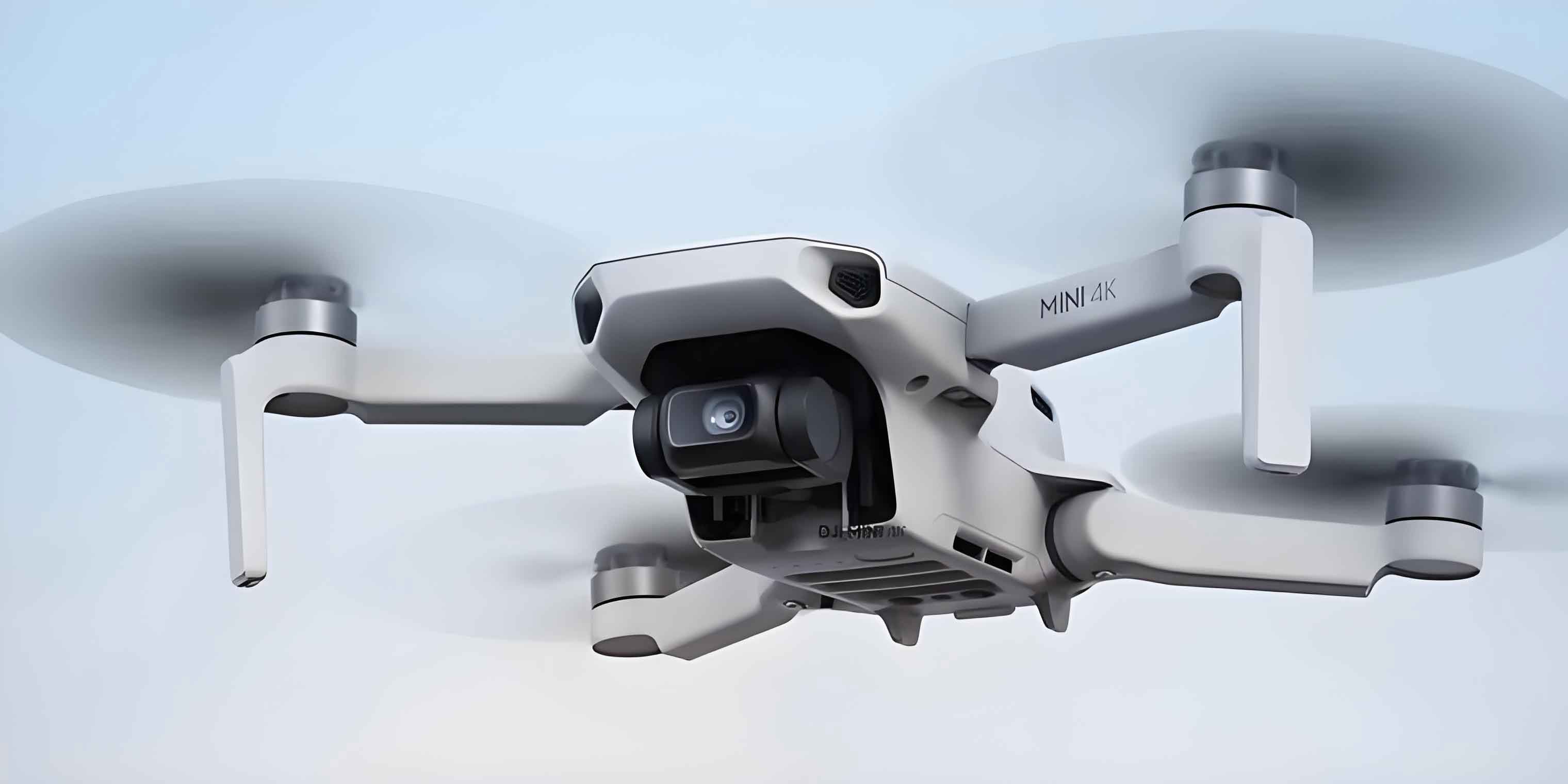
Modern drone technology is rapidly transforming low‑altitude economies, enabling applications such as urban air mobility, emergency response, and secure command delivery. In many mission‑critical operations, a drone must issue real‑time instructions to multiple ground users while ensuring that the transmission itself remains undetectable by illegitimate wardens. This double demand – ultra‑reliable low‑latency communication and covertness – becomes exceedingly challenging when short packets are used and the channel is subject to line‑of‑sight propagation. To address these challenges, we propose a dual‑drone cooperative covert communication system based on rate‑splitting multiple access (RSMA). One drone acts as the source base station, delivering short packets to multiple ground users via RSMA; the other drone serves as a cooperative jammer, emitting artificial noise to confuse the warden. By exploiting the flexibility of RSMA and the jamming capability of a dedicated helper, our design significantly enhances the effective covert sum rate while respecting both reliability and latency constraints.
1. System Model
We consider a downlink covert communication system where a source drone Alice (equipped with \(N_t\) antennas) transmits information to \(K\) single‑antenna legitimate users (Bobs) in the presence of a single‑antenna warden (Willie). A cooperative jammer drone Helper continuously transmits artificial noise to raise the detection difficulty at Willie. All channels are assumed to be quasi‑static flat fading, incorporating both large‑scale path loss and small‑scale Rician fading. The transmission blocklength \(m\) is finite, which forces us to adopt the finite‑blocklength information‑theoretic framework instead of the classical Shannon capacity.
1.1 Transmission Model
Alice splits each user’s message into a common part and a private part. All common parts are combined into a single common stream \(s_c\); each private stream \(s_k\) (\(k=1,\dots,K\)) carries the private part of user \(k\). Helper transmits the jamming signal \(s_z\) with unit power. The received signal at user \(k\) is:
$$
y_k = \mathbf{h}_{a,k}^H \left( \mathbf{w}_c s_c + \sum_{j=1}^K \mathbf{w}_j s_j \right) + \mathbf{h}_{h,k}^H \mathbf{z} s_z + n_k,
$$
where \(\mathbf{h}_{a,k}\in\mathbb{C}^{N_t\times 1}\) and \(\mathbf{h}_{h,k}\in\mathbb{C}^{N_t\times 1}\) are the channel vectors from Alice and Helper to user \(k\), respectively; \(\mathbf{w}_c\) is the beamformer for the common stream, \(\mathbf{w}_j\) for the \(j\)-th private stream; \(\mathbf{z}\) is the jamming beamformer; and \(n_k\sim\mathcal{CN}(0,\sigma^2)\).
The receiver performs successive interference cancellation (SIC). First, the common stream is decoded treating all private streams and the jamming signal as noise. The SINR for decoding the common stream at user \(k\) is:
$$
\gamma_{c,k} = \frac{|\mathbf{h}_{a,k}^H\mathbf{w}_c|^2}{\sum_{j=1}^K |\mathbf{h}_{a,k}^H\mathbf{w}_j|^2 + |\mathbf{h}_{h,k}^H\mathbf{z}|^2 + \sigma^2}.
$$
After removing the common stream, user \(k\) decodes its own private stream. The SINR becomes:
$$
\gamma_{p,k} = \frac{|\mathbf{h}_{a,k}^H\mathbf{w}_k|^2}{\sum_{j\neq k} |\mathbf{h}_{a,k}^H\mathbf{w}_j|^2 + |\mathbf{h}_{h,k}^H\mathbf{z}|^2 + \sigma^2}.
$$
Under the finite‑blocklength regime, the achievable rate of a stream with SINR \(\gamma\), blocklength \(m\), and decoding error probability \(\epsilon\) is given by (Polyanskiy et al.):
$$
R(\gamma) = \log_2(1+\gamma) – \sqrt{\frac{V}{m}} \frac{Q^{-1}(\epsilon)}{\ln 2},
$$
$$
V = 1 – \frac{1}{(1+\gamma)^2},
$$
where \(Q^{-1}(\cdot)\) is the inverse Gaussian Q‑function. Thus, the effective rates for the common stream and the private stream of user \(k\) are:
$$
R_{c,k} = \log_2(1+\gamma_{c,k}) – \sqrt{\frac{V_{c,k}}{m}} \frac{Q^{-1}(\epsilon)}{\ln 2},
$$
$$
R_{p,k} = \log_2(1+\gamma_{p,k}) – \sqrt{\frac{V_{p,k}}{m}} \frac{Q^{-1}(\epsilon)}{\ln 2},
$$
with \(V_{c,k} = 1-(1+\gamma_{c,k})^{-2}\) and \(V_{p,k} = 1-(1+\gamma_{p,k})^{-2}\).
To ensure that every user can decode the common stream, the sum of the common‑rate fractions must not exceed the bottleneck common rate:
$$
\sum_{k=1}^K \alpha_k \le \min_{k} R_{c,k},
$$
where \(\alpha_k \ge 0\) is the portion of the common rate allocated to user \(k\). The total effective covert rate of user \(k\) is therefore:
$$
R_k = \alpha_k + R_{p,k}.
$$
1.2 Willie’s Detection and Covertness Constraint
Willie observes the signal:
$$
y_w = \mathbf{h}_{a,w}^H \left( \mathbf{w}_c s_c + \sum_{k=1}^K \mathbf{w}_k s_k \right) + \mathbf{h}_{h,w}^H \mathbf{z} s_z + n_w,
$$
where \(n_w\sim\mathcal{CN}(0,\sigma^2)\). Under the null hypothesis \(\mathcal{H}_0\) (Alice silent), the distribution is \(\mathcal{CN}(0,\lambda_0)\); under \(\mathcal{H}_1\) (Alice transmits), it is \(\mathcal{CN}(0,\lambda_1)\). The variances are:
$$
\lambda_0 = |\mathbf{h}_{h,w}^H\mathbf{z}|^2 + \sigma^2,
$$
$$
\lambda_1 = |\mathbf{h}_{a,w}^H\mathbf{w}_c|^2 + \sum_{k=1}^K |\mathbf{h}_{a,w}^H\mathbf{w}_k|^2 + |\mathbf{h}_{h,w}^H\mathbf{z}|^2 + \sigma^2.
$$
Covertness is measured by the Kullback–Leibler (KL) divergence between the two distributions. Using Pinsker’s inequality, the condition \(\mathcal{D}(\mathcal{P}_1\|\mathcal{P}_0) \le 2\epsilon_c^2\) guarantees a detection error probability of at least \(1-\epsilon_c\). For zero‑mean complex Gaussian distributions, the KL divergence simplifies to:
$$
\mathcal{D}(\mathcal{P}_1\|\mathcal{P}_0) = \frac{\lambda_1}{\lambda_0} – \ln\frac{\lambda_1}{\lambda_0} – 1.
$$
Hence, the covertness constraint becomes:
$$
\frac{\lambda_1}{\lambda_0} – \ln\frac{\lambda_1}{\lambda_0} – 1 \le \delta,\quad \delta = 2\epsilon_c^2.
$$
2. Problem Formulation
We aim to maximize the total effective covert sum rate by jointly designing Alice’s beamforming matrix \(\mathbf{W} = [\mathbf{w}_c,\mathbf{w}_1,\dots,\mathbf{w}_K]\), the jamming beamformer \(\mathbf{z}\), and the common‑rate allocation vector \(\boldsymbol{\alpha} = [\alpha_1,\dots,\alpha_K]\). The problem is:
$$
\begin{aligned}
\text{(P1)}\quad & \max_{\mathbf{W},\mathbf{z},\boldsymbol{\alpha}} \sum_{k=1}^K (\alpha_k + R_{p,k}) \\
\text{s.t.}\quad & \frac{\lambda_1}{\lambda_0} – \ln\frac{\lambda_1}{\lambda_0} – 1 \le \delta, \quad\text{(C1)}\\
& \sum_{k=1}^K \alpha_k \le \min_k R_{c,k}, \quad\text{(C2)}\\
& \|\mathbf{W}\|_F^2 \le P_{\max}, \quad\|\mathbf{z}\|^2 \le P_{\max}^{\text{help}}, \quad\text{(C3),(C4)}\\
& \alpha_k \ge 0,\ \forall k. \quad\text{(C5)}
\end{aligned}
$$
This problem is non‑convex due to the finite‑blocklength rate expressions and the KL‑divergence constraint. We tackle it with a block coordinate descent (BCD) and successive convex approximation (SCA) framework.
3. Algorithm Design
We decompose (P1) into two sub‑problems: 1) beamforming and jamming design for fixed \(\boldsymbol{\alpha}\); 2) common‑rate allocation for fixed beamformers. The non‑convex terms are linearized via first‑order Taylor expansions.
3.1 Convex Approximation of Finite‑Blocklength Rates
The private stream rate \(R_{p,k}\) is not concave. We approximate it at iteration \(n\) as:
$$
R_{p,k} \approx \log_2(1+\gamma_{p,k}) – \frac{Q^{-1}(\epsilon)}{\ln2}\sqrt{\frac{V_{p,k}^{(n)}}{m}} – \frac{Q^{-1}(\epsilon)}{2\ln2\sqrt{m V_{p,k}^{(n)}}} (\gamma_{p,k}-\gamma_{p,k}^{(n)}).
$$
This yields a concave lower bound that is iteratively tightened.
3.2 Convex Approximation of the Covertness Constraint
We rewrite (C1) by introducing slack variables \(\tau\) and \(\beta\). The inequality is transformed into a set of convex constraints after linearizing the logarithm and the fraction terms. Specifically, using Taylor expansion around the previous point, we obtain:
$$
\begin{aligned}
&\lambda_1^{(n)} + (\lambda_1 – \lambda_1^{(n)}) – \ln\lambda_0 \le \tau,\\
&\beta \ge \frac{1}{\lambda_0^{(n)}} – \frac{1}{(\lambda_0^{(n)})^2}(\lambda_0 – \lambda_0^{(n)}),\\
&\tau – \ln\beta – 1 \le \delta.
\end{aligned}
$$
These constraints are all convex.
3.3 Sub‑problem 1: Beamforming and Jamming
Given \(\boldsymbol{\alpha}\), we solve:
$$
\begin{aligned}
&\max_{\mathbf{W},\mathbf{z},\tau,\beta} \sum_{k=1}^K (\alpha_k + \tilde{R}_{p,k}) \\
&\text{s.t. convexified (C1)–(C4)}.
\end{aligned}
$$
This is a convex second‑order cone program (SOCP) and can be efficiently solved using CVX.
3.4 Sub‑problem 2: Common‑Rate Allocation
Given \(\mathbf{W}\) and \(\mathbf{z}\), the rates \(R_{c,k}\) and \(R_{p,k}\) are fixed. The problem reduces to a linear program:
$$
\begin{aligned}
&\max_{\boldsymbol{\alpha}} \sum_{k=1}^K \alpha_k \\
&\text{s.t. } \sum_{k=1}^K \alpha_k \le \min_k R_{c,k},\ \alpha_k \ge 0.
\end{aligned}
$$
The optimal solution is to set \(\sum_k \alpha_k = \min_k R_{c,k}\), and any non‑negative allocation that saturates the bottleneck works. We simply allocate all common capacity to increase the sum rate.
3.5 Overall Algorithm
The complete iterative procedure is summarised in Table 1.
| Step | Action |
|---|---|
| 1 | Initialize \(\mathbf{W}^{(0)},\mathbf{z}^{(0)},\boldsymbol{\alpha}^{(0)}\); set \(n=0\). |
| 2 | Repeat: |
| 3 | Compute Taylor expansion coefficients for rates and KL divergence at \(\mathbf{W}^{(n)},\mathbf{z}^{(n)}\). |
| 4 | Solve convex sub‑problem 1 → obtain \(\mathbf{W}^{(n+1)},\mathbf{z}^{(n+1)}\). |
| 5 | Solve linear sub‑problem 2 → obtain \(\boldsymbol{\alpha}^{(n+1)}\). |
| 6 | Update \(n\leftarrow n+1\) and compute objective increase \(\Delta\). |
| 7 | Until \(\Delta<\delta_{\text{tol}}\) or \(n\ge L_{\max}\). |
| 8 | Output \(\mathbf{W}^*,\mathbf{z}^*,\boldsymbol{\alpha}^*\). |
4. Simulation Results and Analysis
We use a 3‑D Cartesian coordinate system. The source drone Alice is at \((0,0,100)\) m, the helper drone at \((200,0,100)\) m. Three ground users are randomly placed within a 50 m radius of \((100,0,0)\) m. Willie is at \((50,0,0)\) m. Channels combine path loss with Rician fading (Rician factor \(\kappa=3\) dB). Key parameters are listed in Table 2.
| Parameter | Value |
|---|---|
| Drone height \(H\) | 100 m |
| Number of users \(K\) | 3 |
| Antennas per drone \(N_t\) | 4 (or 8) |
| Max transmit power \(P_{\max}\) | 30 dBm (unless varied) |
| Path loss exponent \(\eta\) | 2.2 |
| Reference channel gain \(\beta_0\) | ‑30 dB |
| Noise power \(\sigma^2\) | ‑100 dBm |
| Blocklength \(m\) | 500 (unless varied) |
| Covertness tolerance \(\epsilon_c\) | 0.05 (unless varied) |
4.1 Convergence Behavior
We first examine the convergence of the proposed algorithm. The effective covert sum rate versus iteration number is shown for \(N_t=4\) and \(N_t=8\). The algorithm converges quickly (within 6–7 iterations) for both antenna configurations, demonstrating the efficiency of the BCD‑SCA approach. The rate increases sharply in the first few iterations and then saturates. Moreover, the RSMA‑based scheme consistently outperforms both SDMA and NOMA baselines irrespective of the number of antennas, thanks to its superior interference management.
4.2 Impact of Transmit Power and Cooperative Jamming
The effective covert sum rate as a function of Alice’s maximum transmit power \(P_{\max}\) is presented in the following analysis. With cooperative jamming activated, the covert sum rate of the RSMA scheme increases by approximately 4 times compared to the case without Helper. This dramatic improvement validates the effectiveness of the jamming drone in relaxing the covertness constraint. In all power regimes, RSMA outperforms SDMA and NOMA. At high power, the rate saturates because the covertness constraint becomes the bottleneck, limiting the transmit power.
4.3 Effect of Blocklength
Figure 3 (conceptual) shows the total covert sum rate versus blocklength \(m\). For very short blocks (\(m<200\)), the finite‑blocklength penalty is severe, causing all schemes to achieve low rates. As \(m\) increases, rates improve and approach the Shannon limit. The RSMA scheme maintains a noticeable advantage over NOMA and SDMA throughout the entire range, confirming its robustness to blocklength variations.
4.4 Influence of Covertness Requirement
We also vary the required detection error probability \(\epsilon_c\). When \(\epsilon_c\) is extremely small (strict covertness), the rates are near zero because the KL‑divergence constraint forces the transmit power to be very low. As \(\epsilon_c\) relaxes to 0.05, the rates increase rapidly. The proposed RSMA scheme shows the steepest growth and the highest saturated rate, outperforming SDMA by about 12.5 % and NOMA by about 28.6 % in the high‑\(\epsilon_c\) regime.
4.5 Reliability vs. Latency Trade‑off
Finally, we investigate the required blocklength to achieve a given decoding error probability \(\epsilon\). For a target error probability of \(10^{-4}\), the RSMA scheme needs a significantly shorter blocklength than both SDMA and NOMA, directly demonstrating its superiority in high‑reliability and low‑latency scenarios enabled by advanced drone technology. This advantage is attributed to the flexible splitting of common and private streams, which mitigates residual interference and improves the effective SINR at each user.
5. Conclusion
We have presented a dual‑drone cooperative covert short‑packet communication system that leverages RSMA to simultaneously achieve high reliability, low latency, and information covertness. By jointly optimizing the source drone’s beamforming, the jamming drone’s artificial noise, and the RSMA common‑rate allocation, we maximize the effective covert sum rate under finite‑blocklength and KL‑divergence constraints. A BCD‑SCA algorithm was developed to handle the non‑convexity, and its convergence was numerically verified. Extensive simulations show that the proposed scheme delivers a roughly 4‑fold improvement in covert sum rate compared to scenarios without cooperative jamming, and consistently outperforms SDMA and NOMA baselines. The results underline the potential of drone technology combined with RSMA for secure, low‑latency command delivery in mission‑critical low‑altitude networks.
Future work will extend the static hovering scenario to dynamic trajectory optimization and consider imperfect channel state information, employing robust design or artificial intelligence‑based planning to further enhance the applicability of drone technology in covert communications.