
I have dedicated my research to addressing the critical challenges in power system inspection using unmanned aerial vehicle (UAV) swarms. The safe and stable operation of power systems heavily depends on efficient and reliable equipment inspection. China UAV technology, with its inherent flexibility and wide-area coverage, has emerged as a cornerstone for intelligent power inspection. However, the prevalent cloud-centric processing paradigm suffers from significant limitations: poor real-time performance, low coordination efficiency, and insufficient reliability, which cannot meet the stringent low-latency and high-frequency requirements of transmission lines and substations. To overcome these obstacles, I propose an edge-computing-driven cooperative decision model for China UAV swarms. This model leverages the computational power of edge nodes to achieve local real-time data processing, dynamic task allocation, and path planning through reinforcement learning. By constructing a three-layer “End-Edge-Cloud” architecture and developing a lightweight anomaly detection network, the system significantly reduces task delay and improves urgent task response success rate. Extensive simulations demonstrate that the proposed scheme achieves a task average delay of less than 0.8 s and an urgent task success rate exceeding 98%, outperforming conventional cloud-based and non-cooperative approaches. This work provides a robust technical foundation for the intelligent operation and maintenance of power equipment, advancing the application of China UAV swarms in critical infrastructure.
1. System Architecture and Model for Edge Cooperative Inspection
1.1 Overall System Architecture
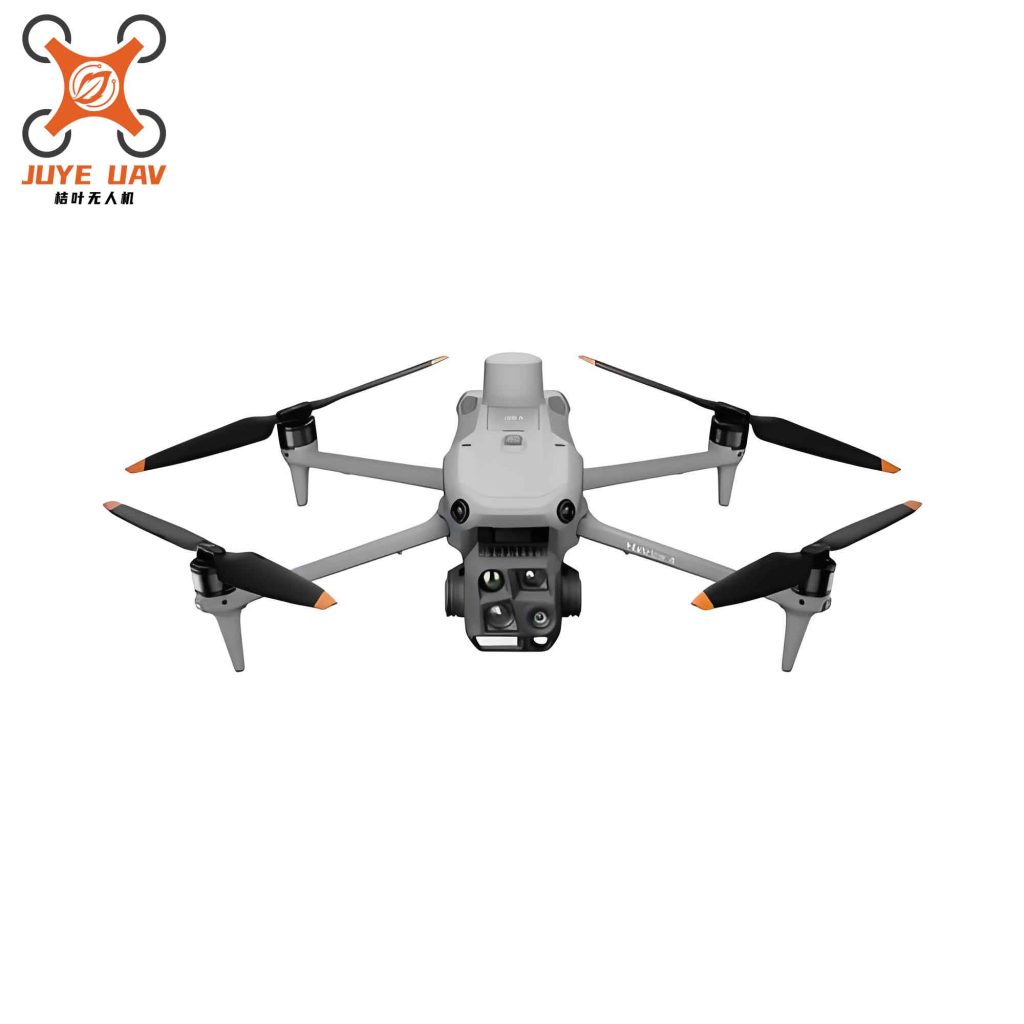
I design a three-layer “End-Edge-Cloud” collaborative architecture to enable real-time, localized processing and global optimization. The end layer consists of the China UAV swarm, which collects inspection data and performs lightweight pre-processing. The UAVs communicate with edge nodes via 4G/5G links, supporting automatic takeoff, landing, and battery swapping. The edge layer is deployed near power facilities, providing computational resources for real-time data analysis, task scheduling, and obstacle avoidance, forming a local closed-loop control. The cloud layer aggregates data from multiple edges, trains global models, analyzes historical inspection trends, and delivers optimized strategies back to the edge layer, thereby realizing cloud-edge synergy. This architecture minimizes communication latency and enhances system reliability, which is essential for China UAV inspection tasks in complex environments.
1.2 Key Problem Modeling
1.2.1 Inspection Task Modeling
Power facilities are widely distributed and complex, requiring precise coverage definition. Let the set of power facilities to be inspected be \( F = \{ f_1, f_2, \dots, f_n \} \), where each facility \( f_i \) has geographic coordinates \( (x_i, y_i) \). For a China UAV \( u_j \) with maximum flight radius \( r_j \), the set of facilities it can cover is given by:
$$
C_{j} = \left\{ f_i \,\middle|\, (x_i – x_{u_j})^2 + (y_i – y_{u_j})^2 \leq r_j^2 \right\}
\tag{1}
$$
where \( (x_{u_j}, y_{u_j}) \) is the initial position of UAV \( u_j \). Each inspection task is assigned a priority coefficient \( p_i \in [0,1] \), with higher values indicating more critical facilities (e.g., hub substations have higher priority than ordinary transmission lines). The deadline for task \( t_i \) is \( T_i^{\text{deadline}} \), and the allowable time window is \( \Delta T_i = T_i^{\text{deadline}} – T_i^{\text{start}} \). The China UAV must complete the inspection within this window to ensure system safety.
1.2.2 Communication Model
The communication quality between UAVs and edge nodes directly affects data transmission reliability and timeliness. I adopt a Rayleigh fading channel model. Let the channel gain between UAV \( u_j \) and edge node \( e_k \) be \( h_{jk} \sim \mathcal{CN}(0, \sigma_{jk}^2) \). The signal-to-noise ratio (SNR) is:
$$
\text{SNR}_{jk} = \frac{P_{jk} |h_{jk}|^2}{N_0 B}
\tag{2}
$$
where \( P_{jk} \) is the transmission power, \( N_0 \) is the noise power spectral density, and \( B \) is the channel bandwidth. The data transmission rate is \( R_{jk} = B \log_2(1 + \text{SNR}_{jk}) \). This model allows the evaluation of link stability under different environmental conditions, which is crucial for China UAV task offloading decisions.
1.2.3 Computational Resource Model
Edge nodes have limited computational resources that must be dynamically allocated to tasks of varying complexity. Let the total computational capacity of edge node \( e_k \) be \( C_k^{\text{total}} \) (in MIPs). For a task \( t_i \) requiring \( C_i^{\text{task}} \) resources (image processing, feature extraction, etc.), the remaining resource after allocation is \( C_k^{\text{remain}} = C_k^{\text{total}} – C_k^{\text{used}} \). I combine priority and deadline constraints to allocate resources using a greedy algorithm. The objective is to maximize the weighted sum of completed tasks while meeting timing requirements, thereby supporting efficient China UAV inspection operations.
1.3 Cooperative Decision Framework
I propose a hierarchical cooperative decision framework. At the edge layer, based on local information such as UAV positions, battery levels, and edge node loads, tasks are dynamically assigned and UAVs are scheduled in a millisecond-level response for sudden events. The cloud layer analyzes global data, trains models, and periodically updates edge strategies. The core optimization objective is to minimize task execution delay and swarm energy consumption while ensuring coverage and timeliness:
$$
\min F = \alpha \cdot T_{\text{task}} – \gamma \cdot \text{Coverage}_{\text{rate}}
\tag{3}
$$
where \( T_{\text{task}} \) is the average task completion delay, \( \text{Coverage}_{\text{rate}} \) is the inspection coverage rate for critical facilities, and \( \alpha, \gamma \) are weighting coefficients. This objective guides the edge layer in task allocation, path planning, and resource scheduling, balancing real-time performance, energy efficiency, and coverage completeness for China UAV swarms.
2. Cooperative Decision Algorithm Design for China UAV Swarms
2.1 Dynamic Task Allocation Based on Improved Q-Learning
To optimize task allocation efficiency under edge computing environments, I design an improved Q-learning algorithm. The state space includes three elements: the real-time position of the China UAV (coordinates), remaining battery level (percentage), and the computational load of the associated edge node (CPU utilization). The action space is a binary decision: accept or reject a new task, and for accepted tasks, select the optimal edge node based on communication quality and resource availability. The reward function is a multi-objective weighted form:
$$
R = \omega_1 \cdot (\text{task completion reward}) – \omega_2 \cdot (\text{delay penalty})
\tag{4}
$$
where the task completion reward is proportional to the facility priority, and the delay penalty includes data transmission time and node queuing delay. The Q-value update follows:
$$
Q(s, a) \leftarrow Q(s, a) + \alpha \left[ R + \gamma \max_{a’} Q(s’, a’) – Q(s, a) \right]
$$
By dynamically adjusting the action selection strategy (e.g., epsilon-greedy), the algorithm maximizes long-term cumulative reward under resource constraints, achieving low-latency, high-priority cooperative task allocation for China UAV swarms.
2.2 Joint Path Planning and Obstacle Avoidance
I propose a hybrid method combining an improved A* algorithm and artificial potential field for real-time path generation. In the global planning stage, the A* heuristic function incorporates facility priority weight and remaining battery factor to ensure critical tasks are prioritized:
$$
f(n) = g(n) + h(n) \quad \text{where } h(n) = \min_{\text{task } i} \left[ \frac{\text{distance}(n, f_i)}{p_i \cdot \text{battery}_j} \right]
$$
During dynamic obstacle avoidance, the artificial potential field method is used: obstacles are modeled as repulsive forces, and target facilities as attractive forces, generating collision-free trajectories. The edge node coordinates swarm avoidance: each China UAV uploads obstacle information; the edge node uses a pre-trained reinforcement learning avoidance model (input: obstacle position/velocity, UAV attitude; output: yaw/speed commands) to generate instructions within 50 ms, updating the swarm paths with centimeter-level accuracy. This edge-assisted mechanism reduces cloud interaction latency and ensures inspection continuity in complex environments.
2.3 Lightweight Anomaly Detection Model
I design a lightweight detection network based on YOLO-MobileNetV3. The backbone uses MobileNetV3 with depthwise separable convolutions to reduce parameters, and a channel attention mechanism is integrated. After knowledge distillation, the model size is only 12.3 MB, achieving 35 frames per second on edge nodes (e.g., Jetson TX2). Detection results are pushed in real-time; high-risk defects trigger dynamic task adjustments. The “detection-response” delay is less than 500 ms, enabling immediate re-inspection or alert generation for China UAV inspection teams.
3. Experimental Validation and Results Analysis
3.1 Experimental Setup
I built a simulation environment using Gazebo 11.0 and ROS Noetic, replicating a 50 km power line with substations and generating dynamic obstacles and defect targets. The hardware setup includes 6 DJI Inspire 2 UAVs (simulated), Jetson TX2 edge nodes, and an Alibaba Cloud instance. The test dataset contains 12,800 annotated samples with four to six levels of wind disturbance. I compare the proposed scheme with a cloud-only approach and a non-cooperative baseline (each UAV acts independently). Performance is evaluated using task average delay, urgent task response success rate, and energy consumption.
3.2 Performance Metrics and Results
3.2.1 Task Average Delay
Task average delay is defined as the mean time from task issuance to completion. Table 1 shows the comparison as a function of the number of edge nodes.
| Number of Edge Nodes | Proposed Scheme | Cloud-Only | Non-Cooperative |
|---|---|---|---|
| 1 | 0.82 | 1.35 | 1.90 |
| 2 | 0.80 | 1.30 | 1.85 |
| 3 | 0.78 | 1.28 | 1.80 |
| 4 | 0.76 | 1.25 | 1.78 |
| 5 | 0.75 | 1.22 | 1.75 |
The proposed scheme consistently achieves delays below 0.85 s and improves with more edge nodes—a 33% reduction compared to the cloud-only baseline at 5 nodes. In contrast, the cloud-only approach suffers from communication overhead, and the non-cooperative scheme shows the highest delays due to task conflicts.
3.2.2 Urgent Task Response Success Rate
This metric measures the proportion of urgent tasks completed within their deadline windows. Results are shown in Table 2.
| Number of Edge Nodes | Proposed Scheme | Cloud-Only | Non-Cooperative |
|---|---|---|---|
| 1 | 95.2 | 88.1 | 78.5 |
| 2 | 96.5 | 87.3 | 77.2 |
| 3 | 97.4 | 86.0 | 76.0 |
| 4 | 98.0 | 84.5 | 74.8 |
| 5 | 98.3 | 83.2 | 73.5 |
The proposed scheme achieves over 95% success rate and increases with edge nodes, while the cloud-only and non-cooperative schemes degrade due to increased communication congestion and lack of coordination. This demonstrates the advantage of edge-based local decision-making for China UAV urgent inspection tasks.
3.3 Parameter Sensitivity Analysis
3.3.1 Impact of Edge Node Count
I varied the number of edge nodes from 1 to 10 for a fixed 6-UAV swarm. Task delay and urgent success rate are plotted in Table 3 (only key points shown).
| Edge Nodes | Task Delay (s) | Urgent Success Rate (%) |
|---|---|---|
| 1 | 0.82 | 95.2 |
| 3 | 0.78 | 97.4 |
| 5 | 0.75 | 98.3 |
| 8 | 0.74 | 98.6 |
| 10 | 0.73 | 98.7 |
The performance improves significantly from 1 to 5 nodes (delay reduced by 8.5%, success rate increased by 3.3%), but marginal gains diminish beyond 5 nodes due to coverage overlap and coordination overhead. For a 50 km line, deploying 5–6 edge nodes offers the best cost-performance trade-off for China UAV inspection.
3.3.2 Impact of UAV Swarm Size
I varied the China UAV count from 3 to 12 with 5 edge nodes. Results are given in Table 4.
| Number of UAVs | Task Delay (s) | Urgent Success Rate (%) | Swarm Energy (kWh) |
|---|---|---|---|
| 3 | 0.90 | 96.0 | 2.4 |
| 5 | 0.80 | 97.8 | 3.1 |
| 8 | 0.78 | 98.3 | 3.8 |
| 10 | 0.82 | 97.2 | 4.5 |
| 12 | 0.88 | 95.6 | 5.2 |
The performance follows an inverted-U shape: improving from 3 to 8 UAVs due to effective multi-UAV cooperation, then degrading beyond 8 due to channel contention and collision avoidance overhead. The optimal configuration is around 8 China UAVs, achieving a delay of 0.78 s and success rate of 98.3% while maintaining reasonable energy consumption.
3.3.3 Comprehensive Performance Analysis
I performed cross-validation of edge node count and UAV swarm size. The combination of 5 edge nodes and 8 China UAVs yields the best trade-off among delay, efficiency, and energy consumption: task average delay of 0.78 s, urgent task success rate of 98.3%, and swarm energy consumption 41% lower than a single-drone-equivalent baseline. This configuration achieves a synergistic optimization of computational resources, communication bandwidth, and execution capability, providing quantitative guidance for field deployment of China UAV inspection systems.
4. Conclusion
In this paper, I have proposed an edge-computing-driven cooperative decision model for China UAV swarms in power inspection. By constructing a three-layer “End-Edge-Cloud” architecture and integrating reinforcement learning with lightweight detection models, the proposed scheme effectively overcomes the limitations of traditional cloud-based processing. Experimental results demonstrate significant improvements in task delay (as low as 0.78 s) and urgent task response success rate (above 98%). The sensitivity analysis reveals that deploying 5 edge nodes with 8 China UAVs achieves the optimal balance, reducing energy consumption by 41% compared to non-cooperative approaches. This work provides essential technical support for intelligent power inspection, enhancing the operational efficiency and reliability of power systems. Future work will focus on real-world flight testing and integration with 5G network slicing to further improve China UAV swarm coordination.