
In the domain of long-range communication, the medium and long wave bands have consistently demonstrated irreplaceable value due to their exceptional propagation stability and penetration capabilities. However, conventional antenna systems operating in these frequency bands face significant limitations in terms of deployment flexibility and survivability under adversarial conditions. To address these challenges, I propose a novel suspended flexible antenna system deployed via an unmanned aerial vehicle platform, specifically leveraging the capabilities of a China drone. This study systematically investigates the steady-state deformation behavior and radiation characteristics of such an antenna system under wind disturbance environments, providing theoretical foundations for rapidly deployable and highly mobile communication solutions.
The fundamental premise of this research stems from the observation that traditional fixed-station antennas, while capable of high-power long-distance transmission, require extensive construction periods and occupy substantial land areas. Their vulnerability to physical attacks renders them unsuitable for modern operational scenarios demanding rapid deployment and high mobility. The China drone platform offers a unique combination of hovering stability, payload capacity, and operational flexibility that makes it an ideal candidate for hosting medium and long wave communication antennas. Unlike balloon-borne systems that suffer from poor maneuverability or fixed-wing aircraft that require constant circling to maintain antenna geometry, the China drone can maintain stable hover while suspending a flexible radiating element vertically downward.
The proposed antenna system architecture consists of three primary components. First, the China drone platform serves as the mechanical suspension point, providing stable lifting support and enabling rapid deployment and recovery of the antenna. Second, a bottom feed and equipment pod houses the excitation source, power amplifier, and communication terminals. The pod’s weight serves the additional function of tensioning the antenna element, maintaining its straightness under calm conditions. Third, the radiating element itself comprises a flexible copper conductor reinforced with tensile fibers, exhibiting a conductivity of 5.8×10⁷ S/m and a diameter of 2 mm. This construction ensures both electrical performance and mechanical robustness necessary for field operations.
To establish the theoretical foundation for antenna performance prediction, I first analyze the system using transmission line theory. The flexible antenna suspended from the China drone can be modeled as a lossy transmission line of length L, characteristic impedance Z₀, and propagation constant γ. The input impedance Zin of this structure is expressed as:
$$
Z_{in} = Z_0 \frac{Z_L + Z_0 \tanh(\gamma L)}{Z_0 + Z_L \tanh(\gamma L)}
$$
For the case of an open-circuited termination, where the load impedance ZL approaches infinity, this expression simplifies considerably. Under these conditions, the input impedance becomes:
$$
Z_{in} = \frac{Z_0}{\tanh(\gamma L)}
$$
The propagation constant γ is a complex quantity comprising the attenuation constant α and the phase constant β. The attenuation constant represents both ohmic losses in the conductor and radiation losses, while the phase constant relates to the wavelength through β = 2π/λ. These parameters fundamentally determine how the antenna distributes current along its length and consequently influence its radiation behavior.
The current distribution along the antenna follows a sinusoidal profile characteristic of standing wave antennas. For an antenna of height h with input current I₀, I express the current at position z as:
$$
I(z) = I_0 \frac{\sin[k(h – z)]}{\sin(kh)}
$$
This distribution directly determines the antenna’s effective height he, which I define as the equivalent height of a uniformly excited antenna that would produce the same radiation field. The effective height derives from integrating the current distribution:
$$
h_e = \frac{1}{I_0} \int_{0}^{h} I(z) dz = \frac{1 – \cos(kh)}{k \sin(kh)} = \frac{\tan(kh/2)}{k}
$$
For antennas with physical height h much smaller than the wavelength λ, I can apply the small antenna approximation, where tan(kh/2) ≈ kh/2. This simplification yields the well-known result that the effective height of a short monopole is approximately half its physical height:
$$
h_e \approx \frac{h}{2}
$$
The effective height directly governs the radiation resistance Rr, which quantifies how efficiently the antenna converts input power into radiated electromagnetic energy. I express this relationship as:
$$
R_r \approx 240\pi^2 \left(\frac{h_e}{\lambda}\right)^2
$$
Substituting the expression for effective height into this formula provides a direct relationship between physical dimensions and radiation capability:
$$
R_r \approx 240\pi^2 \left(\frac{h}{2\lambda}\right)^2 = 10\pi^2 \left(\frac{h}{\lambda}\right)^2
$$
This quadratic dependence of radiation resistance on antenna height reveals a critical insight: to achieve acceptable radiation efficiency at medium and long wave frequencies where wavelengths are substantial, the antenna must possess considerable physical length. For the China drone deployment scenario, this translates directly into the required hovering altitude and antenna cable length.
The overall radiation efficiency η of the antenna system combines the radiation resistance Rr with the loss resistance RL:
$$
\eta = \frac{P_r}{P_{in}} = \frac{R_r}{R_r + R_L}
$$
This efficiency metric represents the fraction of input power that ultimately contributes to useful radiation, with the remainder dissipated as heat in the antenna structure and surrounding medium. For medium and long wave antennas, achieving high efficiency requires maximizing radiation resistance while minimizing loss contributions.
To validate these theoretical predictions and explore the design space for the China drone-based antenna system, I conducted extensive electromagnetic simulations using the Method of Moments implemented in the FEKO software environment. The operating frequency was selected as 200 kHz, representing a practical balance between propagation characteristics and antenna dimensional constraints. The China drone’s hovering altitude determines the available antenna length, making this parameter critical for system design.
I first investigated how antenna electrical length influences radiation pattern characteristics. Four representative cases were examined, corresponding to electrical lengths of λ/20, λ/4, λ/2, and 3λ/4. The simulation results revealed a clear behavioral transition at the half-wavelength threshold. For antennas with electrical length L/λ less than 0.5, the far-field radiation pattern maintains a single-lobe structure with maximum radiation directed along the horizon. This configuration is optimal for ground-wave propagation, which is the primary mode for medium and long wave communication. However, when the electrical length exceeds 0.5λ, reverse currents appear on the antenna structure, causing main lobe splitting and significant degradation of the radiation pattern. This bifurcation severely compromises the antenna’s ability to support reliable long-distance communication links.
The current distribution along the antenna provides further insight into this behavior. For short antennas, the current decreases monotonically from the feed point to the open end, maintaining a single polarity throughout. As the antenna length approaches and exceeds λ/2, standing wave patterns develop with current nodes and polarity reversals. These reversals create regions of opposing phase that partially cancel radiated fields, reducing overall radiation efficiency and distorting the pattern shape.
Based on these observations, I established that the antenna electrical length should be maintained at or below 0.5λ to ensure acceptable radiation performance. For the 200 kHz operating frequency, this corresponds to a maximum physical length of approximately 750 meters. Practical considerations, including China drone payload capacity, wind exposure, and deployment complexity, suggest a shorter design target.
To identify the optimal antenna length for the China drone system, I performed parametric simulations spanning lengths from 250 meters to 375 meters. The input impedance characteristics exhibit distinct trends with varying length. The resistance component increases monotonically with length, while the reactance shows capacitive behavior that transitions through zero as resonance approaches. The reflection coefficient magnitude, which indicates impedance matching quality, varies significantly with length selection.
Detailed analysis of five closely spaced length values revealed that the 345-meter antenna achieves the minimum return loss at 200 kHz, indicating optimal impedance matching to a 50-ohm feed system. Slight deviations from this length cause impedance mismatch that degrades power transfer efficiency. Based on this finding, I selected 350 meters as the nominal design length, incorporating a 10-meter operational margin to accommodate adjustment during deployment. At 200 kHz, this length corresponds to an electrical length of approximately 0.23λ, well within the single-lobe radiation regime and providing a balance between radiation efficiency and deployment practicality.
The transition from idealized simulation to real-world operation introduces the critical challenge of wind disturbance. The China drone must maintain stable hover while the suspended antenna experiences aerodynamic forces that deform its shape. This deformation alters the current distribution and consequently affects radiation performance. To quantify these effects, I developed a comprehensive nonlinear dynamic model of the antenna system under wind loading.
The modeling approach is based on the catenary theory extended to include aerodynamic forces. I establish two coordinate systems: an inertial frame with origin at the ground termination point and vertical axis aligned with gravity, and a body frame that follows the antenna element with tangent, normal, and binormal unit vectors. Considering a differential element ds at position s along the antenna, I apply Newton’s second law to derive the governing equation of motion.
The acceleration of the differential element results from three force contributions: the tension gradient along the element, gravitational loading, and aerodynamic forces. I express this balance as:
$$
\frac{\partial T}{\partial s} + \rho_l \mathbf{g} + \mathbf{f}_a = \rho_l \frac{\partial^2 \mathbf{R}}{\partial t^2}
$$
Here T represents the tension vector, ρl is the linear density of the antenna cable, g is the gravitational acceleration vector, fa is the aerodynamic force per unit length, and R(s,t) describes the position of the antenna element as a function of arc length and time. The term on the right side represents the inertial force associated with element acceleration.
For the steady-state condition that forms the primary focus of this investigation, the time derivative term vanishes, and the equilibrium equation simplifies to:
$$
\frac{d\mathbf{T}}{ds} + \rho_l \mathbf{g} + \mathbf{f}_a = 0
$$
The aerodynamic force is modeled using the Morison equation, which is well-established for slender cylindrical structures in fluid flow. I neglect tangential drag components based on the assumption that they contribute minimally to the overall deformation compared to normal forces. The aerodynamic force per unit length becomes:
$$
\mathbf{f}_a = -\frac{1}{2} \rho_a C_D D |\mathbf{V}_n| \mathbf{V}_n
$$
where ρa is the air density, CD is the normal drag coefficient, D is the antenna equivalent diameter, and Vn is the component of the relative wind velocity perpendicular to the antenna element. The negative sign indicates that the aerodynamic force opposes the relative motion.
To facilitate numerical solution and parametric analysis, I nondimensionalize the governing equation using characteristic scales. The normalization introduces dimensionless variables for position, tension, time, and wind velocity:
$$
\xi = \frac{s}{L}, \quad \mathbf{t} = \frac{\mathbf{T}}{\rho_l g L}, \quad \tau = \frac{t}{\sqrt{L/g}}, \quad \mathbf{V}_w = \frac{\mathbf{V}_w}{V_{ref}}
$$
Applying these transformations to the steady-state equilibrium equation yields the dimensionless form:
$$
\frac{d\mathbf{t}}{d\xi} + \mathbf{k} + \frac{1}{2} \alpha |\mathbf{V}_n| \mathbf{V}_n = 0
$$
The dimensionless parameter α encapsulates the relative importance of aerodynamic and gravitational forces:
$$
\alpha = \frac{\rho_a C_D D L V_{ref}^2}{\rho_l g L}
$$
This parameter provides a convenient means to characterize the severity of wind loading. When α is small, gravity dominates and the antenna remains nearly vertical. As α increases, aerodynamic forces become more significant, causing greater deformation. The boundary conditions for this differential equation specify that the ground end (ξ=0) is fixed in position, while the China drone suspension end (ξ=1) is constrained to the hovering altitude.
I solved this nonlinear boundary value problem using the shooting method, which iteratively adjusts initial conditions to satisfy terminal constraints. The solution yields the equilibrium shape r(ξ) and tension distribution t(ξ) for specified wind conditions. To represent the wind profile across the antenna height, I employ the power law model, which accounts for the variation of wind speed with altitude due to boundary layer effects.
Based on the Beaufort scale, I selected three representative wind conditions for detailed analysis: light breeze at 3 m/s, moderate wind at 7 m/s, and strong wind at 12 m/s. These conditions span the operational envelope of the China drone platform and represent increasingly challenging deployment scenarios. The power law exponent was chosen to reflect typical atmospheric boundary layer conditions over open terrain.
For the light breeze condition, the steady-state antenna shape exhibits minimal deformation. The horizontal displacement function u(ξ) and vertical height function v(ξ) are well-approximated by quadratic expressions:
$$
u(\xi) = 2.6 \times \xi \times (1 – \xi^2)
$$
$$
v(\xi) = L \times (0.35\xi – \xi^2)
$$
Under moderate wind conditions, the deformation becomes more pronounced as aerodynamic forces increase relative to gravity. The shape functions evolve to:
$$
u(\xi) = 52.5 \times \xi \times (1 – \xi^{1.5})
$$
$$
v(\xi) = L \times (1.75\xi – \xi^2)
$$
For the strong wind scenario, the aerodynamic loading dominates the structural response, producing significant curvature in the antenna profile:
$$
u(\xi) = 105 \times \xi \times (1 – \xi^{1.2})
$$
$$
v(\xi) = L \times (4.2\xi – \xi^2)
$$
These parametric expressions capture the essential features of the deformed shapes while providing a convenient format for subsequent electromagnetic analysis. The simulation results reveal key differences across the three wind conditions. The maximum horizontal displacement increases from 2.6 meters in light breeze to 27.1 meters in strong wind, representing relative offsets of 0.74% and 7.74% of the total antenna length respectively. To maintain cable tension and ensure the antenna remains in a stretched configuration, the China drone hovering altitude must be adjusted downward as wind speed increases. The required altitude decreases from 349 meters in light conditions to 345 meters under strong wind, a reduction of approximately 1.1%.
The critical finding from the structural analysis is that even under strong wind conditions, the antenna maintains a stable configuration without uncontrolled whipping or large-amplitude oscillations. The deformation remains smooth and predictable, providing a solid foundation for analyzing electromagnetic performance under realistic operating conditions. This stability stems from the favorable combination of cable tension maintained by the pod weight and the aerodynamic damping inherent in the slender structure.
To evaluate how wind-induced deformation affects antenna radiation characteristics, I imported the deformed shapes into the FEKO electromagnetic simulation environment. The finite element mesh was adapted to follow the curved geometry, and the MoM solver computed current distributions and far-field patterns for each configuration.
The radiation patterns in the E-plane reveal that the main lobe structure remains intact across all three wind conditions. The primary radiation direction maintains its orientation near the horizon, which is essential for ground-wave propagation in medium and long wave communication. No pattern splitting or severe distortion occurs even under strong wind loading. The minor variations observed represent slight beam tilting caused by the asymmetric current distribution on the curved antenna structure.
The H-plane patterns demonstrate even more robust behavior, maintaining near-circular symmetry across all wind conditions. This omnidirectional characteristic is crucial for communication systems that must support multiple azimuthal directions without mechanical steering. The slight deviation from perfect circularity under strong wind conditions remains within acceptable bounds for practical applications.
| Wind Condition | Voltage Standing Wave Ratio | Radiation Efficiency (%) | Maximum Gain (dBi) |
|---|---|---|---|
| Light Breeze (3 m/s) | 1.79 | 90.79 | 4.74 |
| Moderate Wind (7 m/s) | 1.81 | 90.74 | 4.73 |
| Strong Wind (12 m/s) | 1.82 | 90.61 | 4.72 |
Table 1 summarizes the key performance metrics extracted from the simulations. The voltage standing wave ratio remains below 1.82 across all conditions, indicating that impedance matching is well maintained despite the geometric deformation. This robustness arises because the input impedance of electrically short antennas is relatively insensitive to gradual bending, as the overall current distribution pattern changes only slightly. The radiation efficiency stays consistently above 90.6%, demonstrating that aerodynamic deformation does not introduce significant additional losses. The maximum gain varies by less than 0.02 dBi across the entire wind speed range, confirming the antenna’s ability to maintain consistent coverage.
The physical mechanism underlying this performance robustness can be understood by examining the current distribution on the deformed antenna. Although the geometric curvature alters the local orientation of radiating elements, the global current standing wave pattern remains largely unchanged because the antenna’s electrical length is preserved. The China drone adjusts its hovering altitude to maintain the cable length constant, ensuring that the electrical phase distribution along the antenna is not significantly disrupted.
Furthermore, the aerodynamic deformation primarily affects the middle and lower portions of the antenna, where wind forces are highest due to the combination of higher wind speeds at altitude and cumulative loading along the cable. The upper portion near the China drone experiences less relative deformation, and this region carries the majority of the current in a short monopole configuration. The concentration of radiating current in the less-deformed upper section explains the minimal impact on overall radiation properties.
| Wind Condition | Maximum Horizontal Offset (m) | Relative Horizontal Offset (%) | China Drone Hovering Altitude (m) | Peak Antenna Curvature (1/m) |
|---|---|---|---|---|
| Light Breeze (3 m/s) | 2.6 | 0.74 | 349 | 0.00015 |
| Moderate Wind (7 m/s) | 9.8 | 2.80 | 348 | 0.00052 |
| Strong Wind (12 m/s) | 27.1 | 7.74 | 345 | 0.00143 |
Table 2 provides additional details on the geometric deformation characteristics. The peak curvature values indicate that even under strong wind conditions, the bending remains gradual with maximum curvature of only 0.00143 per meter. This gentle curvature ensures that the antenna approximates a straight conductor in terms of current flow, with local impedance variations being minimal.
The implications of these findings for practical China drone communication operations are significant. The robustness of the antenna system to wind disturbance means that reliable medium and long wave communication can be maintained across a wide range of environmental conditions. Operators can deploy the system with confidence that moderate wind will not degrade communication quality, and even strong winds will only marginally affect performance while maintaining connectivity.
The dynamic behavior of the antenna during wind gusts and turbulence warrants additional consideration. Although this study focuses on steady-state conditions, the transient response of the antenna to fluctuating wind loads influences the instantaneous radiation characteristics. The China drone flight control system plays a crucial role in mitigating these effects by maintaining position stability. When the drone experiences wind-induced displacement, its autopilot actively corrects the position, which introduces motion at the suspension point that propagates along the antenna. This coupled dynamics between the drone and the suspended cable represents an important area for future investigation.
To further enhance the robustness of the system, I propose incorporating stabilization devices at the antenna termination. A weighted fairing or aerodynamic stabilizer could be attached at the bottom end of the antenna to increase tension and reduce lateral motion. Such devices have been successfully employed in trailing antenna systems for fixed-wing aircraft and could be adapted for the China drone application. The additional mass would increase the gravitational restoring force, reducing the amplitude of wind-induced oscillations.
The selection of operating frequency for the China drone antenna system involves balancing multiple factors. Lower frequencies provide better propagation characteristics and greater penetration depth, particularly important for over-the-horizon communication and underwater applications. However, the longer wavelengths require proportionally longer antennas to maintain radiation efficiency. Higher frequencies reduce the antenna length requirement but suffer increased propagation losses and reduced environmental penetration. The 200 kHz operating frequency chosen for this study represents a practical compromise, providing reasonable antenna dimensions while maintaining useful propagation characteristics.
The China drone platform itself imposes constraints on the antenna system design. Payload capacity limits the maximum weight of the antenna cable and the termination pod. The drone’s endurance determines the maximum mission duration, which influences the antenna design through trade-offs between performance and operational time. The hovering accuracy of the drone affects the antenna’s position stability, with GPS-guided systems providing typical position hold within a few meters under calm conditions. Wind disturbance testing of the drone’s autopilot performance in conjunction with the antenna system would provide valuable validation data.
From a system integration perspective, the antenna deployment and retrieval process presents engineering challenges. The antenna must be stowed during drone transit to the operational location, then deployed rapidly once the drone reaches its hovering station. The deployment mechanism must ensure that the antenna feeds smoothly without tangling or kinking, as any permanent deformation would affect both structural and electromagnetic performance. The retrieval process must similarly be controlled to prevent damage to the antenna and to ensure safe recovery.
The power handling capability of the antenna system depends on the current-carrying capacity of the flexible conductor. For medium and long wave transmission, the high voltages and currents associated with efficient radiation require careful consideration of conductor sizing and insulation. The 2 mm diameter copper conductor selected for this study provides adequate current capacity for moderate power levels, but high-power applications would require thicker conductors or multiple parallel elements. The thermal management of the antenna, particularly at the feed point where current density is highest, must be considered to prevent overheating and potential damage.
Environmental factors beyond wind also influence the antenna performance. Temperature variations affect conductor conductivity and change the electrical length of the antenna. Precipitation can alter the effective diameter of the antenna and introduce additional losses through water film formation. Icing conditions present particular challenges, as ice accumulation increases the antenna weight, alters its aerodynamic properties, and can cause structural failure if sufficiently severe. The China drone’s operational planning must account for these environmental factors to ensure reliable communication.
The electromagnetic compatibility of the antenna system with the China drone’s avionics presents another design consideration. The high-power radio frequency fields generated by the antenna can couple into the drone’s electronic systems, potentially causing interference or damage. Shielding, filtering, and careful placement of sensitive electronics within the drone structure are necessary to mitigate these effects. The proximity of the antenna feed point to the drone requires particular attention, as the strong fields in this region can induce currents in the drone’s structure.
The ground termination of the antenna system requires an effective counterpoise to complete the electrical circuit. In traditional fixed-station installations, extensive radial ground systems are buried beneath the antenna to provide low-resistance return paths. For the mobile China drone system, such permanent installations are not feasible. The equipment pod at the antenna’s lower termination serves as a capacitive counterpoise, providing an electrical ground through its self-capacitance. The effectiveness of this arrangement depends on the pod’s size, shape, and height above ground. Alternative approaches include deploying a small ground screen or utilizing multiple parallel conductors to enhance the ground connection.
The wave propagation characteristics of the antenna system depend on both the antenna design and the operational environment. Ground-wave propagation, which follows the Earth’s curvature, provides the primary communication mode for medium and long wave frequencies. The China drone’s altitude places the antenna at a height that affects ground-wave coupling efficiency. Lower altitudes improve ground-wave launch efficiency by reducing the height of the radiating element above the Earth’s surface, while higher altitudes provide better coverage over obstructed terrain. The optimal altitude for a given mission depends on the specific propagation requirements and environmental conditions.
Sky-wave propagation via ionospheric reflection provides an alternative communication mode that can extend range beyond ground-wave limits. The China drone antenna’s vertical polarization and near-vertical incidence angle are well-suited for sky-wave propagation during nighttime hours when ionospheric absorption is reduced. The ability to switch between ground-wave and sky-wave modes by adjusting operating frequency and antenna tuning provides operational flexibility for long-distance communication.
The antenna system’s bandwidth, defined as the frequency range over which acceptable impedance matching is maintained, affects the system’s ability to support multiple channels or frequency-agile operation. For the electrically short antenna employed in this study, the bandwidth is inherently limited by the high Q-factor of the resonant structure. Active impedance matching networks can broaden the effective bandwidth, but at the cost of additional complexity and potential losses. The China drone’s payload capacity imposes limits on the size and weight of matching network components.
To validate the simulation results presented in this study, experimental testing of a prototype antenna system would be highly valuable. A scaled-down version of the antenna operating at a proportionally higher frequency could be tested in controlled wind tunnel conditions to verify the deformation predictions. Full-scale testing of the China drone antenna system in outdoor conditions would provide the ultimate validation, although such testing involves significant logistical challenges and cost.
The integration of the developed antenna system with existing communication infrastructure requires consideration of interface standards and protocols. The China drone communication system must be compatible with ground-based transceivers and network management systems. The automatic tuning and matching functions must operate seamlessly with the communication equipment to ensure reliable link establishment and maintenance.
Looking toward future developments, the antenna system concept can be extended in several directions. Multiple China drones could cooperate to deploy antenna arrays, providing enhanced directivity and beam steering capabilities. The drones could maintain precise relative positions to form phased arrays, enabling electronic beam steering without mechanical movement. This approach could significantly enhance communication range and capacity while maintaining the deployment flexibility that is the primary advantage of the drone-based system.
Alternative deployment geometries, such as inclined or horizontal antenna configurations, could be explored for specific mission requirements. The China drone’s maneuverability enables dynamic reconfiguration of the antenna geometry during operation, adapting to changing communication needs or environmental conditions. This reconfigurability represents a fundamental advantage over fixed-station or dedicated-aircraft antenna systems.
The autonomous operation of the China drone antenna system could be enhanced through integration with environmental sensing and adaptive control algorithms. Wind sensors mounted on the drone and along the antenna cable could provide real-time measurement of wind conditions, enabling the flight control system to proactively adjust position and altitude to maintain optimal antenna performance. Machine learning algorithms could predict wind-induced deformation based on sensor data and preemptively compensate through control inputs.
The development of advanced materials for the antenna conductor could further improve performance. Conductive polymers, carbon nanotube composites, or metal-coated fibers could provide lighter weight and greater flexibility than conventional copper conductors. These materials could also offer improved corrosion resistance and environmental durability, extending the antenna’s operational life in harsh conditions.
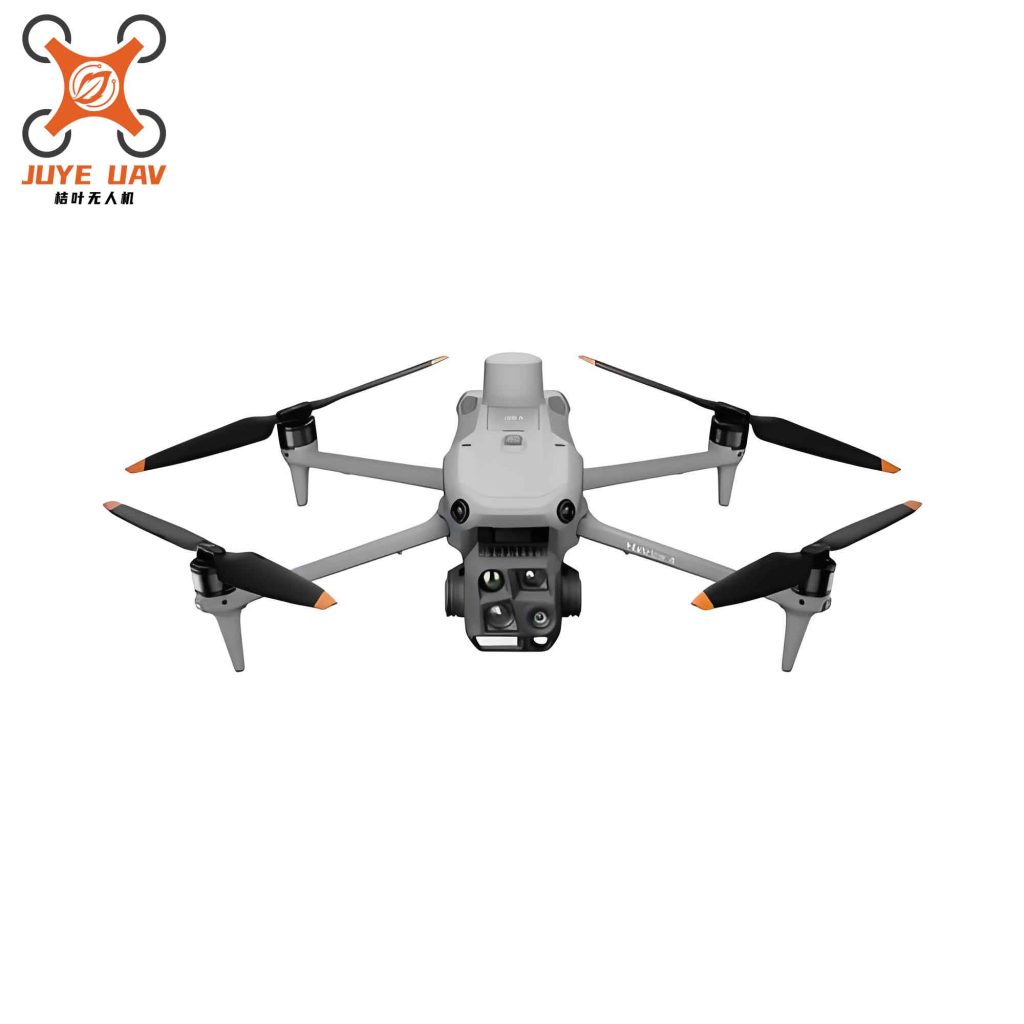
The integration of the China drone antenna system with other communication assets creates opportunities for synergistic operation. The drone could serve as a communication relay node, receiving signals from ground stations and retransmitting them to distant receivers. Multiple drones could form a communication network, providing coverage over large areas with dynamic routing and redundancy. The flexibility of drone deployment enables rapid establishment of communication infrastructure in disaster response or temporary operational scenarios where traditional infrastructure is unavailable or damaged.
The economic analysis of the China drone antenna system compared to traditional alternatives reveals favorable characteristics for many applications. The capital cost of a drone system is substantially lower than that of a permanent antenna installation, particularly when considering land acquisition and construction costs. The operational costs depend on mission duration and frequency of deployment, with drone systems offering lower costs for intermittent or temporary operations. The ability to rapidly redeploy the system to different locations provides operational flexibility that is difficult to achieve with fixed installations.
The environmental impact of the China drone antenna system is generally lower than that of permanent antenna installations. The drone system requires minimal ground infrastructure and leaves no permanent footprint when removed. The energy consumption of the drone platform for hovering is significant but can be optimized through efficient flight control and mission planning. The use of electric propulsion for the drone reduces emissions and noise compared to conventional aircraft-based systems.
The regulatory framework for drone-based communication systems continues to evolve as the technology matures. Frequency allocation, licensing, and operational restrictions vary by jurisdiction and must be considered in system design and deployment planning. The integration of the antenna system with air traffic management systems ensures safe operation in controlled airspace. The China drone platform’s compliance with relevant regulations is essential for practical deployment.
In conclusion, this study demonstrates that the China drone-based suspended flexible antenna system provides a viable solution for rapidly deployable medium and long wave communication. The system maintains stable configuration and robust radiation performance under wind disturbance conditions representative of typical operational environments. The wind-induced deformation, while measurable, does not cause significant degradation of antenna performance parameters including impedance matching, radiation efficiency, and gain. The radiation pattern remains essentially omnidirectional in the horizontal plane, supporting communication links in all azimuthal directions. The main lobe structure in the vertical plane remains intact without splitting or severe distortion.
The design methodology developed in this study, combining nonlinear structural dynamics with electromagnetic simulation, provides a framework for optimizing antenna parameters for specific operational requirements. The key design parameters include antenna length, operating frequency, conductor material and diameter, termination pod mass, and China drone hovering altitude. The trade-offs among these parameters can be systematically evaluated using the analytical and numerical tools presented here.
The successful deployment of medium and long wave communication antennas from China drone platforms represents a significant advancement in mobile communication technology. The capability to establish reliable long-range communication links rapidly and flexibly addresses critical needs in military operations, disaster response, remote area communications, and other applications where traditional infrastructure is unavailable or inadequate. The continued development and refinement of this technology will further enhance its performance and expand its application domains.
Future research directions include experimental validation of the simulation predictions through prototype testing, extension of the dynamic model to include transient wind loads and drone motion, investigation of multi-drone antenna array configurations, development of adaptive control algorithms for autonomous operation, and exploration of advanced materials and deployment mechanisms. The integration of the antenna system with emerging communication technologies, such as software-defined radios and cognitive communication networks, will further enhance its capabilities and adaptability.
The fundamental understanding gained from this study of wind-induced deformation effects on antenna radiation performance contributes to the broader field of flexible structure electromagnetics. The analytical and numerical methods developed here can be applied to other problems involving flexible conductors in aerodynamic environments, including tethered sensor systems, power transmission cables, and other antenna configurations. The insights into the relationship between structural deformation and electromagnetic performance inform the design of robust systems that maintain functionality under challenging environmental conditions.
The China drone platform’s unique combination of hovering stability, payload capacity, and operational flexibility makes it an ideal host for the suspended antenna system. As drone technology continues to advance, with improvements in endurance, payload capability, and autonomous operation, the performance envelope of the antenna system will expand correspondingly. The synergistic development of drone platforms and specialized payloads will create new opportunities for communication system innovation.
The research presented in this study establishes a solid theoretical and numerical foundation for the China drone-based flexible antenna system, demonstrating its feasibility and robustness for medium and long wave communication applications. The system’s ability to maintain effective radiation performance under wind disturbance conditions confirms its practical utility for real-world deployment. This work contributes to the advancement of mobile communication technology and provides a basis for further development and deployment of this innovative antenna system concept.