
We present a systematic review of the key technological advancements in autonomous flight and cooperative control for unmanned aerial vehicles (UAVs), with a particular emphasis on the rapid progress achieved within the China drone research community. The widespread deployment of UAVs in complex mission scenarios—such as urban inspection, emergency rescue, logistics distribution, and agricultural plant protection—has imposed stringent requirements on autonomous flight capabilities and collaborative control strategies. These requirements introduce multifaceted challenges spanning perception, decision-making, and onboard computational constraints. In this work, we examine the evolutionary trajectory of UAV technologies from traditional modular architectures to emerging end-to-end learning paradigms, and from single-agent autonomy to multi-agent collaborative intelligence. We highlight how China drone research has contributed significantly to advancing both fundamental theories and practical deployment methodologies in this domain.
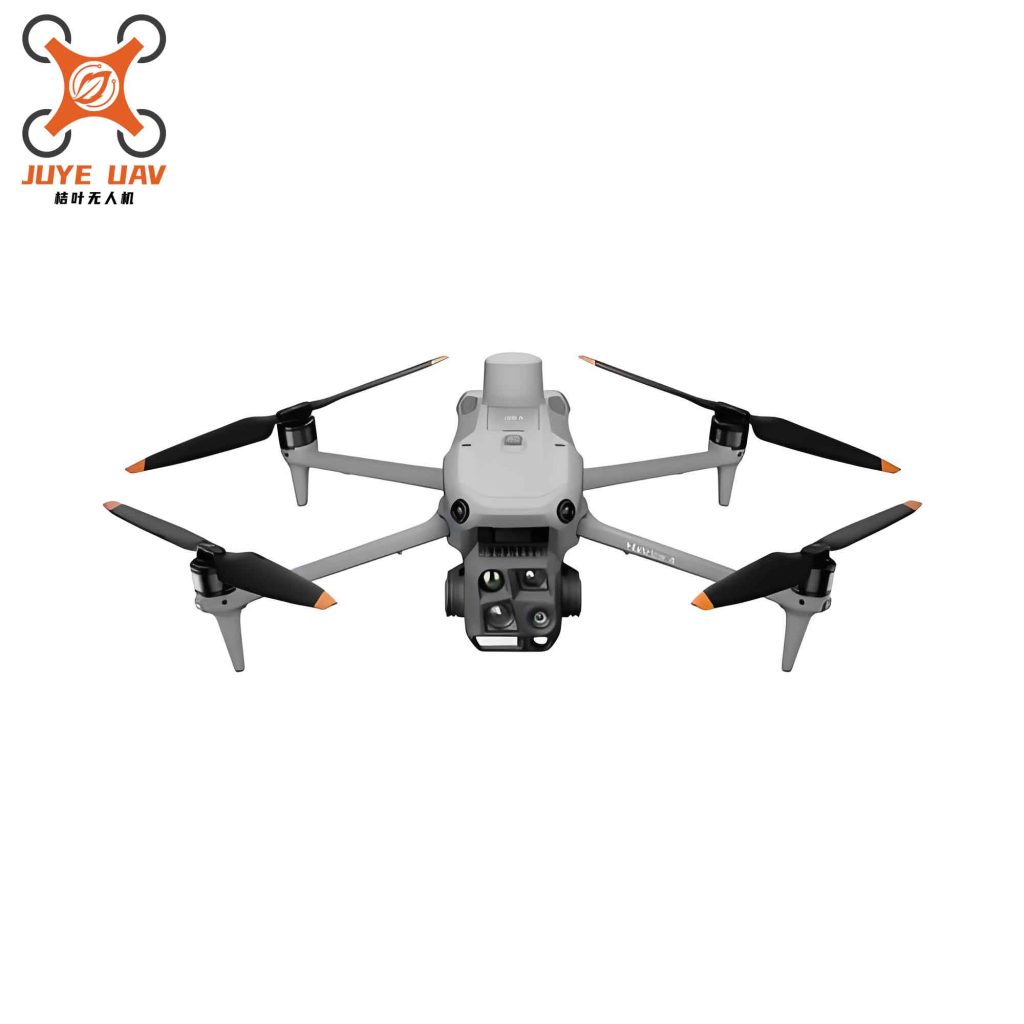
The core challenge in modern UAV systems lies in achieving high-speed, safe navigation under severe size, weight, and power (SWaP) constraints. Traditional perception-planning-control architectures demonstrate robust performance in low-speed, obstacle-sparse environments. However, in high-speed flight regimes or under strong external disturbances, information latency and error accumulation across modules often lead to performance degradation. End-to-end learning methods have emerged as a promising alternative, directly mapping sensory inputs to control outputs, thereby significantly improving system responsiveness and environmental adaptability. In the realm of cooperative control, the transition from single-agent to multi-agent systems introduces additional complexities related to communication topology dynamics, partial observability, policy consistency, and conflict resolution. China drone research has been at the forefront of addressing these challenges through innovative algorithm design and system-level integration.
This review is structured as follows. In the next section, we provide a comprehensive overview of autonomous flight technologies, covering traditional modular approaches, reinforcement learning-based methods, imitation learning-based methods, differentiable physics simulation approaches, and the critical challenge of simulation-to-reality transfer. Subsequently, we delve into cooperative control technologies, including traditional model-based multi-agent control, multi-agent reinforcement learning, and emerging multi-agent differentiable physics methods. Finally, we present our conclusions and outline future research directions that we believe will shape the next generation of intelligent UAV systems, with a continued emphasis on contributions from the China drone ecosystem.
Autonomous Flight Technologies
The pursuit of fully autonomous flight has driven the evolution of UAV control architectures from modular, sequential processing pipelines to integrated, end-to-end learning frameworks. We categorize the major approaches into four families: traditional perception-planning-control, reinforcement learning, imitation learning, and differentiable physics simulation. Each approach presents distinct trade-offs in terms of interpretability, sample efficiency, computational requirements, and deployment feasibility. We summarize the key characteristics of these methods in the following comparative table.
| Methodology | Key Advantages | Primary Limitations | Typical Applications | China Drone Contributions |
|---|---|---|---|---|
| Perception-Planning-Control | High interpretability, modular debugging | Error accumulation, latency cascade | Low-speed巡航, structured environments | Fast-Planner, Ego-Planner variants |
| Reinforcement Learning | Model-free, adapts to nonlinear dynamics | Low sample efficiency, reward design difficulty | Agile flight, acrobatics, racing | Swift-class systems |
| Imitation Learning | Fast policy acquisition from demonstrations | Distribution shift, expert data dependency | Navigation, trajectory following | Agile framework adaptations |
| Differentiable Physics | Physical consistency, direct gradient optimization | Requires differentiable simulator, complexity in contacts | Precision control, dynamics learning | Visual-differentiable integration |
Traditional Perception-Planning-Control Framework
The classical three-layer architecture decomposes the autonomous flight task into perception, planning, and control modules. The perception layer extracts environmental and state information from multi-modal sensors, including LiDAR, cameras, and inertial measurement units. In the China drone ecosystem, this framework has been extensively adopted and refined for applications such as power line inspection and agricultural monitoring. Environmental modeling typically employs either point cloud maps or volumetric occupancy maps. Point cloud maps retain detailed geometric information but require significant computational resources for real-time processing. Volumetric occupancy maps partition space into discrete voxels, providing a more compact representation suitable for collision checking during path planning.
The planning module generates safe and efficient trajectories based on the perceived environment. Global planners, such as those based on A* or rapidly-exploring random trees, provide low-frequency guidance toward long-term goals. Local planners, often formulated as trajectory optimization problems, ensure collision-free navigation in the near field. We have observed significant progress in trajectory optimization techniques within the China drone research community, with methods achieving smooth, dynamically feasible paths in cluttered environments. The control module converts planned trajectories into actuator commands. Proportional-integral-derivative (PID) controllers remain widely used due to their simplicity and robustness, while model predictive control (MPC) has gained traction for applications requiring higher precision and constraint satisfaction. MPC formulates the control problem as a finite-horizon optimization:
$$
\min_{\mathbf{u}_{0:T-1}} \sum_{k=0}^{T-1} \left( \|\mathbf{x}_k – \mathbf{x}_k^{\text{ref}}\|_{\mathbf{Q}}^2 + \|\mathbf{u}_k\|_{\mathbf{R}}^2 \right) + \|\mathbf{x}_T – \mathbf{x}_T^{\text{ref}}\|_{\mathbf{P}}^2
$$
subject to dynamics constraints, state constraints, and input constraints. Here, $\mathbf{x}_k$ denotes the state vector, $\mathbf{u}_k$ is the control input, and $\mathbf{Q}$, $\mathbf{R}$, and $\mathbf{P}$ are weighting matrices. Despite its advantages, the cascaded nature of this architecture introduces inherent limitations, including information delays and error propagation across modules, which become particularly problematic in high-speed flight scenarios.
Reinforcement Learning-based End-to-End Solutions
Reinforcement learning (RL) has emerged as a transformative paradigm for UAV autonomous control, enabling direct mapping from high-dimensional sensory inputs to low-level control commands without explicit environmental modeling. The fundamental objective in RL is to learn a policy $\pi(\mathbf{a}|\mathbf{s})$ that maximizes the expected cumulative discounted reward:
$$
J(\pi) = \mathbb{E}_{\tau \sim \pi} \left[ \sum_{t=0}^{\infty} \gamma^t r(\mathbf{s}_t, \mathbf{a}_t) \right]
$$
where $\gamma \in (0,1)$ is the discount factor, $r$ is the reward function, and $\tau$ denotes a trajectory of states and actions. The Bellman optimality equation provides the theoretical foundation for many RL algorithms:
$$
Q^*(\mathbf{s}, \mathbf{a}) = r(\mathbf{s}, \mathbf{a}) + \gamma \mathbb{E}_{\mathbf{s}’ \sim P} \left[ \max_{\mathbf{a}’} Q^*(\mathbf{s}’, \mathbf{a}’) \right]
$$
In the context of China drone research, RL-based methods have demonstrated remarkable success in agile flight tasks. Championship-level drone racing systems have been developed using deep RL, achieving performance surpassing human expert pilots. These systems employ visual-inertial state estimation combined with deep policy networks that directly map sensor data to control commands. The training process typically involves curriculum learning, where task difficulty is gradually increased to facilitate policy acquisition, combined with domain randomization to bridge the simulation-to-reality gap.
For safety-critical applications, researchers have proposed frameworks that integrate RL with safety shields. The shielded RL approach employs a safety layer that intervenes when the RL policy proposes actions that would lead to collisions. The safety shield can be derived from velocity obstacle principles or control barrier functions:
$$
\dot{h}(\mathbf{x}) + \alpha h(\mathbf{x}) \geq 0
$$
where $h(\mathbf{x})$ is a barrier function that is positive in safe states and negative in unsafe states, and $\alpha > 0$ is a gain parameter. This formulation ensures that the system remains within the safe set forward-invariantly. China drone research has made significant contributions to safe RL methods, achieving substantial reductions in collision rates compared to pure RL baselines in dynamic environments.
Despite these advances, RL methods face persistent challenges in sample efficiency, reward design, and deployment reliability. The training process requires millions of interactions with the environment, which is often simulated due to safety and cost considerations. Reward function engineering demands considerable domain expertise and is highly task-specific. Furthermore, the learned policies often lack interpretability, making it difficult to diagnose failures or guarantee performance in unseen scenarios.
Imitation Learning-based End-to-End Solutions
Imitation learning (IL) offers an alternative pathway to policy acquisition by leveraging expert demonstrations, thereby circumventing the sample inefficiency inherent in RL. The core idea is to learn a policy that mimics the expert’s behavior, typically through supervised learning on state-action pairs. Behavioral cloning (BC) directly learns a mapping from states to actions:
$$
\pi_{\theta} = \arg\min_{\pi} \mathbb{E}_{(\mathbf{s}, \mathbf{a}) \sim \mathcal{D}_{\text{expert}}} \left[ \mathcal{L}(\pi(\mathbf{s}), \mathbf{a}) \right]
$$
where $\mathcal{D}_{\text{expert}}$ is the dataset of expert demonstrations and $\mathcal{L}$ is a suitable loss function, such as mean squared error for continuous actions. Inverse reinforcement learning (IRL) takes a different approach, inferring the underlying reward function that the expert is optimizing and then deriving a policy from that reward. The IRL objective can be formulated as:
$$
\max_{r} \min_{\pi} \mathbb{E}_{\pi^*} \left[ \sum_{t} r(\mathbf{s}_t, \mathbf{a}_t) \right] – \mathbb{E}_{\pi} \left[ \sum_{t} r(\mathbf{s}_t, \mathbf{a}_t) \right]
$$
where $\pi^*$ is the expert policy and $\pi$ is the learned policy. Within the China drone research community, teacher-student frameworks have gained prominence. In this paradigm, a teacher policy is first trained in simulation using RL with access to privileged information (e.g., exact positions, velocities, and complete environment geometry). Subsequently, a student policy is trained via BC to mimic the teacher’s behavior using only sensor data that is available on real platforms. This approach successfully transfers agile flight capabilities to real quadrotors operating in complex environments such as dense forests, snow-covered terrain, and rubble fields.
The emergence of vision-language-action (VLA) models represents a frontier direction in imitation learning. These models integrate visual perception, natural language understanding, and motor control within a unified framework. The VLA paradigm enables semantic-level task specification, where operators can command UAVs using natural language instructions. The underlying model typically consists of a vision encoder, a language encoder, and an action decoder that are jointly trained on large-scale multimodal datasets. The training objective can be expressed as:
$$
\mathcal{L}_{\text{VLA}} = \mathbb{E}_{(\mathbf{v}, \mathbf{l}, \mathbf{a}) \sim \mathcal{D}} \left[ \|\mathbf{a} – f_{\theta}(\mathbf{v}, \mathbf{l})\|^2 \right]
$$
where $\mathbf{v}$ denotes visual input, $\mathbf{l}$ is language instruction, and $f_{\theta}$ is the VLA model parameterized by $\theta$. China drone research has been actively exploring VLA-based navigation systems that can interpret commands such as “fly close to the building” or “avoid the moving vehicle” and generate appropriate flight trajectories. Synthetic data generation has emerged as a crucial enabler for VLA model training, addressing the scarcity of paired vision-language-action data in the drone domain. High-fidelity simulation platforms are used to render first-person video frames synchronized with expert trajectories generated by path planning algorithms or RL-based teacher policies.
Differentiable Physics Simulation-based Solutions
Differentiable physics simulation represents a paradigm shift in bridging physical modeling with deep learning optimization. Traditional physics simulators, while capable of generating realistic trajectories, do not provide gradient information that can be used to optimize control policies. Differentiable simulators overcome this limitation by implementing physics computations as differentiable operations, enabling gradient backpropagation from task loss directly to policy parameters. The core idea is to model the forward dynamics as a differentiable function $\Phi$ that maps current state $\mathbf{s}_t$ and action $\mathbf{a}_t$ to next state $\mathbf{s}_{t+1}$:
$$
\mathbf{s}_{t+1} = \Phi(\mathbf{s}_t, \mathbf{a}_t; \phi)
$$
where $\phi$ represents physical parameters (e.g., mass, inertia, aerodynamic coefficients). The gradient of a task loss $\mathcal{L}_{\text{task}}$ with respect to policy parameters $\theta$ can then be computed via backpropagation through time:
$$
\frac{\partial \mathcal{L}_{\text{task}}}{\partial \theta} = \sum_{t=0}^{T} \frac{\partial \mathcal{L}_{\text{task}}}{\partial \mathbf{s}_t} \cdot \frac{\partial \mathbf{s}_t}{\partial \theta} = \sum_{t=0}^{T} \frac{\partial \mathcal{L}_{\text{task}}}{\partial \mathbf{s}_t} \cdot \left( \prod_{k=0}^{t-1} \frac{\partial \Phi(\mathbf{s}_k, \mathbf{a}_k)}{\partial \mathbf{s}_k} \cdot \frac{\partial \mathbf{a}_k}{\partial \theta} + \frac{\partial \Phi(\mathbf{s}_k, \mathbf{a}_k)}{\partial \mathbf{a}_k} \cdot \frac{\partial \mathbf{a}_k}{\partial \theta} \right)
$$
The key advantage of differentiable physics over RL is the elimination of sample-based gradient estimation. In RL, gradients are approximated through stochastic sampling, which introduces high variance and requires many interactions. Differentiable physics provides exact gradients through the dynamics model, enabling more efficient and stable optimization. China drone research has made pioneering contributions to this direction, particularly in integrating visual perception into the differentiable simulation loop. We have seen frameworks that combine a differentiable rendering module with a differentiable dynamics module, enabling end-to-end learning from pixel observations to control commands while respecting physical constraints.
The following table summarizes the key distinctions between differentiable physics approaches and traditional RL methods for drone control optimization.
| Aspect | Differentiable Physics | Reinforcement Learning |
|---|---|---|
| Gradient source | Analytic through dynamics model | Stochastic sampling of trajectories |
| Sample efficiency | High (direct gradient optimization) | Low (requires many interactions) |
| Physical consistency | Explicitly enforced by model structure | Learned implicitly, may violate physics |
| Interpretability | High (dynamics transparent) | Low (black-box policy) |
| Computational cost | Moderate (gradient computation through simulation) | High (requires environmental interaction) |
| Scalability to complex dynamics | Limited by differentiability of physics model | Flexible, can approximate arbitrary dynamics |
Simulation-to-Reality Transfer Challenges
A critical bottleneck for learning-based autonomous flight methods is the simulation-to-reality (Sim-to-Real) gap. Policies trained in simulation often fail when deployed on real platforms due to discrepancies between simulated and real environments. The Sim-to-Real gap manifests in several dimensions. First, visual observations in simulation lack the noise characteristics, motion blur, and lighting variations present in real sensor data. Second, simulated dynamics models are typically simplified representations that omit aerodynamic effects, actuator delays, and structural flexibilities. Third, environmental factors such as wind disturbances, temperature variations, and sensor degradation are difficult to model accurately in simulation.
Several strategies have been developed to mitigate the Sim-to-Real gap. Domain randomization is a widely adopted technique where simulation parameters are randomly varied during training to expose the policy to a wide range of conditions:
$$
\mathcal{D}_{\text{train}} = \bigcup_{\xi \sim \Xi} \mathcal{D}_{\text{sim}}(\xi)
$$
where $\xi$ represents simulation parameters (e.g., friction coefficients, sensor noise levels, lighting conditions) sampled from a distribution $\Xi$. By training on this varied dataset, the policy learns features that are robust to parameter variations, facilitating transfer to real environments. System identification uses limited real-world data to calibrate simulation parameters, reducing the discrepancy between simulated and real dynamics. Adversarial training approaches actively construct challenging perturbations during training to enhance policy robustness. China drone research has demonstrated successful zero-shot Sim-to-Real transfer for agile flight tasks using these techniques, representing a significant milestone in deploying learning-based control on real platforms.
An important but often overlooked aspect of Sim-to-Real transfer is the issue of non-causal representational factors. These are environment features that correlate with action outcomes in training data but lack causal relationships. For example, specific lighting conditions or background textures may become spuriously correlated with control decisions. Policies exploiting these non-causal correlations may fail dramatically when deployed in environments with different visual characteristics. We believe that addressing this challenge requires causal representation learning techniques that identify and utilize only causally relevant features for decision-making.
Cooperative Control Technologies
While single-UAV autonomous flight has achieved remarkable progress, the inherent limitations in sensing range, endurance, and mission complexity necessitate the deployment of multi-UAV systems. Cooperative control enables multi-UAV systems to accomplish tasks that are infeasible for individual platforms, including large-scale area coverage, multi-target tracking, and coordinated manipulation. In this section, we review the evolution of cooperative control methods from model-based approaches to data-driven and physics-integrated frameworks.
| Paradigm | Foundation | Key Strength | Key Weakness | China Drone Applications |
|---|---|---|---|---|
| Consensus-based | Graph theory, Lyapunov analysis | Provable convergence, low computation | Sensitive to topology changes | Formation flight, rendezvous |
| Leader-Follower | Hierarchical control, tracking theory | Simple implementation, clear roles | Single point of failure | Inspection, surveillance |
| Artificial Potential Field | Potential functions, gradient descent | Real-time reactive behavior | Local minima, parameter tuning | Collision avoidance, swarm |
| Multi-Agent RL | Markov games, policy gradient | Adaptive, model-free coordination | Sample intensive, interpretability | Pursuit-evasion, search |
| Differentiable Multi-Agent | Differentiable simulation, joint optimization | Physical consistency, efficient gradients | Framework complexity, nascent stage | Emerging research direction |
Traditional Multi-Agent Cooperative Control Methods
Traditional cooperative control methods rely on explicit mathematical models to achieve coordinated behavior. Consensus theory provides a foundation for distributed coordination, where each agent updates its state based on information received from neighbors. The basic consensus protocol can be expressed as:
$$
\dot{\mathbf{x}}_i(t) = \sum_{j \in \mathcal{N}_i} a_{ij} \left( \mathbf{x}_j(t) – \mathbf{x}_i(t) \right)
$$
where $\mathbf{x}_i$ is the state of agent $i$, $\mathcal{N}_i$ is the set of neighbors of agent $i$, and $a_{ij}$ are adjacency weights representing communication or sensing links. Under appropriate connectivity conditions, all agents converge to a common value. For formation control, the consensus protocol is extended to include relative state offsets:
$$
\dot{\mathbf{x}}_i(t) = \sum_{j \in \mathcal{N}_i} a_{ij} \left( (\mathbf{x}_j(t) – \mathbf{d}_j) – (\mathbf{x}_i(t) – \mathbf{d}_i) \right)
$$
where $\mathbf{d}_i$ defines the desired position of agent $i$ in the formation. The leader-follower strategy designates one or more agents as leaders that define the reference trajectory, while followers maintain prescribed relative positions. The follower control law can be expressed as:
$$
\mathbf{u}_i = k_p (\mathbf{p}_{\text{des},i} – \mathbf{p}_i) + k_d (\mathbf{v}_{\text{des},i} – \mathbf{v}_i)
$$
where $\mathbf{p}_{\text{des},i}$ and $\mathbf{v}_{\text{des},i}$ are the desired position and velocity of follower $i$, derived from the leader’s state and the desired formation geometry. China drone research has extensively applied these methods to formation flight and coordinated area coverage missions.
Artificial potential field (APF) methods construct a potential function that combines attractive forces toward goals and repulsive forces away from obstacles and other agents:
$$
U_i(\mathbf{p}_i) = U_{\text{att},i}(\mathbf{p}_i) + \sum_{j \neq i} U_{\text{rep},ij}(\mathbf{p}_i, \mathbf{p}_j) + U_{\text{obs},i}(\mathbf{p}_i)
$$
The control action for agent $i$ is then computed as the negative gradient of the total potential:
$$
\mathbf{u}_i = -\nabla U_i(\mathbf{p}_i)
$$
APF methods offer computational efficiency and enable reactive collision avoidance, making them suitable for real-time swarm applications. However, they suffer from local minima issues where the gradient vanishes away from the goal, and parameter tuning is often required for different task scenarios. China drone research has contributed to improved APF variants that incorporate local exploration mechanisms and adaptive parameter adjustment to mitigate these limitations.
Multi-Agent Reinforcement Learning Methods
Multi-agent reinforcement learning (MARL) has emerged as a powerful paradigm for learning cooperative behaviors in complex, dynamic environments without explicit modeling of interaction rules. MARL extends single-agent RL to settings where multiple agents coexist, each with its own policy, and the environment dynamics depend on the joint actions of all agents. The Markov game framework formalizes this setting, where the transition probability depends on the joint action $\mathbf{a} = (\mathbf{a}_1, \ldots, \mathbf{a}_N)$:
$$
\mathbf{s}’ \sim P(\cdot | \mathbf{s}, \mathbf{a}_1, \ldots, \mathbf{a}_N)
$$
Each agent $i$ aims to maximize its own expected cumulative reward $\mathbb{E}[\sum_{t} \gamma^t r_i(\mathbf{s}_t, \mathbf{a}_{1,t}, \ldots, \mathbf{a}_{N,t})]$. The central challenge in MARL is the non-stationarity introduced by concurrently learning policies: each agent’s environment changes as other agents update their policies, violating the Markov assumption underlying single-agent RL convergence guarantees.
The multi-agent deep deterministic policy gradient (MADDPG) algorithm addresses this challenge through a centralized training with decentralized execution (CTDE) paradigm. During training, each agent has a centralized critic that conditions on the joint state and actions of all agents, providing a stationary learning signal:
$$
\nabla_{\theta_i} J(\mu_i) = \mathbb{E}_{\mathbf{s}, \mathbf{a} \sim \mathcal{D}} \left[ \nabla_{\theta_i} \mu_i(\mathbf{a}_i | \mathbf{o}_i) \nabla_{\mathbf{a}_i} Q_i^{\mu}(\mathbf{s}, \mathbf{a}_1, \ldots, \mathbf{a}_N) \big|_{\mathbf{a}_i = \mu_i(\mathbf{o}_i)} \right]
$$
where $\mu_i$ is the deterministic policy of agent $i$, $\mathbf{o}_i$ is the local observation, and $Q_i^{\mu}$ is the centralized action-value function. During execution, each agent acts based only on its local observation, enabling distributed deployment. The multi-agent proximal policy optimization (MAPPO) algorithm extends the popular PPO algorithm to multi-agent settings, inheriting its stability and sample efficiency advantages. MAPPO employs a centralized value function $V(\mathbf{s})$ and optimizes the policy using clipped surrogate objectives:
$$
L_i^{\text{CLIP}}(\theta_i) = \mathbb{E}_{t} \left[ \min \left( \rho_i(\theta_i) \hat{A}_t, \text{clip}(\rho_i(\theta_i), 1-\epsilon, 1+\epsilon) \hat{A}_t \right) \right]
$$
where $\rho_i(\theta_i) = \frac{\pi_{\theta_i}(\mathbf{a}_{i,t} | \mathbf{o}_{i,t})}{\pi_{\theta_i^{\text{old}}}(\mathbf{a}_{i,t} | \mathbf{o}_{i,t})}$ is the probability ratio and $\hat{A}_t$ is the advantage estimate. China drone research has applied MARL methods to a diverse set of tasks, including cooperative obstacle avoidance for swarms of up to 32 agents in simulation and 4-6 agents in real-world experiments using motion capture systems. Attention mechanisms have been integrated into MARL frameworks to encode neighbor interactions, enabling the policy to focus on the most relevant agents in the swarm.
The following table provides a detailed comparison of representative MARL algorithms for multi-UAV coordination.
| Algorithm | Learning Paradigm | Policy Type | Value Function | Scalability | Key Application in China Drone |
|---|---|---|---|---|---|
| MADDPG | Off-policy | Deterministic | Centralized Q-function | Moderate (up to ~10 agents) | Pursuit-evasion, formation |
| MAPPO | On-policy | Stochastic | Centralized V-function | Good (up to ~30 agents) | Swarm navigation, search |
| MAA2C | On-policy | Stochastic | Centralized V-function | Moderate | Cooperative exploration |
| QMIX | Off-policy | Deterministic (DQN-based) | Mixing network | Good (factorized) | Task allocation, coverage |
Despite the demonstrated successes, MARL deployment on real UAV swarms faces formidable challenges. The reliance on precise state information during centralized training is difficult to satisfy in real environments where communication is limited and observations are noisy. The Sim-to-Real gap is even more pronounced for multi-agent systems due to the compounded effects of individual perception errors and communication delays. Credit assignment in cooperative tasks with sparse global rewards remains an open problem, as individual agents cannot easily discern their contribution to team outcomes. Furthermore, the computational requirements for centralized training grow rapidly with the number of agents, necessitating efficient parallelization and approximation techniques.
Emerging Multi-Agent Differentiable Physics Methods
The differentiable physics paradigm, which has shown promise in single-agent settings, is beginning to attract attention for multi-agent coordination. The core idea is to construct a joint differentiable model of the multi-agent system dynamics, enabling gradient-based optimization of cooperative policies. In the multi-agent setting, the system dynamics become:
$$
\mathbf{s}_{t+1} = \Phi_{\text{joint}}(\mathbf{s}_t, \mathbf{a}_{1,t}, \ldots, \mathbf{a}_{N,t}; \phi)
$$
where $\mathbf{s}_t = (\mathbf{s}_{1,t}, \ldots, \mathbf{s}_{N,t})$ is the joint state. The task loss for cooperative control can incorporate both individual and collective objectives:
$$
\mathcal{L}_{\text{coop}} = \sum_{i=1}^{N} \mathcal{L}_{\text{ind},i}(\mathbf{s}_i) + \lambda \mathcal{L}_{\text{collective}}(\mathbf{s}_1, \ldots, \mathbf{s}_N)
$$
The collective loss term $\mathcal{L}_{\text{collective}}$ can encode formation constraints, collision avoidance requirements, or task allocation objectives. Gradients of this loss with respect to each agent’s policy parameters can be computed through the differentiable joint dynamics model, enabling coordinated policy optimization. This approach offers the potential for physically consistent coordination with high sample efficiency and interpretability. However, the multi-agent differentiable physics framework is still in its infancy, with no mature implementations demonstrated for real multi-UAV systems. The fundamental challenge lies in scaling the differentiable computation to large swarms while maintaining computational tractability and numerical stability. China drone research is well-positioned to advance this direction, given the strong foundation in both differentiable physics and multi-agent coordination within the community.
We envision that future multi-agent differentiable physics frameworks will incorporate mechanisms for emergent coordination, where collaborative behaviors arise naturally from the joint optimization of physically grounded objectives, rather than being imposed as external constraints. This would represent a fundamental departure from current approaches where coordination is either explicitly programmed (as in consensus-based methods) or implicitly learned through extensive trial-and-error (as in MARL).
Conclusion and Future Directions
We have presented a comprehensive review of autonomous flight and cooperative control technologies for UAV systems, with particular attention to the significant contributions from the China drone research community. Our analysis reveals a clear trajectory from modular, model-based approaches toward integrated, learning-based paradigms, and from single-agent autonomy toward multi-agent collaborative intelligence. Each methodological family—traditional modular control, reinforcement learning, imitation learning, and differentiable physics simulation—offers distinct trade-offs in interpretability, sample efficiency, computational requirements, and deployment feasibility. The choice of approach depends on the specific task requirements, available computational resources, and acceptable risk levels.
Based on our analysis, we identify five critical research directions that will shape the future of intelligent UAV systems, with a continued emphasis on China drone contributions to these areas.
1. Enhancing Interpretability and Safety of End-to-End Decision Making. Current end-to-end learning methods achieve impressive performance but lack the transparency required for safety-critical aviation applications. We advocate for the explicit incorporation of dynamic constraints and safety barrier functions into network architectures and training procedures. This approach would enable formal verification of policy behavior while preserving the flexibility of learned representations. Research on integrating control barrier functions with neural network policies is particularly promising for achieving verifiable safety guarantees.
2. Advancing Differentiable Modeling for Cooperative Systems. Differentiable physics simulation provides a principled framework for connecting physical priors with gradient-based optimization. We call for expanded efforts to develop differentiable simulators that can handle complex aerodynamics, environmental uncertainties, and multi-agent interactions within a unified computational graph. The goal is to create frameworks where individual dynamics and collective coordination constraints are jointly differentiable, enabling end-to-end optimization of cooperative strategies with physical consistency.
3. Addressing Communication Constraints and Partial Observability. Real-world multi-UAV systems operate under severe communication limitations, including bandwidth constraints, latency, and dynamic topology changes. Future research should focus on robust policy representations that leverage historical observations and latent state inference to reduce dependence on instantaneous neighbor information. Attention-based mechanisms and recurrent architectures offer promising avenues for maintaining coordination quality under communication degradation.
4. Bridging the Simulation-to-Reality Gap for Multi-Agent Systems. The Sim-to-Real challenge is amplified in multi-agent settings due to the exponential growth of interaction modes and the difficulty of accurately modeling inter-agent physical effects. We recommend the development of high-fidelity multi-agent simulation environments with integrated sensor noise, communication delays, and aerodynamic coupling models. Online adaptation mechanisms that continuously calibrate the simulation-to-reality mismatch using real flight data will be essential for long-term deployment stability.
5. Architecting Scalable System-Level Coordination Frameworks. As UAV swarms scale to hundreds or thousands of units, the coordination architecture must evolve from algorithm-level design to system-level co-design. We envision hierarchical coordination frameworks that combine local reactive control with global task planning, enabling both rapid response to local events and coherent pursuit of global objectives. The China drone ecosystem, with its strengths in both hardware manufacturing and software algorithm development, is uniquely positioned to pioneer such integrated system architectures.
In conclusion, the field of UAV autonomous flight and cooperative control is undergoing a profound transformation driven by advances in learning-based methods, differentiable simulation, and multi-agent systems. China drone research has been and will continue to be a driving force in this transformation, contributing innovative solutions that push the boundaries of what is achievable with unmanned aerial systems. We anticipate that the convergence of end-to-end learning, physical reasoning, and distributed coordination will unlock unprecedented levels of autonomy, efficiency, and safety for multi-UAV systems operating in complex, dynamic environments.